
“We could be saddled with some immense costs going forward without federal contributions.”
New from me.
Alberta is exploring the idea of establishing a provincial police force. What are the motivations behind this move, how much is it going to cost, and do Albertans even want it?
#yeg #ableg
“We could be saddled with some immense costs going forward without federal contributions.”
"I’m not convinced necessarily that people understand and appreciate how enormous those costs are, and that those costs are ongoing and forever.”
“I think the province shouldn’t be controlling directly how these police forces operate."
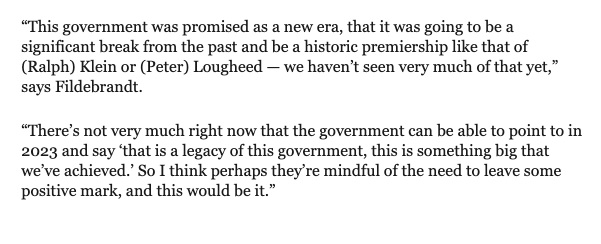
Derek Fildebrandt, former MLA for Strathmore-Brooks and publisher of the Western Standard, suggests the UCP are in search of a “legacy project” to hang its hat on. #ableg
“The majority of respondents thought it wasn’t important at all and shouldn’t be a priority — it’s actually quite overwhelming."
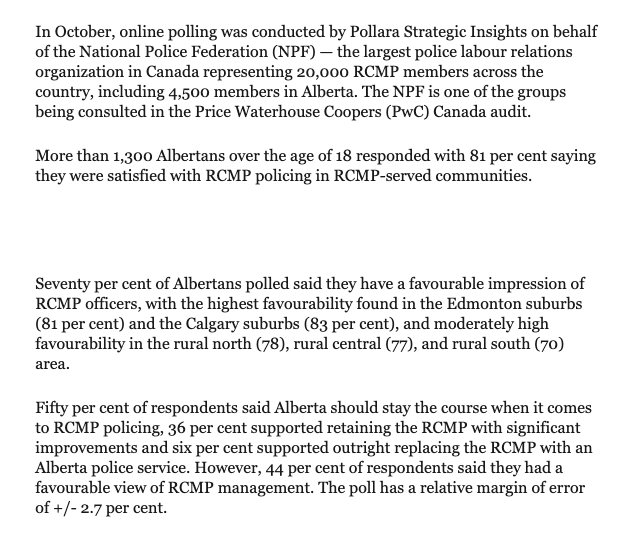
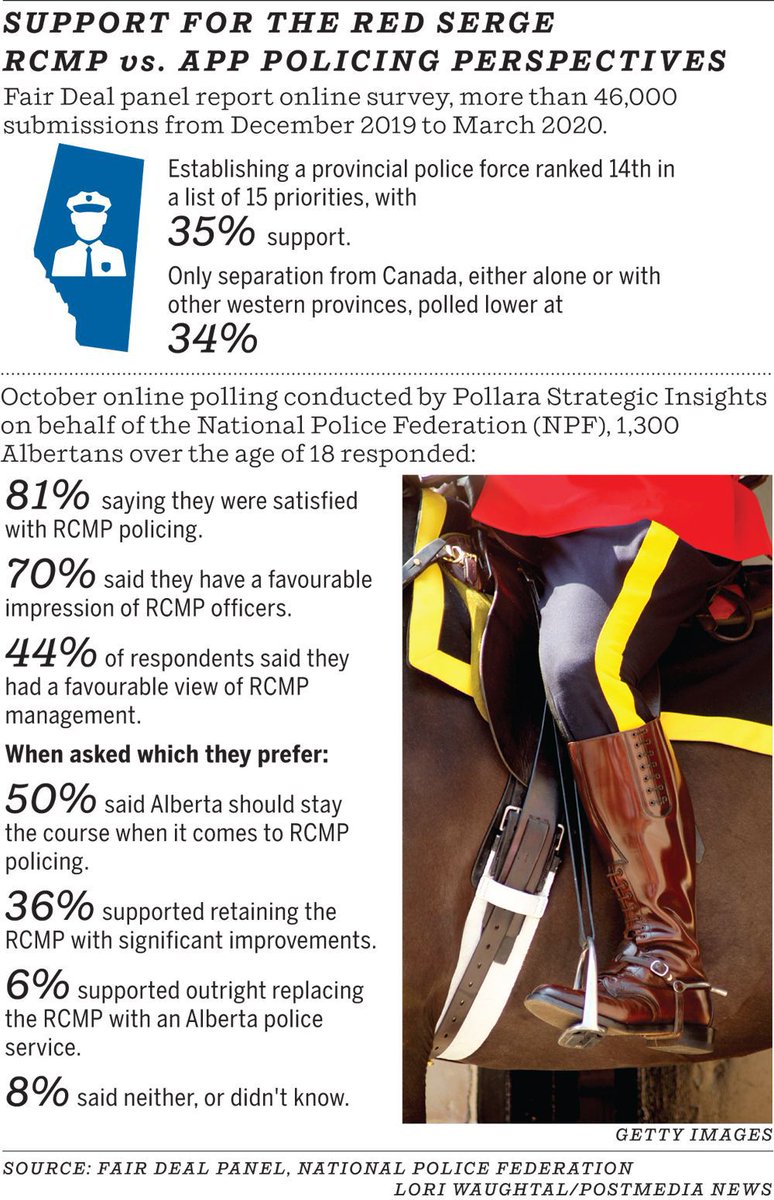
https://t.co/e2hX4L2Jkj
"...all I’m hearing about is “screw Ottawa” and that makes no sense. This isn’t us versus them, or us versus Ottawa … We’re not solving anything by throwing mud at each other."
https://t.co/wwQohkl739
More from Society

1/ One year of destroyed economies, social isolation & deep social splits calls for an anniversary ⬇️thread ⬇️ to celebrate the RT-qPCR manuscript by Christian Drosten (@c_drosten) & Victor Corman (@vmcorman), submitted on 21st Jan 2020 to @Eurosurveillanc. #UnbiasedScience
2/ Before this very publication, virologists were neither treated like superstars, nor were they considered icons or half-gods. In 2009, Drosten almost succeeded in installing the false premise virology could supersede holistic medical sciences as discussed in this thread.
3/ Drosten is a virologist. He neither has any background in epidemiology, nor has he ever worked in the civil service. He also doesn’t have a background in public health. Yet he and his colleagues affect our daily lives to the level of whom to meet up or how to flush the toilet.

4/ Before January 2020, Drosten and Corman were common virologists at Charité Berlin, whenever they were not involved in economic implications (https://t.co/UTDwG8U7Du). Other than that, they looked at coronaviruses in dromedary calves in the Middle East or Africa. 😍 #cute
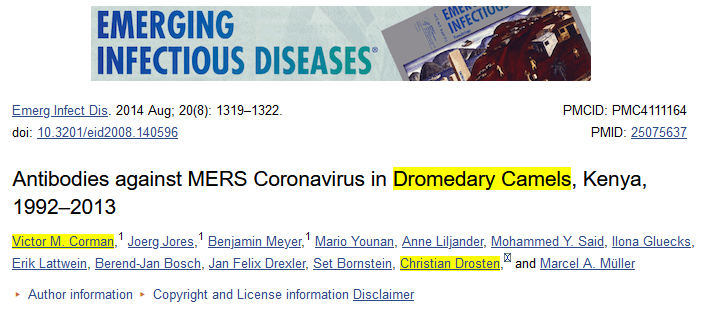
5/ Finally in Jan 2020, the published paper laid the theoretical grounds for the current pandemic, the RT-qPCR mass testing-religion, for which he was awarded his second German Federal Cross of Merit (he received the first one in 2005 for developing the SARS-CoV PCR test).
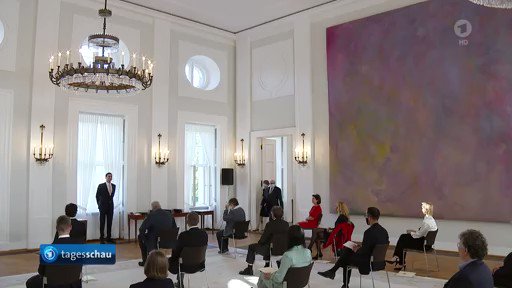
2/ Before this very publication, virologists were neither treated like superstars, nor were they considered icons or half-gods. In 2009, Drosten almost succeeded in installing the false premise virology could supersede holistic medical sciences as discussed in this thread.
3/ Drosten is a virologist. He neither has any background in epidemiology, nor has he ever worked in the civil service. He also doesn’t have a background in public health. Yet he and his colleagues affect our daily lives to the level of whom to meet up or how to flush the toilet.
4/ Before January 2020, Drosten and Corman were common virologists at Charité Berlin, whenever they were not involved in economic implications (https://t.co/UTDwG8U7Du). Other than that, they looked at coronaviruses in dromedary calves in the Middle East or Africa. 😍 #cute
5/ Finally in Jan 2020, the published paper laid the theoretical grounds for the current pandemic, the RT-qPCR mass testing-religion, for which he was awarded his second German Federal Cross of Merit (he received the first one in 2005 for developing the SARS-CoV PCR test).


So, as the #MegaMillions jackpot reaches a record $1.6B and #Powerball reaches $620M, here's my advice about how to spend the money in a way that will truly set you, your children and their kids up for life.
Ready?
Create a private foundation and give it all away. 1/
Let's stipulate first that lottery winners often have a hard time. Being publicly identified makes you a target for "friends" and "family" who want your money, as well as for non-family grifters and con men. 2/
The stress can be damaging, even deadly, and Uncle Sam takes his huge cut. Plus, having a big pool of disposable income can be irresistible to people not accustomed to managing wealth. https://t.co/fiHsuJyZwz 3/
Meanwhile, the private foundation is as close as we come to Downton Abbey and the landed aristocracy in this country. It's a largely untaxed pot of money that grows significantly over time, and those who control them tend to entrench their own privileges and those of their kin. 4
Here's how it works for a big lotto winner:
1. Win the prize.
2. Announce that you are donating it to the YOUR NAME HERE Family Foundation.
3. Receive massive plaudits in the press. You will be a folk hero for this decision.
4. Appoint only trusted friends/family to board. 5/
Ready?
Create a private foundation and give it all away. 1/
Let's stipulate first that lottery winners often have a hard time. Being publicly identified makes you a target for "friends" and "family" who want your money, as well as for non-family grifters and con men. 2/
The stress can be damaging, even deadly, and Uncle Sam takes his huge cut. Plus, having a big pool of disposable income can be irresistible to people not accustomed to managing wealth. https://t.co/fiHsuJyZwz 3/
Meanwhile, the private foundation is as close as we come to Downton Abbey and the landed aristocracy in this country. It's a largely untaxed pot of money that grows significantly over time, and those who control them tend to entrench their own privileges and those of their kin. 4
Here's how it works for a big lotto winner:
1. Win the prize.
2. Announce that you are donating it to the YOUR NAME HERE Family Foundation.
3. Receive massive plaudits in the press. You will be a folk hero for this decision.
4. Appoint only trusted friends/family to board. 5/


You May Also Like








H was always unseen in S2NL :)
Those who exited at 1500 needed money. They can always come back near 969. Those who exited at 230 also needed money. They can come back near 95.
Those who sold L @ 660 can always come back at 360. Those who sold S last week can be back @ 301
Those who exited at 1500 needed money. They can always come back near 969. Those who exited at 230 also needed money. They can come back near 95.
Those who sold L @ 660 can always come back at 360. Those who sold S last week can be back @ 301
Sir, Log yahan.. 13 days patience nhi rakh sakte aur aap 2013 ki baat kar rahe ho. Even Aap Ready made portfolio banakar bhi de do to bhi wo 1 month me hi EXIT kar denge \U0001f602
— BhavinKhengarSuratGujarat (@IntradayWithBRK) September 19, 2021
Neuland 2700 se 1500 & Sequent 330 to 230 kya huwa.. 99% retailers/investors twitter par charcha n EXIT\U0001f602