
We don’t want to fix poverty, even if doing so helps everyone—not if it means life for the “undeserving.”
If you ever want to consider how committed our society is to the foundational lie that life must be earned, and those who fail to earn it must die, consider that the proposition “giving everyone money to spend would be bad for the economy” is widely accepted as truth.
A new study found that giving low-income workers money upfront in their work period helped alleviate the mental burden of their financial problems and allowed them to be more productive \u2014 echoing other findings on the psychological impacts of poverty.https://t.co/zdxItTLDLZ
— NPR (@NPR) February 3, 2021
We don’t want to fix poverty, even if doing so helps everyone—not if it means life for the “undeserving.”
There's a great fear in this country that a single dollar might go to someone who might not deserve it; or that a single given dollar might be spent on something we deem unworthy.
We'll spend five dollars to prevent the waste of that one dollar.
Our use of charity as a way of controlling who gets helped, for example. https://t.co/Ax6Av9J5vb
Charity isn't primarily an act.
— A.R. Moxon (@JuliusGoat) November 10, 2019
Before the act comes an alignment.
Charity is the natural fruit of a deep alignment with the virtue of generosity.
It sure shouldn't be a delivery mechanism for one's own beliefs about worthiness.
Which is why wealthy people like means testing.
https://t.co/bgLKviRjVq
Whenever someone proposes a means-testing solution, it's an indication they've internalized the lie, foundational to the United States, that some people deserve life and others don't.
— A.R. Moxon (@JuliusGoat) December 18, 2020
It's an expensive lie.
As long as people go on believing the lie, it benefits them even if it targets them.
But if you want to spend money trying to administrate it away from the "undeserving" they're happy to exploit it.
These are all expensive lies. https://t.co/WPixtkxACi
To be clear, this lie\u2014that we can't afford to house the houseless\u2014is an *expensive* lie. Not just the considerable moral cost of living in a heartless society: cash on the barrel.
— A.R. Moxon (@JuliusGoat) December 18, 2019
We believe this expensive lie because we believe a deeper lie: that life is something earned.
Which benefits those who benefit from the lie. https://t.co/ZhU0Y3fhwT
UPDATE: Some senior Dems are looking at lowering threshold on stimulus payments so they start phasing out above $50K for single taxpayers; $75K for heads of households; & $100K for married couples
— Jeff Stein (@JStein_WaPo) February 2, 2021
Stressing here: Talks fluid, conversations are ongoinghttps://t.co/0lZ8MKuqbt
Here we see one of the most malicious servants of greed ever born, using our desire to see help go only to the deserving, in order to prevent any help from going to anybody at all. https://t.co/8mM67pXpj1
JUST IN: Sen. Mitch McConnell blasts #CASHAct, refutes Sen. Bernie Sanders: "Our colleague from Vermont is dead wrong on this...\xa0Borrowing from our grandkids to do socialism for rich people is a terrible way to get help to families\xa0who actually need it." pic.twitter.com/k6QfgDdNxq
— The Hill (@thehill) December 31, 2020
It's because he knows that as long as we stay in a framework where some deserve and others don't, money will go to the wealthy either way.
https://t.co/359PyMEgzl
The Democratic party has an obsession with making sure that programs don't help people who "don't need it." This creates hurdles that actually exclude people who need it.
— Lee J. Carter (@carterforva) December 30, 2020
The better way to implement a program is to make it universal, then claw it back from the rich via taxes.
He's not standing up for unemployed people. He's defending the lie that life is for the deserving. https://t.co/iHXbGYqb6Q
Trying to figure out how anyone justifies payments to over 100 million people that have *not* lost their job?
— Dan Crenshaw (@DanCrenshawTX) December 19, 2020
Focus our taxpayer dollar funded relief on the unemployed & those with their hours cut, not the fully employed just working from home all year.https://t.co/OvPXzzKQuY
More from A.R. Moxon

People have wondered why I have spent 3 days mostly pushing back on this idea that "defund the police" is bad marketing.
The reason is, it's an example of this magic trick, the oldest trick in the book.
It's a competition between what I call compass statements. And it matters.
There are a lot of people who think "defund the police" is a bad slogan.
But it's a directional intention. A compass statement.
The real effect of calling it a bad slogan, whether or not intentional (but usually intentional), is to reduce a compass statement down to a slogan.
Whenever there is a real problem and a clear solution, there will be people who benefit from the problem and therefore oppose the solution in a variety of ways.
And this is true of any real problem, not just the problem of lawless militarized white supremacist police.
There are people who oppose it directly using a wide variety of tactics, one of which is misconstruing anything—quite literally anything—said by those who propose solutions—any solutions.
They'd appreciate it if you mistake their deliberate misrepresentation for confusion.
The reason they'd appreciate if if you mistake their deliberate misrepresentation for confusion is, it wastes time that could have been spend on the solution trying to persuade them, with different arguments and metaphors or solutions.
Which they intend to misconstrue.
The reason is, it's an example of this magic trick, the oldest trick in the book.
It's a competition between what I call compass statements. And it matters.
There\u2019s a magic trick that\u2019s going to get played on us every day during the 2020 election cycle. It\u2019s a fairly simple trick, once you see it.
— A.R. Moxon (@JuliusGoat) February 17, 2019
I\u2019d like to talk about leadership and governance.
And the compass, the navigation, the travel, and the corrections.
(thread)
There are a lot of people who think "defund the police" is a bad slogan.
But it's a directional intention. A compass statement.
The real effect of calling it a bad slogan, whether or not intentional (but usually intentional), is to reduce a compass statement down to a slogan.
Whenever there is a real problem and a clear solution, there will be people who benefit from the problem and therefore oppose the solution in a variety of ways.
And this is true of any real problem, not just the problem of lawless militarized white supremacist police.
There are people who oppose it directly using a wide variety of tactics, one of which is misconstruing anything—quite literally anything—said by those who propose solutions—any solutions.
They'd appreciate it if you mistake their deliberate misrepresentation for confusion.
The reason they'd appreciate if if you mistake their deliberate misrepresentation for confusion is, it wastes time that could have been spend on the solution trying to persuade them, with different arguments and metaphors or solutions.
Which they intend to misconstrue.
The reality is very simple: The Republican Party is no longer participating in democracy. They're running a series of ops against every election cycle, predicated on the notion that only their power is legitimate.
This isn't a failed coup. This is a *continuous* coup that stretches back years. It includes Gingrich's scorched earth methods, Bush v Gore, the politicizing of the Bush DoJ, the judicial obstructionism and nullification of the McConnell Senate, and the entire Trump presidency.
It includes decades of tortured racist gerrymandering and disenfranchisement, Citizens United, the dismantling of the Voting Rights Act, PACs, and deliberately colluding with foreign powers.
This isn't a failed coup. This is a *continuous* coup that stretches back years.
The Republican Party is not participating in democracy. They are quite obviously an organization dedicated to the destruction and overthrow of the government of the U.S. as we know it, and should be treated as such.
There are no legitimate Republican office-holders.
I think there's a distinction to be made. Democrats are often weak/ineffective, and many are complicit because they're those things by choice—but institutionally they aren't authoritarian, and they aren't fascist. They're a corporatist conservative party.
As many as 140 House Republicans and at least one GOP Senator will object to Biden's electors.
— Greg Sargent (@ThePlumLineGS) January 1, 2021
As @ChrisMurphyCT told me, it's only a matter of time until Rs steal an election.
\u201cThis party has a whole bunch of enemies of democracy inside its top ranks."https://t.co/FlhH0F1SXH
This isn't a failed coup. This is a *continuous* coup that stretches back years. It includes Gingrich's scorched earth methods, Bush v Gore, the politicizing of the Bush DoJ, the judicial obstructionism and nullification of the McConnell Senate, and the entire Trump presidency.
It includes decades of tortured racist gerrymandering and disenfranchisement, Citizens United, the dismantling of the Voting Rights Act, PACs, and deliberately colluding with foreign powers.
This isn't a failed coup. This is a *continuous* coup that stretches back years.
The Republican Party is not participating in democracy. They are quite obviously an organization dedicated to the destruction and overthrow of the government of the U.S. as we know it, and should be treated as such.
There are no legitimate Republican office-holders.
I think there's a distinction to be made. Democrats are often weak/ineffective, and many are complicit because they're those things by choice—but institutionally they aren't authoritarian, and they aren't fascist. They're a corporatist conservative party.
To what extent is the legitimacy of Democratic leadership also questionable? If I have a friend who tells me he\u2019ll help protect me from a bully we both identify, and then steps out of the way of every punch headed for me, don\u2019t I just have two bullies with extra steps?
— Duke \u201cthiiirdperson\u201d Greene (@DukeGreene) January 1, 2021
More from Society







You May Also Like

1/x Fort Detrick History
Mr. Patrick, one of the chief scientists at the Army Biological Warfare Laboratories at Fort Detrick in Frederick, Md., held five classified US patents for the process of weaponizing anthrax.
2/x
Under Mr. Patrick’s direction, scientists at Fort Detrick developed a tularemia agent that, if disseminated by airplane, could cause casualties & sickness over 1000s mi². In a 10,000 mi² range, it had 90% casualty rate & 50% fatality rate

3/x His team explored Q fever, plague, & Venezuelan equine encephalitis, testing more than 20 anthrax strains to discern most lethal variety. Fort Detrick scientists used aerosol spray systems inside fountain pens, walking sticks, light bulbs, & even in 1953 Mercury exhaust pipes

4/x After retiring in 1986, Mr. Patrick remained one of the world’s foremost specialists on biological warfare & was a consultant to the CIA, FBI, & US military. He debriefed Soviet defector Ken Alibek, the deputy chief of the Soviet biowarfare program
https://t.co/sHqSaTSqtB

5/x Back in Time
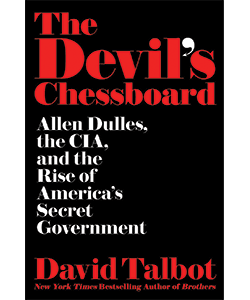
In 1949 the Army created a small team of chemists at "Camp Detrick" called Special Operations Division. Its assignment was to find military uses for toxic bacteria. The coercive use of toxins was a new field, which fascinated Allen Dulles, later head of the CIA
Mr. Patrick, one of the chief scientists at the Army Biological Warfare Laboratories at Fort Detrick in Frederick, Md., held five classified US patents for the process of weaponizing anthrax.
2/x
Under Mr. Patrick’s direction, scientists at Fort Detrick developed a tularemia agent that, if disseminated by airplane, could cause casualties & sickness over 1000s mi². In a 10,000 mi² range, it had 90% casualty rate & 50% fatality rate
3/x His team explored Q fever, plague, & Venezuelan equine encephalitis, testing more than 20 anthrax strains to discern most lethal variety. Fort Detrick scientists used aerosol spray systems inside fountain pens, walking sticks, light bulbs, & even in 1953 Mercury exhaust pipes
4/x After retiring in 1986, Mr. Patrick remained one of the world’s foremost specialists on biological warfare & was a consultant to the CIA, FBI, & US military. He debriefed Soviet defector Ken Alibek, the deputy chief of the Soviet biowarfare program
https://t.co/sHqSaTSqtB
5/x Back in Time
In 1949 the Army created a small team of chemists at "Camp Detrick" called Special Operations Division. Its assignment was to find military uses for toxic bacteria. The coercive use of toxins was a new field, which fascinated Allen Dulles, later head of the CIA


