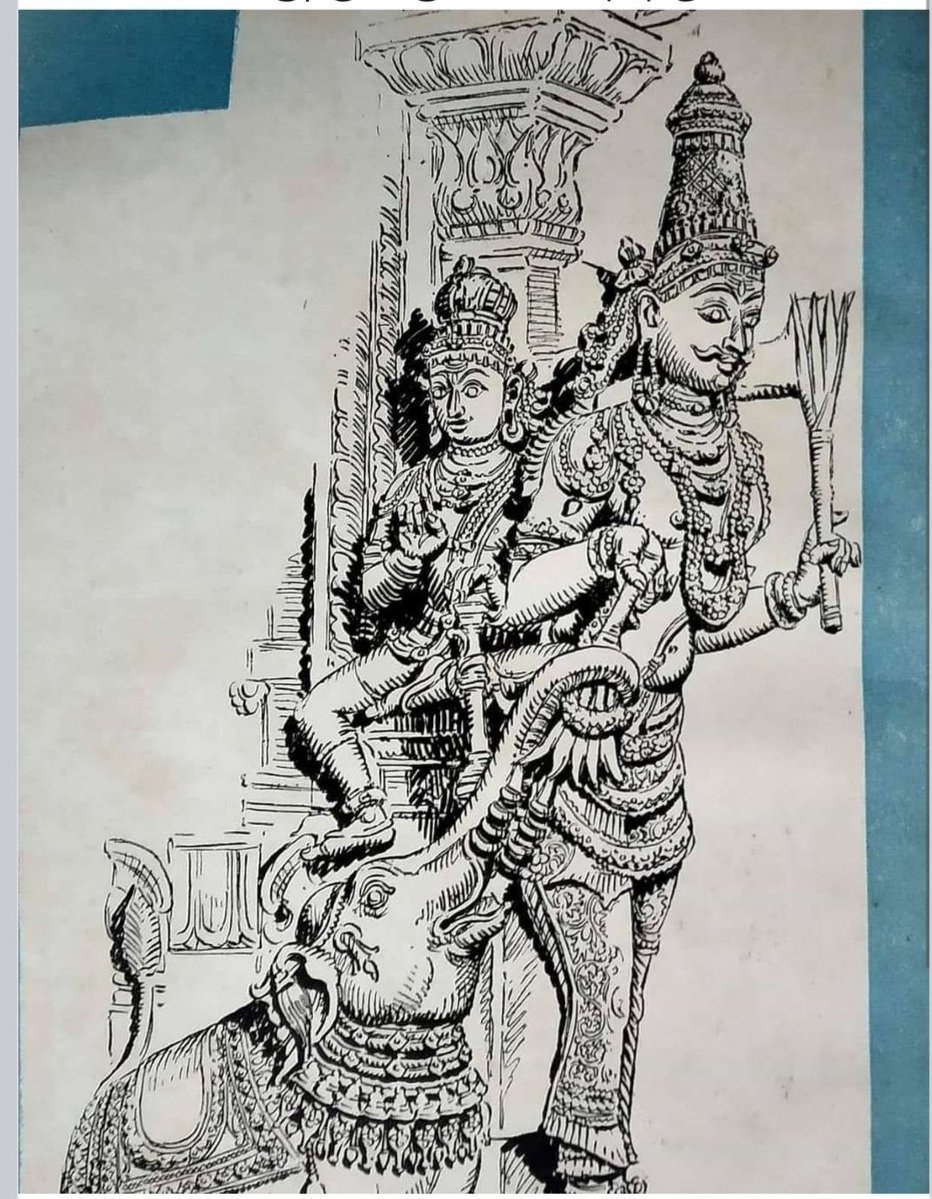
We recently dropped iOS 5 so we could use the new 6+ APIs without backwards compatibility.
It makes me smile every time I notice IGListKit at work in Instagram. We put a lot of work into making and improving it. Proud to see it holding up 4 years later.
🧵 with some memories on how it was built:
We recently dropped iOS 5 so we could use the new 6+ APIs without backwards compatibility.
Except two things bugged the hell out of me:
1. No animated changes (duh)
2. Images could flicker and the like animation could cancel
If something triggered another reload after the animation started, the cell cancelled the animation (thus the UI bug)
When an image cell is reused set the background to grey, async load the image (cache or network), set the image. The async time between reuse and fetch/set from cache is where the flicker came from.
Enter UICV performBatchUpdates
So how the hell do I write a diffing algorithm? I literally had never done this.
I settled on Paul Heckel’s https://t.co/jpxuHNlpXg
Why?
1. It’s output matched UICV’s APIs: inserts, deletes, updates, and moves
2. There were example implementations I could actually understand
Foundation hashes can collide
https://t.co/h9eVHO342U
Or are too basic for diffing
https://t.co/Pp0eVFRS5e https://t.co/ZNPJnXlXa4
https://t.co/BACvyI2l08+
With profile done, I submitted a -12k change to remove the old infra.
Throughout this the eng team 10x’d and users 4x’d, we launched tons of products (Stories!), IG opened a NY office, UICV got diffable data sources, and more.
More from Social media

✨📱 iOS 12.1 📱✨
🗓 Release date: October 30, 2018
📝 New Emojis: 158
https://t.co/bx8XjhiCiB
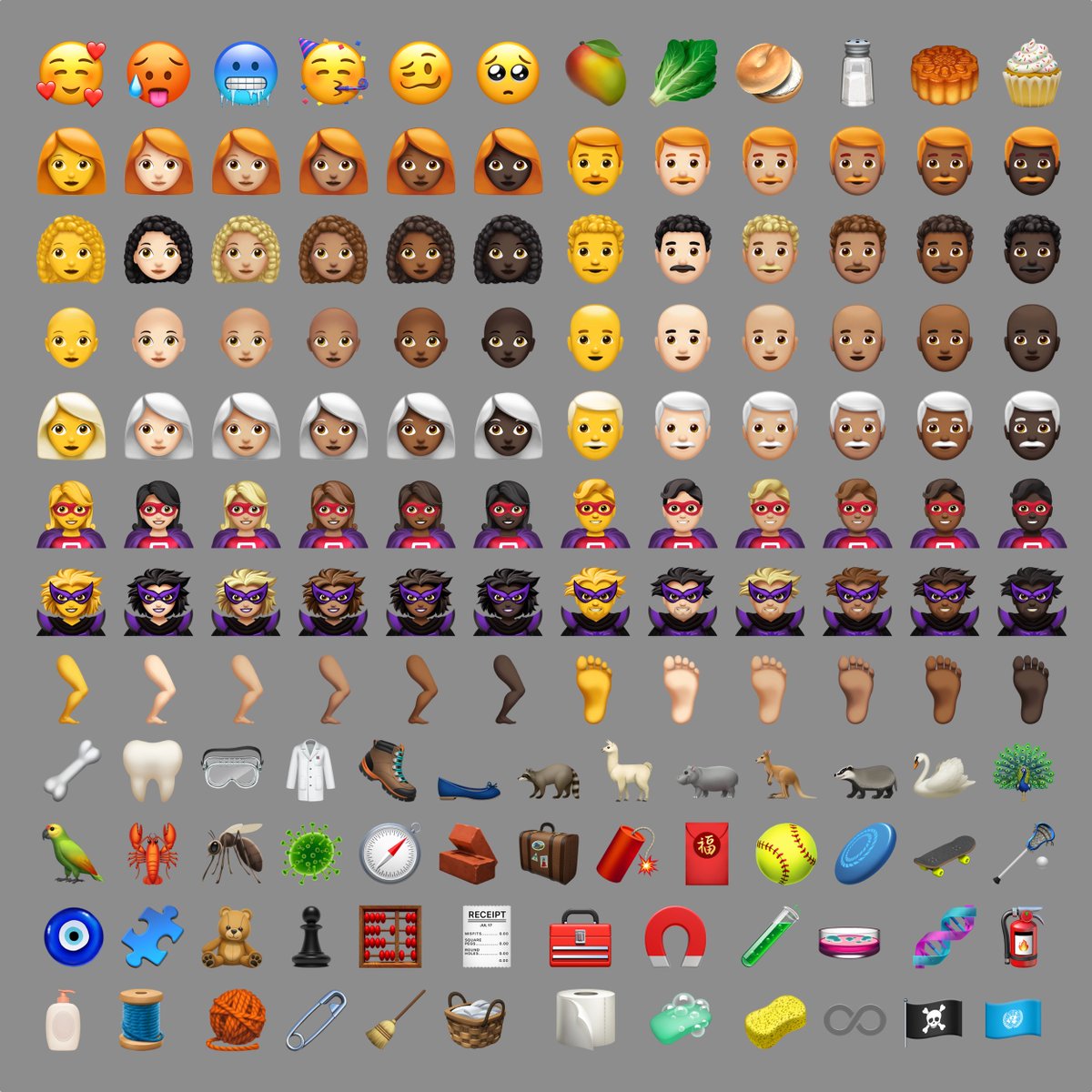
New in iOS 12.1: 🥰 Smiling Face With 3 Hearts https://t.co/6eajdvueip

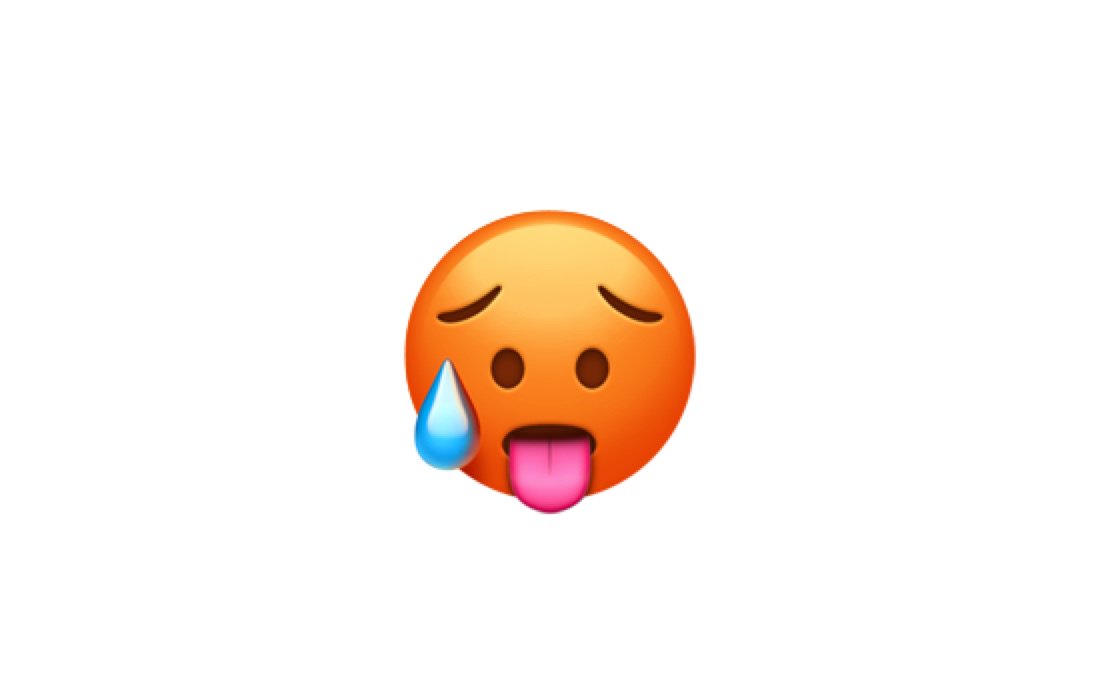
New in iOS 12.1: 🥵 Hot Face https://t.co/jhTv1elltB
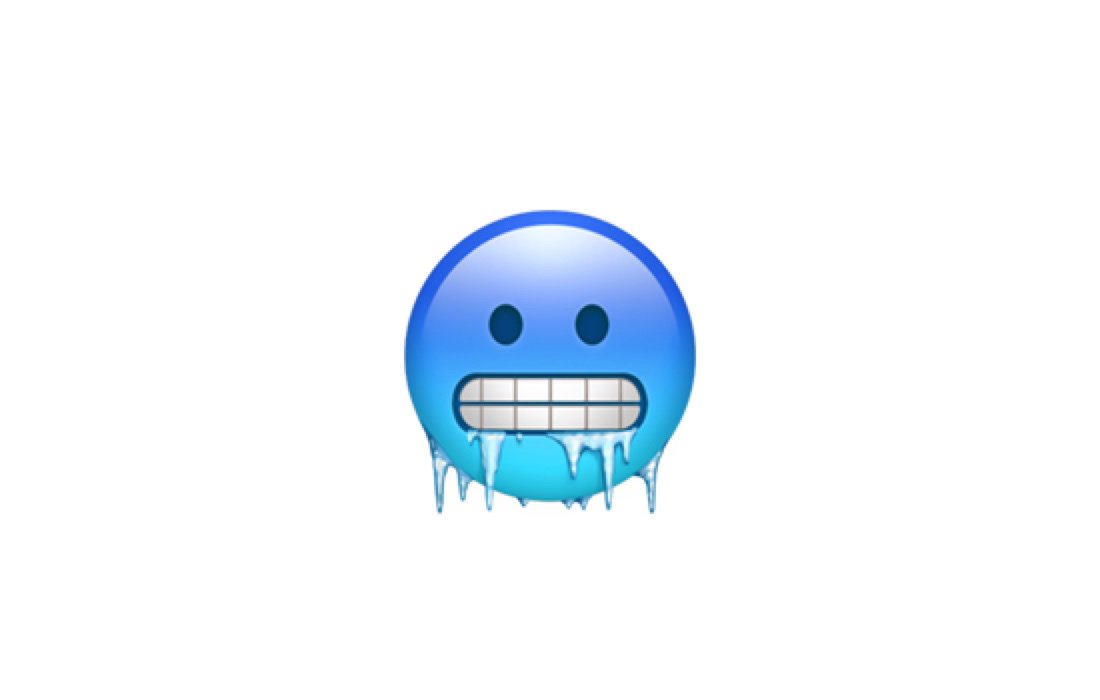
New in iOS 12.1: 🥶 Cold Face https://t.co/EIjyl6yZrF
New in iOS 12.1: 🥳 Partying Face https://t.co/p8FDNEQ3LJ

🗓 Release date: October 30, 2018
📝 New Emojis: 158
https://t.co/bx8XjhiCiB
New in iOS 12.1: 🥰 Smiling Face With 3 Hearts https://t.co/6eajdvueip
New in iOS 12.1: 🥵 Hot Face https://t.co/jhTv1elltB
New in iOS 12.1: 🥶 Cold Face https://t.co/EIjyl6yZrF
New in iOS 12.1: 🥳 Partying Face https://t.co/p8FDNEQ3LJ



Is WhatsApp already the Super App of India?
Thread 🧵
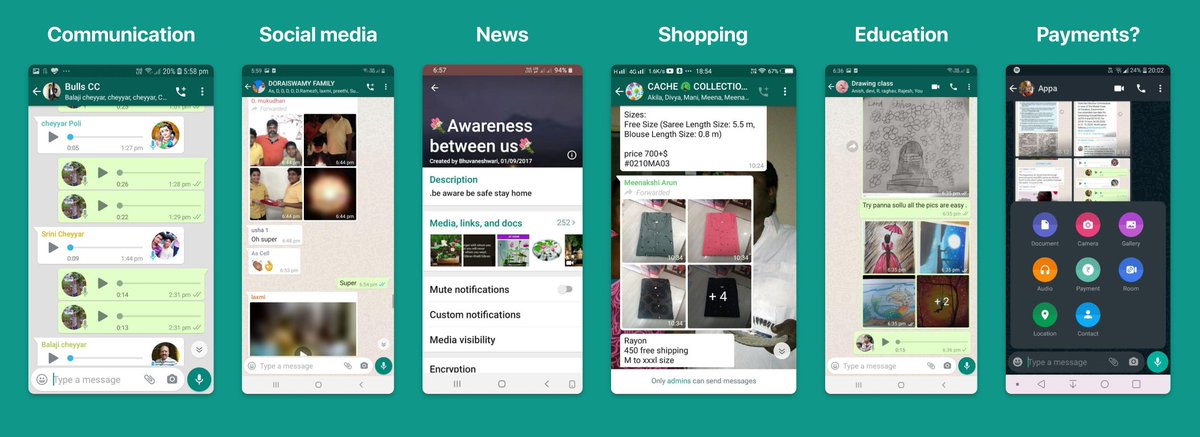
Below are a few insights I gathered while researching on how Gen-X use WhatsApp as a part of @10kdesigners Cohort!
Okay, let's go!
1/x
Gen-X? Who are they?
Gen-X (short for Generation X) are basically people with birth years around 1960–1980. That’s basically our (millennials’) parents!
2/x
Check out this detailed case study by @zainab_delawala
📮 Communication/Community
This is the primary feature of WhatsApp.
This feature is the entry point for most of the Gen-X, they come to WhatsApp to communicate and engage with small
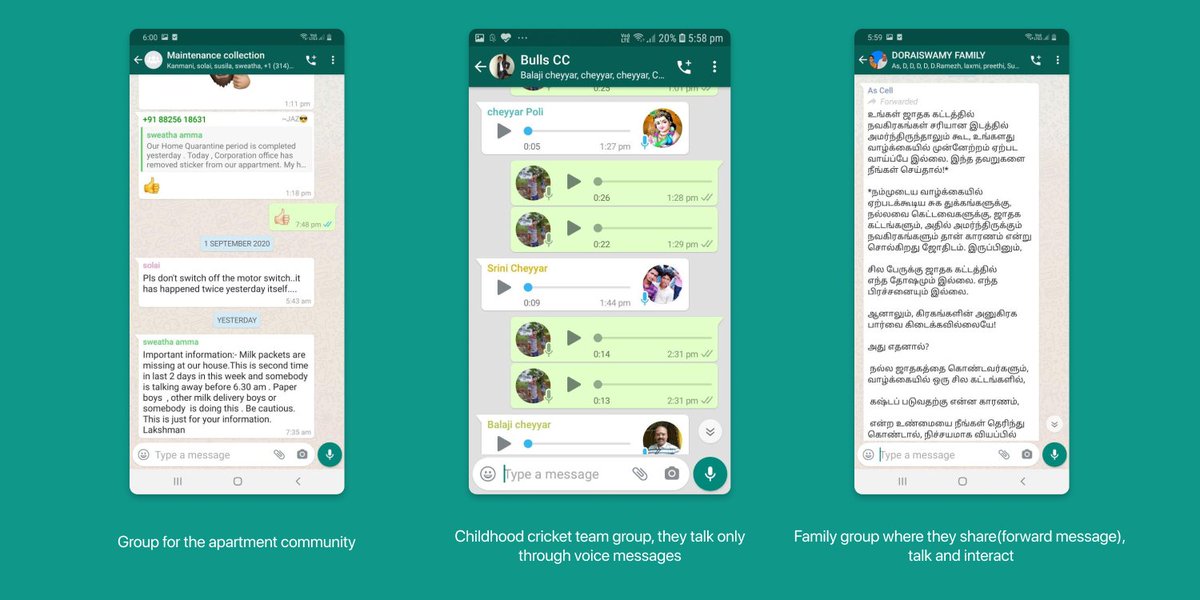
- WhatsApp group is one of the most used features by Gen-X. Most of the message more on groups than on private chats.
- Forward messages received mostly are written in vernacular languages. They are all well scripted.
4/x
Thread 🧵
Below are a few insights I gathered while researching on how Gen-X use WhatsApp as a part of @10kdesigners Cohort!
Okay, let's go!
1/x
Gen-X? Who are they?
Gen-X (short for Generation X) are basically people with birth years around 1960–1980. That’s basically our (millennials’) parents!
2/x
Check out this detailed case study by @zainab_delawala
📮 Communication/Community
This is the primary feature of WhatsApp.
This feature is the entry point for most of the Gen-X, they come to WhatsApp to communicate and engage with small
Can a movie (96') change how people use an app (Whatsapp)?
— Rajesh Raghavan (@rajeshraghavan_) October 1, 2020
YES. It can.
Let's see how\U0001f440 pic.twitter.com/BV0scQ2KEc
- WhatsApp group is one of the most used features by Gen-X. Most of the message more on groups than on private chats.
- Forward messages received mostly are written in vernacular languages. They are all well scripted.
4/x
You May Also Like









Ivor Cummins has been wrong (or lying) almost entirely throughout this pandemic and got paid handsomly for it.
He has been wrong (or lying) so often that it will be nearly impossible for me to track every grift, lie, deceit, manipulation he has pulled. I will use...

... other sources who have been trying to shine on light on this grifter (as I have tried to do, time and again:
Example #1: "Still not seeing Sweden signal versus Denmark really"... There it was (Images attached).
19 to 80 is an over 300% difference.
Tweet: https://t.co/36FnYnsRT9

Example #2 - "Yes, I'm comparing the Noridcs / No, you cannot compare the Nordics."
I wonder why...
Tweets: https://t.co/XLfoX4rpck / https://t.co/vjE1ctLU5x

Example #3 - "I'm only looking at what makes the data fit in my favour" a.k.a moving the goalposts.
Tweets: https://t.co/vcDpTu3qyj / https://t.co/CA3N6hC2Lq

He has been wrong (or lying) so often that it will be nearly impossible for me to track every grift, lie, deceit, manipulation he has pulled. I will use...
... other sources who have been trying to shine on light on this grifter (as I have tried to do, time and again:
Ivor Cummins BE (Chem) is a former R&D Manager at HP (sourcre: https://t.co/Wbf5scf7gn), turned Content Creator/Podcast Host/YouTube personality. (Call it what you will.)
— Steve (@braidedmanga) November 17, 2020
Example #1: "Still not seeing Sweden signal versus Denmark really"... There it was (Images attached).
19 to 80 is an over 300% difference.
Tweet: https://t.co/36FnYnsRT9
Example #2 - "Yes, I'm comparing the Noridcs / No, you cannot compare the Nordics."
I wonder why...
Tweets: https://t.co/XLfoX4rpck / https://t.co/vjE1ctLU5x
Example #3 - "I'm only looking at what makes the data fit in my favour" a.k.a moving the goalposts.
Tweets: https://t.co/vcDpTu3qyj / https://t.co/CA3N6hC2Lq