Below are a few insights I gathered while researching on how Gen-X use WhatsApp as a part of
@10kdesigners Cohort!
Okay, let's go!
1/x
Gen-X? Who are they?
Gen-X (short for Generation X) are basically people with birth years around 1960–1980. That’s basically our (millennials’) parents!
2/x
Check out this detailed case study by
@zainab_delawala https://t.co/G7QTkQN2id
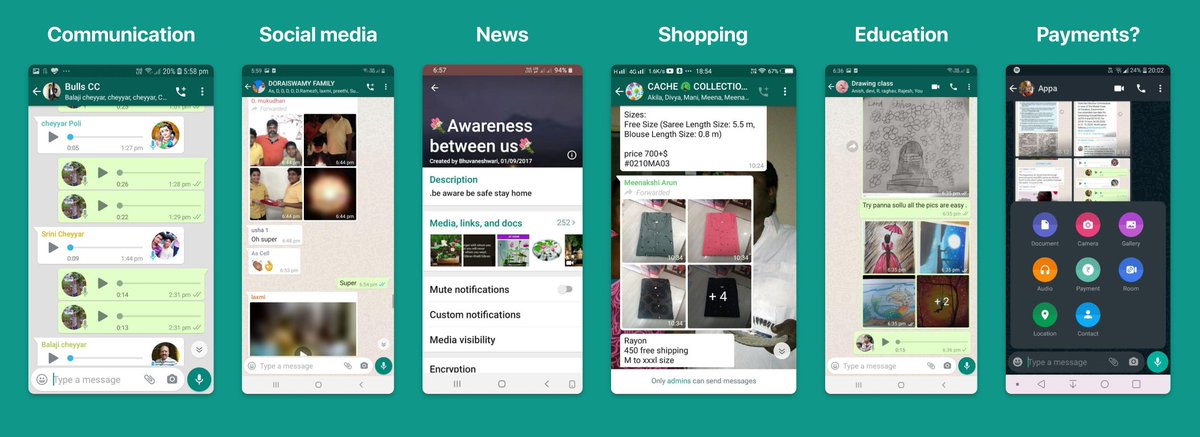
📮 Communication/Community
This is the primary feature of WhatsApp.
This feature is the entry point for most of the Gen-X, they come to WhatsApp to communicate and engage with small groups/communities.
3/x
https://t.co/PfQLAtv54S
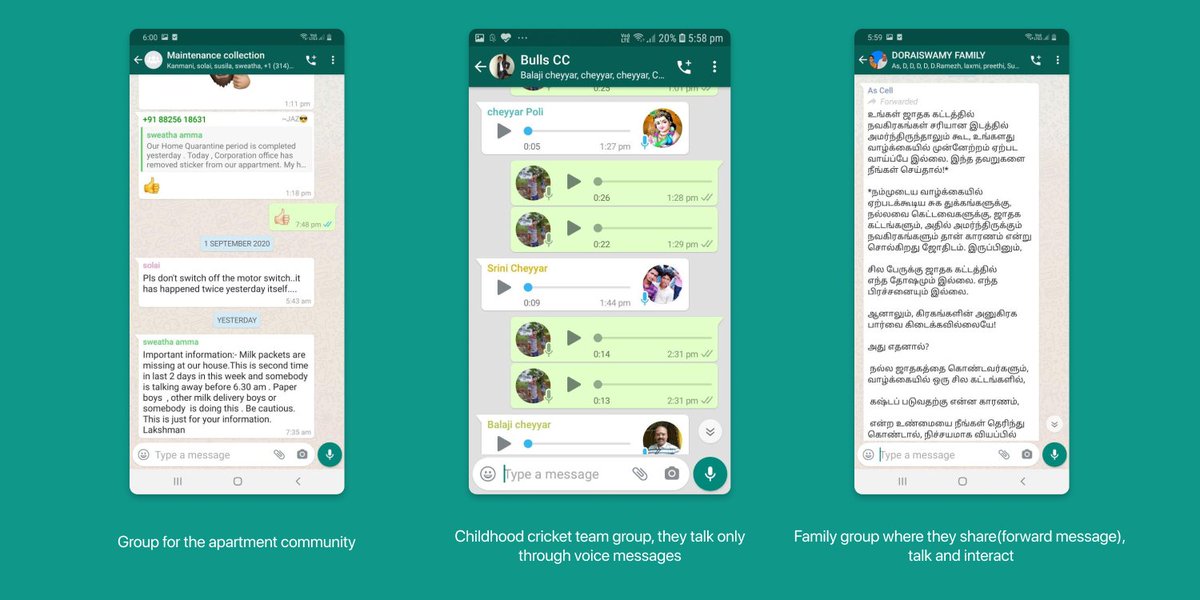
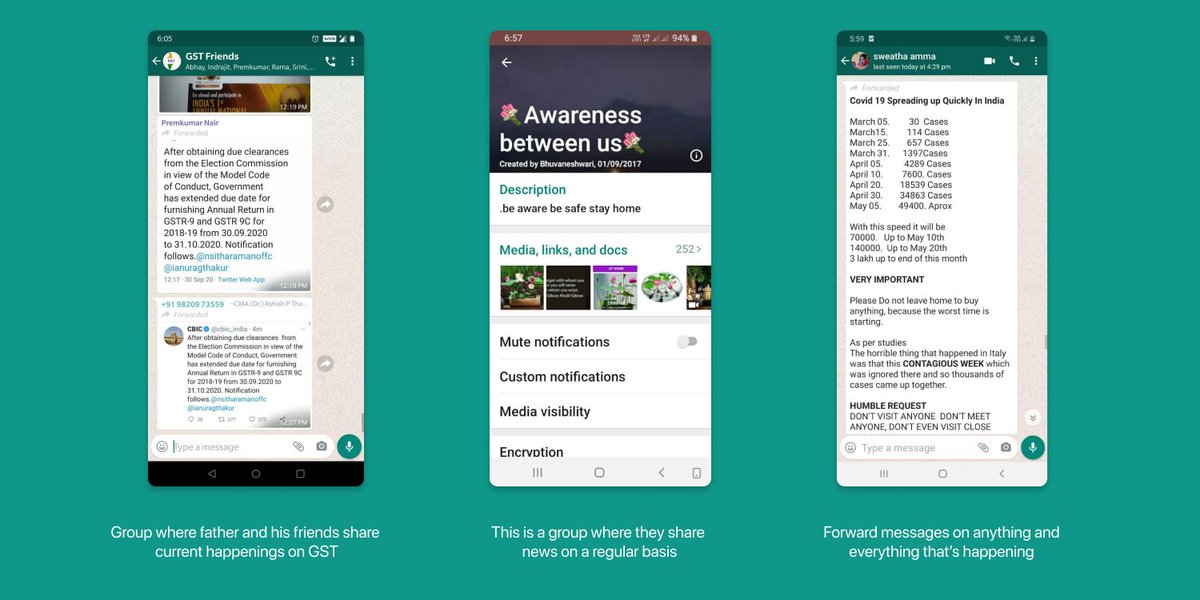
- WhatsApp group is one of the most used features by Gen-X. Most of the message more on groups than on private chats.
- Forward messages received mostly are written in vernacular languages. They are all well scripted.
4/x
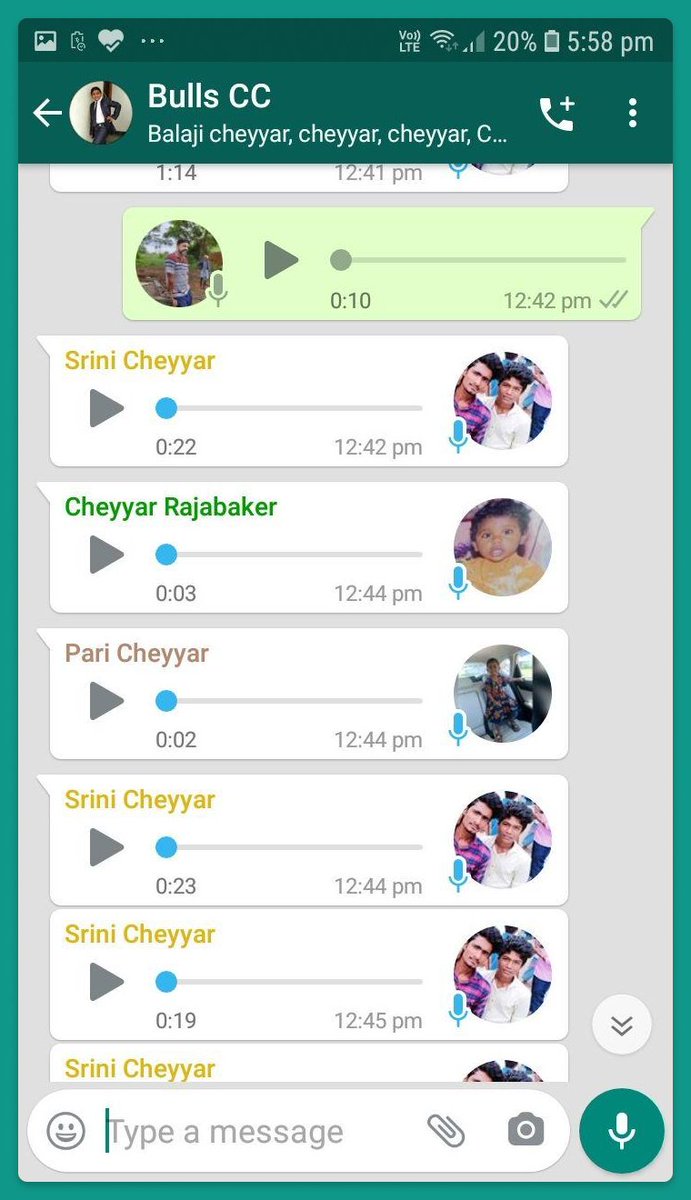
- Interestingly most of the messages are not text messages, instead, they were voice messages.
- The reason being, it's hard to type messages in vernacular languages and also text messages lack personality.
5/x
👥 Social Media
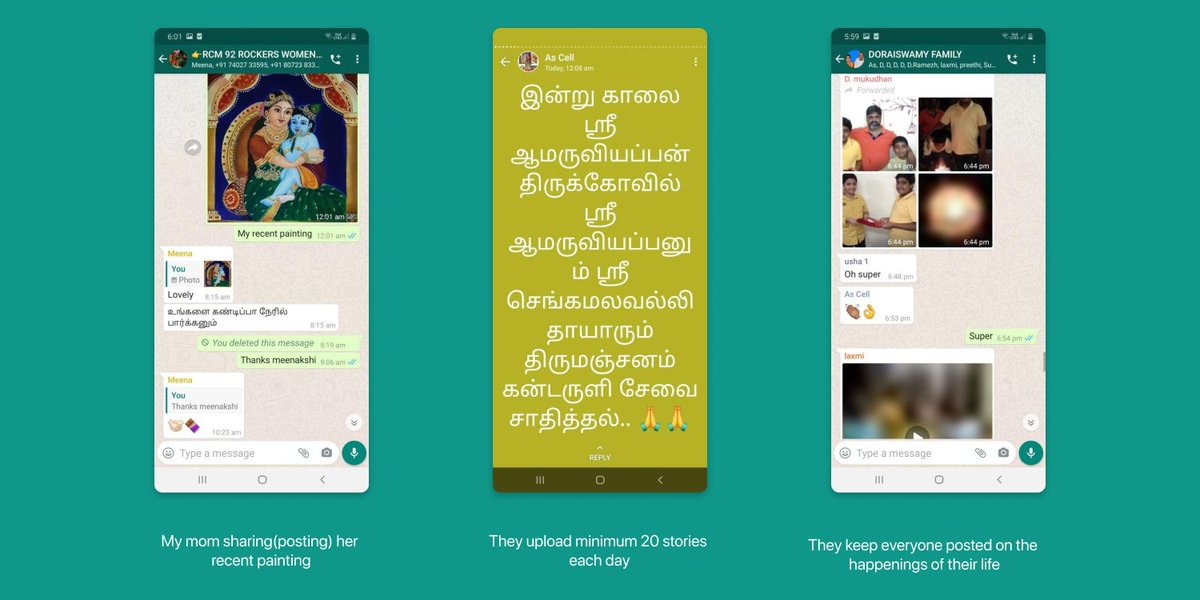
- We use social media to receive validation from our network, their network is most active on WhatsApp groups so they do it here.
- They treat messages as a post, keep their connection updated with what's happening with them.
6/x
- Instant validation is received as messages on the same group.
- Gen-X use WhatsApp status more than any other age group. Few of them even upload 20 stories per day!
7/x
📰 News
- 7 out of 10 people I interviewed are part of a newsgroup.
- Most of these messages are Forward messages received at very high frequency.
8/x
- They trust these messages. They don't bother to cross-check the information.
- The reason they trust is that they are receiving these messages from "trusted people", and thus the information gains trust immediately.
9/x
🛍️ Shopping
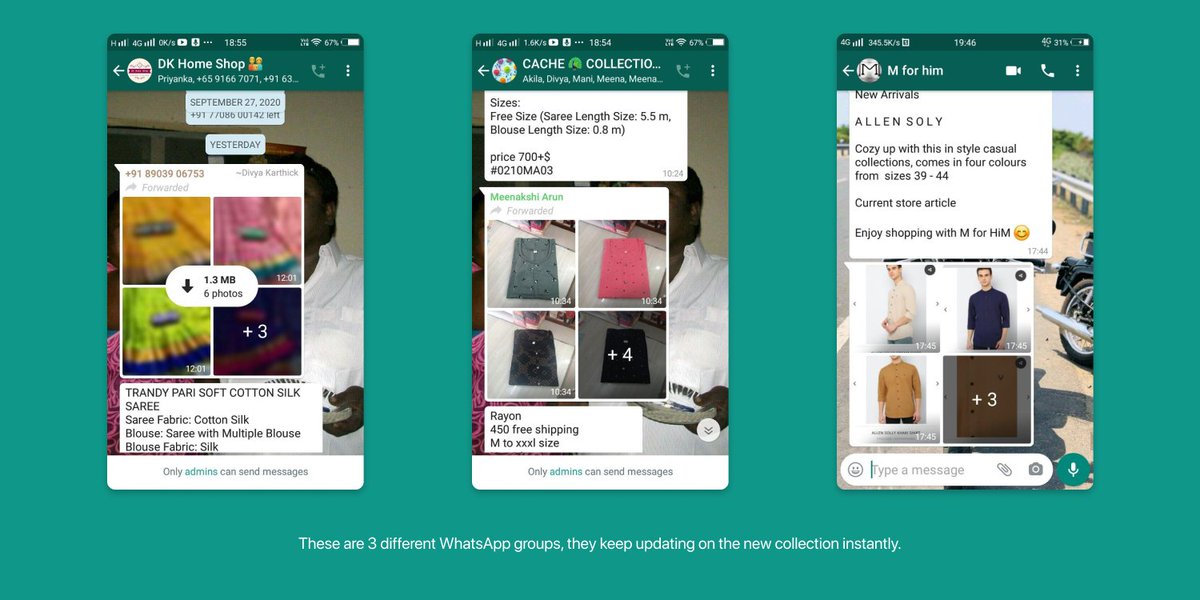
- All of them I came across were clothing shop groups!
- Believe me, my friend's mom got addicted to these groups.
How do they discover these groups?
- They share their numbers at small offline clothing stores.
- They receive suggestions from their peers.
10/x
What makes these groups addictive?
- WhatsApp is a high-frequency platform. They somehow land on these groups multiple times a day.
- These products are easily sharable. Just imagine how easy it is to share products that you receive as a message vs a product on Amazon?
11/x
📗 Education
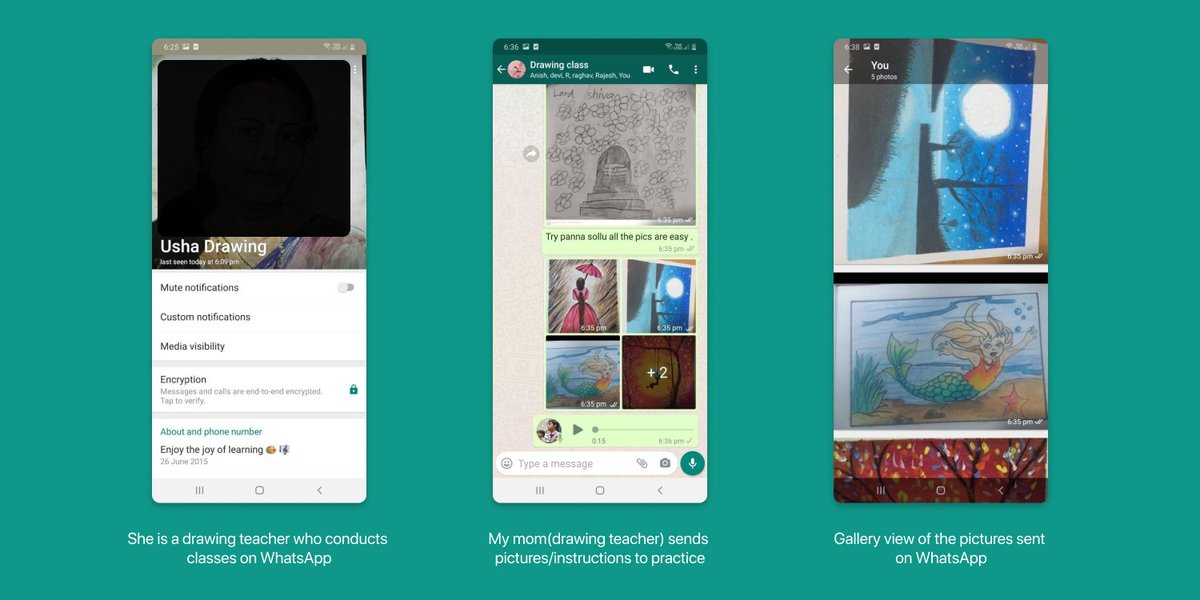
- My mom is a drawing teacher who teaches drawing to children of age 8-12. She primarily uses WhatsApp for all her teaching and information passing.
- Even our neighbour who takes tuition for students of similar age use WhatsApp.
12/x
Why and how do they use WhatsApp for this?
- Everyone uses WhatsApp, it's really hard to miss the information that is passed on WhatsApp.
- "I take online classes through WhatsApp video call". They work best for 1:1 classes that my mom conducts.
- "WhatsApp works fine."
13/x
💰 Payments?
Now that we have seen how Gen-X uses WhatsApp, we can now try to question and understand in what all ways WhatsApp can be used.
WhatsApp is a powerful platform and used at very high frequency by its users. Gen-X is engaged with WhatsApp like no other app.
14/x
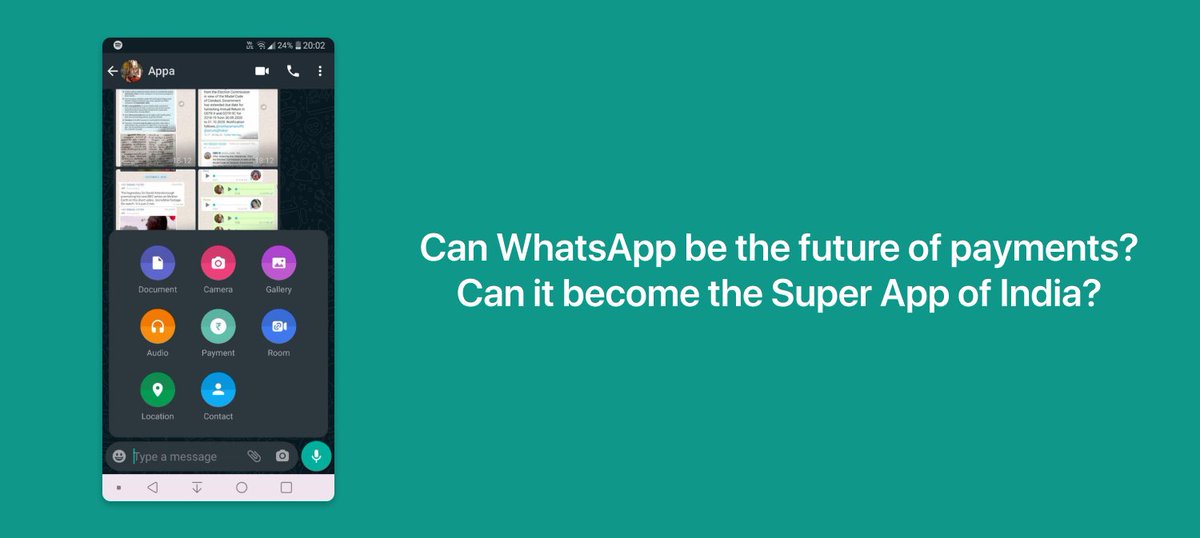
Can WhatsApp payments be real in the coming years?
My guess would be - YES! Because-
- Very high frequency
- Strongest network
- High trust
- Abundance of resource
15/x
10 out of 10 people I interview didn't know about the payment feature on WhatsApp!
Surprisingly, 7 out of 10 were ready to use WhatsApp as their payments app. But we need to understand that this is not a behavioural insight.
16/x
Is WhatsApp already the Super App of India?
No, it's heading in that direction.
It's also really interesting to see with 2 giants joining hands to make this happen.
Will meet you guys with Gen-X once that happens,
Thank you!
17/17