A basic premier on the banking sector, demystifying commonly used terms,
CASA
Wholesale Banking
Net Interest Income (NII)
Cost of Liability
Advances Growth
Gross v/s Net NPA
Provisions
SLR/CRR
Capital Adequacy Ratio
Net Interest Margin (NIM)
Do hit the 're-tweet' (1/n)
(a) Savings Account (SA)
(b) Current Account (CA)
(c) Fixed Deposit (FD)
(d) Recurring Deposit (RD)
(e) Certificate of Deposits (CD)
(f) Bonds etc. (3/n)
(a) Retail - Housing loan, auto loan, personal loan etc.
(b) Wholesale (Institutional Lending) – Commercial Papers (CP) & other Corporate Loans
P.S. – “HDFC Bank is now increasing focus on wholesale lending”, hope you now understand what that means (4/n)
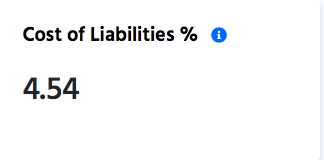
So lets say the average borrowing cost of the bank (also know as the cost of liabilities) is 4.54% & average lending cost is 8.54%, the difference 8.54% - 4.54% = 4% is called the Net Interest Income (NII). HDFC Banks Cost of Liability is 4.54% (5/n)

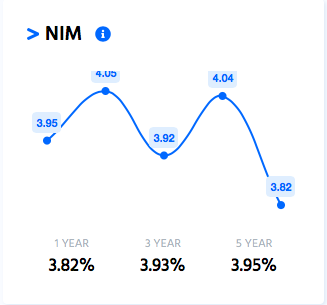
NIM helps us understand the margin in banking business
NIM = NII/Average interest earning asset
i.e. What is the net interest income generated by the bank/the amount of lending done
Margins of HDFC bank has been at close to 3.9%(7/n)
(a) Reducing the cost of liabilities (borrowings)
and/or
(b) Increasing lending/Giving out more loans (8/n)
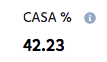
Answer - CASA
CASA stands for current account & savings account (9/n)
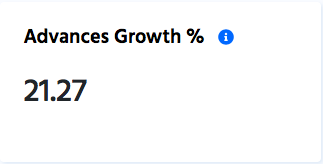
It shows the YoY loan/advances growth by the bank. HDFC bank has been able to grow their loan book at 21.27%. Ofcourse the bank will make more NII by borrowing cheap & lending more, only if it is able to control NPA (13/n)
When you miss 3 consecutive EMIs (90 days), the outstanding loan you owe the bank will be termed as an NPA (Non Performing Asset). In technical language, when you are paying EMIs on time, it’s called a standard asset & when you don’t, its called slippages (14/n)
-Gross NPA means all the loans that have not been able to pay 3 consecutive EMIs, like explained above
-Net NPA means = Gross NPA – Provisions (15/n)
When the bank knows that a particular loan account is finding it difficult 2 pay back, banks keep a % of the loan outstanding 2 the bank aside 2b able 2 build some reserves if the loan actually defaults. This makes sure that d banks financial health is in check
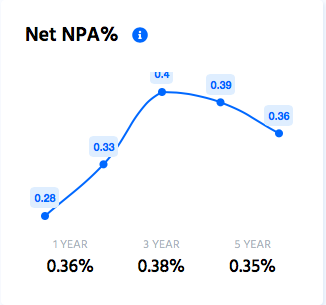
HDFC banks Net NPA of 0.36% means that of the total advances/loans, only 0.36% of the loans are not provided for. (17/n)
Its RBIs job 2 make sure the banking system is healthy & hence RBI has checks & balances in place 2 make sure banks don’t go burst. The common 1s u would have heard r the SLR–Statutory Liquidity Ratio & CRR–Cash Reserve Ratio (18/n)
So all deposits that the bank receives from various channels, is called NDTL in the banking language. Net Demand & Time Liability. It is nothing but the total deposits with the bank. (19/n)
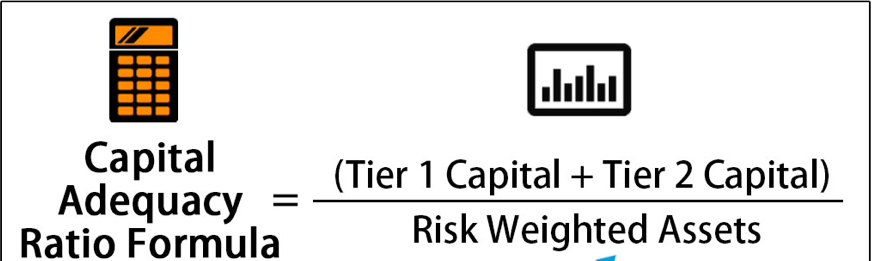
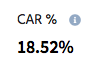
CAR in simple terms mean that the bank is expected 2 have a minimum 11.5% capital against all the risky lending’s that bank has done. It’s somewhat like the provisioning thing we spoke about earlier
https://t.co/VBmV2deOXP
Yes Bank\u2019s additional Tier 1 bonds, written off. Lakshmi Villas Banks Tier 2 bonds, written off. Understand what & why of ATI and Tier 2 bonds in this thread.
— Kirtan A Shah (@KirtanShahCFP) December 4, 2020
Do \u2018re-tweet\u2019 and help us benefit more investors (1/n)
https://t.co/tBHgTHieJE
Here\u2019s a compilation of Personal Finance threads I have written so far. Thank you for motivating me to do it.
— Kirtan A Shah (@KirtanShahCFP) December 13, 2020
Hit the 're-tweet' and help us educated more investors
More from Kirtan A Shah
Here’s a compilation of Personal Finance threads I have written so far. Thank you for motivating me to do it.
Hit the 're-tweet' and help us educated more investors
Yes Bank’s additional Tier 1 bonds, written off. Lakshmi Villas Banks Tier 2 bonds, written off. Understand what & why of ATI and Tier 2 bonds in this thread.
https://t.co/VBmV2dwpPn (1/n)
'Floating Rate Funds' - A case for debt investing in the current interest rate situation
Fixed Income investment strategies
It’s a misconception that FD, RBI Bond, PPF etc have no risk. The reason we don’t see the risk in them is because for us, risk ONLY means loss of capital.
Index Funds v/s ETFs
While index funds and ETF’s look similar, there are multiple differences you need to keep in mind before investing in either of them. Let me highlight the important ones
Hit the 're-tweet' and help us educated more investors
Yes Bank’s additional Tier 1 bonds, written off. Lakshmi Villas Banks Tier 2 bonds, written off. Understand what & why of ATI and Tier 2 bonds in this thread.
https://t.co/VBmV2dwpPn (1/n)
Yes Bank\u2019s additional Tier 1 bonds, written off. Lakshmi Villas Banks Tier 2 bonds, written off. Understand what & why of ATI and Tier 2 bonds in this thread.
— Kirtan A Shah (@KirtanShahCFP) December 4, 2020
Do \u2018re-tweet\u2019 and help us benefit more investors (1/n)
'Floating Rate Funds' - A case for debt investing in the current interest rate situation
'Floating Rate Funds' - A case for debt investing in the current interest rate situation (A Thread)
— Kirtan A Shah (@KirtanShahCFP) November 27, 2020
You should not miss this if you invest in Debt.
Do \u2018re-tweet\u2019 & help us benefit more investors (1/n)
Fixed Income investment strategies
It’s a misconception that FD, RBI Bond, PPF etc have no risk. The reason we don’t see the risk in them is because for us, risk ONLY means loss of capital.
Fixed Income investment strategies (Thread)
— Kirtan A Shah (@KirtanShahCFP) November 20, 2020
Do 're-tweet' & help us reach & benefit investors
It\u2019s a misconception that FD, RBI Bond, PPF etc have no risk. The reason we don\u2019t see the risk in them is because for us, risk ONLY means loss of capital. (1/n)
Index Funds v/s ETFs
While index funds and ETF’s look similar, there are multiple differences you need to keep in mind before investing in either of them. Let me highlight the important ones
Index Funds v/s ETFs
— Kirtan A Shah (@KirtanShahCFP) November 17, 2020
Do 're-tweet' so that we can reach a larger audience :)
(Thread)
(1) While index funds and ETF\u2019s look similar, there are multiple differences you need to keep in mind before investing in either of them. Let me highlight the important ones (1/n)
More from Sectorlearnings


You May Also Like

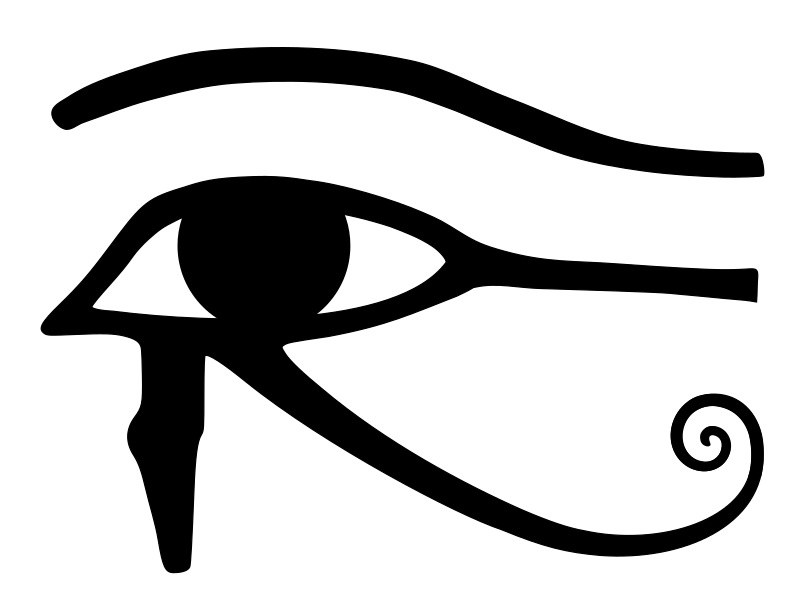
The Eye of Horus. 1/*
I believe that @ripple_crippler and @looP_rM311_7211 are the same person. I know, nobody believes that. 2/*
Today I want to prove that Mr Pool smile faces mean XRP and price increase. In Ripple_Crippler, previous to Mr Pool existence, smile faces were frequent. They were very similar to the ones Mr Pool posts. The eyes also were usually a couple of "x", in fact, XRP logo. 3/*

The smile XRP-eyed face also appears related to the Moon. XRP going to the Moon. 4/*

And smile XRP-eyed faces also appear related to Egypt. In particular, to the Eye of Horus. https://t.co/i4rRzuQ0gZ 5/*

I believe that @ripple_crippler and @looP_rM311_7211 are the same person. I know, nobody believes that. 2/*
Today I want to prove that Mr Pool smile faces mean XRP and price increase. In Ripple_Crippler, previous to Mr Pool existence, smile faces were frequent. They were very similar to the ones Mr Pool posts. The eyes also were usually a couple of "x", in fact, XRP logo. 3/*
The smile XRP-eyed face also appears related to the Moon. XRP going to the Moon. 4/*
And smile XRP-eyed faces also appear related to Egypt. In particular, to the Eye of Horus. https://t.co/i4rRzuQ0gZ 5/*