The best traders are all directional traders.

We should be investing our time into learning what the best traders are doing.

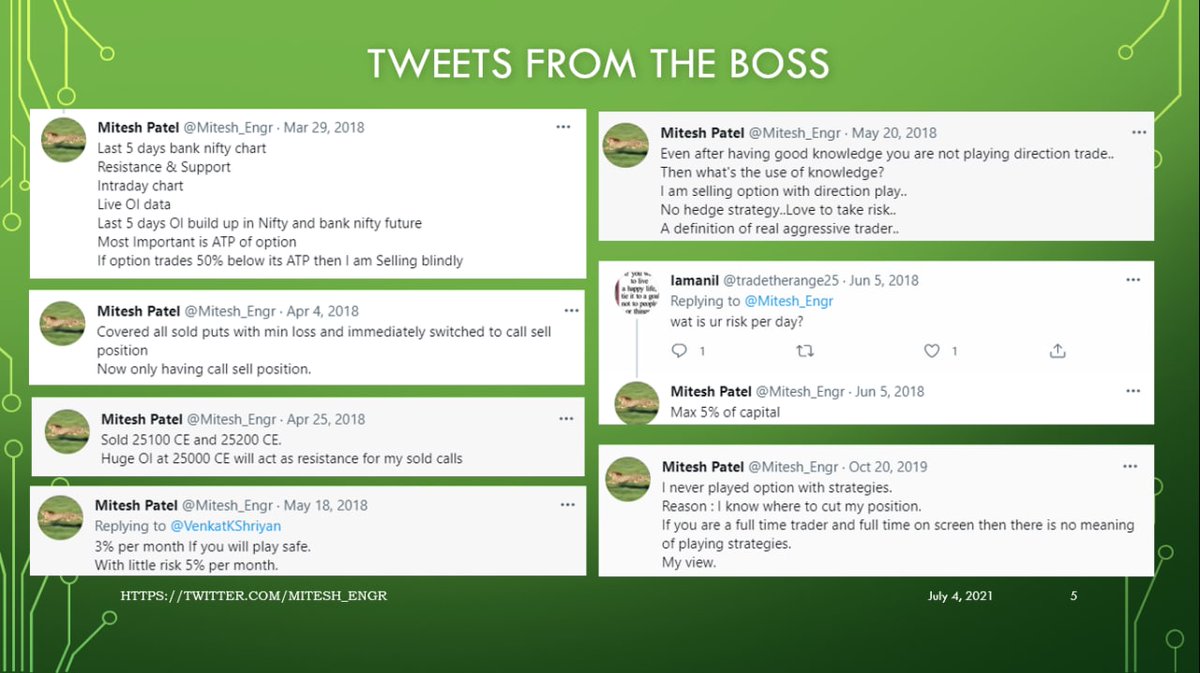
I have traded with @niki_poojary for the past year, who is an aggressive directional trader.

Here are my 10 learnings trading with her: 🧵

1. Learn directional trading

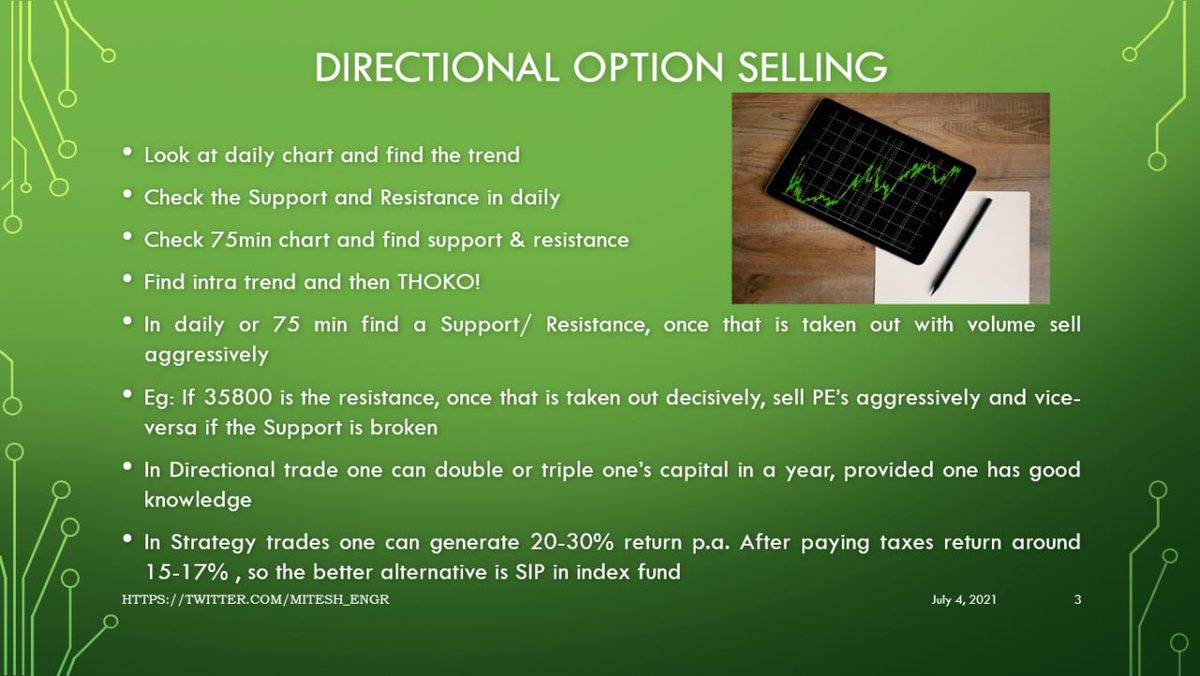
If you want to be the best, you have to be very good at gauging the direction of the market and then betting aggressively.

Practicing this style over a lot of years will give you an edge which will help you compound your account quicker.
2. Levels based trading

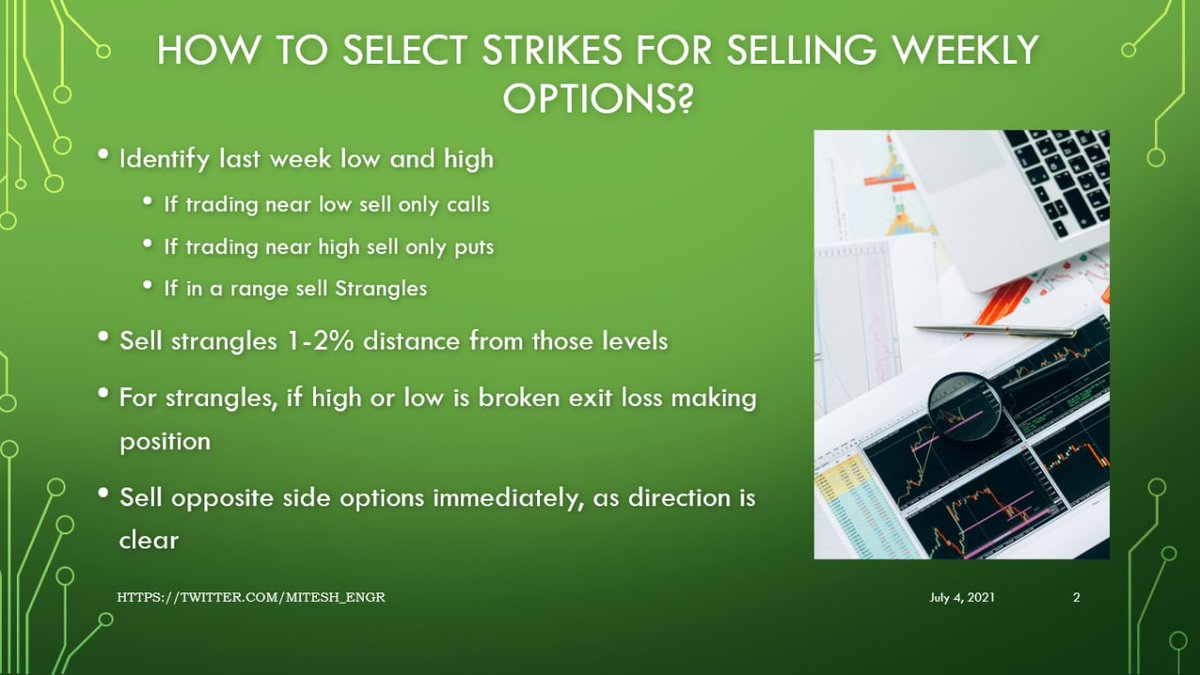
Premium-based sellers put an SL of double or triple in the system which has a very high probability of taking your SL.

Irrespective of premium price, just stick to the charts.

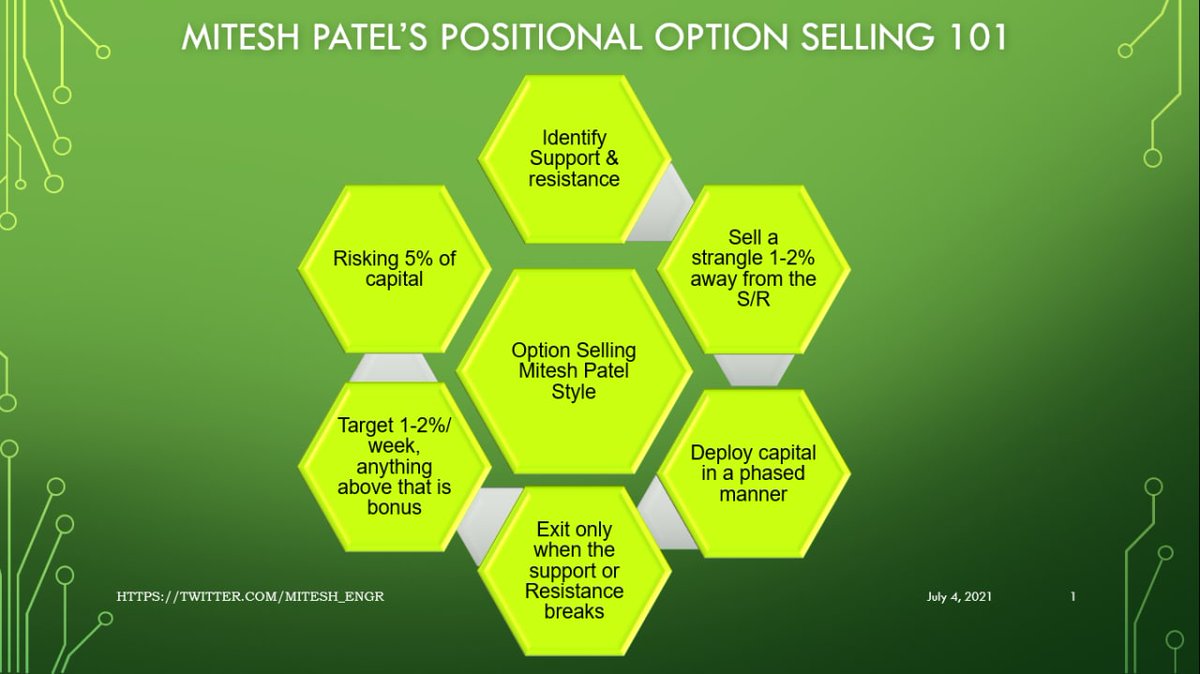
A simple understanding of S&R enables you to take trades on levels.
3. Patterns

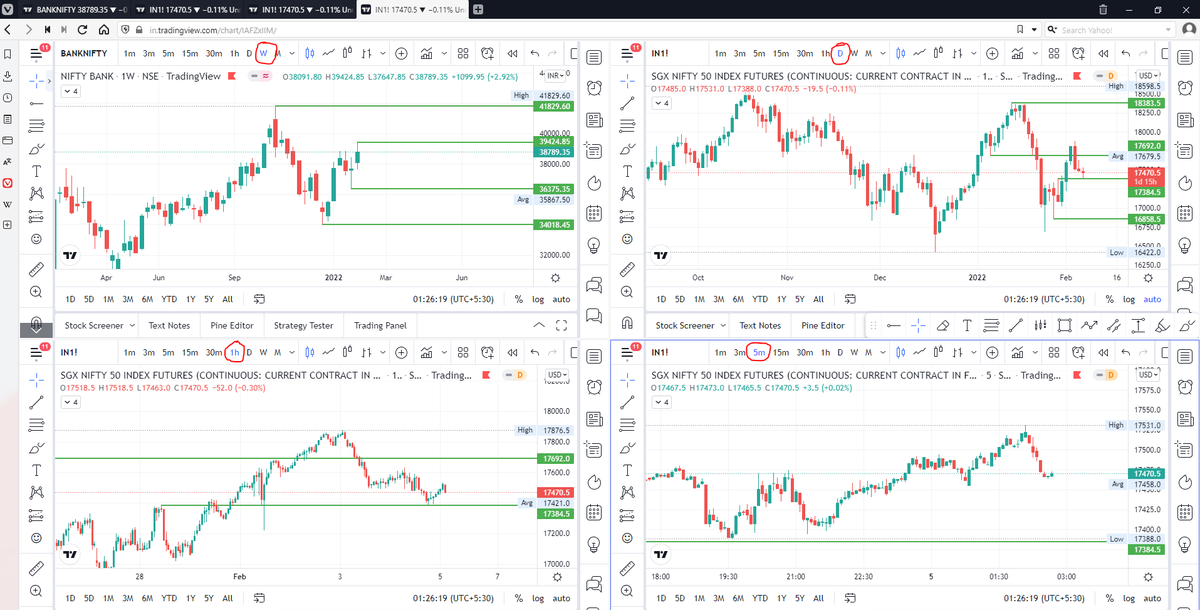
Chart patterns are necessary to understand market trends and to predict further movements, which helps us in deploying our trades accordingly.

Eg: A symmetrical pattern means prices have squeezed a lot and an expansion is soon on the cards.

Cont. 👇🏻
Likewise, after a strong momentum, some consolidation can be expected.

Entry/Exit triggers can also be determined on the basis few patterns.

She focuses on:
1. Symmetrical Triangles
2. Rectangle breakouts
3. Flag breakouts
4. M or W breakouts
5. Range breakouts
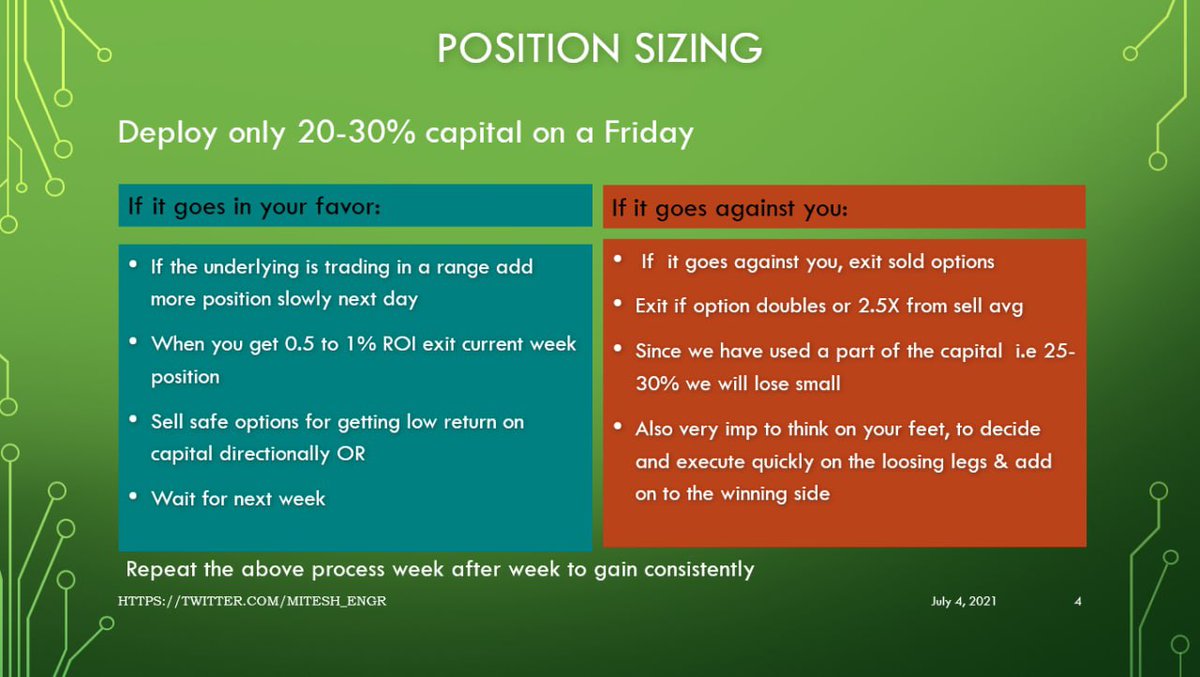
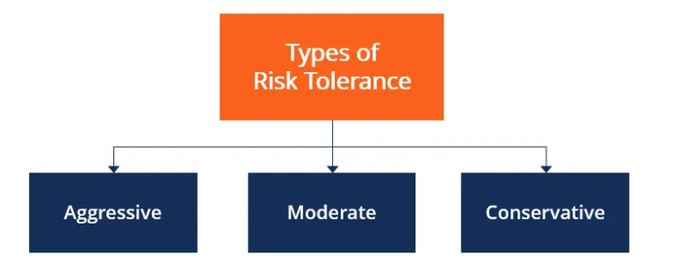
4. Take high risks when you are winning

If you want to grow your account faster, you'll be required to take a lot of risks.

Conservative traders may make consistent returns, but not higher returns.

Cont. 👇🏻
Eg: A trader targets 1% a week.

Over 50 weeks, he'll win 40 weeks and lose 10 weeks if you take an 80% win rate.

Assuming, winning 40 times gives him 40%, and losing 10 times takes away 10%. (assuming a 1:1 risk-reward)

So, the Net ROC is 30%

Cont. 👇🏻
Despite trading conservatively, it's almost impossible to have all green weeks.

You're bound to lose a few times over a year.

If one wishes to grow his/her account then it's important to learn to trade aggressively.
5. Profit Money

One needs to first build a profit cushion by trading conservatively in the initial period.

Once the war chest is built, all you are doing is staking the profit money, so that your capital is intact.
6. Stop Loss

Earlier whenever I used to go long in futures, I never used to keep any SL as those were blue-chip stocks.

Instead, I used to sell CE's against my positions.

I used to end up holding them for at least 2 to 3 months and see huge red mtms.

SL helps psychologically.
7. No time wastage in a trade

Post trading on patterns, it's simply a target or SL.

So you get to know whether you are right/wrong pretty quickly.

Better to know early if it's wrong as you can bet elsewhere without getting stuck in a trade that isn't giving you returns.
8. Expiry Trading

The decay is extremely fast on an expiry day.

If you get your bet right on this day, you can potentially make very good money.

We take more risk on expiry days compared to other days.

Even next year, we will be focusing on expiry days the most.
9. Weekly Analysis

Weekly analysis helps in determining a range and helps us to gauge the strikes which have a high probability of expiry OTMs.

Accordingly, our trading blueprint is formed.

Without such weekly plans, we would just be selling CE's or PE's randomly.

Cont. 👇🏻
Here's a thread on how I learned to make a weekly trading plan from @niki_poojary

https://t.co/aVh21muOYi
Hope you discovered something new (because that's the point!)

If you did, share it with a friend

Hop back up to retweet the first tweet

See past threads here: @AdityaTodmal & @niki_poojary
If you liked this thread, here's another one I think you'll enjoy.
https://t.co/bv2mbhSaLn

More from Aditya Todmal

DJ SIR THREAD

Great video with points helpful for beginners.

Made 4 threads on DJ Sir with the help of @niki_poojary

1. Selecting strikes to trade in with risk management.
2. How he took some aggressive trades.
3. Multiple charts analysis for intraday trading.
4. Trade Setup


Attaching all threads made on DJ Sir. After watching the video you can refer to this tweet for notes about his strategy and learn a few other ideas.

Compiling these together for easy access to his knowledge.

1. Selecting strikes and risk


2. Going aggressive with help of data and


3. Intraday
Google Chrome has over 137,000 extensions.

But 95% of Traders are unaware of the best extensions for trading.

10 Google Chrome Extensions that will accelerate your trading ( all free ): 🧵

Collaborated with @niki_poojary

1. Pulse by Zerodha

Latest financial and market news from all major Indian news sources are aggregated in one place.

🔗
https://t.co/jQ5Lu1P1r3


2. Full Width Zerodha Kite Trading Platform

This extension will make your Zerodha kite trading app full-width for large-screen desktops and laptops.

Also adding some tweaks will help you stay more focused on trading.

🔗 https://t.co/HSmVxLxPNv


3. Zerodha Scrip Plus

Zerodha fullscreen trading with brokerage calculator and analysis options

- Brokerage Calculator
- Full screen trading
- Marketwatch and Holdings scrips analysis

🔗 https://t.co/ZOmAcvamRh


4. Jarvis - Zerodha Trading helper

Jarvis helps in managing your risk by giving you a consistency of pre-determined stop loss % and risk per trade.

Once you set these values in the plugin then it automatically sets the quantity of the trade.

🔗 https://t.co/qn2MvDkCdR

More from Screeners

You May Also Like

I just finished Eric Adler's The Battle of the Classics, and wanted to say something about Joel Christiansen's review linked below. I am not sure what motivates the review (I speculate a bit below), but it gives a very misleading impression of the book. 1/x


The meat of the criticism is that the history Adler gives is insufficiently critical. Adler describes a few figures who had a great influence on how the modern US university was formed. It's certainly critical: it focuses on the social Darwinism of these figures. 2/x

Other insinuations and suggestions in the review seem wildly off the mark, distorted, or inappropriate-- for example, that the book is clickbaity (it is scholarly) or conservative (hardly) or connected to the events at the Capitol (give me a break). 3/x

The core question: in what sense is classics inherently racist? Classics is old. On Adler's account, it begins in ancient Rome and is revived in the Renaissance. Slavery (Christiansen's primary concern) is also very old. Let's say classics is an education for slaveowners. 4/x

It's worth remembering that literacy itself is elite throughout most of this history. Literacy is, then, also the education of slaveowners. We can honor oral and musical traditions without denying that literacy is, generally, good. 5/x