Categories Science

I was Wrong about False Memories: Satanic Panic, Pedophiles, Ted Bundy, and the Lost in the Mall Studies https://t.co/6XKTfGOqwl
— skepchicks (@skepchicks) January 15, 2021
Since this, bizarrely, turned out to be one of my longest videos ever (??) here's a quick thread to sum it up for those of you like myself with short attention spans. 1/10
In the '90s the False Memory Syndrome Foundation was founded to call attention to the problem of adults suddenly "remembering" child abuse that never actually happened, often under hypnosis. Skeptics like James Randi & Martin Gardner joined their board. 2/10
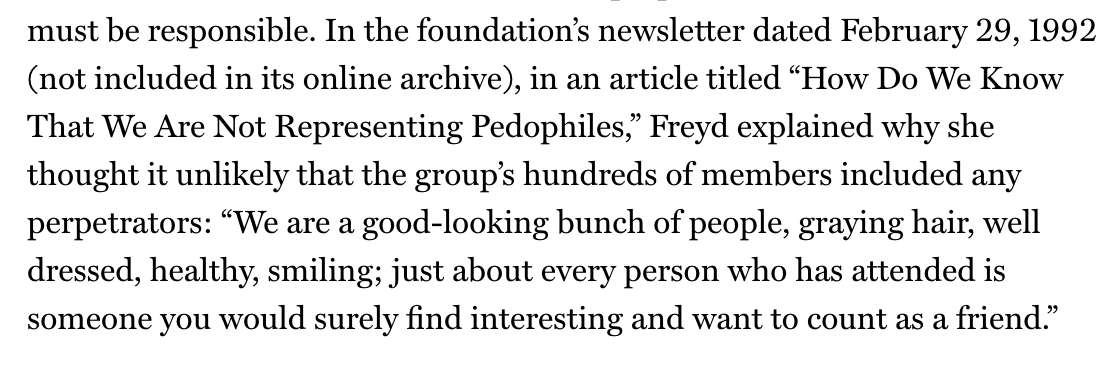
A new article reveals that the FMSF was founded by parents who had been credibly and PRIVATELY accused of molestation by their now-adult daughter. They publicized the accusation, destroyed the daughter's reputation, and started the foundation. 3/10
The FMSF assumed any accused pedo who joined was innocent, saying "We are a good-looking bunch of people, graying hair, well dressed, healthy, smiling; just about every person who has attended is someone you would surely find interesting and want to count as a friend" 😬 4/10


An example using the Flat Earthers: A thread of many parts:
Let me explain something to those of you who didn't grow up around violently abusive white supremacists.
— Lili Saintcrow (@lilithsaintcrow) January 7, 2021
*They absolutely do not believe their own bullshit*, but it's useful for them to pretend they do.
I'm firmly convinced that the flat Earth thing was started by some adolescent trolls with nothing more productive to do. They didn't believe it, but they thought it was entertaining to keep pretending that they did.
You can't engage with them, because they *are playing a game*. They think it's fun to see if they can get anybody to engage with something completely stupid as though it's true.
If you challenge them, the rules of the game state that they have to argue as hard and a spuriously as they like, but *never* to admit that the Earth is not in fact flat. I suppose you have to make up your own entertainment on 4chan or whatever hole this was conceived in.
It's annoying as hell, but I suppose it doesn't do much harm.. except to folks like this:


Thank you again @JamesEBartlett for a fantastic talk (with a really nice personal touch) on reproducible workflows!
— RIOT Science Club Wolverhampton (@riotscience_wlv) February 16, 2021
Thanks especially for the co-leads @IMLahart for co-hosting and @DrManiBhogal for nabbing James!
Slides: https://t.co/CNqxzOhch1
Video: https://t.co/YjHEHuRJlz
My inspiration was making open science accessible. I wanted to outline the mistakes I've made along the way so people would feel empowered to give it a go. Increased accountability is seen as a barrier to adopting open science practices as an ECR
It also comes across as all or nothing. You are either fully open science or your research won't get anywhere. However, that can be quite intimidating, so I wanted to emphasise this incremental approach to adapting your workflow
There are two sides to why you should work towards reproducibility. The first is communal. It's going to help the field if you or someone else can reproduce your whole pipeline.
There is also the selfish element of it's just going to help you do your work. If you can't remember what your work means after a lunch break, you're not going to remember months or years down the line
Why are lunch breaks important for #code?
— Dr Rebecca Hirst (@HirstRj) February 11, 2021
If you can't remember what your variable names refer to after lunch, you sure as hell won't remember in 3 months.

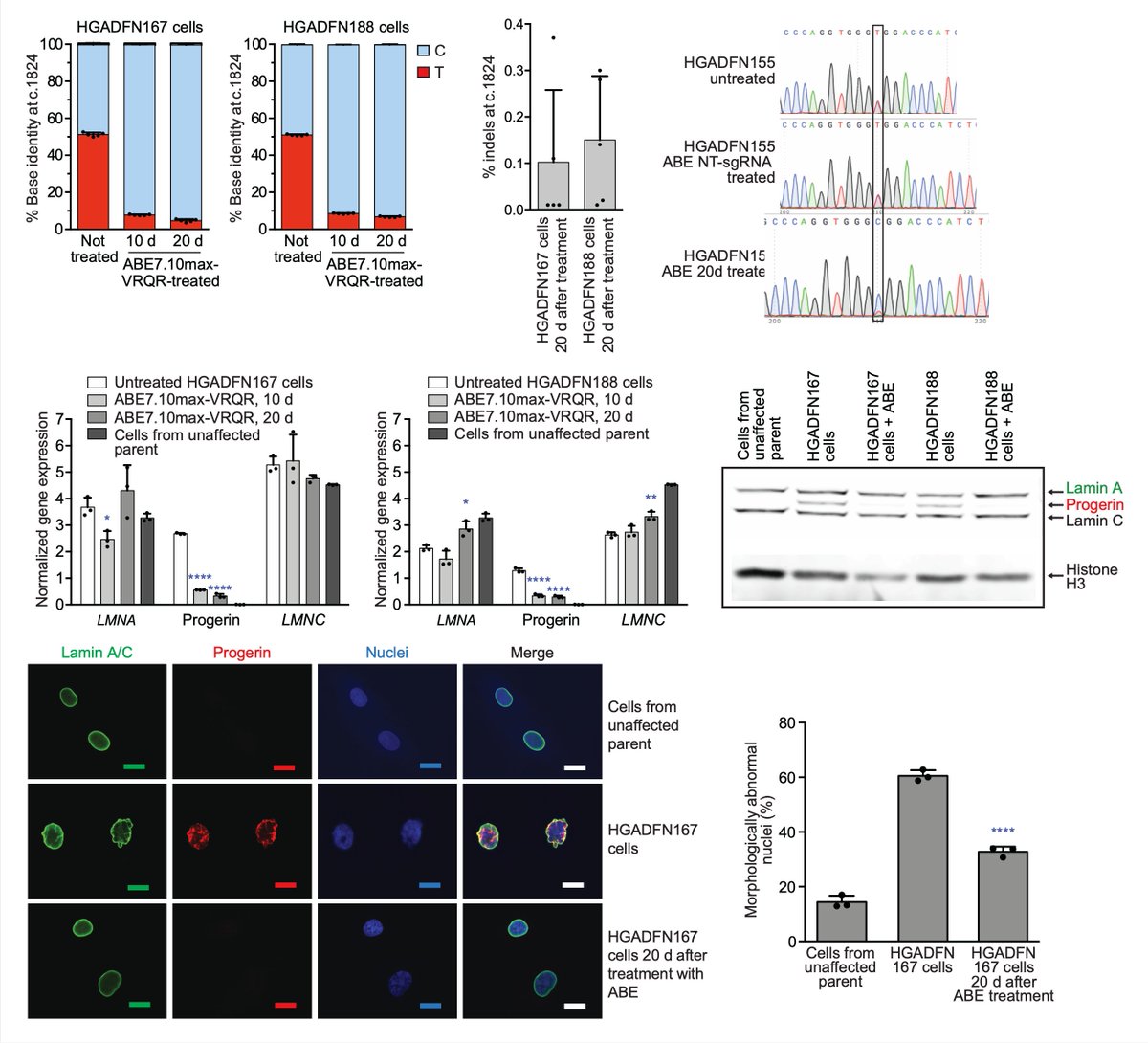
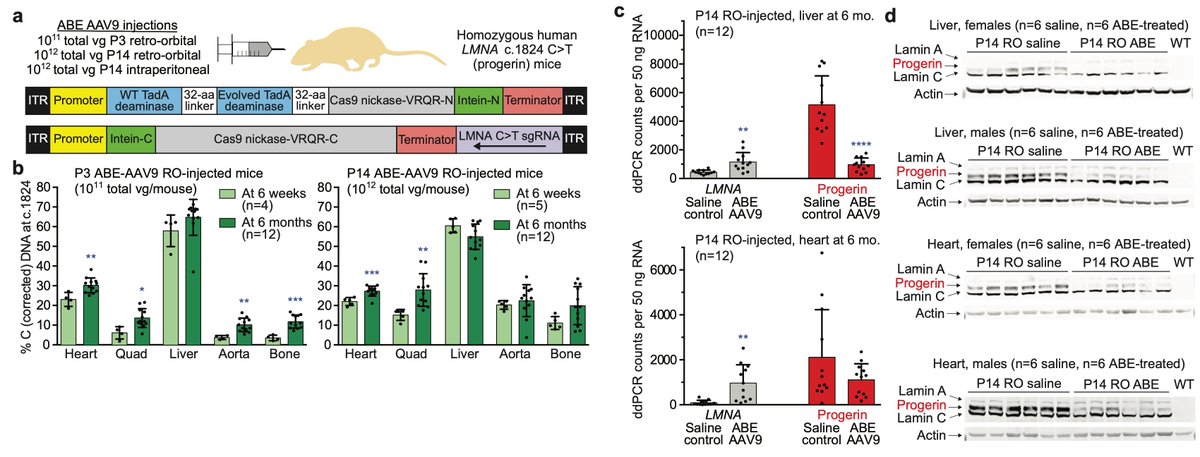


Most important has been the paper by the @CovidGenomicsUK consortium on the new variant, here:
(This is super-rapid pre-print on https://t.co/PHmxAcVUoB - other people will pick over this no doubt - but the openness of the data and quality of analysis from this group means this is super solid, and any updates on discussion likely to happen fast)
Two key take aways from this paper for me:
1. There is a big jump in number of changes - too big to be explainable with the natural progression over time. @arambaut and colleagues point out that similar big jumps have happened in immunocompromised patients treated via convalescent plasma + drugs


1/
Already almost a decade ago, a brilliant paper in Nature showed that there is crosstalk between the gut microbiome, gut epithelial cells, and immune cells. Moreover, it showed that epithelial cells can take over the immune cell
Than there is this work of art:
https://t.co/O38Gm3P1Nu
The author argues that the immune and metabolic system are likely coevolved and demonstrates that cytokines in fact also act as metabolic hormones. This explains the low-grade inflammation associated with e.g. diabetes.
3/
A quote:
"The evolutionary advantages of a strong defence system
are obvious [...] As a strong immune response is dependent on energy sources, one can also argue that the integration of these systems and their cooperation [...] would be highly advantageous."
4/
"From this perspective, an intriguing way to think about this paradigm would be to envision immune mediators, such as cytokines,
as metabolic hormones. In fact, this aspect of immunometabolism is
extremely well-conserved among organisms"
5/

Enter a thread on isogenies, random walks and automorphism groups.
🧵👇
(0/n)
I will explain some of the background we used to write these papers with Ben Smith, so I encourage you to go read them. There are some results at the end of the thread
My first two papers are out in the arXiv! I'm very thrilled about them \U0001f604 pic.twitter.com/Az9gODokH9
— Enric Florit (@enricflorit) January 5, 2021
The main objects in isogeny-based cryptography are elliptic curves and isogenies, usually defined over finite fields. And, of course, isogeny graphs.
(2/n)
You might want to read about elliptic curves
\U0001f369 elliptic curves thread \U0001f369
— \u2133 \u2606\xb0\u30df (@computer_dream) December 31, 2020
Disclaimer: this thread is not meant to be technical but rather a bunch of facts I find beautiful about elliptic curves. I hope you can find them beautiful as well.
If you want to learn more about this, read Silverman's Arithmetic of Elliptic Curves!
First of all, an isogeny is a nonconstant morphism of elliptic curves fixing the point at infinity.
So it is a group morphism, a morphism of algebraic curves, it is surjective, and it has finite kernel.


What is fiduciary duty? Trustees? #bcpoli @sd5sek00tenay
[email protected] [email protected]
[email protected]
[email protected]
[email protected]
[email protected]
[email protected]
Current science clear #bced plan unsafe for employees.
What is fiduciary duty? Trustees? #bcpoli @RMSD6
[email protected]
[email protected]
[email protected]
[email protected]
[email protected]
[email protected]
[email protected]
Current science clear #bced plan unsafe for employees. Current science says masks, distancing, ventilation needed. Children transmit & are asymptomatic.
What is fiduciary duty? Trustees? #bcpoli @SD8KootenayLk
[email protected]
Current science clear #bced plan unsafe for employees. Current science says masks, distancing, ventilation needed. Children transmit & are asymptomatic.
What is fiduciary duty? Trustees? Supers? #bcpoli
@terrytaylorsd10
Current science clear #bced plan unsafe for employees. Current science says masks, distancing, ventilation needed. Children transmit & are asymptomatic.
What is fiduciary duty? Trustees? Supers? #bcpoli
@SD20kc
[email protected]
[email protected]
[email protected]


The hearings are meant as a questioning of the scientific process
— Ashish K. Jha, MD, MPH (@ashishkjha) December 7, 2020
To sew doubt on what we know and how we know it
So a group of us organized a response, which we just posted on our website
It isn't pro or anti hydroxy
Its about the scientific method and why it matters
2/3
The goal of science is to acquire knowledge. The goal of medicine is to help the sick. That's a fundamental distinction.
Also, scientists stand apart from their subject matter--as distantly as possible. Physicians, on the contrary, are in "a relationship" with patients. 2/
Of course, medical care should rely on scientific knowledge, but that means that science should be at the service of the patient-physician relationship, not the other way around! /3
Also, scientific knowledge can never be the ultimate arbiter of medical decisions.
First, scientific knowledge is often limited or provisional, especially with a new disease.
Second, for every patient there are myriad circumstances that influence a medical decision. /3
Third, even if excellent scientific knowledge is present, the physician must always judge how it applies to the patient, or whether it applies at all.
Fourth--and most pertinent here--one cannot narrowly limit the scientific knowledge to only RCTs as you do in your statement. /4