
"Hinduism was one of the world's most easy-going faith traditions, famed for it's non-persecutory history."
I can assure you, it is NOT.
It is neither easy-going, nor non-persecutory. In fact it is the very opposite.
Thread.
Hinduism was historically one of the world's most easy-going faith traditions, famed for its non-persecutory history. Now this ... pic.twitter.com/Obln4cns7b
— David Frum (@davidfrum) February 3, 2021
More from Religion


#BookExcerpts #Venkateshwara #Balaji
I will write a 3 part thread series with some interesting points from this book.
Part-1 : History of Tirumala & Venkateshwara Swamy
Part-2: Rituals & Prasada Procedure
Part-3: Historical records
Part-1 thread below
1/
Venkatachala Hill
Maha Vishnu wished for the mountain Krida / Krida Parvatham / Kridhachalam from Vaikunta to be brought to the earth for his avataram.
This was brought to earth by Garuda and Ananta & placed it on banks of river Swarna Mukhi
2/
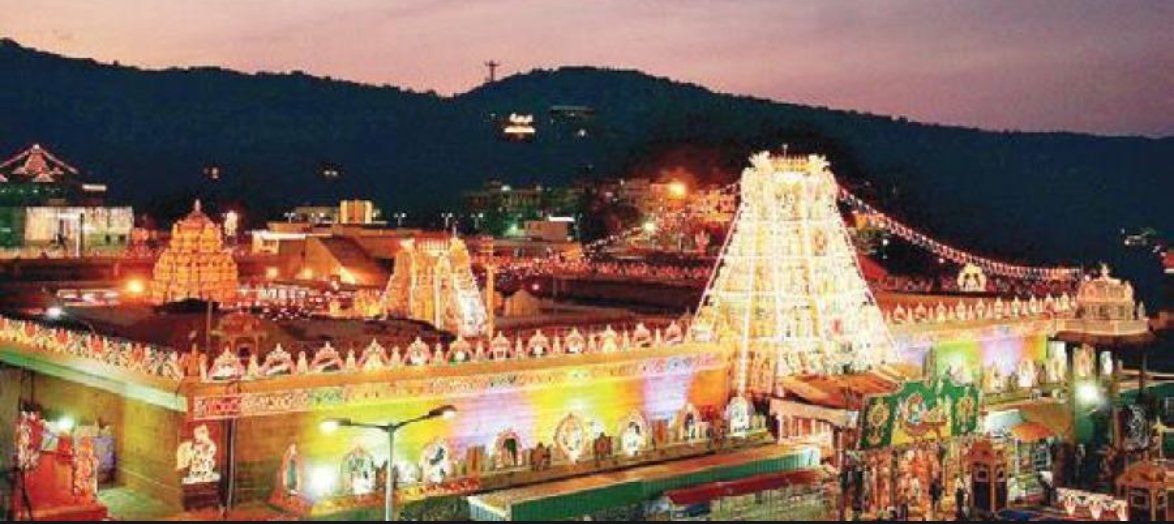
This is where current Tirumala temple is located. The fact that this was transported from Vaikunta is apparently a scientifically proven fact.
The scientific dating of the sedimentary rocks have confirmed the date to be around 120 million years ago..
3/
This timeline coincides with Swayambhu Manu manvanthara of the Sweta Varaha Kalpa which is the time when Swamy descended on earth in the form of Venkateshwara Swamy.
From a survey of flora and fauna, they have found rare species of plants & animals like golden gecko..
4/
that are exclusive to this hill range only and not found anywhere else in the world.
Tirumala hills are a range of 7 hills
1. Seshachala
2. Vedachala
3. Garudachala
4. Anjanachala
5. Vrishabhachala
6. Narayanachala
7. Venkatachala --> Where temple is present
5/
I will write a 3 part thread series with some interesting points from this book.
Part-1 : History of Tirumala & Venkateshwara Swamy
Part-2: Rituals & Prasada Procedure
Part-3: Historical records
Part-1 thread below
1/
#Books
— GunduHuduga| \u0c97\u0cc1\u0c82\u0ca1\u0cc1 \u0cb9\u0cc1\u0ca1\u0cc1\u0c97|\U0001f549 (@GunduHuDuGa) January 14, 2021
Thanks to Niranjan Raman again for this wonderful recommendation
Tirumala - Sacred Foods of God pic.twitter.com/dwiZDPI7W0
Venkatachala Hill
Maha Vishnu wished for the mountain Krida / Krida Parvatham / Kridhachalam from Vaikunta to be brought to the earth for his avataram.
This was brought to earth by Garuda and Ananta & placed it on banks of river Swarna Mukhi
2/
This is where current Tirumala temple is located. The fact that this was transported from Vaikunta is apparently a scientifically proven fact.
The scientific dating of the sedimentary rocks have confirmed the date to be around 120 million years ago..
3/
This timeline coincides with Swayambhu Manu manvanthara of the Sweta Varaha Kalpa which is the time when Swamy descended on earth in the form of Venkateshwara Swamy.
From a survey of flora and fauna, they have found rare species of plants & animals like golden gecko..
4/
that are exclusive to this hill range only and not found anywhere else in the world.
Tirumala hills are a range of 7 hills
1. Seshachala
2. Vedachala
3. Garudachala
4. Anjanachala
5. Vrishabhachala
6. Narayanachala
7. Venkatachala --> Where temple is present
5/

You May Also Like



I just finished Eric Adler's The Battle of the Classics, and wanted to say something about Joel Christiansen's review linked below. I am not sure what motivates the review (I speculate a bit below), but it gives a very misleading impression of the book. 1/x
The meat of the criticism is that the history Adler gives is insufficiently critical. Adler describes a few figures who had a great influence on how the modern US university was formed. It's certainly critical: it focuses on the social Darwinism of these figures. 2/x
Other insinuations and suggestions in the review seem wildly off the mark, distorted, or inappropriate-- for example, that the book is clickbaity (it is scholarly) or conservative (hardly) or connected to the events at the Capitol (give me a break). 3/x
The core question: in what sense is classics inherently racist? Classics is old. On Adler's account, it begins in ancient Rome and is revived in the Renaissance. Slavery (Christiansen's primary concern) is also very old. Let's say classics is an education for slaveowners. 4/x
It's worth remembering that literacy itself is elite throughout most of this history. Literacy is, then, also the education of slaveowners. We can honor oral and musical traditions without denying that literacy is, generally, good. 5/x
As someone\u2019s who\u2019s read the book, this review strikes me as tremendously unfair. It mostly faults Adler for not writing the book the reviewer wishes he had! https://t.co/pqpt5Ziivj
— Teresa M. Bejan (@tmbejan) January 12, 2021
The meat of the criticism is that the history Adler gives is insufficiently critical. Adler describes a few figures who had a great influence on how the modern US university was formed. It's certainly critical: it focuses on the social Darwinism of these figures. 2/x
Other insinuations and suggestions in the review seem wildly off the mark, distorted, or inappropriate-- for example, that the book is clickbaity (it is scholarly) or conservative (hardly) or connected to the events at the Capitol (give me a break). 3/x
The core question: in what sense is classics inherently racist? Classics is old. On Adler's account, it begins in ancient Rome and is revived in the Renaissance. Slavery (Christiansen's primary concern) is also very old. Let's say classics is an education for slaveowners. 4/x
It's worth remembering that literacy itself is elite throughout most of this history. Literacy is, then, also the education of slaveowners. We can honor oral and musical traditions without denying that literacy is, generally, good. 5/x


H was always unseen in S2NL :)
Those who exited at 1500 needed money. They can always come back near 969. Those who exited at 230 also needed money. They can come back near 95.
Those who sold L @ 660 can always come back at 360. Those who sold S last week can be back @ 301
Those who exited at 1500 needed money. They can always come back near 969. Those who exited at 230 also needed money. They can come back near 95.
Those who sold L @ 660 can always come back at 360. Those who sold S last week can be back @ 301
Sir, Log yahan.. 13 days patience nhi rakh sakte aur aap 2013 ki baat kar rahe ho. Even Aap Ready made portfolio banakar bhi de do to bhi wo 1 month me hi EXIT kar denge \U0001f602
— BhavinKhengarSuratGujarat (@IntradayWithBRK) September 19, 2021
Neuland 2700 se 1500 & Sequent 330 to 230 kya huwa.. 99% retailers/investors twitter par charcha n EXIT\U0001f602