#SatiSavitri #RealLifeExperiences #BharatDarshana

Bharat Darshana publishes a small monthly magazine which has some very interesting puranic anecdotes and snippets.

When I picked up this month's magazine, I was intrigued by a story which I want to share as below

1/

This is a real-life incident as narrated by Prof. Krishna Bihari Pandey titled "Sati Savitri"

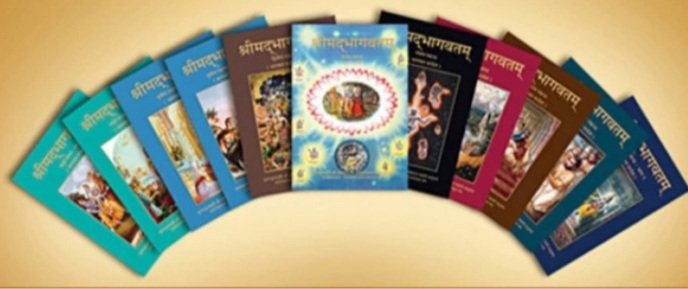
Sati Savitri is a well known puranic figure from Srimad DeviBhagwatham and Mahabharatha as one of those who fought with Yama to save her husband.

2/
This story is a modern real-life experience which mimics the puranic account in it's own unique way.

The story occurs in 1975 with Prof and his wife in Delhi with professor working as a researcher in university. Prof's family is in Allahabad in a large joint family

3/
Once Prof gets to know that his mother is not keeping well. He goes to his native and brings his mother. With dedicated care of his wife, his mother recovers quite remarkably and regains full stamina and strength

Mother-in-law & Daughter-in-law go out for shopping frequently

4/
Life's going smooth until one day when they receive a telegram that Prof's father is not keeping well.

His mother is distressed about the situation and requests her son to take her to the native. Prof is a little angry due to frequent travels and turns it down

5/
He says : There are 2 more brothers there. They can take care. You don't have to worry.

Mother is not happy, but helpless. As fate would have it, Prof's nephew visits from his village and his mother says she will go with him to the village.

6/
They pack all her belongings in a new trunk purchased for this purpose and books seats in a train and send her off.

Life's back to normal to the Prof for 15 days after which they receive a telegram that "Mother has passed away"

7/
Professor, his wife and another nephew who was visiting are shocked beyond belief. They can't believe such an incident could have occurred.

They book tickets and go their native all along praying that this is not a true incident

8/
When they reach the native, the worst-feared is true. Prof's mother indeed would have passed away.

All those around say, "If someone else would have told, we wouldn't have believed it. But we are those who were present through this experience"

This is what transpired....

9/
When Prof's mother came back to village and goes to her husband, folds her hands and prays to God.

She circumambulates the bed 7 times, goes to Ganga and takes a dip. She gets a small pot of Ganga Jal and offers to the Devi at her home

10/
She says "O Devi, what's happening here is incorrect. Please give me the disease that my husband is suffering with. Please cure him and take me instead"

Saying so, she sits next to his cot. Looking at her, her husband says: You look more beautiful than the day we got marrie

11/
She smiles, but doesn't reply back.

With passing time, she develops fever. Her husbands starts to improve while her condition deteriorates.

One of her sons would have come from Kolkotta. When he wishes to go back, she asks him to stay back for 1 more day

12/
The next day, the lady passed away. When she breathed her last, her 2 sons were in front of her, couple of them outside India.

When her husband was fit, hale and hearty, she breathed her last. Even though her name was "Anupama Devi", the entire village named her "Savitri"

13/
What an amazing experience. I had goosebumps as I read the story and wrote this thread. Real life experiences are so amazing, we get to learn something new everyday

Ref: Bharat Darshana Dec 2020 Magazine

🙏🕉️🙏

More from GunduHuduga| ಗುಂಡು ಹುಡುಗ|🕉

#BookExcerpts #Venkateshwara #Balaji

I will write a 3 part thread series with some interesting points from this book.

Part-1 : History of Tirumala & Venkateshwara Swamy
Part-2: Rituals & Prasada Procedure
Part-3: Historical records

Part-1 thread below

1/


Venkatachala Hill

Maha Vishnu wished for the mountain Krida / Krida Parvatham / Kridhachalam from Vaikunta to be brought to the earth for his avataram.

This was brought to earth by Garuda and Ananta & placed it on banks of river Swarna Mukhi

2/


This is where current Tirumala temple is located. The fact that this was transported from Vaikunta is apparently a scientifically proven fact.

The scientific dating of the sedimentary rocks have confirmed the date to be around 120 million years ago..

3/

This timeline coincides with Swayambhu Manu manvanthara of the Sweta Varaha Kalpa which is the time when Swamy descended on earth in the form of Venkateshwara Swamy.

From a survey of flora and fauna, they have found rare species of plants & animals like golden gecko..

4/

that are exclusive to this hill range only and not found anywhere else in the world.

Tirumala hills are a range of 7 hills
1. Seshachala
2. Vedachala
3. Garudachala
4. Anjanachala
5. Vrishabhachala
6. Narayanachala
7. Venkatachala --> Where temple is present

5/
#Ramayana #LecturesOnTheRamayana

Today, I will share a very touching, quite surprising unconventional thought process from Ramayana.

When Lakshmana erected the hut in Panchavati, Rama said something which is quite strange & unexpected. Thread on this incident below:

1/

We all know about Lakshmana's unflinching devotion and respect for Rama. We will visit this theme quite often in this series.

In the context where Lakshmana has just built the hut, Rama gave a glowing tribute as below

Section: Aranyaa Kanda, Sarga 15

2/

Verse 27

सुसंहृष्टः परिष्वज्य बाहुभ्यां लक्ष्मणं तदा।
अतिस्निग्धं च गाढं च वचनं चेदमब्रवीत्।।

Deeply pleased with Lakshmana, he hugged him tightly and said those loving words :

3/

Verse 28

प्रीतोऽस्मि ते महत्कर्म त्वया कृतमिदं प्रभो।
प्रदेयो यन्निमित्तं ते परिष्वङ्गो मया कृतः।।

O my master, you have done a great task for which I have given you what I could give at the moment a hug.

4/

Verse 29

भावज्ञेन कृतज्ञेन धर्मज्ञेन च लक्ष्मण।
त्वया पुत्रेण धर्मात्मा न संवृत्तः पिता मम।।

O Lakshmana with a son like you who can understand others' feelings, who has a sense of gratitude and a sense of duty my father is not dead yet.

5/

More from Religion

Assalam Alaiki dear Sister in Islam. I hope this meets you well. Hope you are keeping safe in this pandemic. May Allah preserve you and your beloved family. I would like to address the misconception and misinterpretation in your thread. Please peruse the THREAD below.


1. First off, a disclaimer. Should you feel hurt by my words in the course of the thread, then forgive me. It’s from me and not from Islam. And I probably have to improve on my delivery. And I may not quote you verbatim, but the intended meaning would be there. Thank You!

2. Standing on Imam Shafii’s quote: “And I never debated anyone but that I did not mind whether Allah clarified the truth on my tongue or his tongue” or “I never once debated anyone hoping to win the debate; rather I always wished that the truth would come from his side.”

3. Okay, into the meat (my love for meat is showing. Lol) of the thread. Even though you didn’t mention the verse that permitted polygamy, everyone knows the verse you were talking about (Q4:3).


4. Your reasons for the revelation of the verse are strange. The first time I came across such. I had to quickly consult the books on the exegeses or tafsir of the Quran written by renowned specialists!
"Hinduism was one of the world's most easy-going faith traditions, famed for it's non-persecutory history."

I can assure you, it is NOT.

It is neither easy-going, nor non-persecutory. In fact it is the very opposite.

Thread.


Modern Hinduism is a British colonial concept, created in concert with Brahmins, who are at the "apex" of the caste system. The word "Hindoo" in fact, is of Persian origin, meaning a person who lives in the Indus valley.

Colonialists who attempted to study Indian religion in the 18th century (NOT, at the time, Hinduism) were baffled by it. Strata of people living distinctly (the caste system) with overlapping gods didn't fit into their Judeo-Christian understanding of religion.

Which has an ecclesiastical authority, a holy book etc., which Indian religions lacked. In studying "The Hindoo", colonialists prioritized textual sources of knowledge, which is where Brahmins, the priestly caste with a monopoly over education/text come in.

Brahminism was a distinct "religion" (although i don't really want to use the term in this way) that was frankly terrorized of other castes. In fact, the very basis of Brahminism is oppression. Brahmins had scholars who recorded *Brahminical* canon textually.

You May Also Like