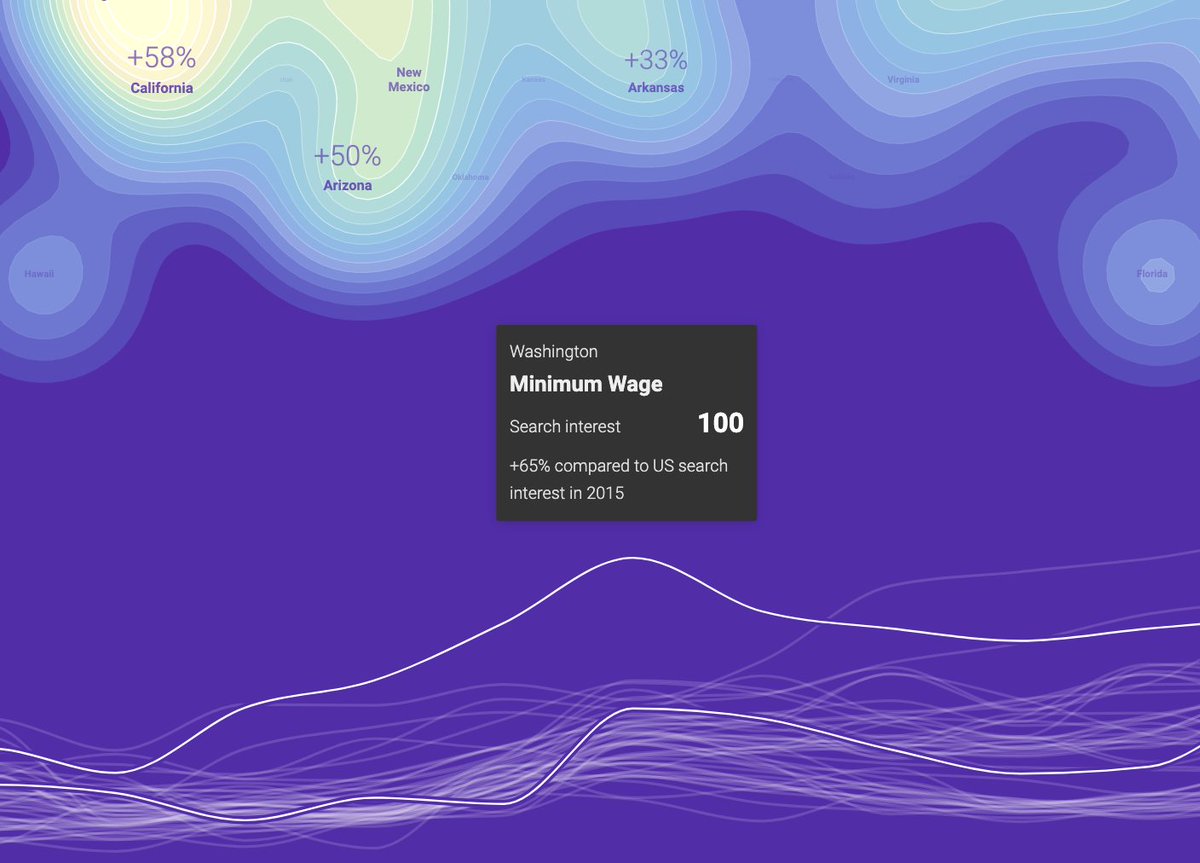
Google Trends covers 17 years of data by now!
✨ Excited to launch:✨
~ WAVES OF INTEREST ~
Tracing Google Search Interest
in US Election Years
https://t.co/iF8VwZTgS7
w/ @recifs @destrysibley @googlenewsinit @albertocairo @smfrogers
🧵👇
Google Trends covers 17 years of data by now!
How did the topic landscape evolve?
And how has the pace of attention shifts changed?
Opening with a smooth wavy line chart animation — an ambient introduction to the theme of waves, and trends — we dive right into the first central question:
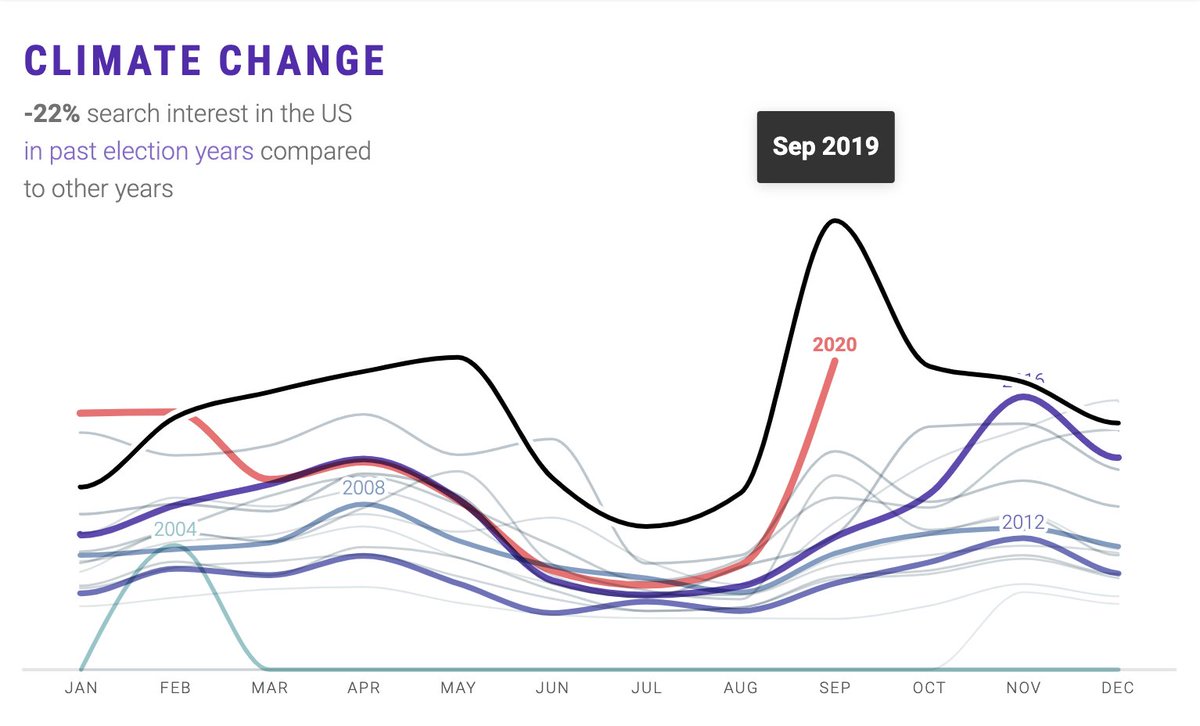
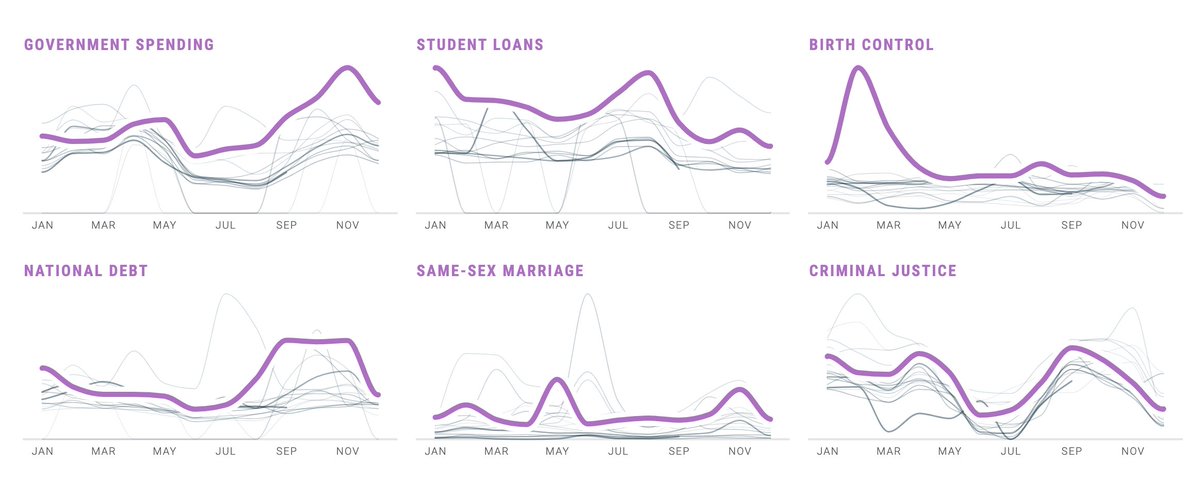
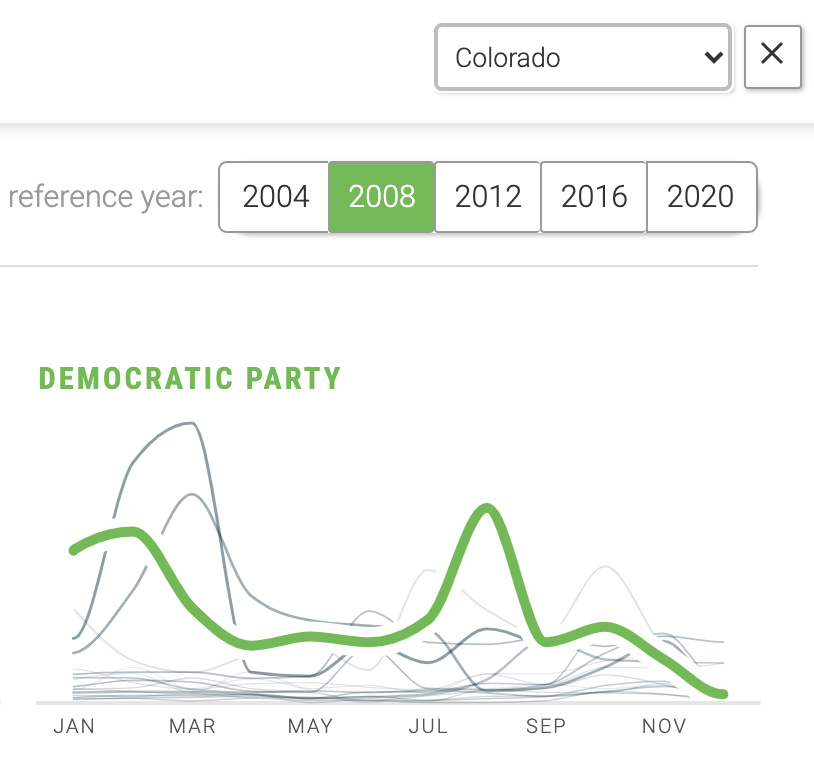
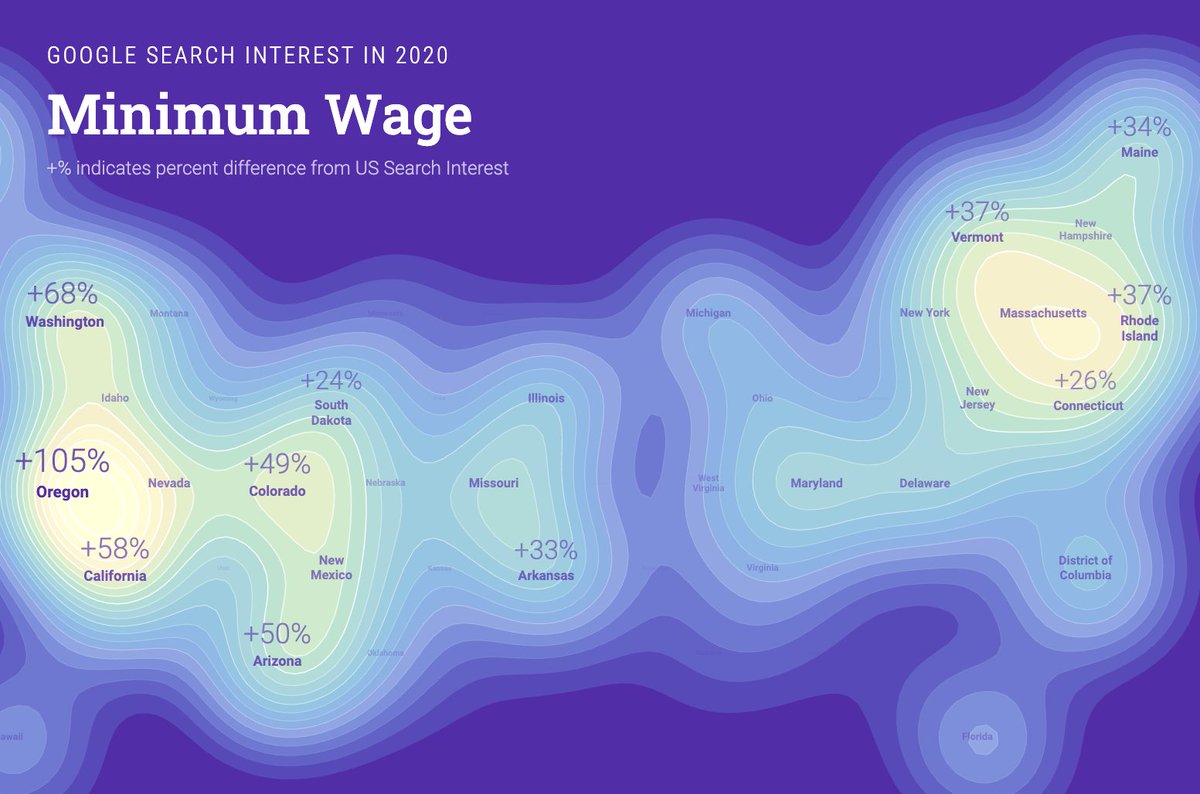
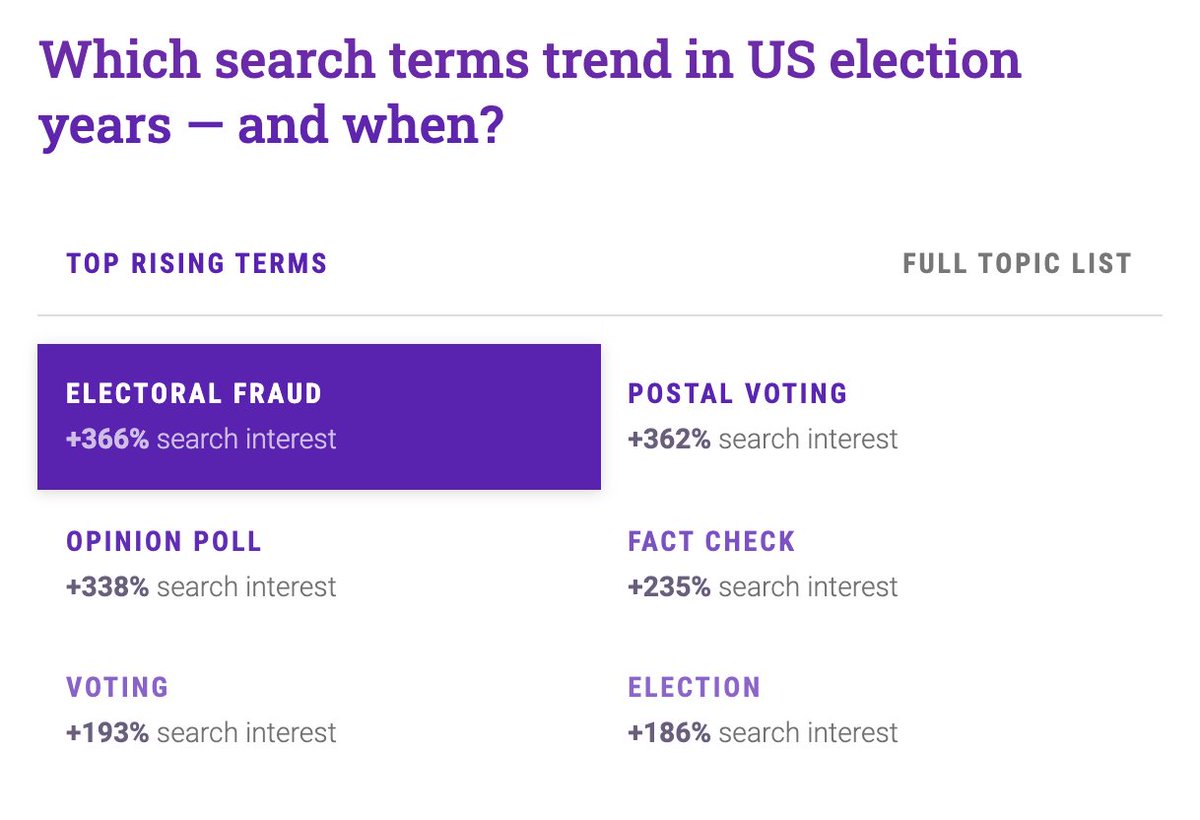
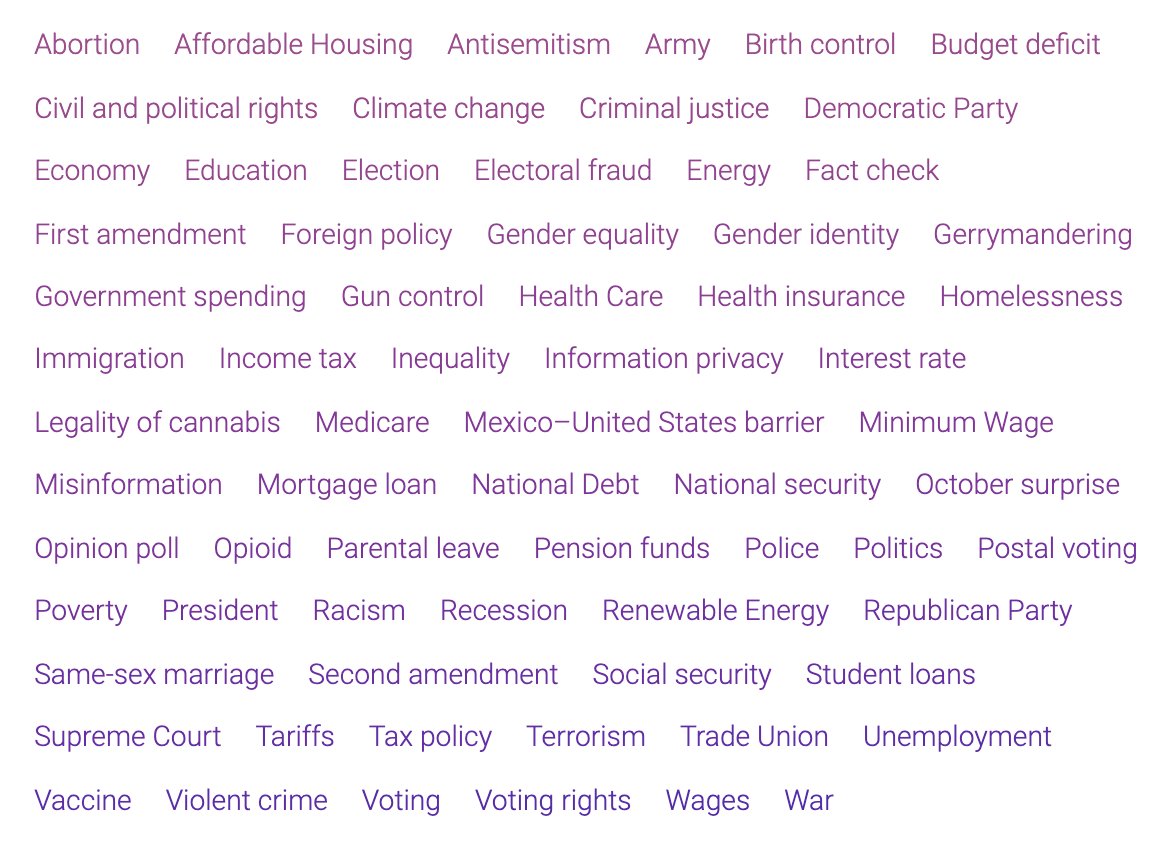
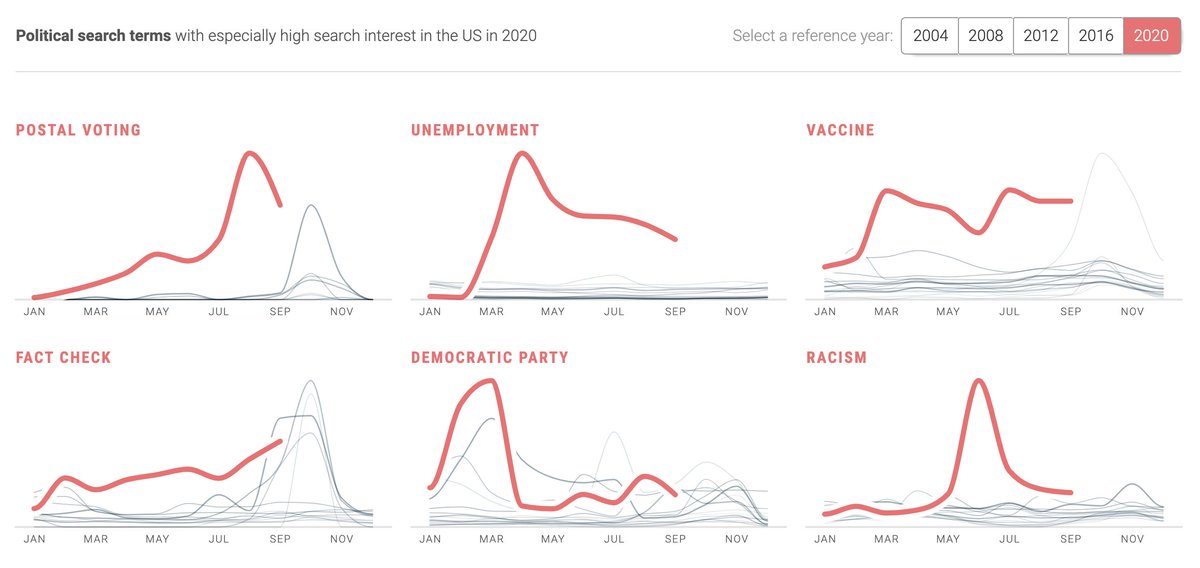
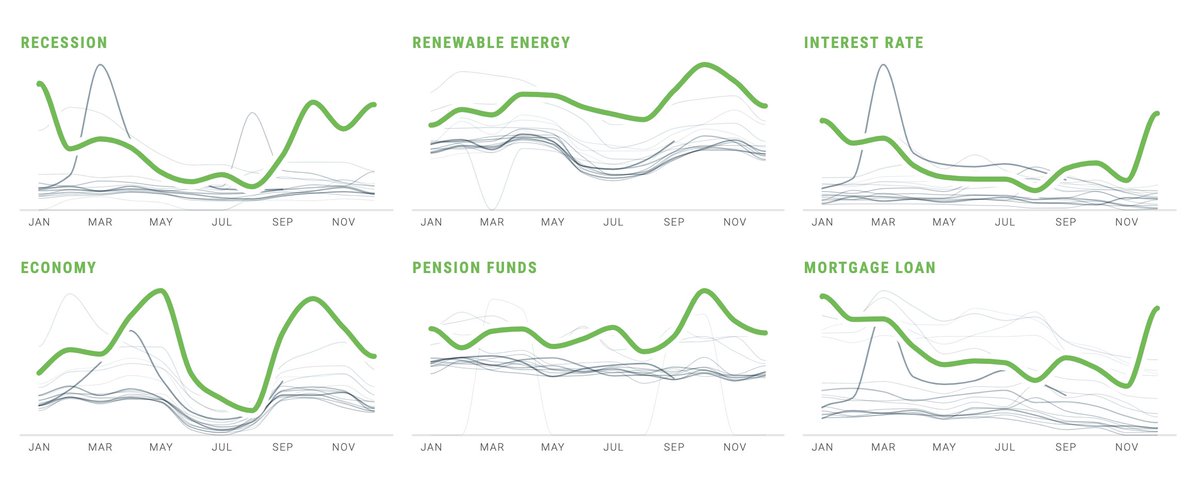
We show both a list of top rising topics in election years, as well as a detailed chart of how their search interest values unfolded over the years.
- a set of top searched political terms on Google,
- concepts from Pew surveys on top political issues in election years
- and a few manually added terms to account for recent events.
Data says YES INDEED.
The flatness of these top issue curves, compared to 2020s attention spikiness, tells a striking story how pace of attention shifts has changed dramatically.
https://t.co/7rWPWNLyeL
https://t.co/Mskb1P6n1Z
More from Politics
1/ Imagine that as soon as the referendum result the EU announced that it was looking forward to the end of free movement of UK citizens in the EU
2/ Imagine if the EU said finally all those retired Brits in the EU27 could go home
3/ Imagine if the EU said finally all those Brits in the EU could stop driving down wages, taking jobs and stop sending benefits back to the UK
4/ Imagine if the EU said it was looking to use UK citizens as “bargaining chips” to get a better trade deal
5/ Imagine if the EU told UK citizens in the EU27 that they could no longer rely on established legal rights and they would have to apply for a new status which they have to pay for for less rights
Imagine, for a moment, the reaction of the UK Government, Brexiters, and the RW UK press if Juncker, Tusk, Macron or Merkel went on TV to say that Brexit was worth it to stop Freedom of Movement for UK citizens, and to stop Brits being able to come to the EU and jump the queue.
— Steve Bullock (@GuitarMoog) November 20, 2018
2/ Imagine if the EU said finally all those retired Brits in the EU27 could go home
3/ Imagine if the EU said finally all those Brits in the EU could stop driving down wages, taking jobs and stop sending benefits back to the UK
4/ Imagine if the EU said it was looking to use UK citizens as “bargaining chips” to get a better trade deal
5/ Imagine if the EU told UK citizens in the EU27 that they could no longer rely on established legal rights and they would have to apply for a new status which they have to pay for for less rights
This idea - that elections should translate into policy - is not wrong at all. But political science can help explain why it's not working this way. There are three main explanations: 1. mandates are constructed, not automatic, 2. party asymmetry, 3. partisan conpetition 1/
First, party/policy mandates from elections are far from self-executing in our system. Work on mandates from Dahl to Ellis and Kirk on the history of the mandate to mine on its role in post-Nixon politics, to Peterson Grossback and Stimson all emphasize that this link is... 2/
Created deliberately and isn't always persuasive. Others have to convinced that the election meant a particular thing for it to work in a legislative context. I theorized in the immediate period of after the 2020 election that this was part of why Repubs signed on to ...3/
Trump's demonstrably false fraud nonsense - it derailed an emerging mandate news cycle. Winners of elections get what they get - institutional control - but can't expect much beyond that unless the perception of an election mandate takes hold. And it didn't. 4/
Let's turn to the legislation element of this. There's just an asymmetry in terms of passing a relief bill. Republicans are presumably less motivated to get some kind of deal passed. Democrats are more likely to want to do *something.* 5/
I\u2019m sorry it\u2019s just insane that Democrats are like, \u201cwe won everything and our opening position on relief is $1.9T\u201d and Republicans are like, \u201cwe lost and our opening position is $600B,\u201d and the media will be like, \u201cDemocrats say they want unity but reject this bipartisan deal.\u201d
— Meredith Shiner (@meredithshiner) January 31, 2021
First, party/policy mandates from elections are far from self-executing in our system. Work on mandates from Dahl to Ellis and Kirk on the history of the mandate to mine on its role in post-Nixon politics, to Peterson Grossback and Stimson all emphasize that this link is... 2/
Created deliberately and isn't always persuasive. Others have to convinced that the election meant a particular thing for it to work in a legislative context. I theorized in the immediate period of after the 2020 election that this was part of why Repubs signed on to ...3/
Trump's demonstrably false fraud nonsense - it derailed an emerging mandate news cycle. Winners of elections get what they get - institutional control - but can't expect much beyond that unless the perception of an election mandate takes hold. And it didn't. 4/
Let's turn to the legislation element of this. There's just an asymmetry in terms of passing a relief bill. Republicans are presumably less motivated to get some kind of deal passed. Democrats are more likely to want to do *something.* 5/