If you're not a 1 man band, the hosts and guests are more important than the content. I listen to @arseblog ArsecastExtra with @gunnerblog religiously and when one of the two aren't there, I delete the episode.
As one of my podcasts approaches 1.5m downloads and the the other 50,000, I thought I'd share a few things that I've learnt over the past 3 years on building a successful podcast 👇
If you're not a 1 man band, the hosts and guests are more important than the content. I listen to @arseblog ArsecastExtra with @gunnerblog religiously and when one of the two aren't there, I delete the episode.
To the naked ear, your audience can't tell the difference between 10/10 audio and 8/10 audio. The content is more important. If it's gripping and good people will stick around even if the audio quality is average.
Be consistent with your distribution whether it's a day of the week, or consistently after an event. Podcasts are audio on demand, but most podcasts retain listeners by becoming part of their weekly routine.
Use your latest episode as an anchor piece on your social media profiles/website. Everything you do post launch, should be done with an aim to draw as many impressions to your pinned anchor piece of content as possible.
If someone takes their time to reach out and tell you they enjoy your show, ask for something back. Ask them to review your show and share your latest episode. Getting an audience is one thing, generating growth through them is another.
Some of us have our attention grabbed by visuals. Use graphics and social cards whenever you post your show. The impression and link click rates are often a lot higher and it also shows your podcast to be something that is 'more than audio'.
You May Also Like

Fake chats claiming to be from the Irish African community are being disseminated by the far right in order to suggest that violence is imminent from #BLM supporters. This is straight out of the QAnon and Proud Boys playbook. Spread the word. Protest safely. #georgenkencho

There is co-ordination across the far right in Ireland now to stir both left and right in the hopes of creating a race war. Think critically! Fascists see the tragic killing of #georgenkencho, the grief of his community and pending investigation as a flashpoint for action.
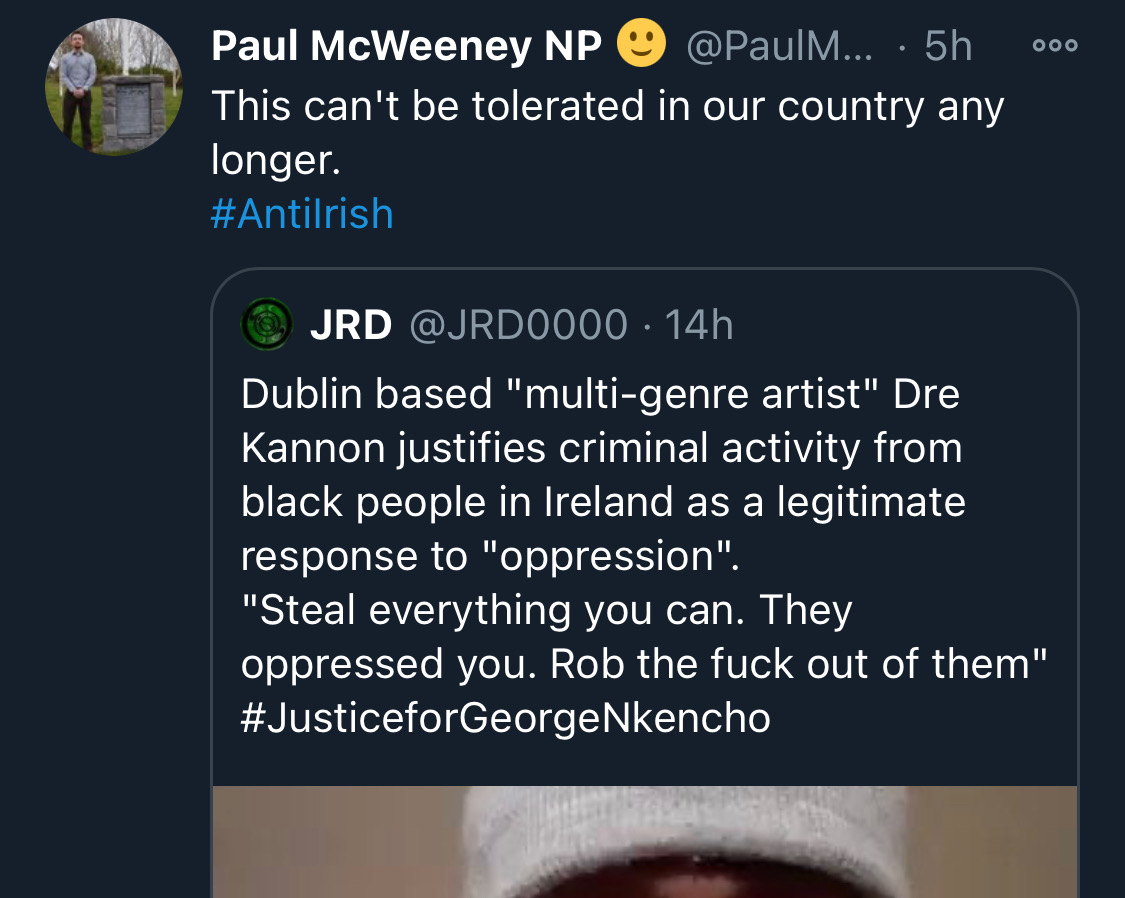
Across Telegram, Twitter and Facebook disinformation is being peddled on the back of these tragic events. From false photographs to the tactics ofwhite supremacy, the far right is clumsily trying to drive hate against minority groups and figureheads.
Declan Ganley’s Burkean group and the incel wing of National Party (Gearóid Murphy, Mick O’Keeffe & Co.) as well as all the usuals are concerted in their efforts to demonstrate their white supremacist cred. The quiet parts are today being said out loud.
The best thing you can do is challenge disinformation and report posts where engagement isn’t appropriate. Many of these are blatantly racist posts designed to drive recruitment to NP and other Nationalist groups. By all means protest but stay safe.
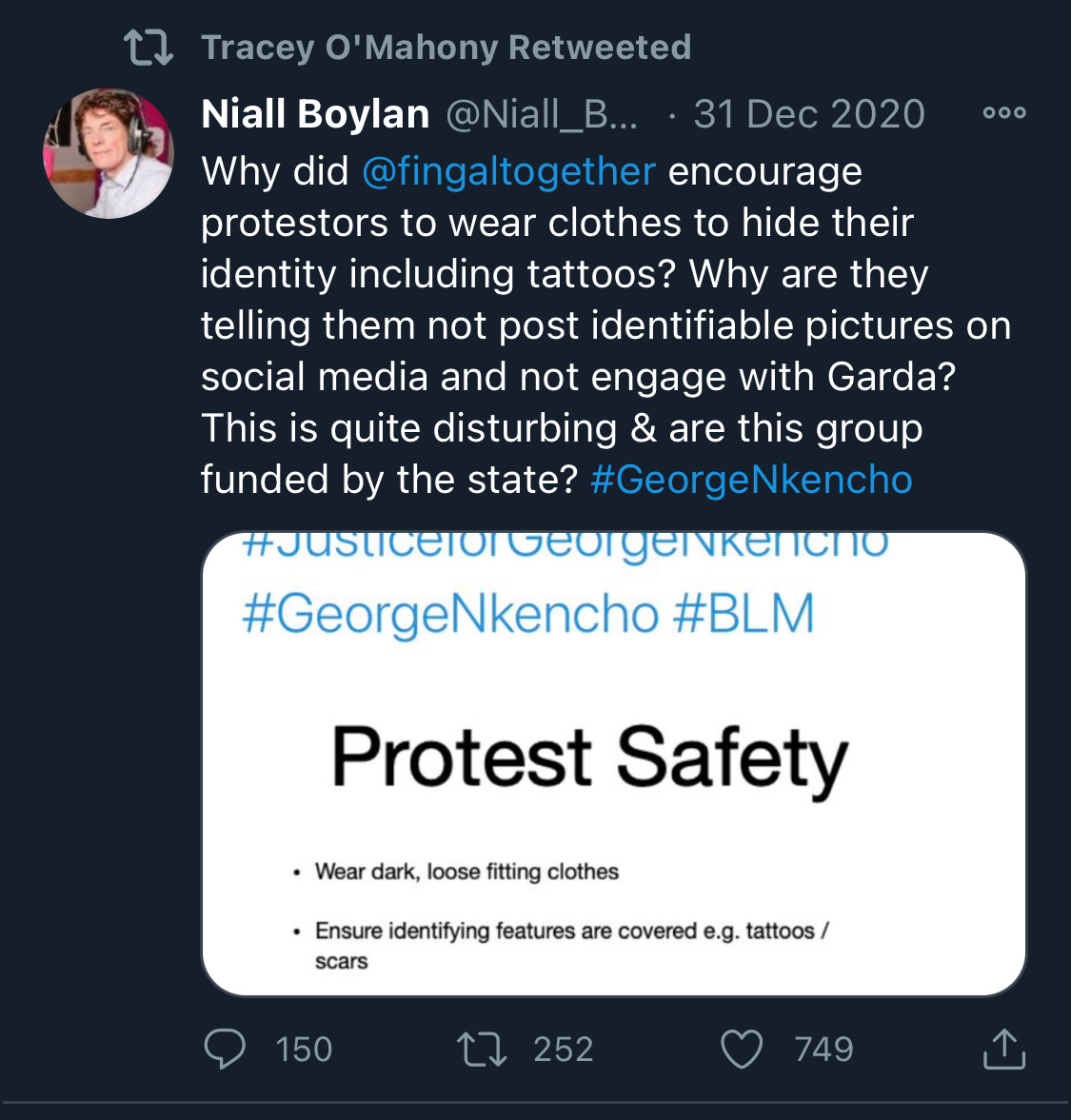
There is co-ordination across the far right in Ireland now to stir both left and right in the hopes of creating a race war. Think critically! Fascists see the tragic killing of #georgenkencho, the grief of his community and pending investigation as a flashpoint for action.
Across Telegram, Twitter and Facebook disinformation is being peddled on the back of these tragic events. From false photographs to the tactics ofwhite supremacy, the far right is clumsily trying to drive hate against minority groups and figureheads.
Be aware, the images the #farright are sharing in the hopes of starting a race war, are not of the SPAR employee that was punched. They\u2019re older photos of a Everton fan. Be aware of the information you\u2019re sharing and that it may be false. Always #factcheck #GeorgeNkencho pic.twitter.com/4c9w4CMk5h
— antifa.drone (@antifa_drone) December 31, 2020
Declan Ganley’s Burkean group and the incel wing of National Party (Gearóid Murphy, Mick O’Keeffe & Co.) as well as all the usuals are concerted in their efforts to demonstrate their white supremacist cred. The quiet parts are today being said out loud.
There is a concerted effort in far-right Telegram groups to try and incite violence on street by targetting people for racist online abuse following the killing of George Nkencho
— Mark Malone (@soundmigration) January 1, 2021
This follows on and is part of a misinformation campaign to polarise communities at this time.
The best thing you can do is challenge disinformation and report posts where engagement isn’t appropriate. Many of these are blatantly racist posts designed to drive recruitment to NP and other Nationalist groups. By all means protest but stay safe.