1/🧵 Good #DataScience advice that breaks pretty much every rule you learned in class... a thread. (+full blog post linked)
English version: https://t.co/dG4l6vPFBT
Spanish version: https://t.co/gFAjPQ5clS
#AI #MachineLearning #Statistics #RStats
For more info: https://t.co/Ue332SMjy1
More from Machine learning




10 machine learning YouTube videos.
On libraries, algorithms, and tools.
(If you want to start with machine learning, having a comprehensive set of hands-on tutorials you can always refer to is fundamental.)
🧵👇
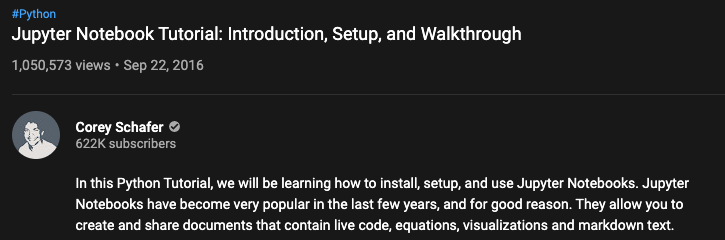
1⃣ Notebooks are a fantastic way to code, experiment, and communicate your results.
Take a look at @CoreyMSchafer's fantastic 30-minute tutorial on Jupyter Notebooks.
https://t.co/HqE9yt8TkB
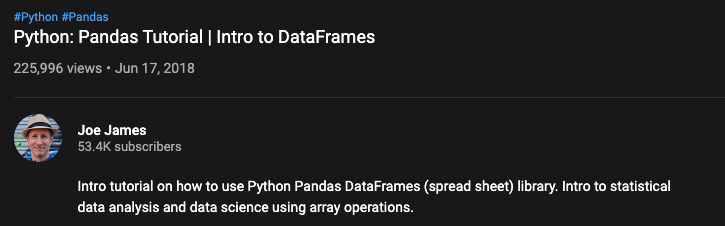
2⃣ The Pandas library is the gold-standard to manipulate structured data.
Check out @joejamesusa's "Pandas Tutorial. Intro to DataFrames."
https://t.co/aOLh0dcGF5
3⃣ Data visualization is key for anyone practicing machine learning.
Check out @blondiebytes's "Learn Matplotlib in 6 minutes" tutorial.
https://t.co/QxjsODI1HB
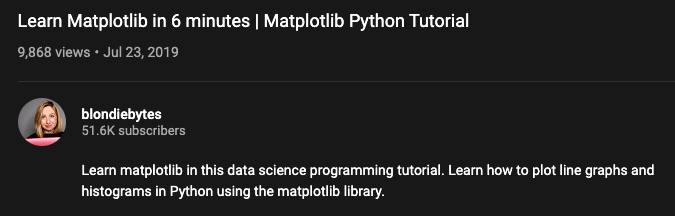
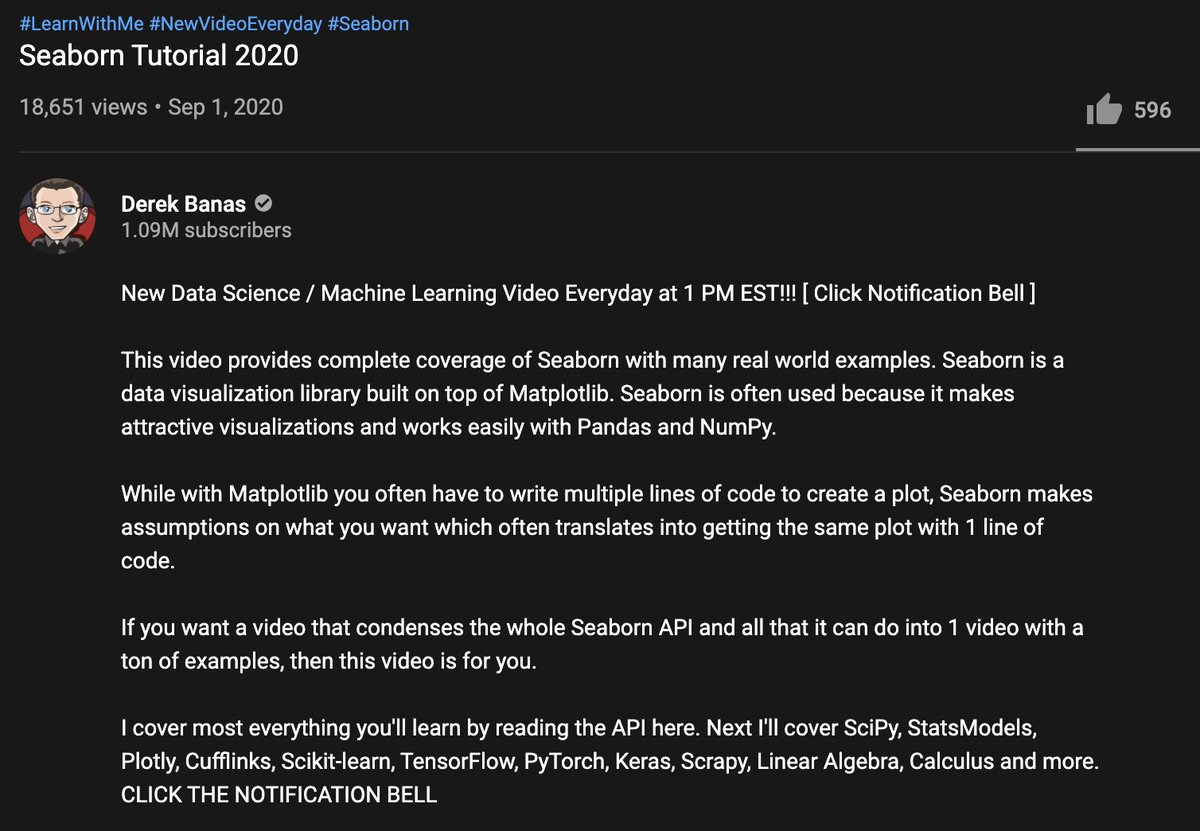
4⃣ Another trendy data visualization library is Seaborn.
@NewThinkTank put together "Seaborn Tutorial 2020," which I highly recommend.
https://t.co/eAU5NBucbm
On libraries, algorithms, and tools.
(If you want to start with machine learning, having a comprehensive set of hands-on tutorials you can always refer to is fundamental.)
🧵👇
1⃣ Notebooks are a fantastic way to code, experiment, and communicate your results.
Take a look at @CoreyMSchafer's fantastic 30-minute tutorial on Jupyter Notebooks.
https://t.co/HqE9yt8TkB
2⃣ The Pandas library is the gold-standard to manipulate structured data.
Check out @joejamesusa's "Pandas Tutorial. Intro to DataFrames."
https://t.co/aOLh0dcGF5
3⃣ Data visualization is key for anyone practicing machine learning.
Check out @blondiebytes's "Learn Matplotlib in 6 minutes" tutorial.
https://t.co/QxjsODI1HB
4⃣ Another trendy data visualization library is Seaborn.
@NewThinkTank put together "Seaborn Tutorial 2020," which I highly recommend.
https://t.co/eAU5NBucbm

With hard work and determination, anyone can learn to code.
Here’s a list of my favorites resources if you’re learning to code in 2021.
👇
1. freeCodeCamp.
I’d suggest picking one of the projects in the curriculum to tackle and then completing the lessons on syntax when you get stuck. This way you know *why* you’re learning what you’re learning, and you're building things
2. https://t.co/7XC50GlIaa is a hidden gem. Things I love about it:
1) You can see the most upvoted solutions so you can read really good code
2) You can ask questions in the discussion section if you're stuck, and people often answer. Free
3. https://t.co/V9gcXqqLN6 and https://t.co/KbEYGL21iE
On stackoverflow you can find answers to almost every problem you encounter. On GitHub you can read so much great code. You can build so much just from using these two resources and a blank text editor.
4. https://t.co/xX2J00fSrT @eggheadio specifically for frontend dev.
Their tutorials are designed to maximize your time, so you never feel overwhelmed by a 14-hour course. Also, the amount of prep they put into making great courses is unlike any other online course I've seen.
Here’s a list of my favorites resources if you’re learning to code in 2021.
👇
1. freeCodeCamp.
I’d suggest picking one of the projects in the curriculum to tackle and then completing the lessons on syntax when you get stuck. This way you know *why* you’re learning what you’re learning, and you're building things
2. https://t.co/7XC50GlIaa is a hidden gem. Things I love about it:
1) You can see the most upvoted solutions so you can read really good code
2) You can ask questions in the discussion section if you're stuck, and people often answer. Free
3. https://t.co/V9gcXqqLN6 and https://t.co/KbEYGL21iE
On stackoverflow you can find answers to almost every problem you encounter. On GitHub you can read so much great code. You can build so much just from using these two resources and a blank text editor.
4. https://t.co/xX2J00fSrT @eggheadio specifically for frontend dev.
Their tutorials are designed to maximize your time, so you never feel overwhelmed by a 14-hour course. Also, the amount of prep they put into making great courses is unlike any other online course I've seen.