X : We need to adapt to our new reality.
Me : A question?
X : Should we start with organisation or operating model first?
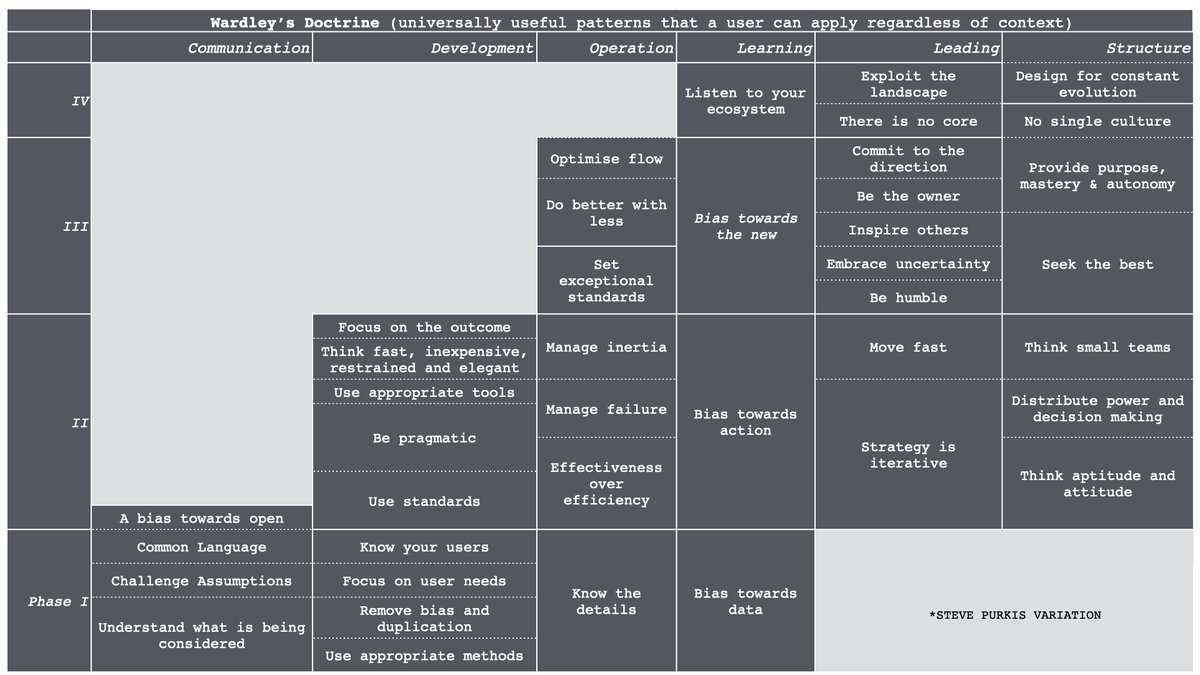
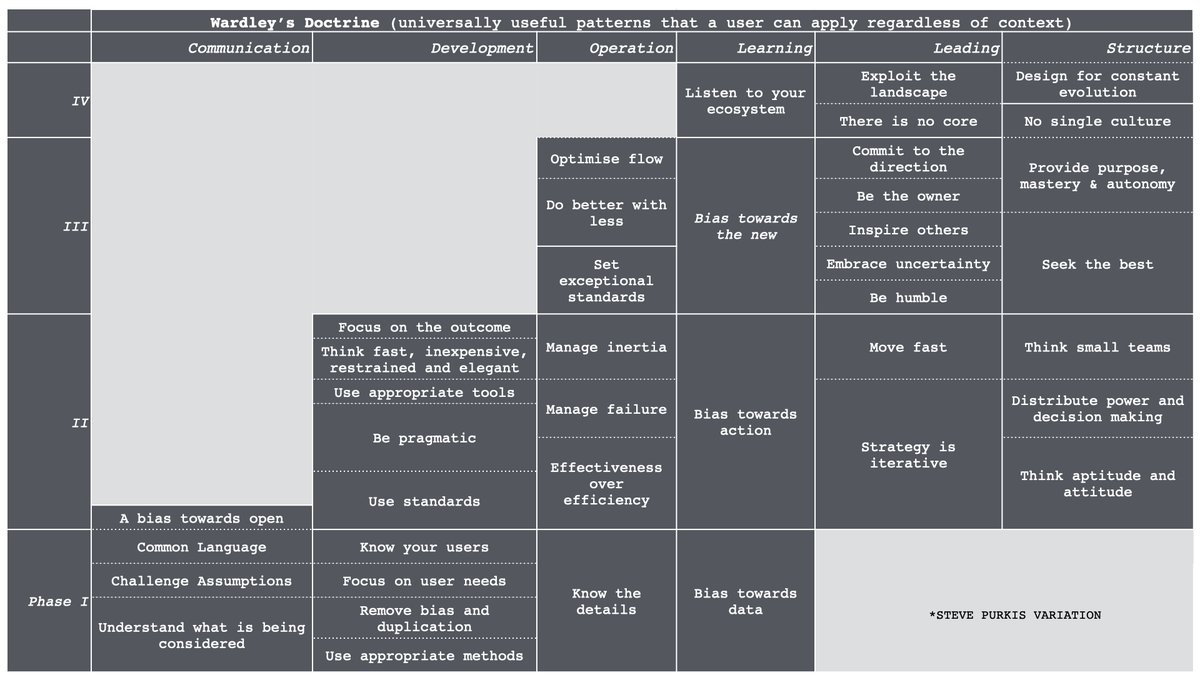
Me : Neither. Start with doctrine i.e. basic principles of your company. This will lead you to landcape which will lead you to structure + operating model.
X : Don't we need to get the structure right though?
Me : Structure against what? If you don't understand the landscape that you operate in then how do you structure around it? How do you decide what your operating model is? Awareness comes first and that needs those principles.
X : Explain?
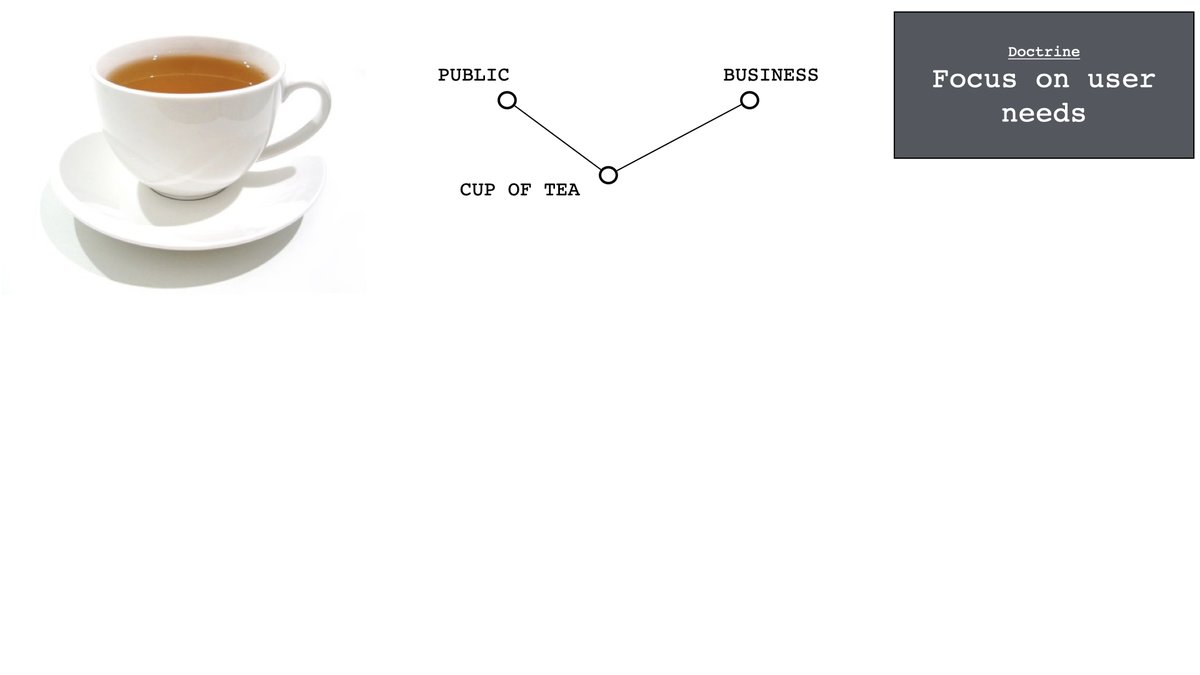
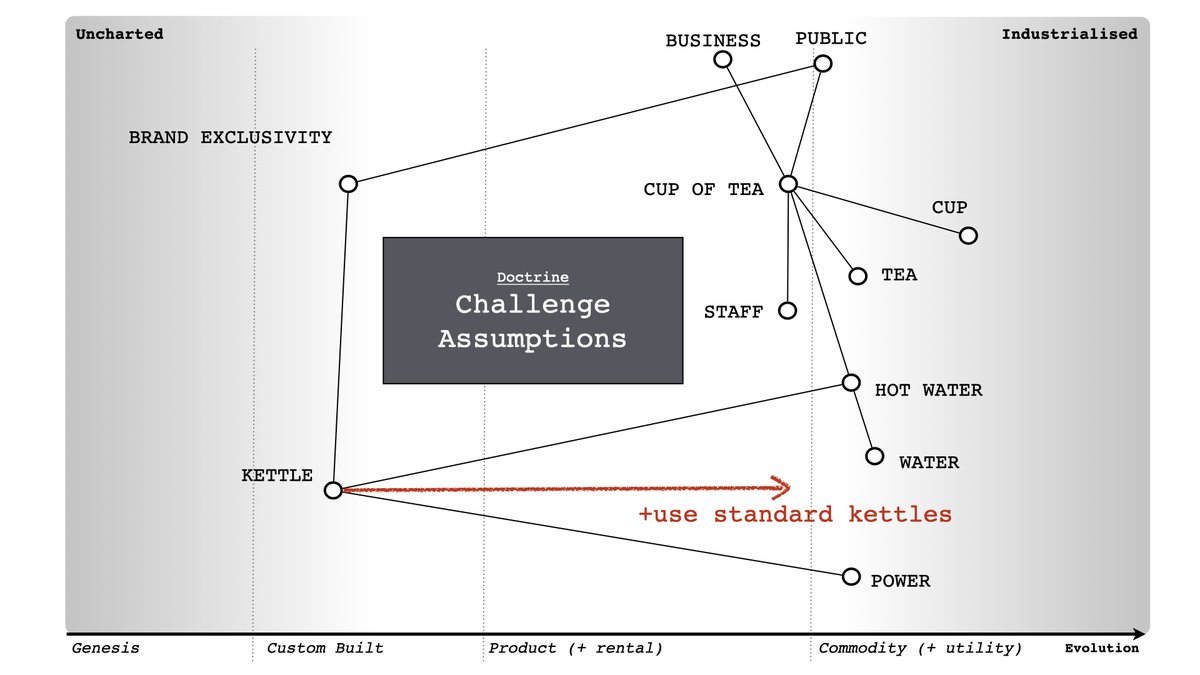
Me : Pretend you're running a tea shop (I'm a Brit, I like tea shops). First thing you need to do is to know who your users are - the public, the business for example (there are more like regulators etc).
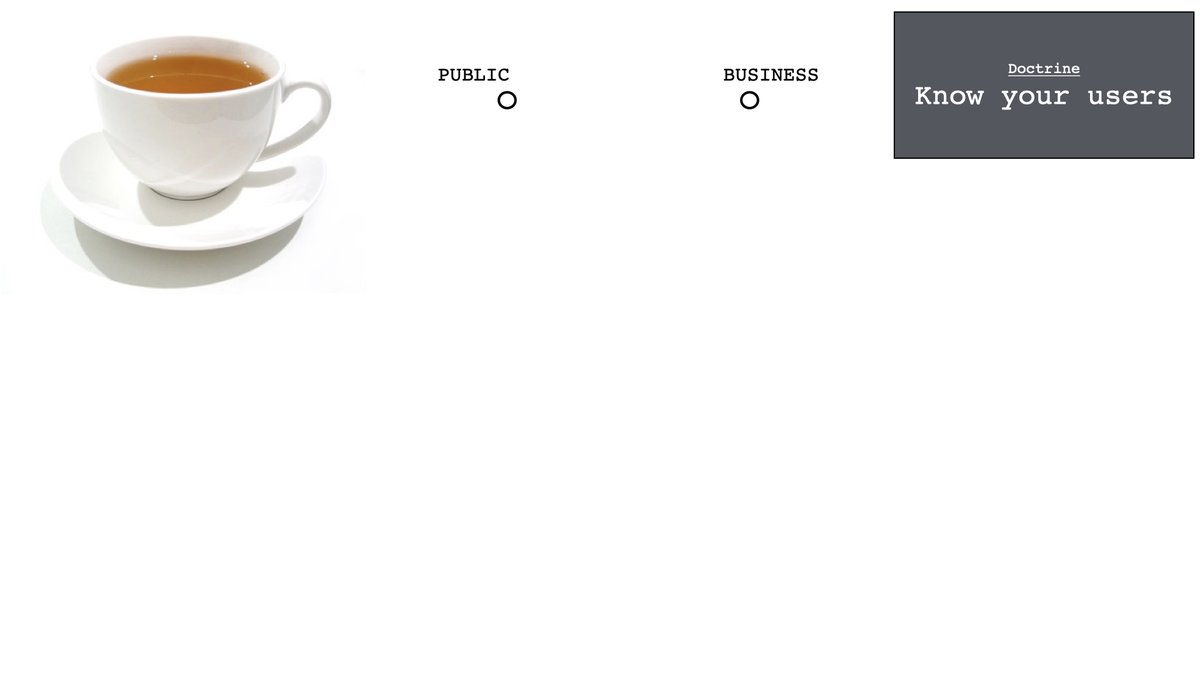
... but just knowing the users is not enough, you need to know what they need i.e. a cup of tea, maybe something more like entertainment or a nice piece of fruitcake
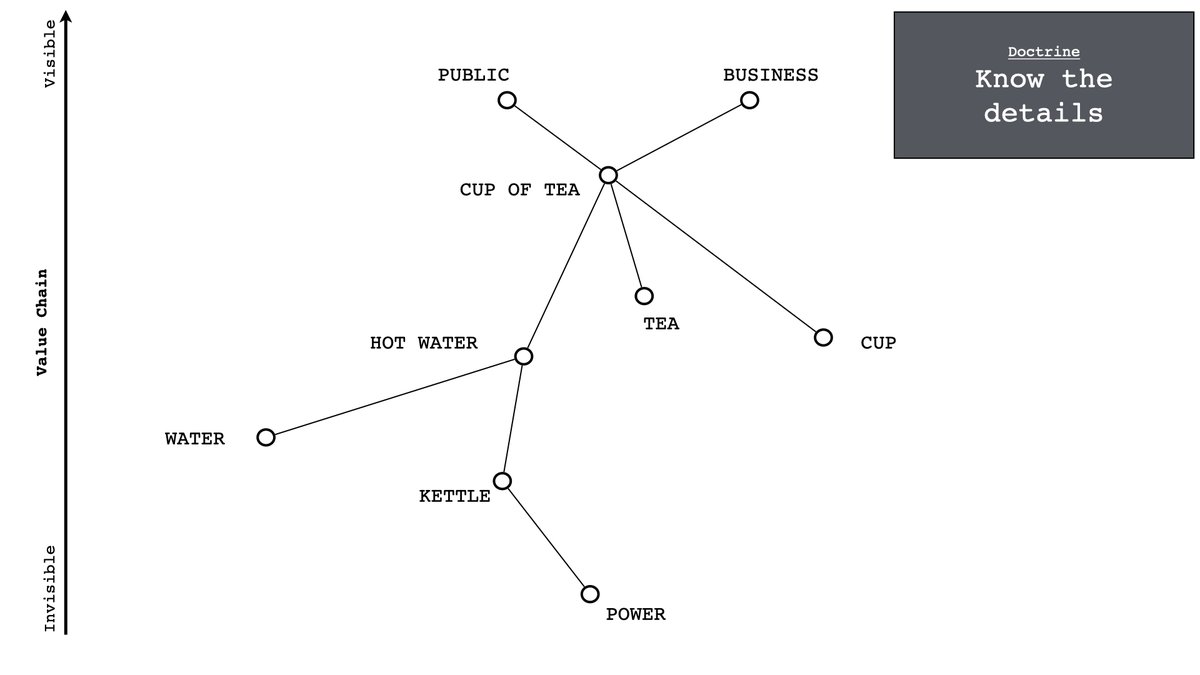
... but just knowing what they need is not enough, you need to know what goes into making a cup of tea, the chain of chains that it is built upon. You need to know the details ...
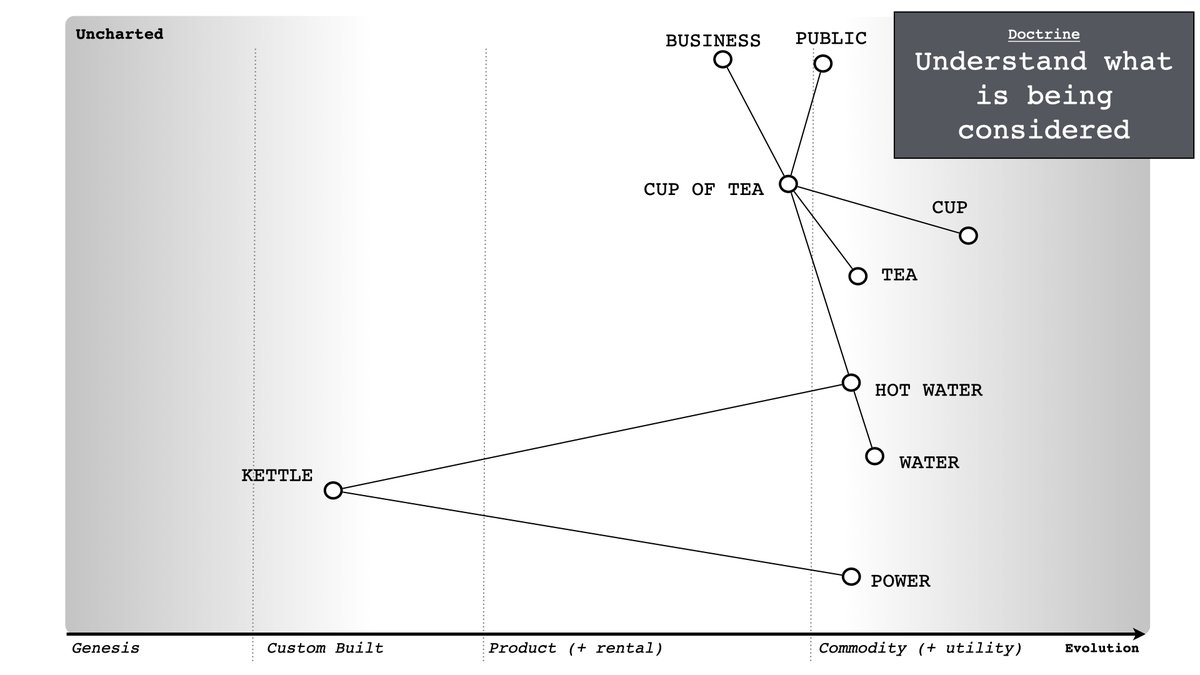
... but knowing the details is not enough, there is a world of difference between a custom built kettle and one you buy from argos. so you need to understand what is being considered ... this is what we call a map ...
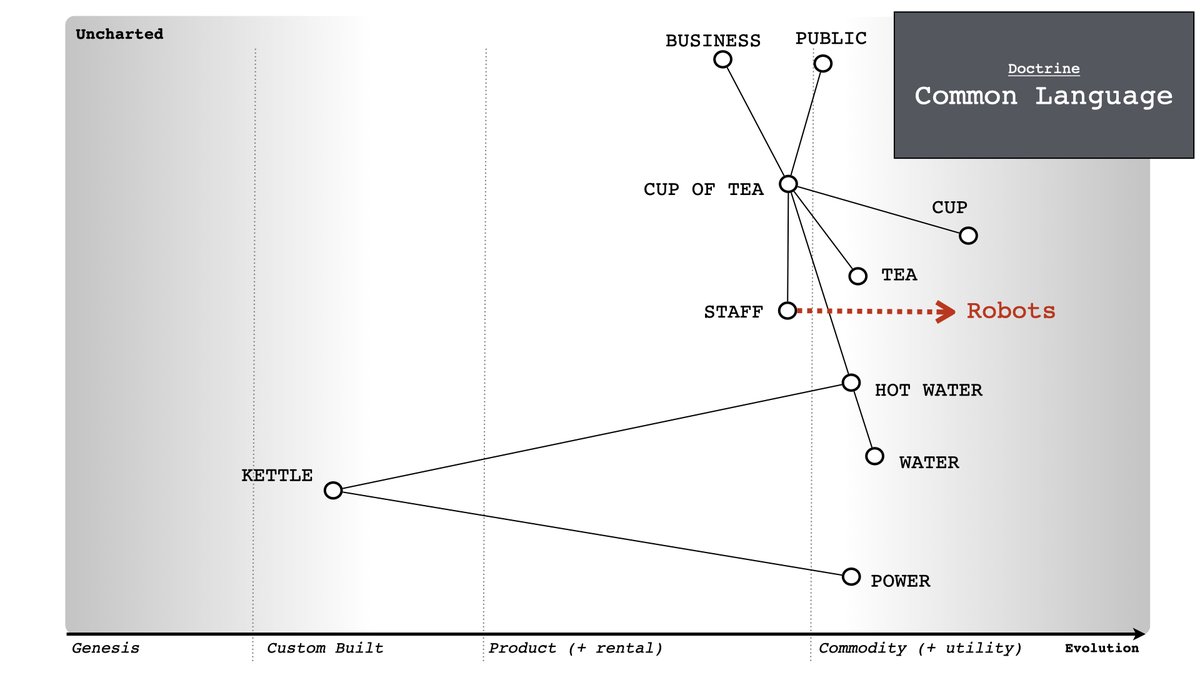
... now that we have a map, we have a common language where others can add components we are missing or discuss how we should think about those components ...
... because we have a common language, we can now challenge the assumptions because we are expressing our assumptions in the map. The key is to challenge the map (not the person) ... it's the map that's wrong ...
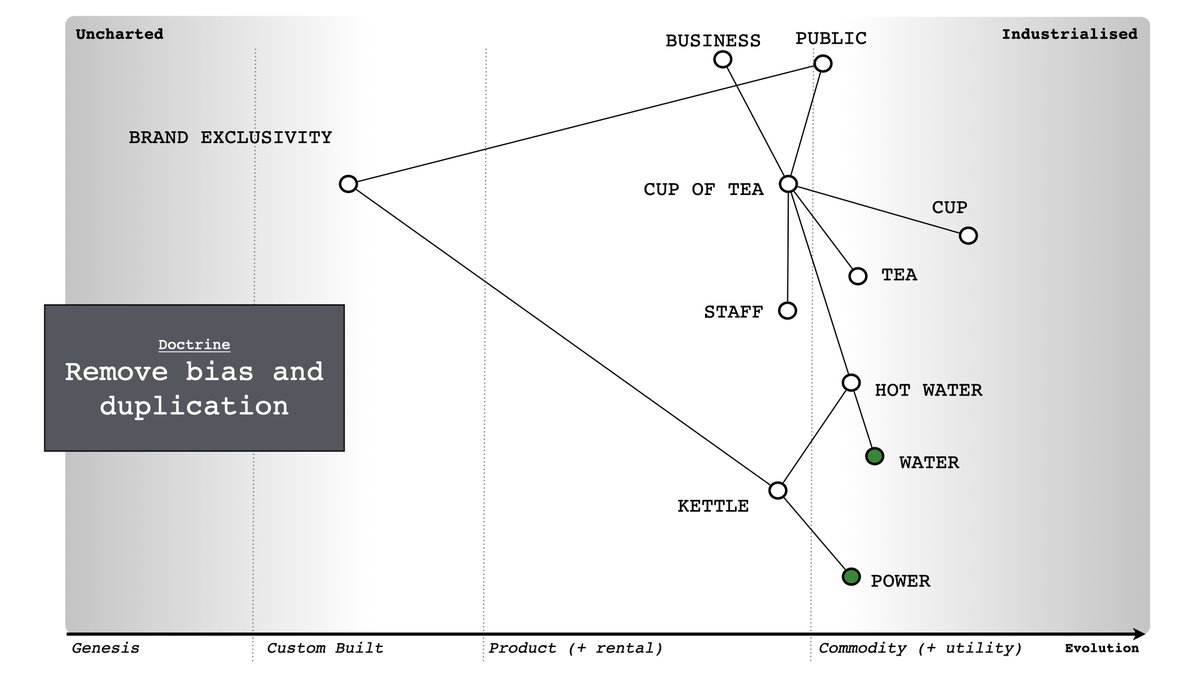
... as we build more maps, we discover we have duplication and bias between maps. We can literally see it by comparing maps and because we've now become good at challenging then we can remove it ...
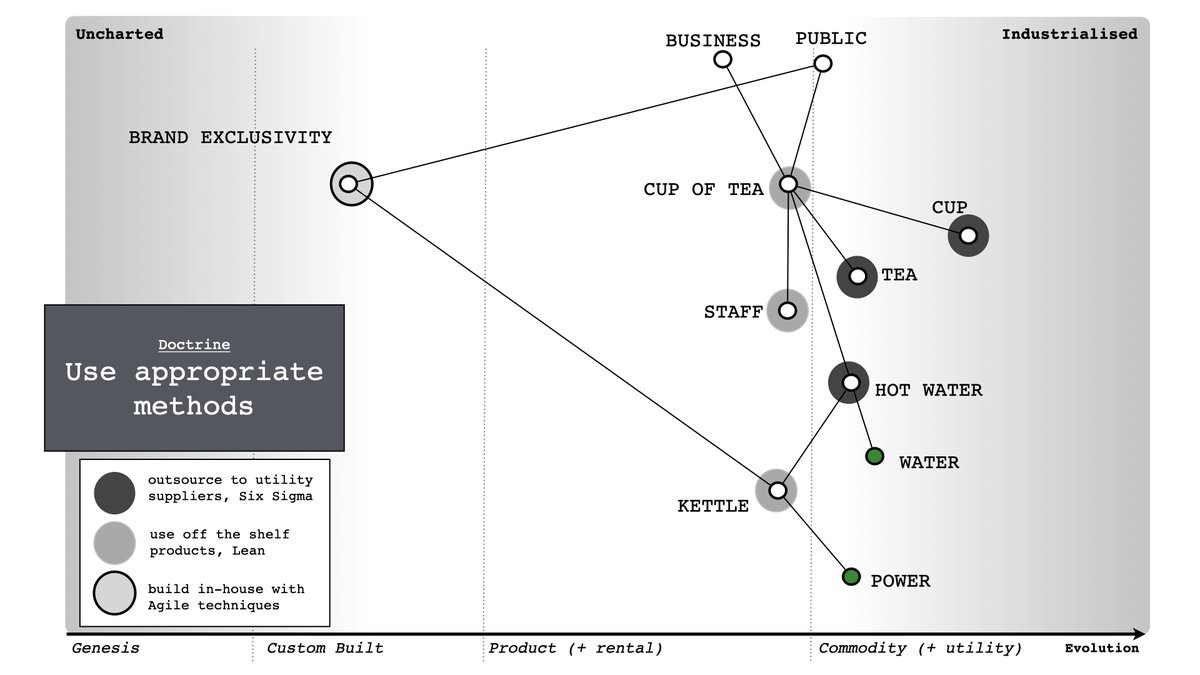
... with our understand of the landscape, we can start to apply appropriate methods. All methods have a context where they work, there is no one size fits all ...
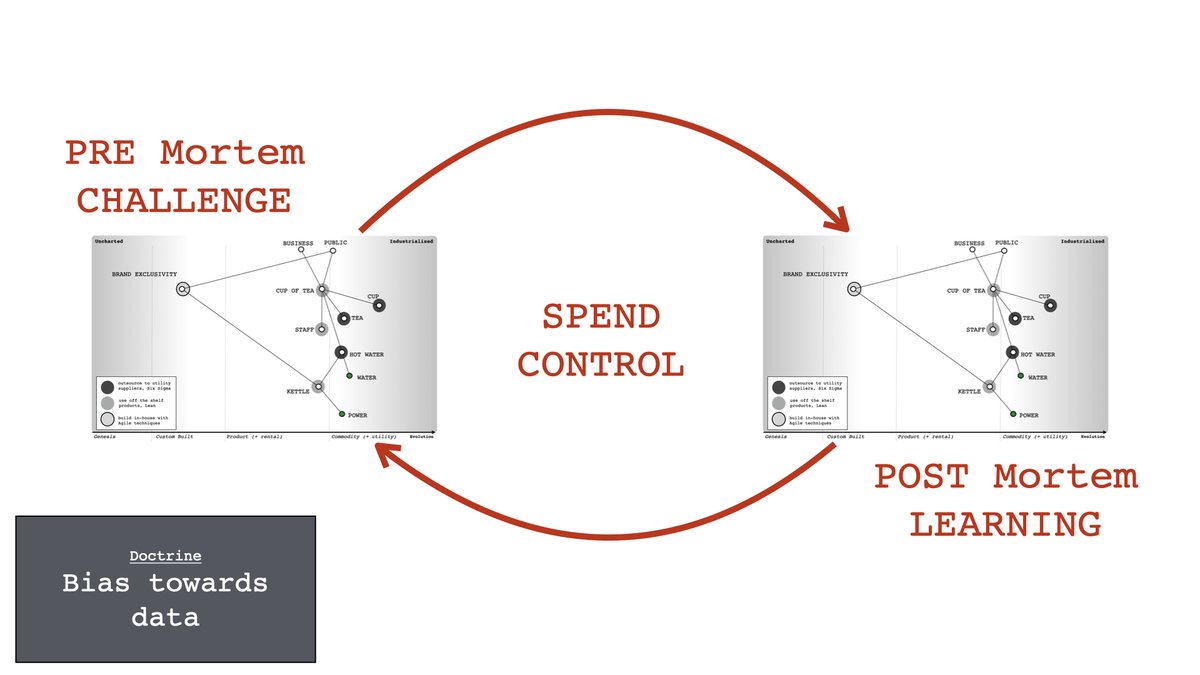
... we can embed challenge, communication (maps) and learning (i.e. which method goes where) through the use of pre and post mortems. We call this "spend control" and it's all about learning from those maps (i.e. data) rather than using data to justify a story we like.
... you have now completed all phase I of the doctrine. You have some awareness! Congratulations!

You have earned the right to talk about concepts like organisation, operating model and strategy ... just don't try and do them yet. You've got more principles to fix first.
X : What about phase II?
Me : Have you done phase I?
X : Not quite.
Me : Ok. Was the tea shop example useful.
X : It's pretty good.
Me : Ok. Well, in which case I better put some maps together to explain phase II. Note to self ... #to_be_continued #phases

More from Simon Wardley

More from Life

1/ Some initial thoughts on personal moats:

Like company moats, your personal moat should be a competitive advantage that is not only durable—it should also compound over time.

Characteristics of a personal moat below:


2/ Like a company moat, you want to build career capital while you sleep.

As Andrew Chen noted:


3/ You don’t want to build a competitive advantage that is fleeting or that will get commoditized

Things that might get commoditized over time (some longer than


4/ Before the arrival of recorded music, what used to be scarce was the actual music itself — required an in-person artist.

After recorded music, the music itself became abundant and what became scarce was curation, distribution, and self space.

5/ Similarly, in careers, what used to be (more) scarce were things like ideas, money, and exclusive relationships.

In the internet economy, what has become scarce are things like specific knowledge, rare & valuable skills, and great reputations.
1/ Here’s a list of conversational frameworks I’ve picked up that have been helpful.

Please add your own.

2/ The Magic Question: "What would need to be true for you


3/ On evaluating where someone’s head is at regarding a topic they are being wishy-washy about or delaying.

“Gun to the head—what would you decide now?”

“Fast forward 6 months after your sabbatical--how would you decide: what criteria is most important to you?”

4/ Other Q’s re: decisions:

“Putting aside a list of pros/cons, what’s the *one* reason you’re doing this?” “Why is that the most important reason?”

“What’s end-game here?”

“What does success look like in a world where you pick that path?”

5/ When listening, after empathizing, and wanting to help them make their own decisions without imposing your world view:

“What would the best version of yourself do”?

You May Also Like

"I really want to break into Product Management"

make products.

"If only someone would tell me how I can get a startup to notice me."

Make Products.

"I guess it's impossible and I'll never break into the industry."

MAKE PRODUCTS.

Courtesy of @edbrisson's wonderful thread on breaking into comics –
https://t.co/TgNblNSCBj – here is why the same applies to Product Management, too.


There is no better way of learning the craft of product, or proving your potential to employers, than just doing it.

You do not need anybody's permission. We don't have diplomas, nor doctorates. We can barely agree on a single standard of what a Product Manager is supposed to do.

But – there is at least one blindingly obvious industry consensus – a Product Manager makes Products.

And they don't need to be kept at the exact right temperature, given endless resource, or carefully protected in order to do this.

They find their own way.