
Interesting to realize that the living things that lay the foundation of the biosphere are extremely robust as compared to the humans that are destroying the biosphere.
More from Carlos E. Perez
It's a very different perspective when we realize that our bodies consist of an entire ecology of bacteria and viruses that are also passed to our ancestors. Mammals rear their young and as a consequence transfer the microbiome and virome to their offspring.
What does it mean to treat our individuality as ecologies? We are all ecologies existing in other ecologies. Nature is constantly performing a balancing act across multiple scales of existence.
There are bacteria and viruses that are unique to your ancestry as that of your own DNA. They have lived in symbiosis with your ancestor and will do so for your descendants.
It is an empirical fact that the microbiome in our stomach can influence not only our own moods but also our metabolism and thus our weight and health.
It is also intriguing to know that brains evolved out of stomachs and that our stomachs contain hundreds of millions of neurons. Humans can literally think with their gut.
What is the nature of our (evolved) relationship with viruses? We are literally flooded by them. Welcome to the human virome, with harmful but also beneficial members. Great paper in @sciam "The Viruses Inside You" https://t.co/aWszsNq61d pic.twitter.com/eFsoxV4M9K
— Ricard Sol\xe9 (@ricard_sole) December 12, 2020
What does it mean to treat our individuality as ecologies? We are all ecologies existing in other ecologies. Nature is constantly performing a balancing act across multiple scales of existence.
There are bacteria and viruses that are unique to your ancestry as that of your own DNA. They have lived in symbiosis with your ancestor and will do so for your descendants.
It is an empirical fact that the microbiome in our stomach can influence not only our own moods but also our metabolism and thus our weight and health.
It is also intriguing to know that brains evolved out of stomachs and that our stomachs contain hundreds of millions of neurons. Humans can literally think with their gut.
More from World




Watch the entire discussion if you have the time to do so. But if not, please make sure to watch Edhem Eldem summarizing ~150 years of democracy in Turkey in 6 minutes (starting on 57'). And if you can't watch it, fear not; I've transcribed it for you (as public service). Thread:
"Let me start by saying that I am a historian, I see dead people. But more seriously, I am constantly torn between the temptation to see patterns developing over time, and the fear of hasty generalizations and anachronistic comparisons. 1/n
"Nevertheless, the present situation forces me to explore the possible historical dimensions of the problem we're facing today. 2/n
"(...)I intend to go further back in time and widen the angle in order to focus on the confusion I believe exists between the notions of 'state', 'government', and 'public institutions' in Turkey. 3/n
"In the summer of 1876, that's a historical quote, as Midhat Pasa was trying to draft a constitution, Edhem Pasa wrote to Saffet Pasa, and I quote in Turkish, 'Bize Konstitusyon degil enstitusyon lazim' ('It is not a constitution we need but institutions'). 4/n
https://t.co/1GtPJaxi1H - Ka\xe7\u0131rmay\u0131n bu muhte\u015fem Bo\u011fazi\xe7i hocalar\u0131 ge\xe7idini !
— dilek cinar (@dlkcinar) February 16, 2021
"Let me start by saying that I am a historian, I see dead people. But more seriously, I am constantly torn between the temptation to see patterns developing over time, and the fear of hasty generalizations and anachronistic comparisons. 1/n
"Nevertheless, the present situation forces me to explore the possible historical dimensions of the problem we're facing today. 2/n
"(...)I intend to go further back in time and widen the angle in order to focus on the confusion I believe exists between the notions of 'state', 'government', and 'public institutions' in Turkey. 3/n
"In the summer of 1876, that's a historical quote, as Midhat Pasa was trying to draft a constitution, Edhem Pasa wrote to Saffet Pasa, and I quote in Turkish, 'Bize Konstitusyon degil enstitusyon lazim' ('It is not a constitution we need but institutions'). 4/n

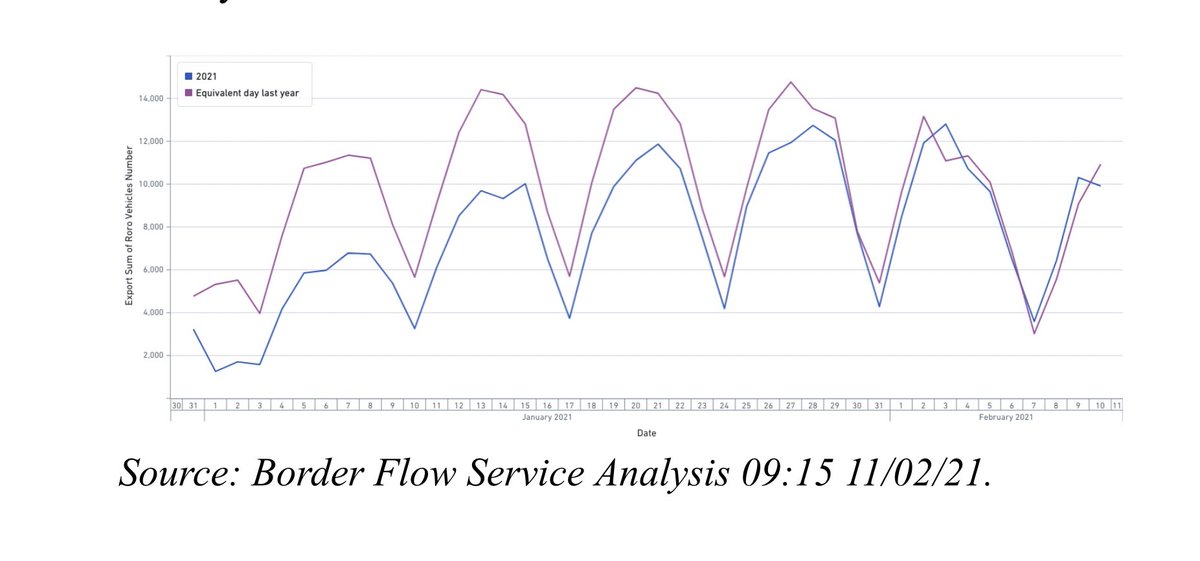

Ladies and Gentlemen, it's time! https://t.co/xPMGL36VGy

So today, I am going to quickly talk about 4 or 5 countries where you can get residence visas.
Why residence visas?
For starters, they are cheaper, FAR CHEAPER than passports, and offer almost all the benefits, not not, but a large swathe of them.
Second, residencies can be...
a pathway to citizenship.
In one or two of the countries I will talk about tonight, if you renew your residencies long enough, and fulfill all requirements, according to their law, which differs from country to country, you become eligible to apply for full citizenship.
So...
you can see why they are good enough?
Cool. Alright, let's begin.
The first country is
1. Barbados
Yes, @Rihanna's country.
The first thing I love about it is it's fully black, majority descendants of ex-slaves of Igbo extraction.
That's why they refer to their country...
Barbados last year officially launched its 12-month Barbados Welcome Stamp, a new visa that allows remote workers to live and work from the Caribbean country for up to a year.
Applicants must electronically submit documents, such as a copy of their international passport and...
I'll do a thread of countries outside Nigeria where you younglings + all of you "young at heart" making smart internet money can get Permanent and Temporary residencies, allowing multiple entries and exits.
— Ikenna Ronald Nzimora (@ronaldnzimora) February 18, 2021
As always the idea is for you guys to have a PLAN B.
Tonight. 8 PM.
So today, I am going to quickly talk about 4 or 5 countries where you can get residence visas.
Why residence visas?
For starters, they are cheaper, FAR CHEAPER than passports, and offer almost all the benefits, not not, but a large swathe of them.
Second, residencies can be...
a pathway to citizenship.
In one or two of the countries I will talk about tonight, if you renew your residencies long enough, and fulfill all requirements, according to their law, which differs from country to country, you become eligible to apply for full citizenship.
So...
you can see why they are good enough?
Cool. Alright, let's begin.
The first country is
1. Barbados
Yes, @Rihanna's country.
The first thing I love about it is it's fully black, majority descendants of ex-slaves of Igbo extraction.
That's why they refer to their country...
Barbados last year officially launched its 12-month Barbados Welcome Stamp, a new visa that allows remote workers to live and work from the Caribbean country for up to a year.
Applicants must electronically submit documents, such as a copy of their international passport and...
You May Also Like



Following @BAUDEGS I have experienced hateful and propagandist tweets time after time. I have been shocked that an academic community would be so reckless with their publications. So I did some research.
The question is:
Is this an official account for Bahcesehir Uni (Bau)?

Bahcesehir Uni, BAU has an official website https://t.co/ztzX6uj34V which links to their social media, leading to their Twitter account @Bahcesehir
BAU’s official Twitter account

BAU has many departments, which all have separate accounts. Nowhere among them did I find @BAUDEGS
@BAUOrganization @ApplyBAU @adayBAU @BAUAlumniCenter @bahcesehirfbe @baufens @CyprusBau @bauiisbf @bauglobal @bahcesehirebe @BAUintBatumi @BAUiletisim @BAUSaglik @bauebf @TIPBAU
Nowhere among them was @BAUDEGS to find

The question is:
Is this an official account for Bahcesehir Uni (Bau)?
Bahcesehir Uni, BAU has an official website https://t.co/ztzX6uj34V which links to their social media, leading to their Twitter account @Bahcesehir
BAU’s official Twitter account
BAU has many departments, which all have separate accounts. Nowhere among them did I find @BAUDEGS
@BAUOrganization @ApplyBAU @adayBAU @BAUAlumniCenter @bahcesehirfbe @baufens @CyprusBau @bauiisbf @bauglobal @bahcesehirebe @BAUintBatumi @BAUiletisim @BAUSaglik @bauebf @TIPBAU
Nowhere among them was @BAUDEGS to find


