The fact that we can't agree anymore on simple truths keeps me up at night.
More from Life

1/“What would need to be true for you to….X”
Why is this the most powerful question you can ask when attempting to reach an agreement with another human being or organization?
A thread, co-written by @deanmbrody:
2/ First, “X” could be lots of things. Examples: What would need to be true for you to
- “Feel it's in our best interest for me to be CMO"
- “Feel that we’re in a good place as a company”
- “Feel that we’re on the same page”
- “Feel that we both got what we wanted from this deal
3/ Normally, we aren’t that direct. Example from startup/VC land:
Founders leave VC meetings thinking that every VC will invest, but they rarely do.
Worse over, the founders don’t know what they need to do in order to be fundable.
4/ So why should you ask the magic Q?
To get clarity.
You want to know where you stand, and what it takes to get what you want in a way that also gets them what they want.
It also holds them (mentally) accountable once the thing they need becomes true.
5/ Staying in the context of soliciting investors, the question is “what would need to be true for you to want to invest (or partner with us on this journey, etc)?”
Multiple responses to this question are likely to deliver a positive result.
Why is this the most powerful question you can ask when attempting to reach an agreement with another human being or organization?
A thread, co-written by @deanmbrody:
Next level tactic when closing a sale, candidate, or investment:
— Erik Torenberg (@eriktorenberg) February 27, 2018
Ask: \u201cWhat needs to be true for you to be all in?\u201d
You'll usually get an explicit answer that you might not get otherwise. It also holds them accountable once the thing they need becomes true.
2/ First, “X” could be lots of things. Examples: What would need to be true for you to
- “Feel it's in our best interest for me to be CMO"
- “Feel that we’re in a good place as a company”
- “Feel that we’re on the same page”
- “Feel that we both got what we wanted from this deal
3/ Normally, we aren’t that direct. Example from startup/VC land:
Founders leave VC meetings thinking that every VC will invest, but they rarely do.
Worse over, the founders don’t know what they need to do in order to be fundable.
4/ So why should you ask the magic Q?
To get clarity.
You want to know where you stand, and what it takes to get what you want in a way that also gets them what they want.
It also holds them (mentally) accountable once the thing they need becomes true.
5/ Staying in the context of soliciting investors, the question is “what would need to be true for you to want to invest (or partner with us on this journey, etc)?”
Multiple responses to this question are likely to deliver a positive result.


TW: suicidal ideation.
At the darkest days of the abuse I was being subjected to I decided to attend a conference for women in Los Angeles. I convinced my mother in law to pay for it because I couldn’t afford it. @ChristineCaine was preaching. I was desperate...
1/
I wanted to die, I didn’t see a way out and I had tried everything. I imagined many ways to die daily. The most recurring one was throwing my car down a bridge I had to drive over every day. I never did it because my kids were in the car and I was afraid one of them would...
2/
survive or I’d kill someone on the way down.
Christine spoke about honoring your pastors even when they weren’t great, she spoke of us expecting too much of pastors and how wrong that was. She said God would use our testimony if we submitted to our pastors.
3/
She said “honor your pastors, God will honor you.” She said more about having disagreed with her pastors but she submitted and God honored her and now she’s blessed. How if they are faithfully serving God, we need to support them and not forfeit what God has for us.
4/
I felt my heart drop into my stomach. I got up and went to the bathroom because I couldn’t breath and I felt like I was going to faint if I didn’t scream. I now know I was having a panic attack. I sat on the toilet w/my head between my legs, breathed and wept..
5/
At the darkest days of the abuse I was being subjected to I decided to attend a conference for women in Los Angeles. I convinced my mother in law to pay for it because I couldn’t afford it. @ChristineCaine was preaching. I was desperate...
1/
There are many reasons why the unfolding news of Ravi Zacharias\u2019 abuse is enraging. But for me, there\u2019s one other piece. The women he chose to abuse were young, massage therapists, ethnic minorities, likely women who were not in positions of power or education.
— Devi Abraham (@devi_writes) February 12, 2021
I wanted to die, I didn’t see a way out and I had tried everything. I imagined many ways to die daily. The most recurring one was throwing my car down a bridge I had to drive over every day. I never did it because my kids were in the car and I was afraid one of them would...
2/
survive or I’d kill someone on the way down.
Christine spoke about honoring your pastors even when they weren’t great, she spoke of us expecting too much of pastors and how wrong that was. She said God would use our testimony if we submitted to our pastors.
3/
She said “honor your pastors, God will honor you.” She said more about having disagreed with her pastors but she submitted and God honored her and now she’s blessed. How if they are faithfully serving God, we need to support them and not forfeit what God has for us.
4/
I felt my heart drop into my stomach. I got up and went to the bathroom because I couldn’t breath and I felt like I was going to faint if I didn’t scream. I now know I was having a panic attack. I sat on the toilet w/my head between my legs, breathed and wept..
5/
You May Also Like

Neo-nazi group #PatriotFront held a photo op in #Chicago last weekend & is currently marching around #DC so it's as good time as any to compile a list of their identified members for folks to watch for
Who are these chuds?
Patriot Front broke away from white nationalist org Vanguard America following #unitetheright in #charlottesville after James Alex Fields was seen with a VA shield before driving his car into a crowd, murdering Heather Heyer & injuring dozens of others
Syed Robbie Javid a.k.a. Sayed Robbie Javid or Robbie Javid of Alexandria,
Antoine Bernard Renard (a.k.a. “Charlemagne MD” on Discord) from Rockville, MD.
https://t.co/ykEjdZFDi6
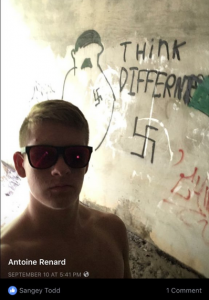
Brandon Troy Higgs, 25, from Reisterstown,
Who are these chuds?
Patriot Front broke away from white nationalist org Vanguard America following #unitetheright in #charlottesville after James Alex Fields was seen with a VA shield before driving his car into a crowd, murdering Heather Heyer & injuring dozens of others
Syed Robbie Javid a.k.a. Sayed Robbie Javid or Robbie Javid of Alexandria,
Happy Monday everyone :-) Let's ring in September by reacquainting ourselves with Virginia neo-Nazi and NSC Dixie affiliate Sayed "Robbie" Javid, now known by "Reform the States". Robbie is an explicitly genocidal neo-Nazi, so lets get to know him a bit better!
— Garfield but Anti-Fascist (@AntifaGarfield) August 31, 2020
CW on this thread pic.twitter.com/3gzxrIo9HD
Antoine Bernard Renard (a.k.a. “Charlemagne MD” on Discord) from Rockville, MD.
https://t.co/ykEjdZFDi6
Brandon Troy Higgs, 25, from Reisterstown,

First update to https://t.co/lDdqjtKTZL since the challenge ended – Medium links!! Go add your Medium profile now 👀📝 (thanks @diannamallen for the suggestion 😁)

Just added Telegram links to https://t.co/lDdqjtKTZL too! Now you can provide a nice easy way for people to message you :)

Less than 1 hour since I started adding stuff to https://t.co/lDdqjtKTZL again, and profile pages are now responsive!!! 🥳 Check it out -> https://t.co/fVkEL4fu0L
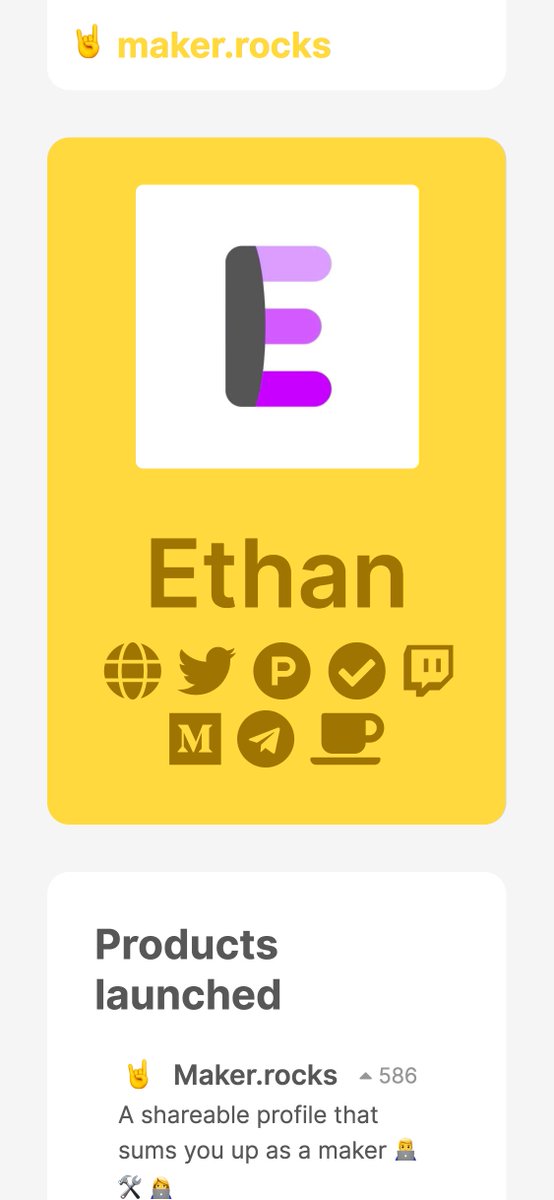
Accounts page is now also responsive!! 📱✨
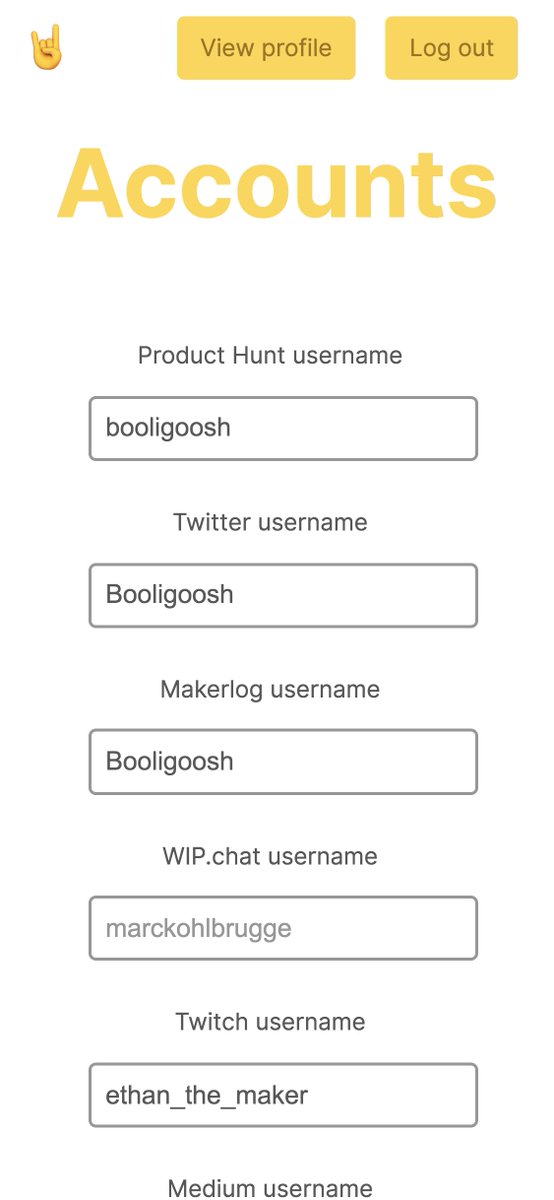
💪 I managed to make the whole site responsive in about an hour. On my roadmap I had it down as 4-5 hours!!! 🤘🤠🤘
Just added Telegram links to https://t.co/lDdqjtKTZL too! Now you can provide a nice easy way for people to message you :)
Less than 1 hour since I started adding stuff to https://t.co/lDdqjtKTZL again, and profile pages are now responsive!!! 🥳 Check it out -> https://t.co/fVkEL4fu0L
Accounts page is now also responsive!! 📱✨
💪 I managed to make the whole site responsive in about an hour. On my roadmap I had it down as 4-5 hours!!! 🤘🤠🤘