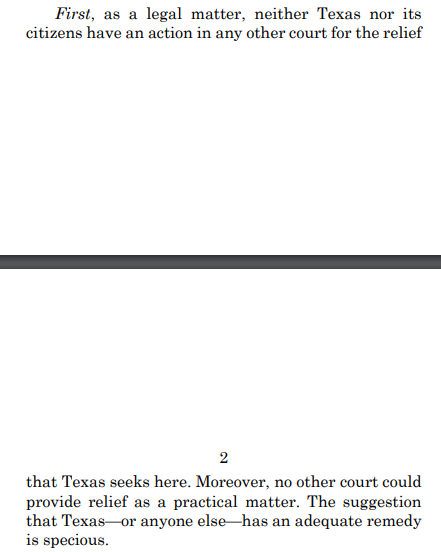
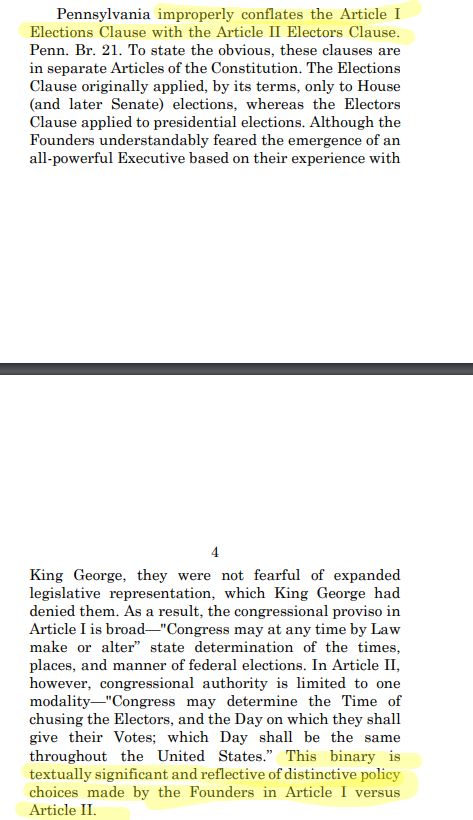
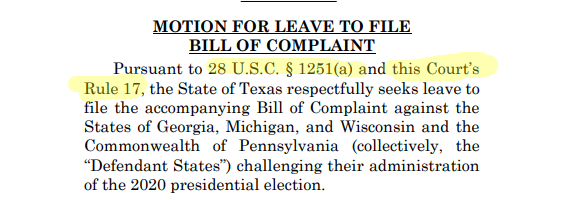
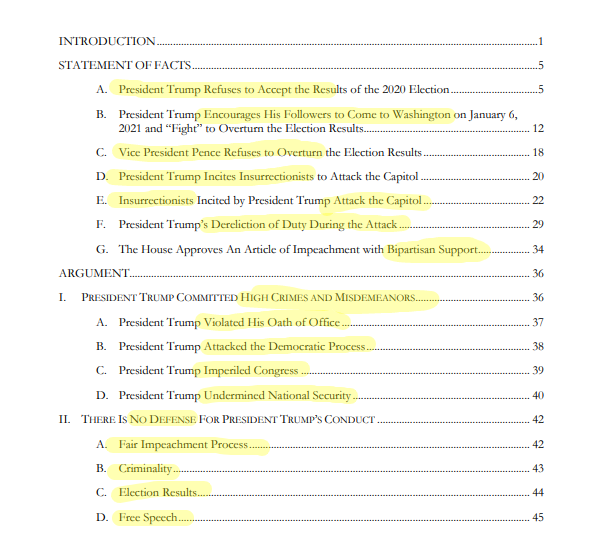
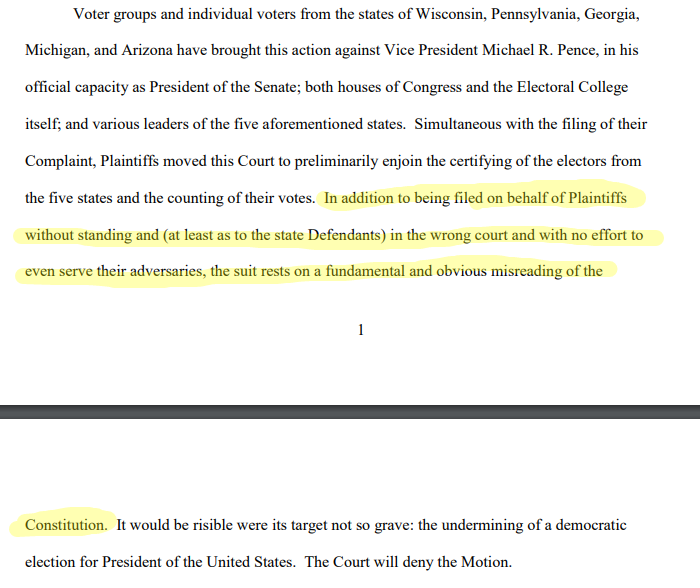
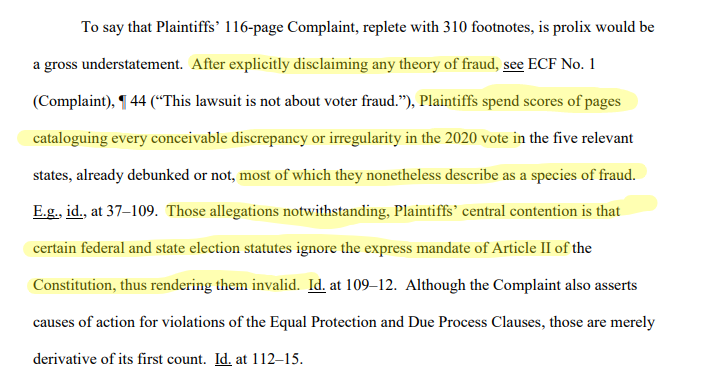
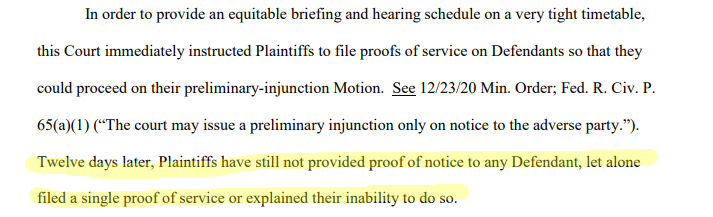
In the cold light of morning, I'm still completely amazed by the legal belly flop that @ThomasMoreSoc filed in the DC District Court. It's the legal equivalent of watching the butt fumble, live

EVERYTHING you could possibly get wrong in a complaint, they managed

Start with the plaintiffs. The ONLY claims in the lawsuit are that the Constitution gives state legislatures the right to set the manner of elections, which they have allegedly (we'll get to this insanity) failed to do.
There's oodles of caselaw saying "since that's a right of the state legislature, only state legislatures, as a body, can bring such a claim"

Are the plaintiffs state legislatures?

https://t.co/KJGEvm8Owp
OK, what about the Defendants? They've sued Defendants from, IIRC, five states (GA, PA, WI, MI, AZ) based on claims that the State Legislatures there didn't pass election rules that the plaintiffs insist the Constitution requires (I promise, we'll get there).
OK, so the State Legislatures weren't plaintiffs. They were Defendants, right? 'Cause, you know, the claim is that the legislatures didn't do what they were required to do?

Again
Let's gloss over the fact that they've joined a whole bunch of independent defendants, sued for independent wrongs, in a single case ....
For those who don't know, you ... uh ... can't do that. If I steal your car, and someone in Wisconsin empties your bank account, you can't sue us both in one case just because we both stole from you; unless it's a conspiracy & we're working together, you need separate suits
But sweet glory, they ALSO named the Electoral College as a Defendant, an "entity" that, with apologies to @scottlynch78, is entirely fictional.
That's like filing a lawsuit against "chemotherapy" or "the foreign policy establishment". As I said last night, pity the poor process server who was handed a summons and told "ok, go serve this on the Electoral College"
On the plus side, they DID make up a physical address for "Defendant Electoral College" - it's the US Capitol Building, where (unless I'm wrong and the DC electors use it) exactly NONE of the temporary members of the Electoral College even meet to vote
They also sued a raft of individual defendants from the various states "in their official capacity" - except Brian Kemp, who was sued in his "original" capacity - meaning that they all have 11th Amendment immunity from being sued
Or, well, they would, if the case ever got to the point where immunity is relevant, which it won't because ...
They sued these defendants in the US District Court for the District of Columbia, where basically none of the defendants reside or do business (except for Mike Pence and Congress, who, OF COURSE, were also named as defendants because when you're this crazy, why not?)
This is a slight problem due to the little-discussed topic of personal jurisdiction, which only a hundred thousand or so cases have addressed, which basically says "no, asshole, you can't sue Ginny Welch of Minnetonka in a court in New York. We have no power over her"
There are exceptions to that rule, of course - we're lawyers, after all, and bright-line, easily followed rules without exceptions would put us out of business - but none of them apply here, and the plaintiffs don't even bother arguing that they do.

More from Akiva Cohen

More from Law

You May Also Like

First thread of the year because I have time during MCO. As requested, a thread on the gods and spirits of Malay folk religion. Some are indigenous, some are of Indian origin, some have Islamic


Before I begin, it might be worth explaining the Malay conception of the spirit world. At its deepest level, Malay religious belief is animist. All living beings and even certain objects are said to have a soul. Natural phenomena are either controlled by or personified as spirits

Although these beings had to be respected, not all of them were powerful enough to be considered gods. Offerings would be made to the spirits that had greater influence on human life. Spells and incantations would invoke their


Two known examples of such elemental spirits that had god-like status are Raja Angin (king of the wind) and Mambang Tali Arus (spirit of river currents). There were undoubtedly many more which have been lost to time

Contact with ancient India brought the influence of Hinduism and Buddhism to SEA. What we now call Hinduism similarly developed in India out of native animism and the more formal Vedic tradition. This can be seen in the multitude of sacred animals and location-specific Hindu gods