
I couldn’t tweet a better description than the headline for this piece: After SolarWinds breach, lawmakers ask NSA for help in cracking Juniper cold case.
More from Law

1/ After a good night's sleep, I have a few thoughts on the impending Ripple lawsuit.
Less schadenfreude, more "what now?" https://t.co/a0oTwblBHB
2/ First of all, the USG is going to lose.
I don't even need to read the complaint. They might force a settlement, but they're outclassed on legal.
Remember Ripple engaged former SEC Chair Mary Jo White in a civil matter in 2018. A hint of their
3/ Second, the USG should lose.
The SEC restrictions on non-accredited investors; the ridiculous Howey test; 80 year old securities law like the "40 Act" all need to die in fire. They are un-American and completely outdated.
I hope Ripple wins. (WUT?)
4/ Third, it's incumbent upon industry to self-police and hold the moral high ground.
I give certain individuals A's and others F's, but as a whole, the most powerful people and companies generally take a Swiss neutrality stance on assets.
So we're effectively in this together.
5/ We're "in this together" to draw lines of regulatory demarcation.
XRP as a "security" further hurts the U.S. businesses while global comps will continue to make these markets.
XRP as a security also means other assets will meet the same fate. At least Ripple has $ to fight.
Less schadenfreude, more "what now?" https://t.co/a0oTwblBHB
BREAKING: The @SEC_News intends to sue @ripple over its sale of XRP, alleging the cryptocurrency is an unregistered security according to @bgarlinghouse.@nikhileshde reportshttps://t.co/7Z3KSWk7dn
— CoinDesk (@CoinDesk) December 22, 2020
2/ First of all, the USG is going to lose.
I don't even need to read the complaint. They might force a settlement, but they're outclassed on legal.
Remember Ripple engaged former SEC Chair Mary Jo White in a civil matter in 2018. A hint of their
3/ Second, the USG should lose.
The SEC restrictions on non-accredited investors; the ridiculous Howey test; 80 year old securities law like the "40 Act" all need to die in fire. They are un-American and completely outdated.
I hope Ripple wins. (WUT?)
4/ Third, it's incumbent upon industry to self-police and hold the moral high ground.
I give certain individuals A's and others F's, but as a whole, the most powerful people and companies generally take a Swiss neutrality stance on assets.
So we're effectively in this together.
5/ We're "in this together" to draw lines of regulatory demarcation.
XRP as a "security" further hurts the U.S. businesses while global comps will continue to make these markets.
XRP as a security also means other assets will meet the same fate. At least Ripple has $ to fight.


High crime talk from Fredo
VA curfew
Sen. Grassley - Biden family investigated, potential financial crimes WW including China
Warning
March

The #TexasCase has them terrified.
— Major Patriot (@MajorPatriot) December 10, 2020
They are losing it.#CNN pic.twitter.com/FtdWKIXBlB
VA curfew
#BREAKING: Virginia will implement a statewide curfew from midnight to 5 a.m. starting on Dec. 14. Here's what else is changing for Virginians.https://t.co/cH4jdCOZgt
— WUSA9 (@wusa9) December 10, 2020
Sen. Grassley - Biden family investigated, potential financial crimes WW including China
Warning
— Dan Scavino\U0001f1fa\U0001f1f8\U0001f985 (@DanScavino) December 11, 2020
March


One of the judges this story mentions is William Cassidy, who was promoted from an Atlanta IJ position to a BIA member position in 2019 by the Trump DOJ. Cassidy has an awful history that has been well-documented, but I'm still enraged reading this reporting.
The story notes that the EOIR Director served as an ICE attorney in Atlanta and practiced before Cassidy for years. And it points to FOIA records unearthed by Bryan Johnson showing they remain friendly.
A trove of complaints against Cassidy was published by AILA in 2019 after FOIA litigation. They generally show misconduct, substantiated in the record, followed by "written counseling" etc.
One way Cassidy could avoid discipline is by turning off the recording device during the hearing. If he made a lewd or offensive comment off the record, all the EOIR would do is listen to the recording. If it's not there, the complaint is "unsubstantiated" https://t.co/wUeBPEEbpV

In that case, Cassidy joked about a detained immigrant saying he missed his wife. The complaint was dismissed because the ACIJ found "no levity or joking" in the comment.

\U0001f6a8New investigation: \U0001f6a8
— Tal Kopan (@TalKopan) January 22, 2021
How sexual harassment and misconduct has been allowed to flourish in the immigration courts, a system intended to give immigrants a fair chance to stay in the U.S.:https://t.co/Lw8hpK5jSe
The story notes that the EOIR Director served as an ICE attorney in Atlanta and practiced before Cassidy for years. And it points to FOIA records unearthed by Bryan Johnson showing they remain friendly.
A trove of complaints against Cassidy was published by AILA in 2019 after FOIA litigation. They generally show misconduct, substantiated in the record, followed by "written counseling" etc.
One way Cassidy could avoid discipline is by turning off the recording device during the hearing. If he made a lewd or offensive comment off the record, all the EOIR would do is listen to the recording. If it's not there, the complaint is "unsubstantiated" https://t.co/wUeBPEEbpV
In that case, Cassidy joked about a detained immigrant saying he missed his wife. The complaint was dismissed because the ACIJ found "no levity or joking" in the comment.
You May Also Like



My top 10 tweets of the year
A thread 👇
https://t.co/xj4js6shhy
https://t.co/b81zoW6u1d
https://t.co/1147it02zs
https://t.co/A7XCU5fC2m
A thread 👇
https://t.co/xj4js6shhy
Entrepreneur\u2019s mind.
— James Clear (@JamesClear) August 22, 2020
Athlete\u2019s body.
Artist\u2019s soul.
https://t.co/b81zoW6u1d
When you choose who to follow on Twitter, you are choosing your future thoughts.
— James Clear (@JamesClear) October 3, 2020
https://t.co/1147it02zs
Working on a problem reduces the fear of it.
— James Clear (@JamesClear) August 30, 2020
It\u2019s hard to fear a problem when you are making progress on it\u2014even if progress is imperfect and slow.
Action relieves anxiety.
https://t.co/A7XCU5fC2m
We often avoid taking action because we think "I need to learn more," but the best way to learn is often by taking action.
— James Clear (@JamesClear) September 23, 2020


THREAD: 12 Things Everyone Should Know About IQ
1. IQ is one of the most heritable psychological traits – that is, individual differences in IQ are strongly associated with individual differences in genes (at least in fairly typical modern environments). https://t.co/3XxzW9bxLE
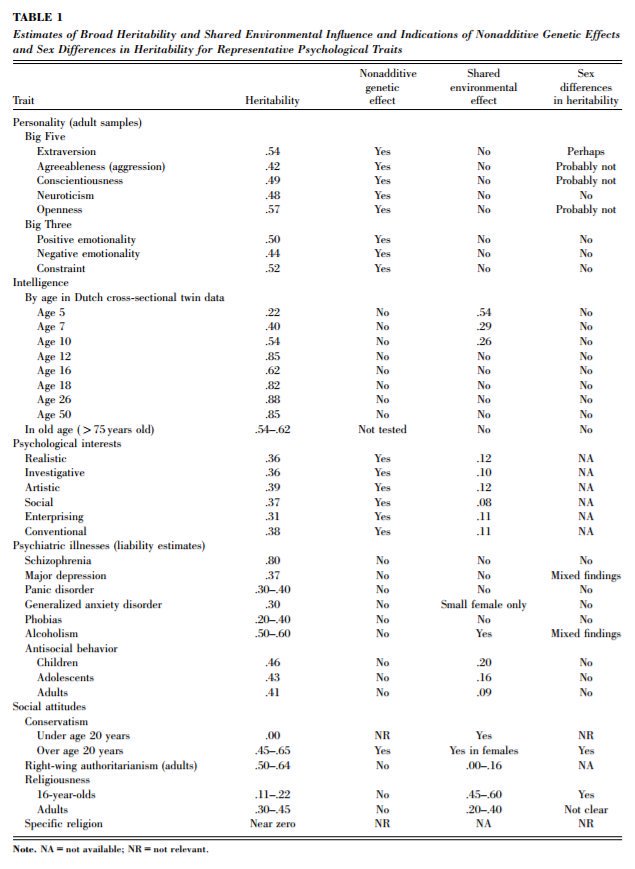
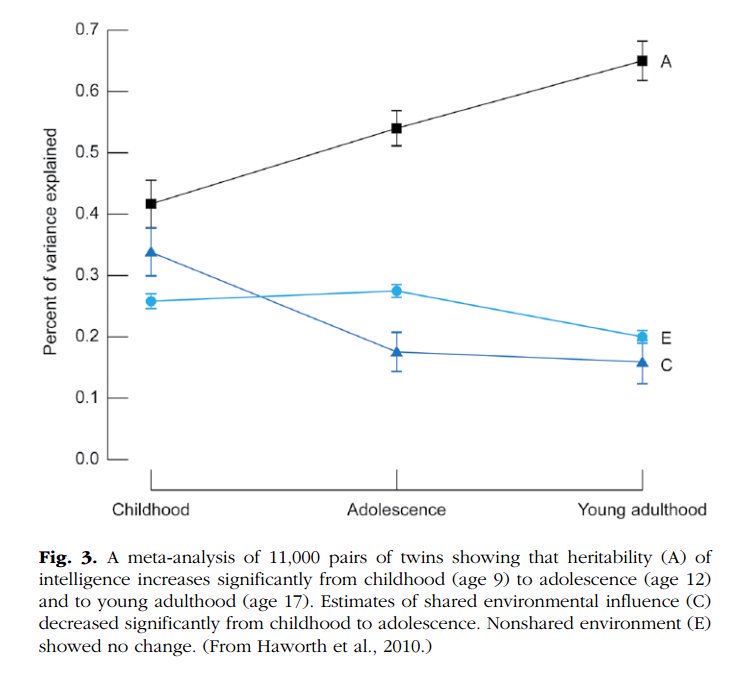
2. The heritability of IQ *increases* from childhood to adulthood. Meanwhile, the effect of the shared environment largely fades away. In other words, when it comes to IQ, nature becomes more important as we get older, nurture less. https://t.co/UqtS1lpw3n
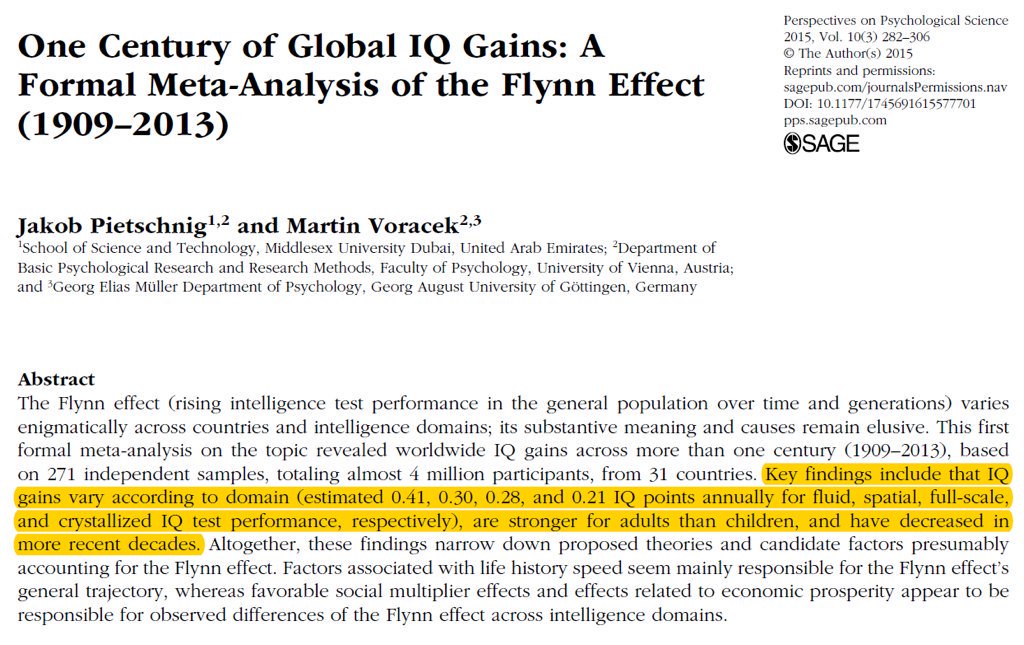
3. IQ scores have been increasing for the last century or so, a phenomenon known as the Flynn effect. https://t.co/sCZvCst3hw (N ≈ 4 million)
(Note that the Flynn effect shows that IQ isn't 100% genetic; it doesn't show that it's 100% environmental.)
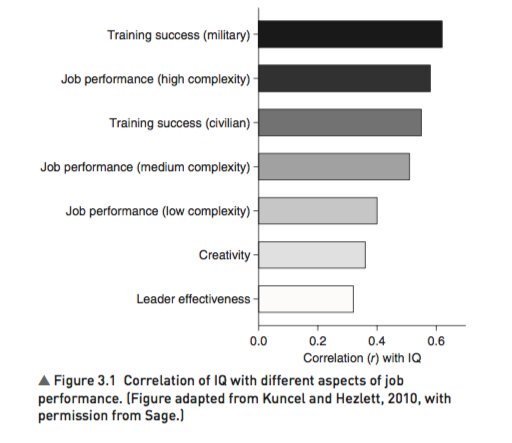
4. IQ predicts many important real world outcomes.
For example, though far from perfect, IQ is the single-best predictor of job performance we have – much better than Emotional Intelligence, the Big Five, Grit, etc. https://t.co/rKUgKDAAVx https://t.co/DWbVI8QSU3
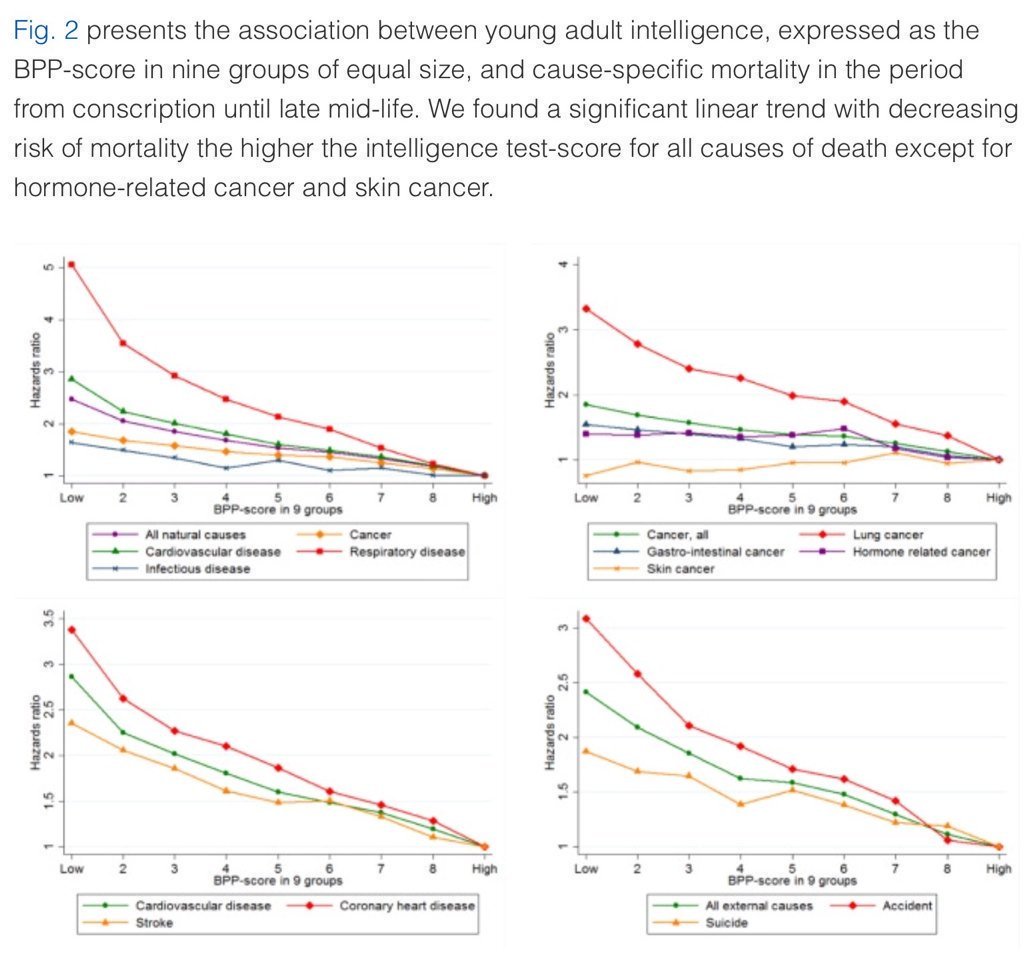
5. Higher IQ is associated with a lower risk of death from most causes, including cardiovascular disease, respiratory disease, most forms of cancer, homicide, suicide, and accident. https://t.co/PJjGNyeQRA (N = 728,160)
1. IQ is one of the most heritable psychological traits – that is, individual differences in IQ are strongly associated with individual differences in genes (at least in fairly typical modern environments). https://t.co/3XxzW9bxLE
2. The heritability of IQ *increases* from childhood to adulthood. Meanwhile, the effect of the shared environment largely fades away. In other words, when it comes to IQ, nature becomes more important as we get older, nurture less. https://t.co/UqtS1lpw3n
3. IQ scores have been increasing for the last century or so, a phenomenon known as the Flynn effect. https://t.co/sCZvCst3hw (N ≈ 4 million)
(Note that the Flynn effect shows that IQ isn't 100% genetic; it doesn't show that it's 100% environmental.)
4. IQ predicts many important real world outcomes.
For example, though far from perfect, IQ is the single-best predictor of job performance we have – much better than Emotional Intelligence, the Big Five, Grit, etc. https://t.co/rKUgKDAAVx https://t.co/DWbVI8QSU3
5. Higher IQ is associated with a lower risk of death from most causes, including cardiovascular disease, respiratory disease, most forms of cancer, homicide, suicide, and accident. https://t.co/PJjGNyeQRA (N = 728,160)

I’m torn on how to approach the idea of luck. I’m the first to admit that I am one of the luckiest people on the planet. To be born into a prosperous American family in 1960 with smart parents is to start life on third base. The odds against my very existence are astronomical.
I’ve always felt that the luckiest people I know had a talent for recognizing circumstances, not of their own making, that were conducive to a favorable outcome and their ability to quickly take advantage of them.
In other words, dumb luck was just that, it required no awareness on the person’s part, whereas “smart” luck involved awareness followed by action before the circumstances changed.
So, was I “lucky” to be born when I was—nothing I had any control over—and that I came of age just as huge databases and computers were advancing to the point where I could use those tools to write “What Works on Wall Street?” Absolutely.
Was I lucky to start my stock market investments near the peak of interest rates which allowed me to spend the majority of my adult life in a falling rate environment? Yup.
Ironies of Luck https://t.co/5BPWGbAxFi
— Morgan Housel (@morganhousel) March 14, 2018
"Luck is the flip side of risk. They are mirrored cousins, driven by the same thing: You are one person in a 7 billion player game, and the accidental impact of other people\u2019s actions can be more consequential than your own."
I’ve always felt that the luckiest people I know had a talent for recognizing circumstances, not of their own making, that were conducive to a favorable outcome and their ability to quickly take advantage of them.
In other words, dumb luck was just that, it required no awareness on the person’s part, whereas “smart” luck involved awareness followed by action before the circumstances changed.
So, was I “lucky” to be born when I was—nothing I had any control over—and that I came of age just as huge databases and computers were advancing to the point where I could use those tools to write “What Works on Wall Street?” Absolutely.
Was I lucky to start my stock market investments near the peak of interest rates which allowed me to spend the majority of my adult life in a falling rate environment? Yup.