So Dominion sued Rudy for defamation. How are they ever going to allege actual malice?
More from Akiva Cohen
EVERYTHING you could possibly get wrong in a complaint, they managed

Start with the plaintiffs. The ONLY claims in the lawsuit are that the Constitution gives state legislatures the right to set the manner of elections, which they have allegedly (we'll get to this insanity) failed to do.
There's oodles of caselaw saying "since that's a right of the state legislature, only state legislatures, as a body, can bring such a claim"
Are the plaintiffs state legislatures?
https://t.co/KJGEvm8Owp

OK, what about the Defendants? They've sued Defendants from, IIRC, five states (GA, PA, WI, MI, AZ) based on claims that the State Legislatures there didn't pass election rules that the plaintiffs insist the Constitution requires (I promise, we'll get there).
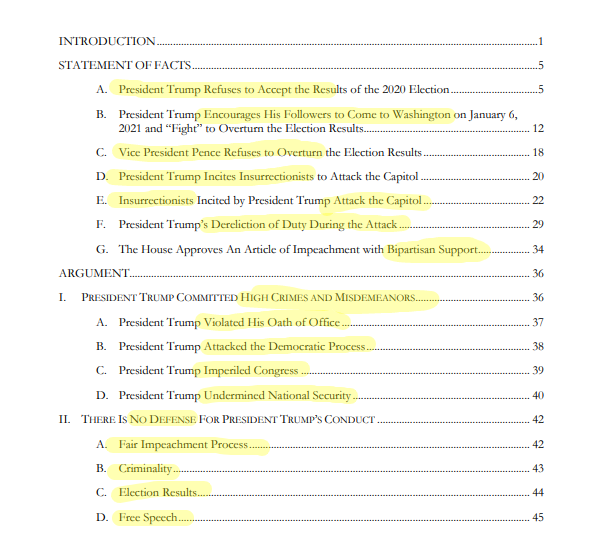
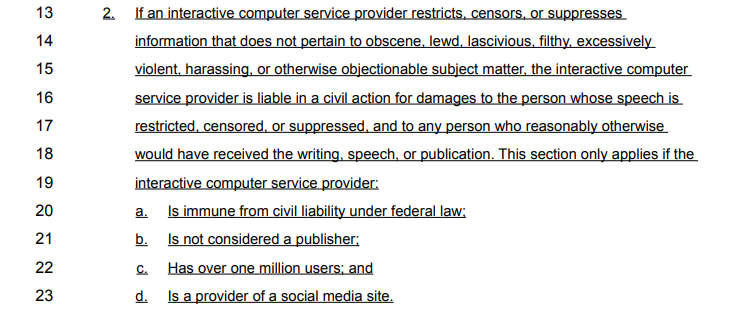
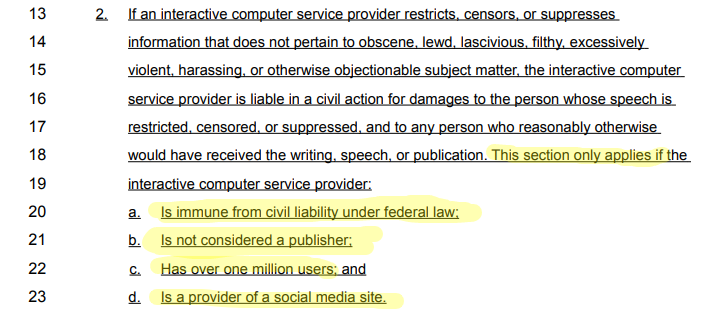
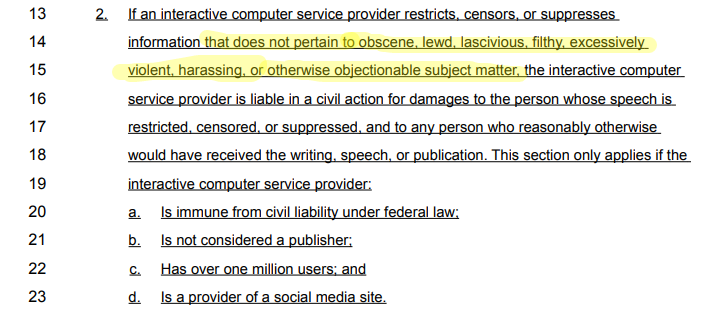
Here's the meat of their intro: Amazon isn't being fair to us. They're holding us to a higher standard than Twitter - they say we allow violent content, but look what Twitter does!
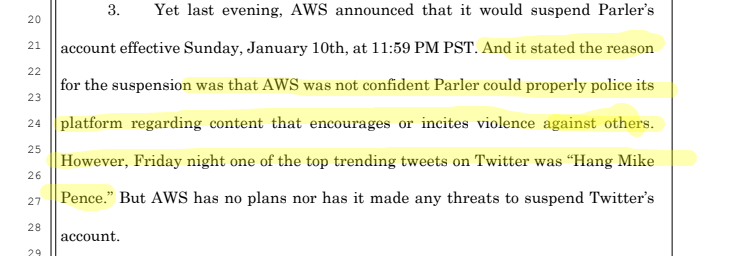
There are a few problems with this approach. First, there's a factual problem: Twitter and Parler take very different approaches to moderation. Hell, *that's Parler's entire pitch.* So "we're the same as Twitter, why are you treating us different" isn't going to fly
ALSO, the hashtag was mostly people saying "these folks are calling to hang Mike
Five minutes of scrolling a search for #hangmikepence, a gallery: pic.twitter.com/40hsyJNK50
— Jawafawa (@jawafawa) January 11, 2021
And ALSO also, did anyone notice any prominent right wingers complaining about losing tens of thousands of followers yesterday? You know why they did? Because Twitter has been active in deleting accounts that violate its TOS
Hi, #Squidigation fans. New developments in the Michigan tentacle. Driving little man to school this morning, but we can talk about it when I get back https://t.co/m6GxK7g5T1
— Akiva Cohen (@AkivaMCohen) December 7, 2020
First: 11th Amendment Immunity. Basically, states (and their officials) have sovereign immunity; you can't sue them in Federal Court except to the extent that they agree to be sued there. Quick thumbnail of the doctrine here
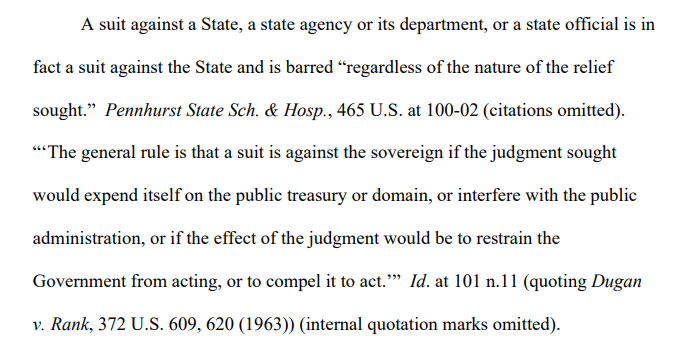
There are only 3 exceptions to this: 1) Congress says "you can sue your state for this"; 2) the state agrees to be sued; 3) Younger, a case that said "you can sue your state if you are just seeking an order saying 'stop violating my rights'"
In other words, if the state passes a law that says "no talking politics in public" you can sue for an order saying "that's unconstitutional and can't be enforced" but not for damages from having your 1A rights violated in the past
I'm sure you can see where this is going: Exceptions 1 and 2 don't apply; Congress didn't say "no sovereign immunity" when it passed 42 USC 1983 (the civil rights statute the plaintiffs sued under) and Michigan hasn't waived it. That leave Younger as the only remaining option
More from Law








And I have thoughts (MY OWN). So, I’m sorry ... a thread 1/25
One of the main reasons I think users are best served by a recognition that social media services have 1st Amendment rights to curate the content on their sites is because many users want filtered content, either by topic, or by behavior, or other. 2/
So online services should have the right to do this filtering, and to give their users the tools to do so too. For more detail see our Prager U amicus brief https://t.co/73PswB9Q7Q 3/
So, I disagree with my friends (and others) who say that every online service should apply First Amendment rules, even though they cannot be required to do so. There are both practical and policy reasons why I don’t like this. 4/
Most obviously, the 1st Amendment reflects only one national legal system when this is inherently an international issue. So it’s politically messy, even if you think a 1st Amendment-based policy will be most speech-protective (though probably only non-sexual speakers). 5/

We have watched and waited too long for the government to punish. It never happens and even in some cases it does it lakes too long,and many more crimes are done in the meantime. Quick justice like this is the best way out.
— Ratna murlidharan (@Ratnamurlidhar2) January 2, 2021
In other words, what do governments prefer - looking away the other side when law is broken with impunity in the fear that acting against the offender will lead to large scale rioting on the roads?
Or will the government gear up to uphold the sanctity of law and punish every single one trying to break it? There are many examples. Take the Tablighi Wuhan Wave. Or Bangalore Riots. Or the destruction of Temples in Andhra.
Now, if the perpetrators are punished, there is going to be large scale rioting. Pointing out Tablighi Wuhan Wave destroyed many a person in the Gulf when Pakistanis and their minions profiled every Indian and got them arrested for insulting Islam.
No one talks about the post to which the MLA's nephew responded to. Singhu Resort is another. What's stopping the government from clearing the protest site? Is it the same confusion between law and order?
You May Also Like

Imagine for a moment the most obscurantist, jargon-filled, po-mo article the politically correct academy might produce. Pure SJW nonsense. Got it? Chances are you're imagining something like the infamous "Feminist Glaciology" article from a few years back.https://t.co/NRaWNREBvR pic.twitter.com/qtSFBYY80S
— Jeffrey Sachs (@JeffreyASachs) October 13, 2018
The article is, at heart, deeply weird, even essentialist. Here, for example, is the claim that proposing climate engineering is a "man" thing. Also a "man" thing: attempting to get distance from a topic, approaching it in a disinterested fashion.

Also a "man" thing—physical courage. (I guess, not quite: physical courage "co-constitutes" masculinist glaciology along with nationalism and colonialism.)

There's criticism of a New York Times article that talks about glaciology adventures, which makes a similar point.

At the heart of this chunk is the claim that glaciology excludes women because of a narrative of scientific objectivity and physical adventure. This is a strong claim! It's not enough to say, hey, sure, sounds good. Is it true?