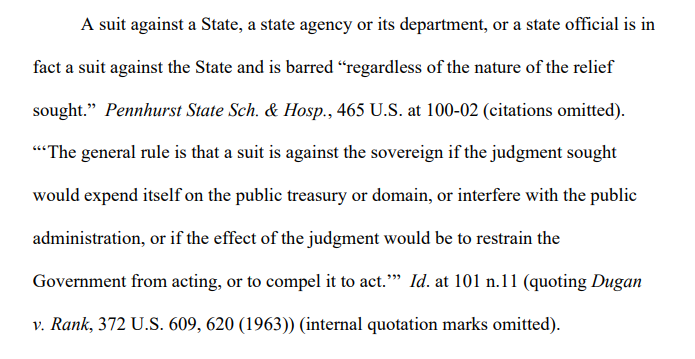
So, quick rundown of the latest #Squidigation decision: It's very thorough; 36 pages of Judge Parker explaining that Powell and her merry band of fuckups lose for every conceivable reason
Hi, #Squidigation fans. New developments in the Michigan tentacle. Driving little man to school this morning, but we can talk about it when I get back https://t.co/m6GxK7g5T1
— Akiva Cohen (@AkivaMCohen) December 7, 2020
Bottom line: The Plaintiffs have no ability to sue any of these defendants at all, so they lose.


It's over.
(I paraphrase)


Why? Abstention
Pullman abstention - don't assess the constitutionality of ambiguous state statutes until state courts have had an opportunity to interpret those statutes
More from Akiva Cohen

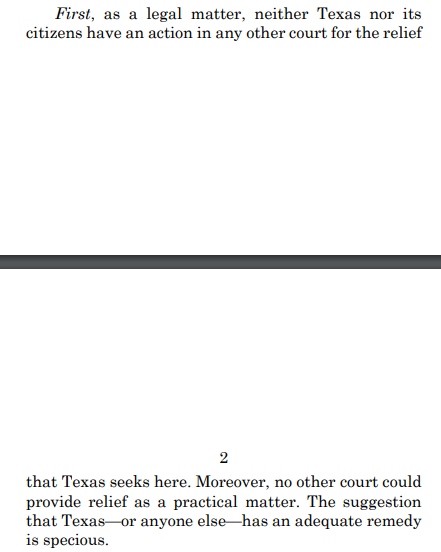
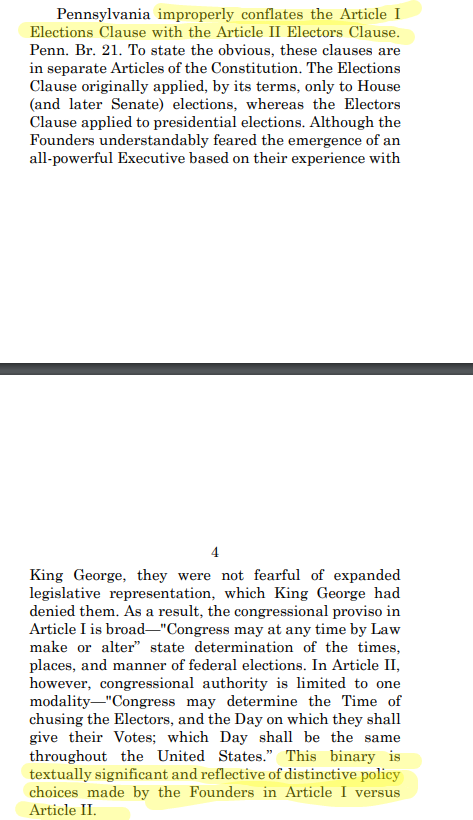


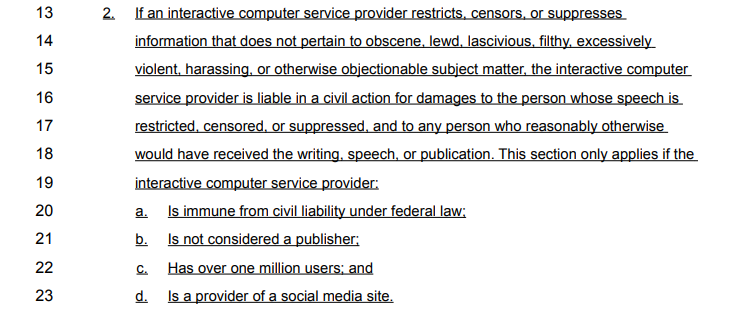
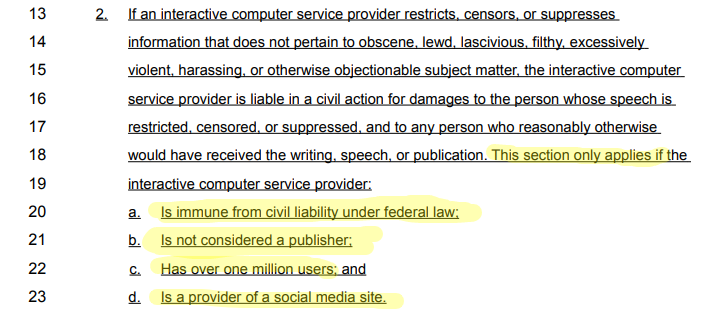
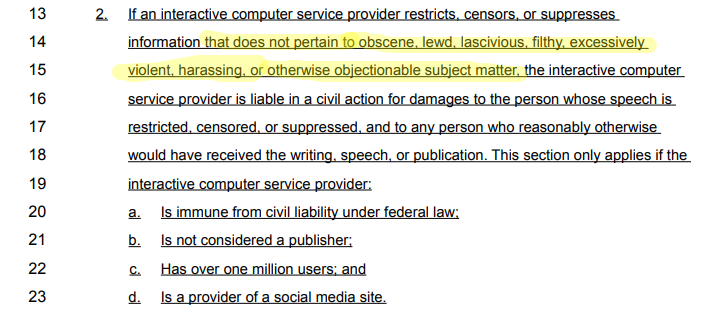
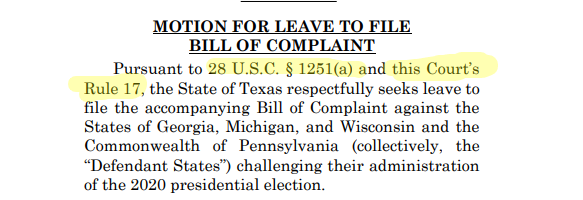

Looks like we need to spend some time talking about the Parler lolsuit against Amazon and why it's deader than a Mitch McConnell comedy special. They've brought three claims - antitrust, breach of contract, and tortious interference. None will survive. Here's why
Here's the meat of their intro: Amazon isn't being fair to us. They're holding us to a higher standard than Twitter - they say we allow violent content, but look what Twitter does!
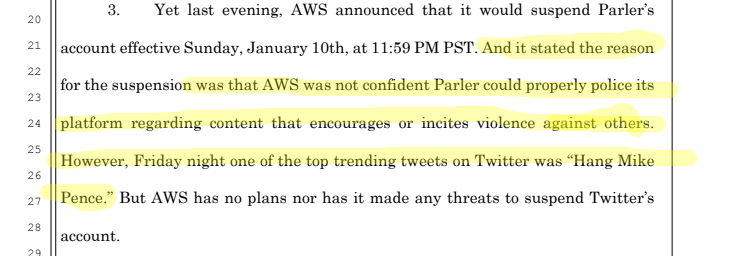
There are a few problems with this approach. First, there's a factual problem: Twitter and Parler take very different approaches to moderation. Hell, *that's Parler's entire pitch.* So "we're the same as Twitter, why are you treating us different" isn't going to fly
ALSO, the hashtag was mostly people saying "these folks are calling to hang Mike
And ALSO also, did anyone notice any prominent right wingers complaining about losing tens of thousands of followers yesterday? You know why they did? Because Twitter has been active in deleting accounts that violate its TOS
Here's the meat of their intro: Amazon isn't being fair to us. They're holding us to a higher standard than Twitter - they say we allow violent content, but look what Twitter does!
There are a few problems with this approach. First, there's a factual problem: Twitter and Parler take very different approaches to moderation. Hell, *that's Parler's entire pitch.* So "we're the same as Twitter, why are you treating us different" isn't going to fly
ALSO, the hashtag was mostly people saying "these folks are calling to hang Mike
Five minutes of scrolling a search for #hangmikepence, a gallery: pic.twitter.com/40hsyJNK50
— Jawafawa (@jawafawa) January 11, 2021
And ALSO also, did anyone notice any prominent right wingers complaining about losing tens of thousands of followers yesterday? You know why they did? Because Twitter has been active in deleting accounts that violate its TOS
You May Also Like


A brief analysis and comparison of the CSS for Twitter's PWA vs Twitter's legacy desktop website. The difference is dramatic and I'll touch on some reasons why.
Legacy site *downloads* ~630 KB CSS per theme and writing direction.
6,769 rules
9,252 selectors
16.7k declarations
3,370 unique declarations
44 media queries
36 unique colors
50 unique background colors
46 unique font sizes
39 unique z-indices
https://t.co/qyl4Bt1i5x

PWA *incrementally generates* ~30 KB CSS that handles all themes and writing directions.
735 rules
740 selectors
757 declarations
730 unique declarations
0 media queries
11 unique colors
32 unique background colors
15 unique font sizes
7 unique z-indices
https://t.co/w7oNG5KUkJ

The legacy site's CSS is what happens when hundreds of people directly write CSS over many years. Specificity wars, redundancy, a house of cards that can't be fixed. The result is extremely inefficient and error-prone styling that punishes users and developers.
The PWA's CSS is generated on-demand by a JS framework that manages styles and outputs "atomic CSS". The framework can enforce strict constraints and perform optimisations, which is why the CSS is so much smaller and safer. Style conflicts and unbounded CSS growth are avoided.
Legacy site *downloads* ~630 KB CSS per theme and writing direction.
6,769 rules
9,252 selectors
16.7k declarations
3,370 unique declarations
44 media queries
36 unique colors
50 unique background colors
46 unique font sizes
39 unique z-indices
https://t.co/qyl4Bt1i5x
PWA *incrementally generates* ~30 KB CSS that handles all themes and writing directions.
735 rules
740 selectors
757 declarations
730 unique declarations
0 media queries
11 unique colors
32 unique background colors
15 unique font sizes
7 unique z-indices
https://t.co/w7oNG5KUkJ
The legacy site's CSS is what happens when hundreds of people directly write CSS over many years. Specificity wars, redundancy, a house of cards that can't be fixed. The result is extremely inefficient and error-prone styling that punishes users and developers.
The PWA's CSS is generated on-demand by a JS framework that manages styles and outputs "atomic CSS". The framework can enforce strict constraints and perform optimisations, which is why the CSS is so much smaller and safer. Style conflicts and unbounded CSS growth are avoided.







This is a pretty valiant attempt to defend the "Feminist Glaciology" article, which says conventional wisdom is wrong, and this is a solid piece of scholarship. I'll beg to differ, because I think Jeffery, here, is confusing scholarship with "saying things that seem right".
The article is, at heart, deeply weird, even essentialist. Here, for example, is the claim that proposing climate engineering is a "man" thing. Also a "man" thing: attempting to get distance from a topic, approaching it in a disinterested fashion.

Also a "man" thing—physical courage. (I guess, not quite: physical courage "co-constitutes" masculinist glaciology along with nationalism and colonialism.)

There's criticism of a New York Times article that talks about glaciology adventures, which makes a similar point.

At the heart of this chunk is the claim that glaciology excludes women because of a narrative of scientific objectivity and physical adventure. This is a strong claim! It's not enough to say, hey, sure, sounds good. Is it true?
Imagine for a moment the most obscurantist, jargon-filled, po-mo article the politically correct academy might produce. Pure SJW nonsense. Got it? Chances are you're imagining something like the infamous "Feminist Glaciology" article from a few years back.https://t.co/NRaWNREBvR pic.twitter.com/qtSFBYY80S
— Jeffrey Sachs (@JeffreyASachs) October 13, 2018
The article is, at heart, deeply weird, even essentialist. Here, for example, is the claim that proposing climate engineering is a "man" thing. Also a "man" thing: attempting to get distance from a topic, approaching it in a disinterested fashion.
Also a "man" thing—physical courage. (I guess, not quite: physical courage "co-constitutes" masculinist glaciology along with nationalism and colonialism.)
There's criticism of a New York Times article that talks about glaciology adventures, which makes a similar point.
At the heart of this chunk is the claim that glaciology excludes women because of a narrative of scientific objectivity and physical adventure. This is a strong claim! It's not enough to say, hey, sure, sounds good. Is it true?