
Just like photography has become much easier to create in the last 100 years, liquid NFTs will surely bring down price points of tokenized digital content but will also open expansive new markets.
1/The next major problem set in #DeFi is #NFTLiquidity.
It has become very clear that, like fungibles, nonfungibles are their own financial asset class.
One path to see this is to envision the future of NFTs as “liquid
Just like photography has become much easier to create in the last 100 years, liquid NFTs will surely bring down price points of tokenized digital content but will also open expansive new markets.
👉🏻 In particular, because of tokenization, *the NFT liquidity problem reduces to the NFT price discovery problem.*
This is a core mechanism that today is underutilized in the market, and one that — we will soon see — applies to all illiquid assets.
And the fundamental problem with each of these mechanisms is capital efficiency: in each mechanism, participants need to spend *at least* $N to value something at $N.
But one super cool approach uses peer prediction oracles created by @nick_emmons and @UpshotHQ. https://t.co/HleEMPpgcq
It\u2019s no secret that pricing NFTs is really difficult, so we built an NFT appraisal product powered by peer prediction.https://t.co/uWFZq4aeGs
— Upshot (@UpshotHQ) December 23, 2020
Prices can then be reported on-chain through @UpshotHQ’s mechanism.
More from Internet


Or, you could let us know when you figure out why it was trending yesterday and the users are complaining which is why Vice wrote about it. Why I'm saying what I am.
There's an assumption here that this problem is fixed bc it was already hacked.
It's not.
We have ppl freezing and dying in TX right now because some ppl who thought they were really smart never spoke to anyone with actual experience with energy systems in extreme cold climates.
Texans are waiting for a solution to a preventable problem.
Farmers are saying that now, not during a crisis, they have to wait for a JD tech to arrive to help them.
The assumption that bc SOME farmers said screw this and used hacked firmware to get around that obstacle doesn't mean that all farmers are doing that.
If all farmers were using hacked firmware we wouldn't be discussing this right now would we?
Of course no one has pointed out that another issue here is that no one at John Deere has figured out they don't have enough staff to quickly and reliably SOLVE problems.
The locked firmware is just one of many issues here.
By not giving people a fast solution they're causing this and other issues.
So what I'm saying is somebody at John Deere needs to examine all of this.
There's an assumption here that this problem is fixed bc it was already hacked.
It's not.
Let us know when you've found the supply chain hack that's already there
— SleeplessOrphan (@sleeplessorphan) February 20, 2021
We have ppl freezing and dying in TX right now because some ppl who thought they were really smart never spoke to anyone with actual experience with energy systems in extreme cold climates.
Texans are waiting for a solution to a preventable problem.
Farmers are saying that now, not during a crisis, they have to wait for a JD tech to arrive to help them.
The assumption that bc SOME farmers said screw this and used hacked firmware to get around that obstacle doesn't mean that all farmers are doing that.
If all farmers were using hacked firmware we wouldn't be discussing this right now would we?
Of course no one has pointed out that another issue here is that no one at John Deere has figured out they don't have enough staff to quickly and reliably SOLVE problems.
The locked firmware is just one of many issues here.
By not giving people a fast solution they're causing this and other issues.
So what I'm saying is somebody at John Deere needs to examine all of this.

We’ve spent the last ten months building #CitizenBrowser, a project that aims to peek inside the Black Box of social media algorithms, by building a nationwide panel to share data with us. Today, we are publishing our first story from the project. /1
.@corintxt crunched the numbers and found that after Facebook flipped the switch for political ads, partisan content elbowed out reputable news outlets in our panelists’ news feeds. https://t.co/Z0kibSBeQZ /2
You can learn more in our methodology, where we describe how we did this and what steps we took to ensure that we preserved the panelists' privacy. https://t.co/UYbTXAjy5i /3
Personally, this project is the culmination of years of experiments trying to figure out how to collect data from social media platforms in a way that can lead to meaningful reporting. I’ve described a couple of highlights below 👇 /4
My first attempt was in 2016 at Propublica, when I was working with @JuliaAngwin . We were interested in seeing if there was a difference in the Ad interests FB disclosed to users in their settings and the interests they showed to marketers. /5
.@corintxt crunched the numbers and found that after Facebook flipped the switch for political ads, partisan content elbowed out reputable news outlets in our panelists’ news feeds. https://t.co/Z0kibSBeQZ /2
You can learn more in our methodology, where we describe how we did this and what steps we took to ensure that we preserved the panelists' privacy. https://t.co/UYbTXAjy5i /3
Personally, this project is the culmination of years of experiments trying to figure out how to collect data from social media platforms in a way that can lead to meaningful reporting. I’ve described a couple of highlights below 👇 /4
My first attempt was in 2016 at Propublica, when I was working with @JuliaAngwin . We were interested in seeing if there was a difference in the Ad interests FB disclosed to users in their settings and the interests they showed to marketers. /5

You May Also Like




BREAKING: @CommonsCMS @DamianCollins just released previously sealed #Six4Three @Facebook documents:
Some random interesting tidbits:
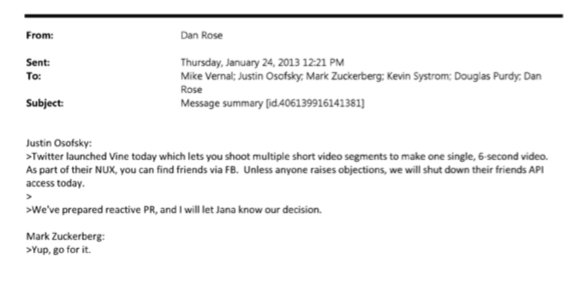
1) Zuck approves shutting down platform API access for Twitter's when Vine is released #competition
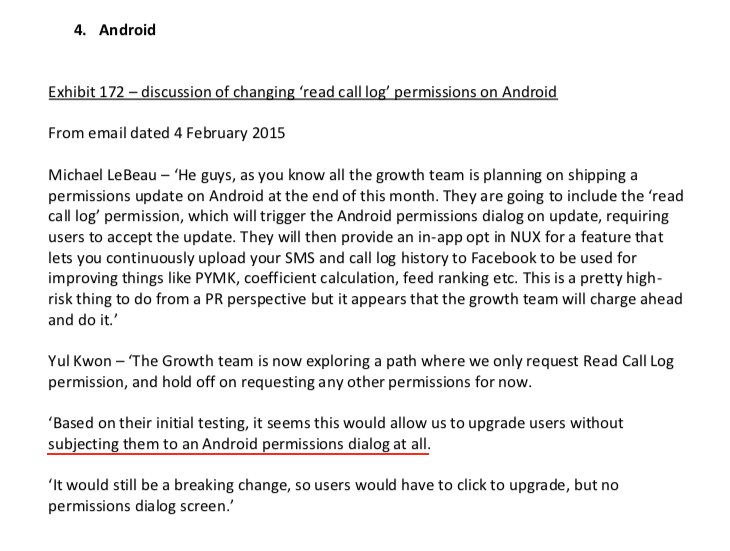
2) Facebook engineered ways to access user's call history w/o alerting users:
Team considered access to call history considered 'high PR risk' but 'growth team will charge ahead'. @Facebook created upgrade path to access data w/o subjecting users to Android permissions dialogue.
3) The above also confirms @kashhill and other's suspicion that call history was used to improve PYMK (People You May Know) suggestions and newsfeed rankings.
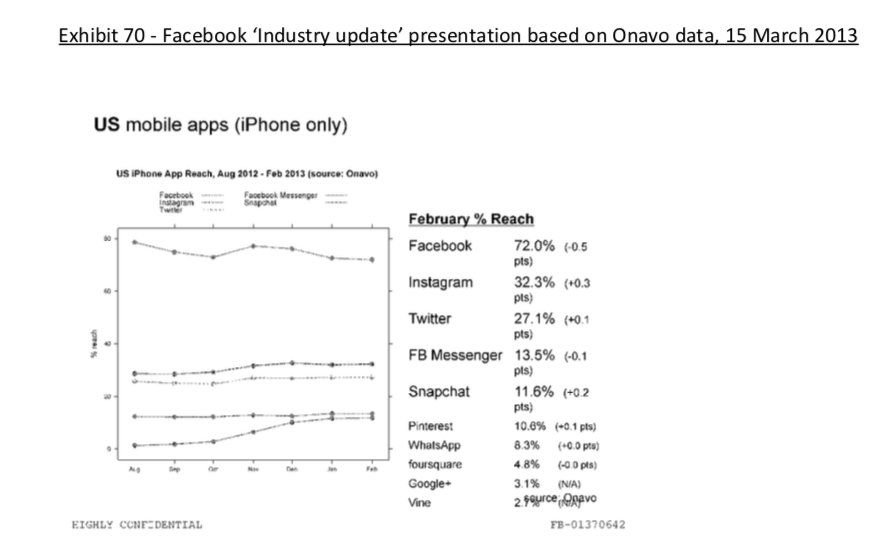
4) Docs also shed more light into @dseetharaman's story on @Facebook monitoring users' @Onavo VPN activity to determine what competitors to mimic or acquire in 2013.
https://t.co/PwiRIL3v9x
Some random interesting tidbits:
1) Zuck approves shutting down platform API access for Twitter's when Vine is released #competition
2) Facebook engineered ways to access user's call history w/o alerting users:
Team considered access to call history considered 'high PR risk' but 'growth team will charge ahead'. @Facebook created upgrade path to access data w/o subjecting users to Android permissions dialogue.
3) The above also confirms @kashhill and other's suspicion that call history was used to improve PYMK (People You May Know) suggestions and newsfeed rankings.
4) Docs also shed more light into @dseetharaman's story on @Facebook monitoring users' @Onavo VPN activity to determine what competitors to mimic or acquire in 2013.
https://t.co/PwiRIL3v9x