The Christmas Day Truce.

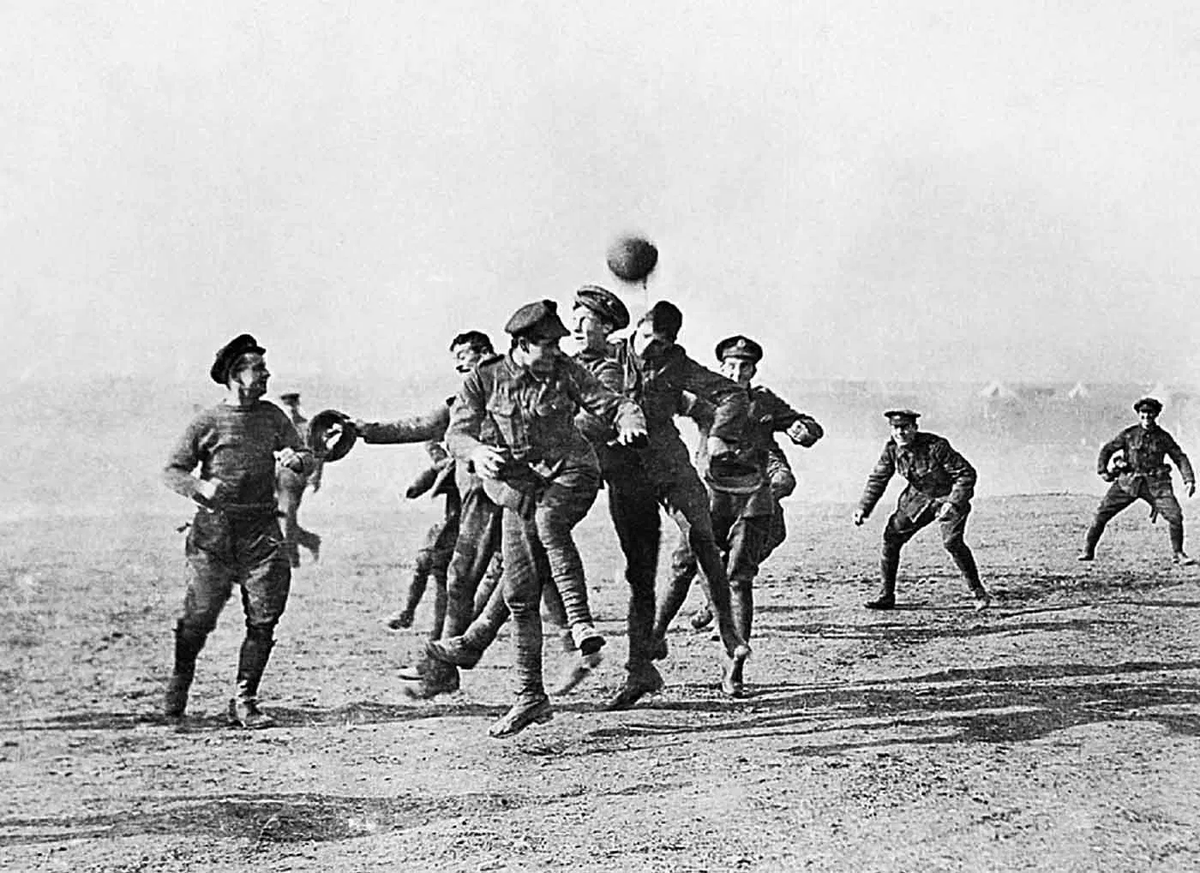
On Christmas Eve 1914 soldiers hunkered down in trenches no further than 150 meters away from the enemy in a network of channels and human trough lines stretching across the north of France all the way to Switzerland.

Separating the warring sides was No Man’s Land, and it doesn’t matter what side initiated the ceasefire, what matters is it happened. The fighting stopped. The 1914 Christmas truce was not the first unofficial truce of this great conflict, but certainly one of the last.
The sound of the other side’s conversations, laughter, groaning and singing replaced the falling of shells and the rain of steel.

Most accounts say it was the Germans that started the Christmas celebration as their clocks would have indicated it was Christmas back home
one hour earlier than the British and French again, it really doesn’t matter. What does matter, at least for this writing, is soldiers looking across No Man’s Land and not seeing carnage, but rather seeing tiny Christmas trees with candles pop up on the German side
or Allied soldiers holding up cigarettes and waving their caps. The sound of music and laughter filled the lifeless void their world had become. Initially, both sides planned to deploy their burial and body retrieval squads before the next day’s fighting took place as that
would have been the “humane” thing to do in war. On Christmas Eve, the overnight temperatures had frozen the mud and a thin layer of snow began to fall. Snowfall seems to deaden sound across distance, but the reported cacophony of Christmas carols floated on the snowflakes
that day as soldiers popped their heads up and in an act of wartime defiance and bravery, both sides emerged from their respective trenches. Enemies only hours before walked towards one another, exchanging looks of fear and hopefulness.
There are accounts of a German voice cutting the silence in northern France with the line: “You no shoot, we no shoot.” It is at this point where faith in their fellow man was perhaps made possible through football in addition to the exchanging of gifts, handshakes, cigarettes,
and pictures of sweethearts back home. The most extraordinary incident. The Germans started shouting to come out’ and ‘have a drink’ and also climbing about in trenches. The ball appeared from somewhere, It was a proper football. They took their coats off some
of them and put them down as goalposts. One fellow went in goal and then it was just a general kickabout. One of them came out in front without rifle, as one of ours went out, too. A huge crowd formed. We had found a little rubber ball so, of course, a football match came
No referee, we didn’t need a referee for that kind of game. It was like playing as a kid in the streets, kicking the ball about and the referee being the policeman and chasing you off. There was no score, no tally at all. It was simply a melee. Nothing like the football you
see on tv. The boots we wore were a menace those great big boots we had on and in those days the balls were made of leather and they soon got very soggy. A great many of the passes went wide, but all the amateur footballers, although they have been very tired, played with huge
enthusiasm … but after an hour’s play, commanding officer heard about it, he sent an order that we must stop. A little later we drifted back to our trenches, the fraternization ended. The game finished with a score of three goals to two in favour of ‘Fritz’ against ‘Tommy’.”

More from Defense News Nigeria

More from History

Folks who don't know history just tweet whatever they want.

On Feb 1935, Bose attacked the Nazis as he was angry as Indians were described as Sub-Humans in Mein Kampf. The British arrested Bose in April 1936, because he insulted the Nazis.

#Thread


The West at this point had a soft spot for the Nazis. France, Great Britain, Netherlands, Poland all gave the Nazi Salute during the 1936 Olympics in Berlin.

Even during the Spanish Civil War (1936 - 1939), the Western powers observed neutrality as the Fascists rose in Spain.


In 1937, Hitler told British Foreign Secretary Lord Halifax that one of his fav movies was ‘The Lives of a Bengal Lancer’. Why?

‘The Lives of a Bengal Lancer’ depicted a handful of "superior race" Brits holding sway over an entire Indian subcontinent (Sub-Humans).

"Shoot Gandhi. If necessary, shoot more Congress Leaders (Nehru & Bose)."

- Hitler to Lord Halifax, Britain's Foreign Secretary

This statement by Hitler in 1937 angered many pro-Leftist leaders of the INC including Bose.

Bose reached London in Jan 1938, and he met many leaders of the British Labour Party including Attlee.

1938 & 1939 were two huge years for the Indian National Congress. As i always say, the 10-year phase from 1938 - 1948 shaped modern India and it began in 1938 Haripura session.

You May Also Like