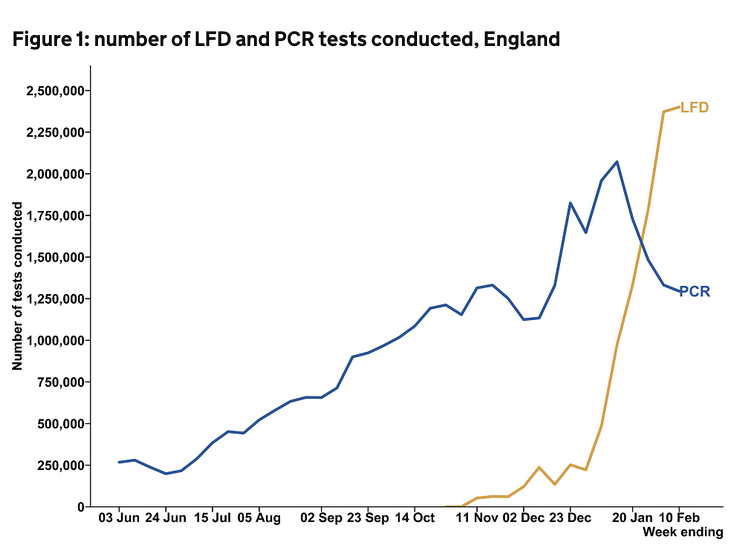
Most recent T&T data now out, covers 4th - 10th Feb
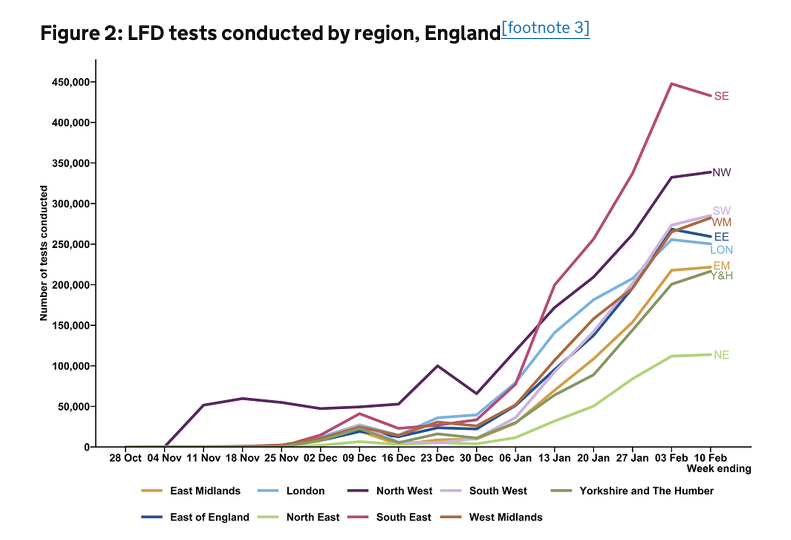
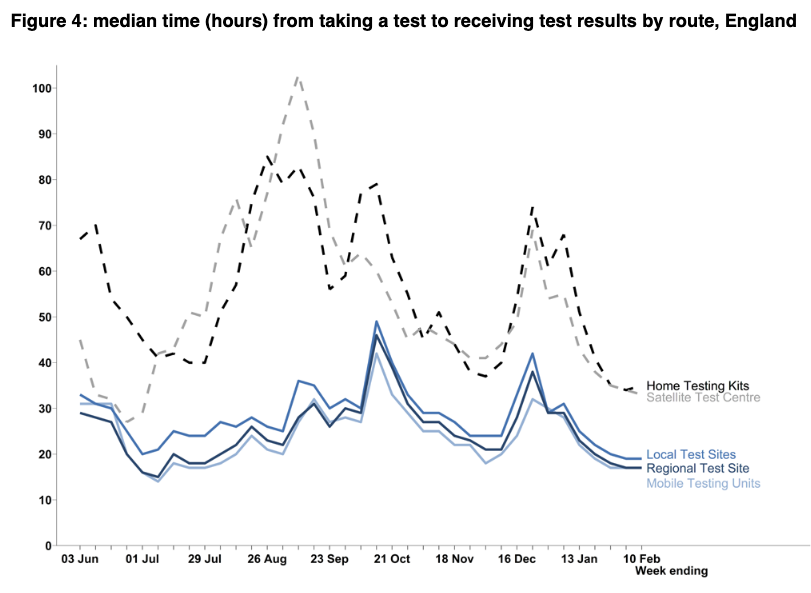
LFD use continues to rise but more slowly than last week and T&T performance remains consistent.
And as ever we don't know about who isn't tested and who struggles to isolate.
🧵
https://t.co/lffa72M9YJ

By contrast, PCR test use for people with symptoms fallen week on week for the past month (PHE positivity data due later).
Need to mitigate any unintended harm, esp around jobs
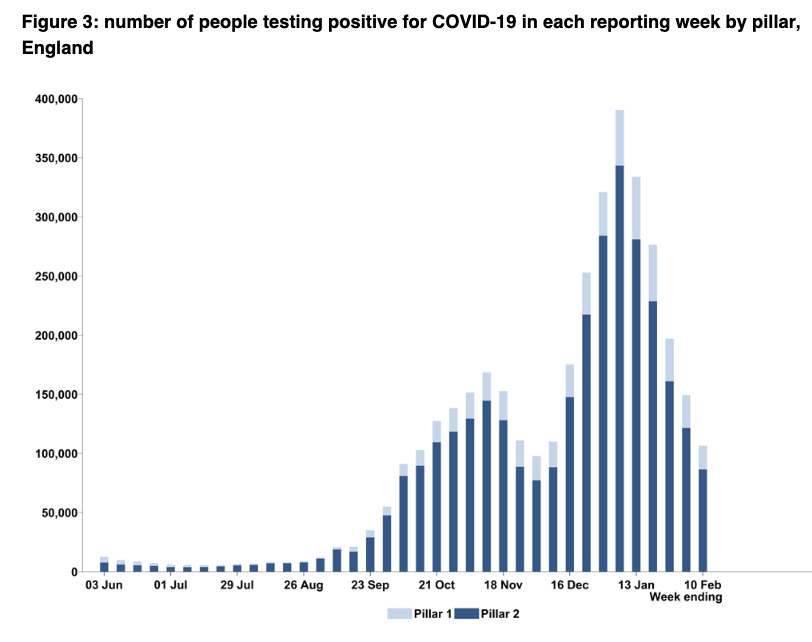
That's 106k cases.
Both these percentages are similar to previous weeks.
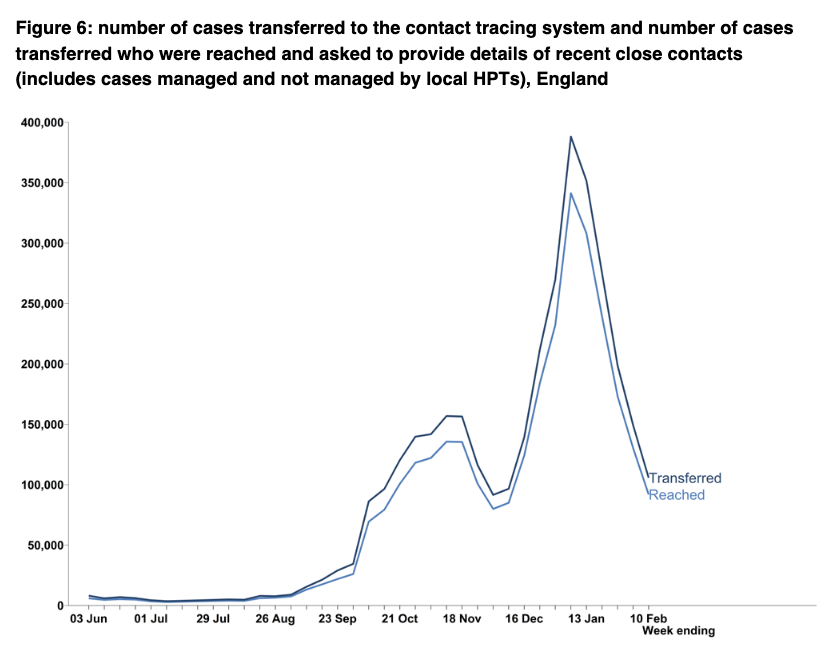

Worth noting that given lockdown, 87% of identified contacts were household contacts of which 97% were reached, this compares with 71% of non-household contacts.
These percentages reached have all been similar since start of Dec.
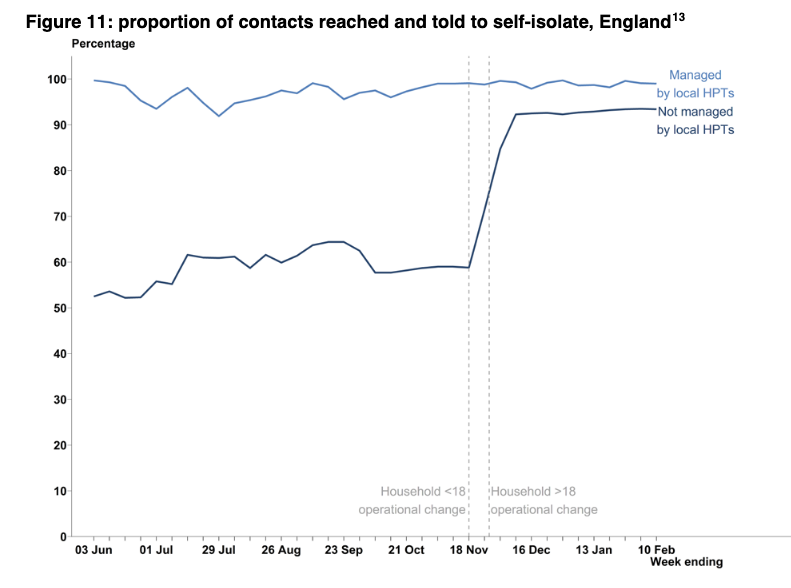
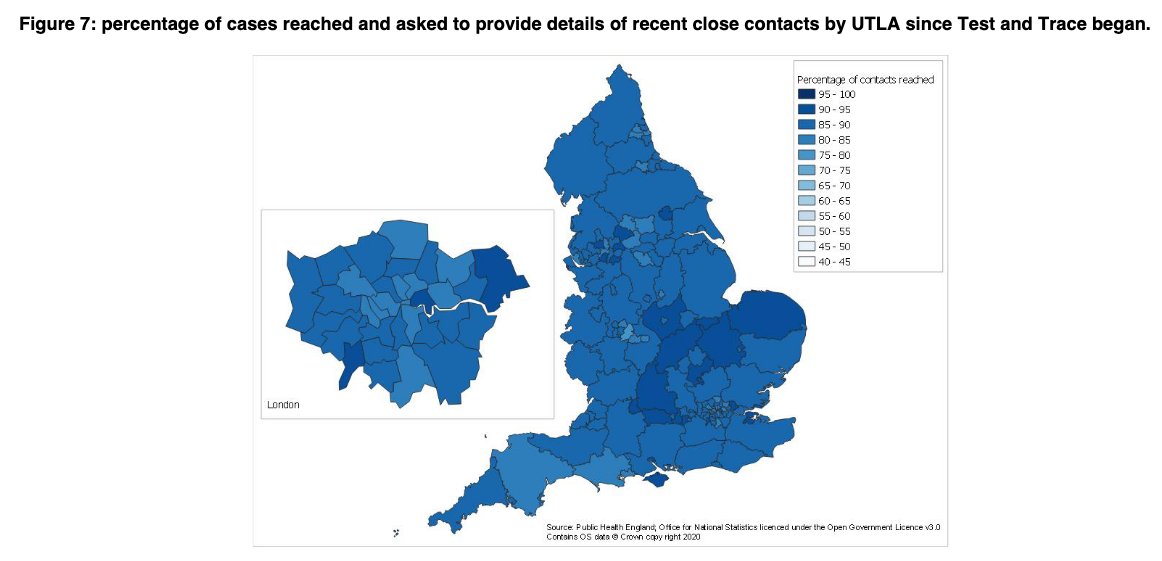
Local teams generally pick up cases that can't be reached by the national team within 24hrs and their role may become ever more important as case numbers fall.
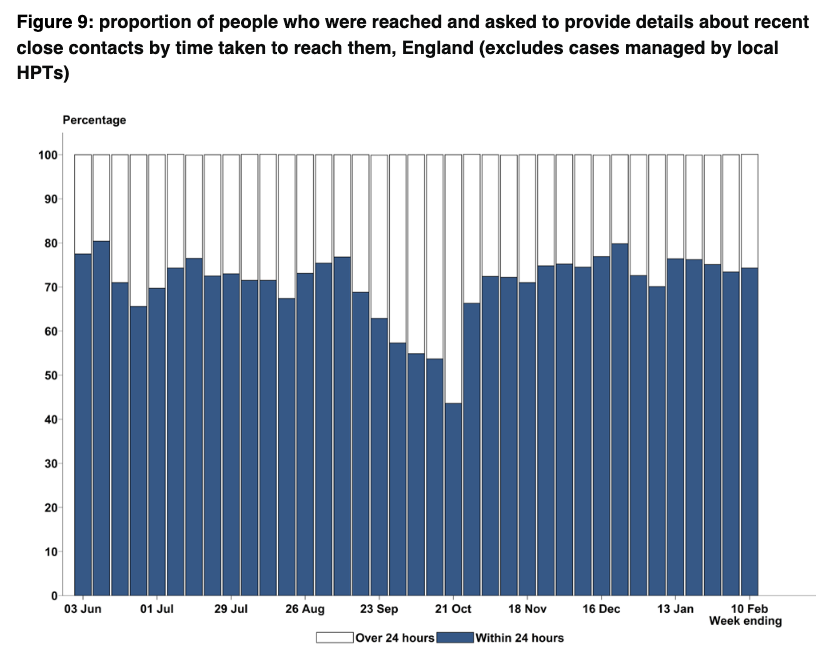
Room for improvement but definitely not getting worse.
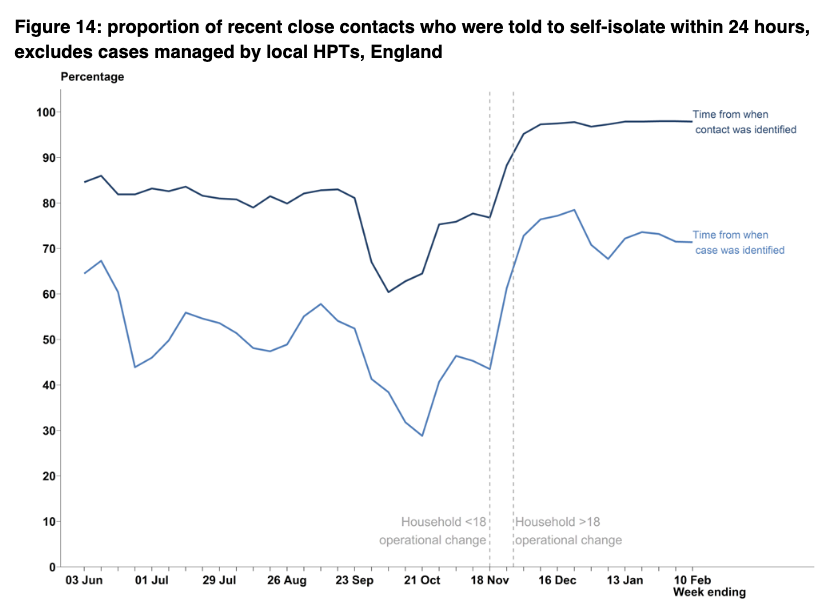
Everyone needs to be confident they will have the support needed if testing positive, and that their job – however insecure – will not be put at risk.
@Jeanelleuk @fascinatorfun @profchrisham @petermbenglish
@HPIAndyCowper @Davewwest @HSJEditor @KateAlvanley
@IndependentSage @nedwards_1 @chrischirp @SamanthaJonesUK
And pls say if you'd rather not be tagged in these threads each week.
More from Government


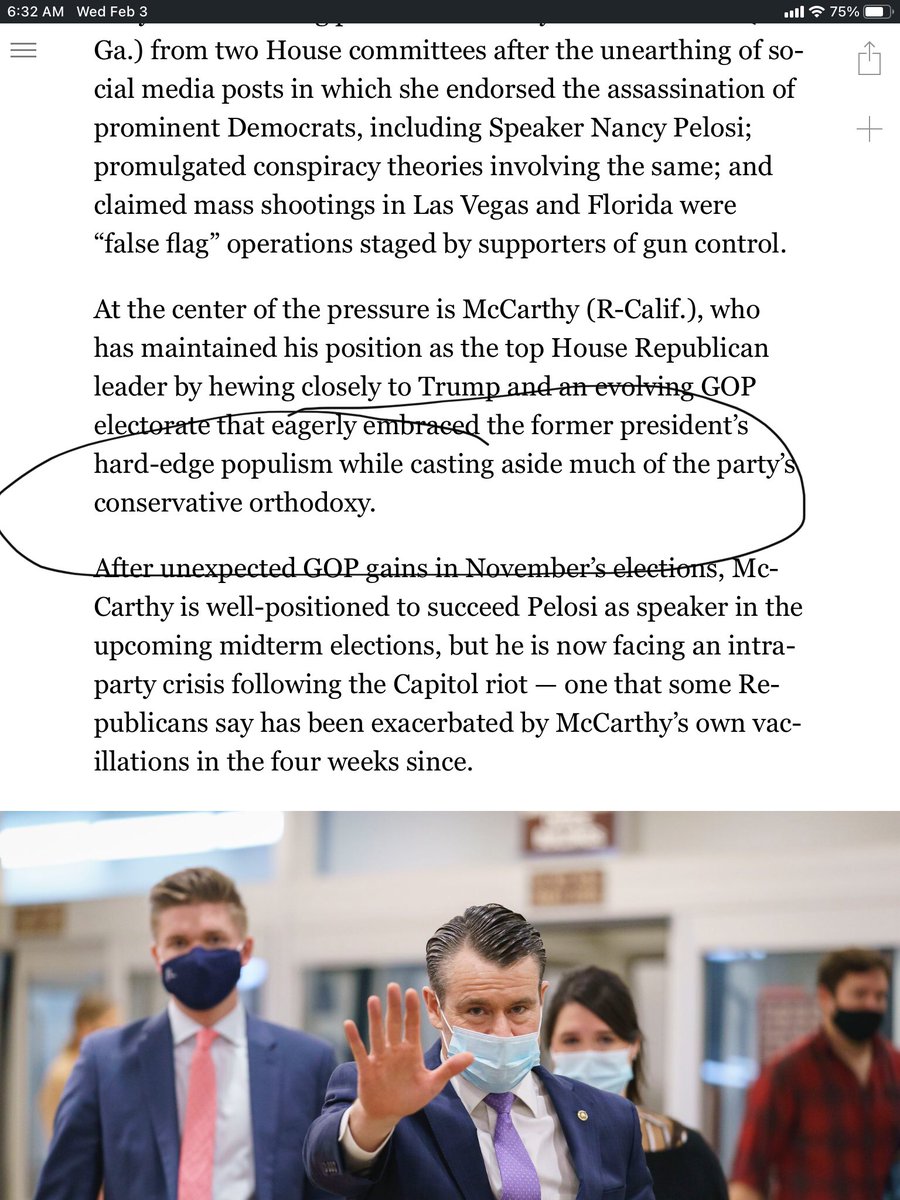
This is a good piece on fissures within the GOP but I think it mischaracterizes the Trump presidency as “populist” & repeats a story about how conservatives & the GOP expelled the far-right in the mid-1960s that is actually far more complicated. /1
I don’t think the sharp opposition between “hard-edge populism” & “conservative orthodoxy” holds. Many of the Trump administration’s achievements were boilerplate conservatism. Its own website trumpets things like “massive deregulation,” tax cuts, etc. /2
https://t.co/N97v85Bb79
The claim that Buckley and “key GOP politicians banded together to marginalize anti-Communist extremism and conspiracy-mongering” of the JBS has been widely repeated lately but the history is more complicated. /3
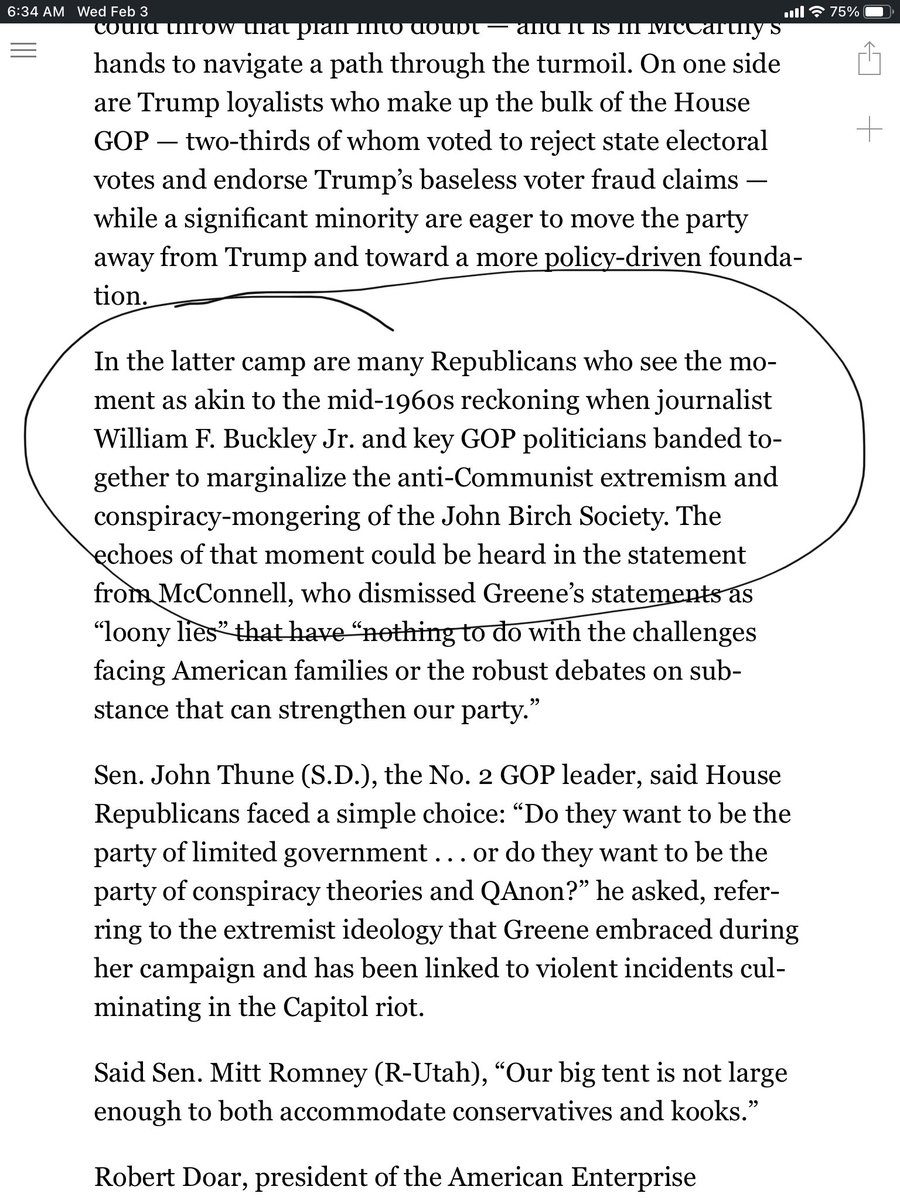
This tweet by @ThePlumLineGS citing a paper by @sam_rosenfeld and @daschloz on the "porous" boundary between conservatives, the GOP and the far-right is relevant in this context.
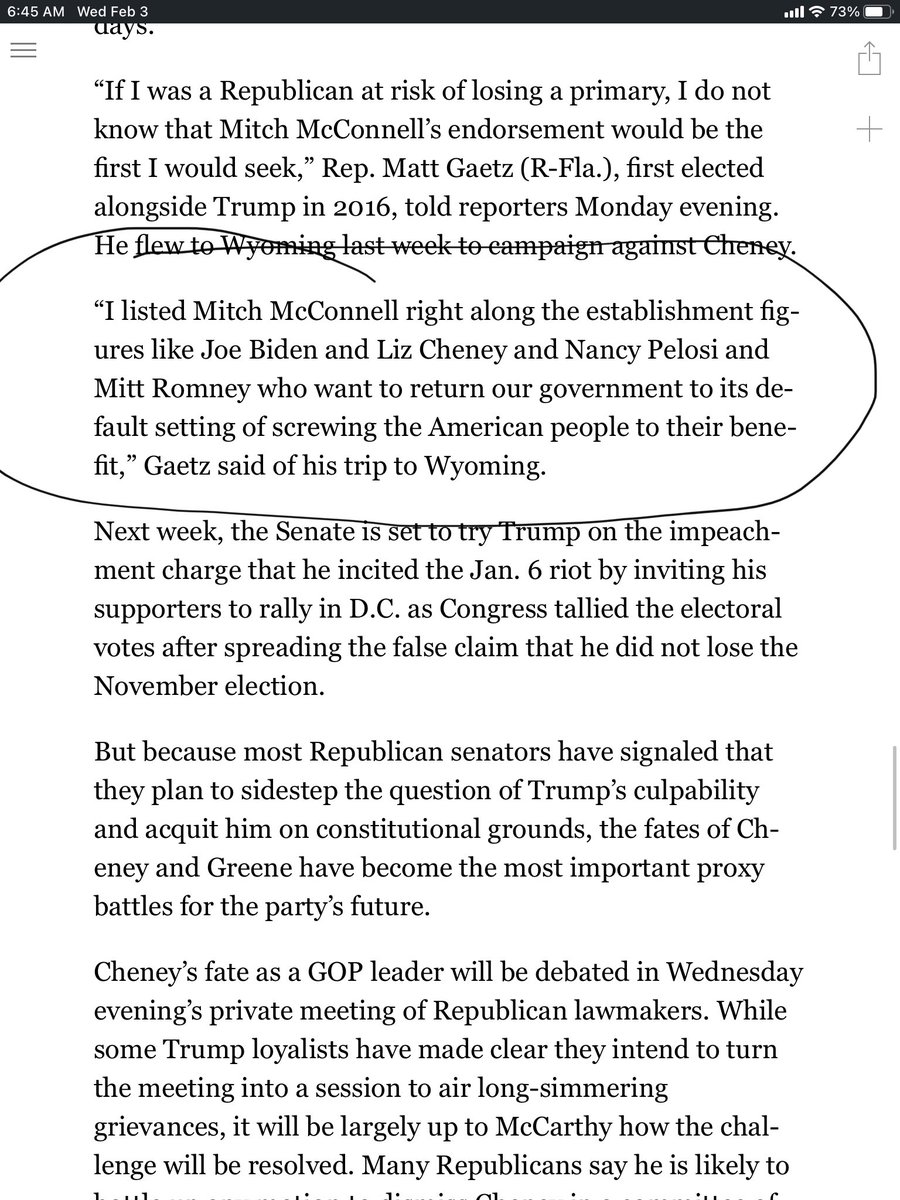
This is a separate point but I find it interesting that Gaetz, like Roy Moore did In his failed Senate campaign, disses McConnell. What are their actual policy differences? MM supported taking health care away from millions, a tax cut for the rich, conservative judges, etc. /5
I don’t think the sharp opposition between “hard-edge populism” & “conservative orthodoxy” holds. Many of the Trump administration’s achievements were boilerplate conservatism. Its own website trumpets things like “massive deregulation,” tax cuts, etc. /2
https://t.co/N97v85Bb79
The claim that Buckley and “key GOP politicians banded together to marginalize anti-Communist extremism and conspiracy-mongering” of the JBS has been widely repeated lately but the history is more complicated. /3
This tweet by @ThePlumLineGS citing a paper by @sam_rosenfeld and @daschloz on the "porous" boundary between conservatives, the GOP and the far-right is relevant in this context.
There's a great paper called "The Long New Right" that tells the story of the GOP/conservative movement's failure to police extremists for the last 50 years.
— Greg Sargent (@ThePlumLineGS) January 28, 2021
It's highly relevant to the insurrection and Marjorie Greene's lunacy.
I summed it up here:https://t.co/DTlzGomy5h pic.twitter.com/Dhc38CDuE2
This is a separate point but I find it interesting that Gaetz, like Roy Moore did In his failed Senate campaign, disses McConnell. What are their actual policy differences? MM supported taking health care away from millions, a tax cut for the rich, conservative judges, etc. /5