#MakeAbleistsUncomfortable pretty much all of abled culture's ideas and ideals about humanity and society are profoundly ableist. Read what disabled people have written. Listen to what we have said. Start unlearning that shit now, and continue doing so.
Question what you - even if you think you're radical and non-conformist and anti-capitalist - value, recognise, and understand. And start seeing all the ways even leftists frequently
@MizTeeFranklin. As thanks for it, you can support her fundraiser here (CW: domestic violence, attempted kidnapping):
https://t.co/9gMpaN8bCp
More from For later read


How I created content in 2020
A thread...
Back in Aug 2016, I started creating content to share my experiences as an entrepreneur.
Over 3 years I had put out 1,200+ hours of content - posting every week without
Little did I know that something I started almost 4 years back would give my life an entirely new direction.
At the end of 2019, my biggest platform was LinkedIn with ~700K followers.
In Jan 2020, I decided to build a team that would help me with the content.
I ran a month long recruitment drive to hire a team of interns.
It comprised 4 detailed rounds - starting with my loved 20 questions, then an assignment, then a WhatsApp video round and finally F2F.
Through 1,200+ applications, I finally selected 6 profiles, starting March.
I am a firm believer in @peterthiel's one task, one person philosophy
So the team was structured such that everyone was responsible for ONLY one task
1. Content ideas
2. Videography
3. Video editing
4. LinkedIn (+TikTok) distribution
5. FB+IG distribution
6. YouTube distribution
A thread...
Back in Aug 2016, I started creating content to share my experiences as an entrepreneur.
Over 3 years I had put out 1,200+ hours of content - posting every week without
August 2016.
— Ankur Warikoo (@warikoo) October 2, 2020
It has been 3 months since LinkedIn had launched its video feature.
And I had been waiting for it to be activated on my profile.
A thread...
Little did I know that something I started almost 4 years back would give my life an entirely new direction.
At the end of 2019, my biggest platform was LinkedIn with ~700K followers.
In Jan 2020, I decided to build a team that would help me with the content.
I ran a month long recruitment drive to hire a team of interns.
It comprised 4 detailed rounds - starting with my loved 20 questions, then an assignment, then a WhatsApp video round and finally F2F.
Through 1,200+ applications, I finally selected 6 profiles, starting March.
I am a firm believer in @peterthiel's one task, one person philosophy
So the team was structured such that everyone was responsible for ONLY one task
1. Content ideas
2. Videography
3. Video editing
4. LinkedIn (+TikTok) distribution
5. FB+IG distribution
6. YouTube distribution

#IDTwitter #IDFellows
Introducing our new series: “IDFN top 10 articles every fellow should read”🔖
#1: SAB management
by @mmcclean1 @LeMiguelChavez
Reviewers @KaBourgi, @IgeGeorgeMD, @Courtcita, @MDdreamchaser
We know is subjective & expect feedback/future improvements 👇
1. Clinical management of Staphylococcus aureus bacteremia: a review.
https://t.co/9tBCtp9mlP
👉 A must read written by Holland et al. where they review the evidence of the management of SAB.
2. Impact of Infectious Disease Consultation on Quality of Care, Mortality, and Length of Stay in Staphylococcus aureus Bacteremia: Results From a Large Multicenter Cohort Study.
https://t.co/XujO68pCuH
👉ID consult associated with reduced inpatient mortality.
3. Predicting Risk of Endocarditis Using a Clinical Tool (PREDICT): Scoring System to Guide Use of Echocardiography in the Management of Staphylococcus aureus Bacteremia
https://t.co/otcA1pxjAw
👉Predictive risk factors for infective endocarditis, and thus the need for TEE.
4. The Cefazolin Inoculum Effect Is Associated With Increased Mortality in Methicillin-Susceptible Staphylococcus aureus Bacteremia.
https://t.co/CQZiryVWZz
👉Presence of cefazolin inoculum effect in the infecting isolate was associated with an increase 30-day mortality.
Introducing our new series: “IDFN top 10 articles every fellow should read”🔖
#1: SAB management
by @mmcclean1 @LeMiguelChavez
Reviewers @KaBourgi, @IgeGeorgeMD, @Courtcita, @MDdreamchaser
We know is subjective & expect feedback/future improvements 👇
1. Clinical management of Staphylococcus aureus bacteremia: a review.
https://t.co/9tBCtp9mlP
👉 A must read written by Holland et al. where they review the evidence of the management of SAB.
2. Impact of Infectious Disease Consultation on Quality of Care, Mortality, and Length of Stay in Staphylococcus aureus Bacteremia: Results From a Large Multicenter Cohort Study.
https://t.co/XujO68pCuH
👉ID consult associated with reduced inpatient mortality.
3. Predicting Risk of Endocarditis Using a Clinical Tool (PREDICT): Scoring System to Guide Use of Echocardiography in the Management of Staphylococcus aureus Bacteremia
https://t.co/otcA1pxjAw
👉Predictive risk factors for infective endocarditis, and thus the need for TEE.
4. The Cefazolin Inoculum Effect Is Associated With Increased Mortality in Methicillin-Susceptible Staphylococcus aureus Bacteremia.
https://t.co/CQZiryVWZz
👉Presence of cefazolin inoculum effect in the infecting isolate was associated with an increase 30-day mortality.

You May Also Like

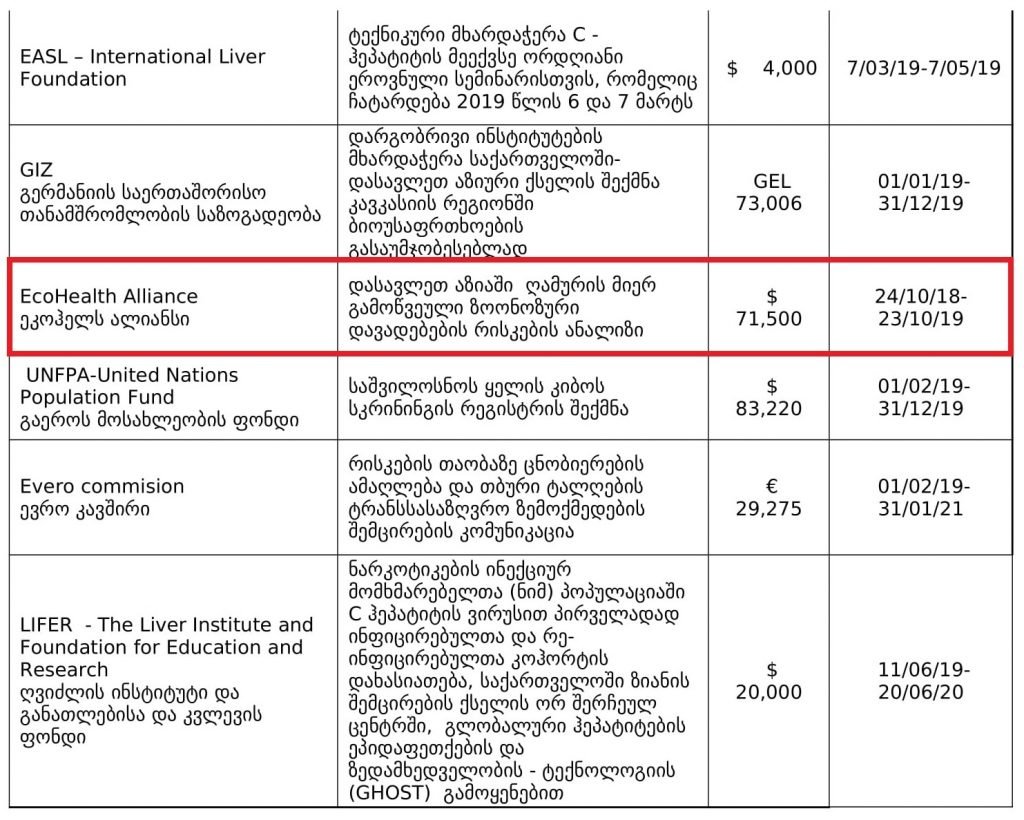
1. Project 1742 (EcoHealth/DTRA)
Risks of bat-borne zoonotic diseases in Western Asia
Duration: 24/10/2018-23 /10/2019
Funding: $71,500
@dgaytandzhieva
https://t.co/680CdD8uug
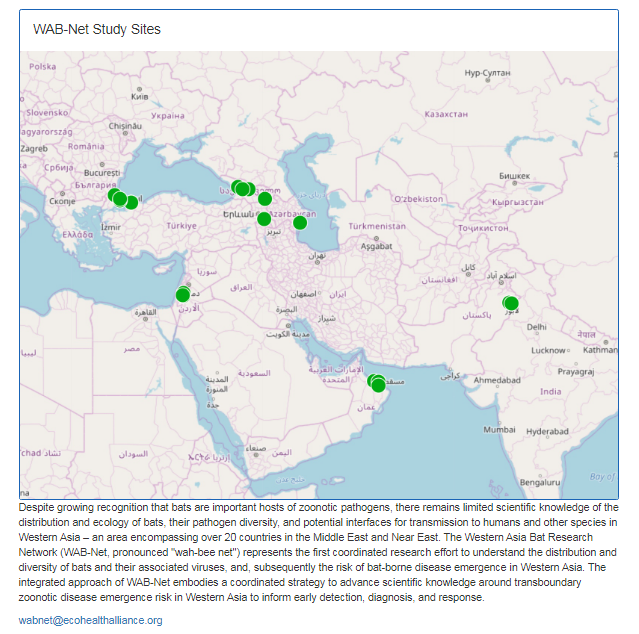
2. Bat Virus Database
Access to the database is limited only to those scientists participating in our ‘Bats and Coronaviruses’ project
Our intention is to eventually open up this database to the larger scientific community
https://t.co/mPn7b9HM48
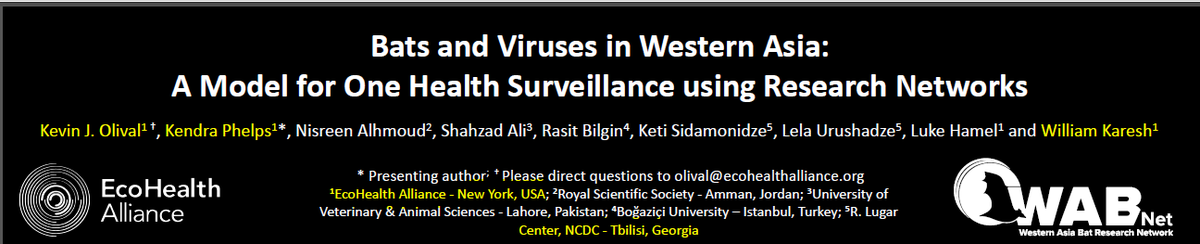
3. EcoHealth Alliance & DTRA Asking for Trouble
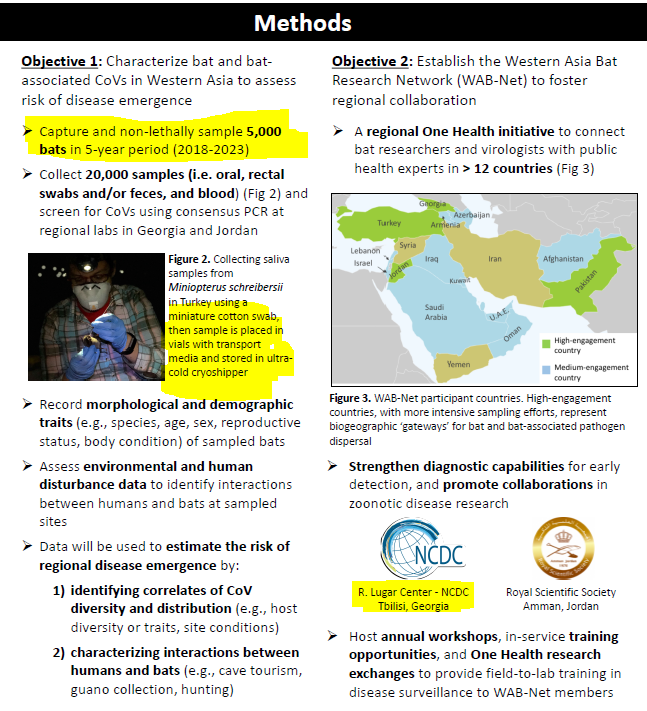
One Health research project focused on characterizing bat diversity, bat coronavirus diversity and the risk of bat-borne zoonotic disease emergence in the region.
https://t.co/u6aUeWBGEN
4. Phelps, Olival, Epstein, Karesh - EcoHealth/DTRA
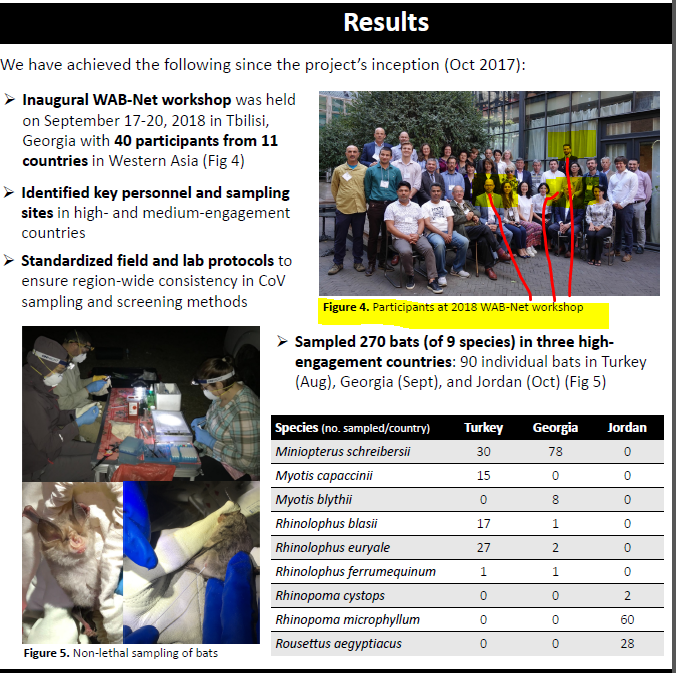
5, Methods and Expected Outcomes
(Unexpected Outcome = New Coronavirus Pandemic)
Risks of bat-borne zoonotic diseases in Western Asia
Duration: 24/10/2018-23 /10/2019
Funding: $71,500
@dgaytandzhieva
https://t.co/680CdD8uug
2. Bat Virus Database
Access to the database is limited only to those scientists participating in our ‘Bats and Coronaviruses’ project
Our intention is to eventually open up this database to the larger scientific community
https://t.co/mPn7b9HM48
3. EcoHealth Alliance & DTRA Asking for Trouble
One Health research project focused on characterizing bat diversity, bat coronavirus diversity and the risk of bat-borne zoonotic disease emergence in the region.
https://t.co/u6aUeWBGEN
4. Phelps, Olival, Epstein, Karesh - EcoHealth/DTRA
5, Methods and Expected Outcomes
(Unexpected Outcome = New Coronavirus Pandemic)