This is what happens when you train neural networks largely on tone and its stylistic relics. They pick up formal features of arguments (not so much fallacies as tics) that have almost nothing to do with semantic content (focus on connotation over implication).
This is what happens when you let philosophers try to write about real life. This ridiculous, game-playing, feigned innocence. Journals have been full of this for years, this elaborate performance of *doing philosophy* and saying nothing. I cannot adequately express my contempt pic.twitter.com/ciDeWuEkET
— Jack (@jackeselbst) January 14, 2021
I won't let you claim the mantle of Socrates until you've earned it by besting me logically, rather than merely rhetorically. So be prepared to find out you're the one with the rubber mask, not me. Don't hate the player, hate the game.
— pete wolfendale (@deontologistics) January 13, 2021
A short thread on education as a model of how bad assumptions about the nature of information distort and eventually break social infrastructure (h/t @cstross). https://t.co/MmJVhuAwCm
— pete wolfendale (@deontologistics) January 5, 2021
Solidarity with those who need philosophical vocabulary to bring their ongoing intellectual labours and political struggles to some new level of self-consciousness, might require refusing complicity with those who carelessly sabotage its semantic substance by playing pretend.
— pete wolfendale (@deontologistics) January 4, 2021
Anyway, that's my advice, and the reasoning behind it. If you ever want more specific advice on either side of the process (synopsis/analysis), feel free to ask. Good luck!
— pete wolfendale (@deontologistics) December 27, 2020
a) Video Essays as a Philosophical Medium: https://t.co/a6epfzXYLS
b) Enlightenment and Opportunism: https://t.co/V8DJcgf9jm
I'm fielding a lot of objections to the claim articulated in this tweet (which you can read down thread), but it might be worth starting a new thread that takes a different tack, and synthesises my perspective on the video essay as a legitimate format in which to do philosophy. https://t.co/hHDD9ndUJo
— pete wolfendale (@deontologistics) December 28, 2020
More from pete wolfendale
So, here’s a way of reframing this question: which societies enabled coexistence and collaboration between people with divergent social styles, rather than imposing a dominant social style? Such social pluralism is very important indeed.
I suspect that the vast majority of the answers to the original question will fall foul of the tendency to project ideal social arrangements that reflect our own style of social understanding and engagement, and that this will lead them to talk past one another.
Consider the perspective of someone far away from you on in the neurological map, who doesn’t overlap with your socially calibrated genetic resources for social intelligence: the social heaven of an autist introvert may be the social hell of a bipolar extrovert, and vice versa.
I’ve had many good conversations about this with people in different parts of the map who overlap with me in different ways (h/t @tjohnlinward, @dynamic_proxy, @maradydd, @mojozozoe, @UnclePhobic) whose personal heavens I would like to visit, but maybe not live in full time.
We get to see glimpses of these heavens not merely in the past, but in the present, and abstract their geometries, both in spatial/architectural terms (https://t.co/aTcRgtJOVJ) and in temporal/dynamic terms (). The physical/computational platforms around us configure our agency.
Which human societies, past or present, come closest to your ideal of how we should live together?
— Keith Frankish (@keithfrankish) January 15, 2021
I suspect that the vast majority of the answers to the original question will fall foul of the tendency to project ideal social arrangements that reflect our own style of social understanding and engagement, and that this will lead them to talk past one another.
Consider the perspective of someone far away from you on in the neurological map, who doesn’t overlap with your socially calibrated genetic resources for social intelligence: the social heaven of an autist introvert may be the social hell of a bipolar extrovert, and vice versa.
I’ve had many good conversations about this with people in different parts of the map who overlap with me in different ways (h/t @tjohnlinward, @dynamic_proxy, @maradydd, @mojozozoe, @UnclePhobic) whose personal heavens I would like to visit, but maybe not live in full time.
We get to see glimpses of these heavens not merely in the past, but in the present, and abstract their geometries, both in spatial/architectural terms (https://t.co/aTcRgtJOVJ) and in temporal/dynamic terms (). The physical/computational platforms around us configure our agency.
More from For later read

A name has caught the radar of agencies investigating #GretaToolkit- FRIEDRICH PIETER. Delhi Police expressed shock over the appearance of Pieter's name as "Who to Follow" in g-doc as he is under cops' scanner since 2006 for his Anti-India activities. Some shocking details..
1/9
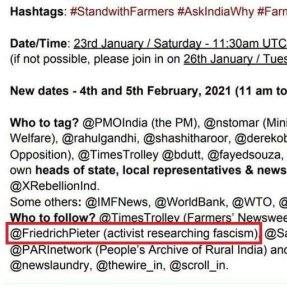
Pieter is close associate (read hired by) Bhajan Singh Bhindar, founder of OFMI (Org for Minorities of India) that considers itself an anti-Gandhi 'crusader' & is Pro-Khalistan. They also campaigned to free Bhullar (convicted Khalistani terr0r!st) & lobby against Modi in US.
2/9
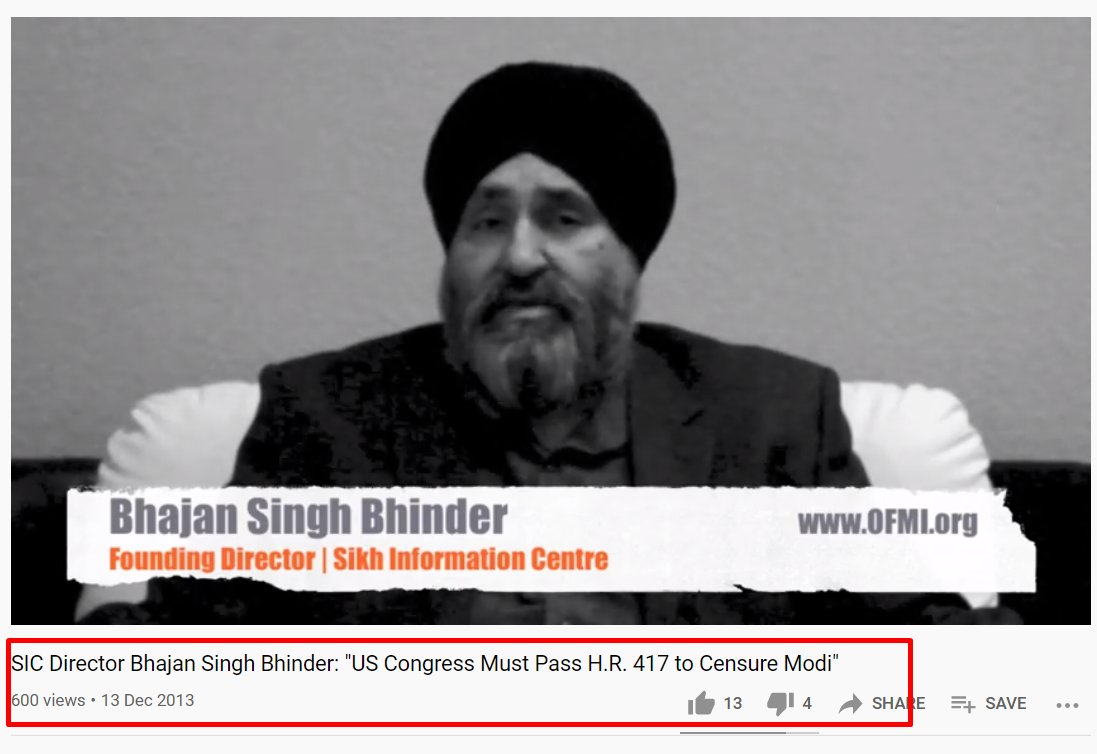
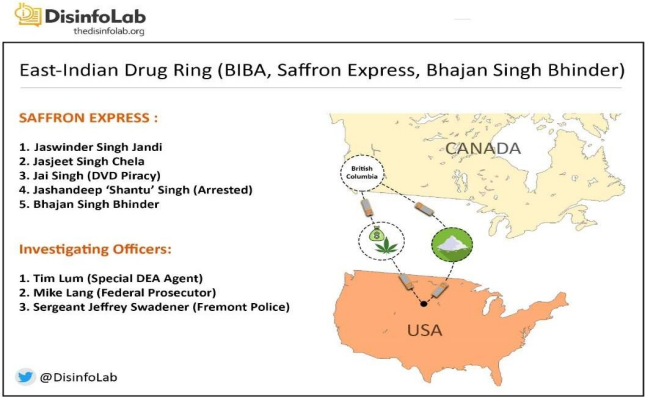
Bhinder has alleged connection with ISI & had records of owning inter-state drugs cartel & DVD piracy for terr0r funding. They also took control Fremont Gurudwara, US back in 2003 for millions of donation. Details of this 'Info-War' by @DisinfoLab
https://t.co/oIDFSoaDX2
3/9
Back to Pieter. Take a glance at his work. His TL is filled with anti-BJP/RSS/Modi propaganda. From his speeches to articles, everything have few keywords in common- RSS/Fascism/gen0c!de/k!ll!ing/Kashmir/Hindutva, as if running a non-stop unrest in India is his bread & butter
4/9
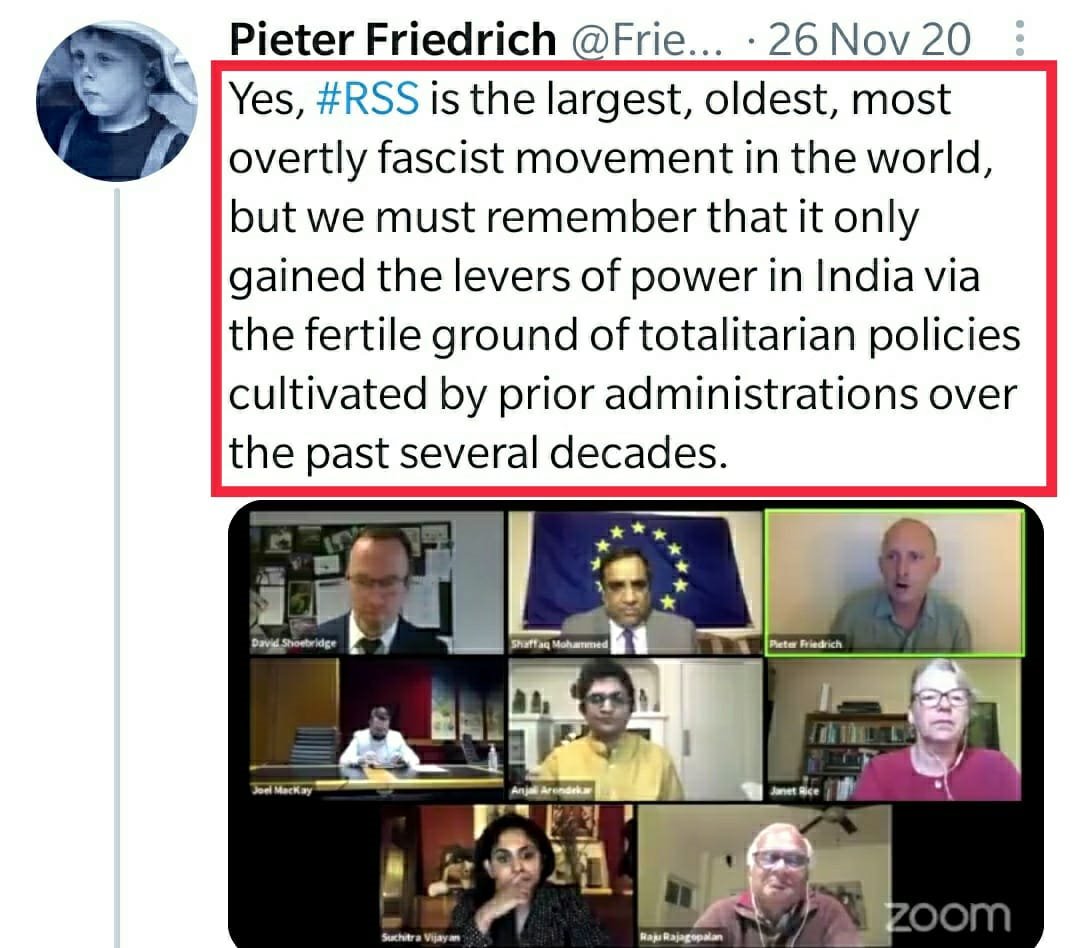
He picks every topic with an extreme narrative that potentially hurts integrity of nation, be it Kashmir,CAA,1984 & with his recent projects- Farmer protest & campaigning heavily against Sri Kulkarni. Despite all, Kulkarni appointed as Chief of Ext Affairs at Biden admin.
5/9
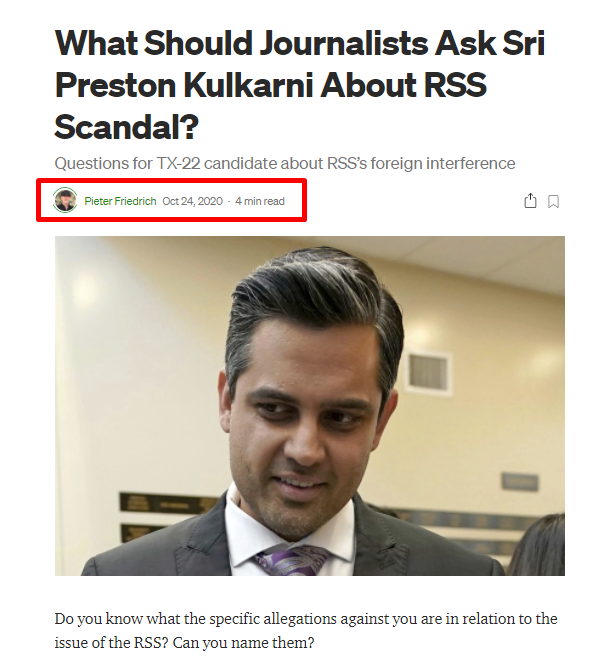
1/9
Pieter is close associate (read hired by) Bhajan Singh Bhindar, founder of OFMI (Org for Minorities of India) that considers itself an anti-Gandhi 'crusader' & is Pro-Khalistan. They also campaigned to free Bhullar (convicted Khalistani terr0r!st) & lobby against Modi in US.
2/9
Bhinder has alleged connection with ISI & had records of owning inter-state drugs cartel & DVD piracy for terr0r funding. They also took control Fremont Gurudwara, US back in 2003 for millions of donation. Details of this 'Info-War' by @DisinfoLab
https://t.co/oIDFSoaDX2
3/9
Back to Pieter. Take a glance at his work. His TL is filled with anti-BJP/RSS/Modi propaganda. From his speeches to articles, everything have few keywords in common- RSS/Fascism/gen0c!de/k!ll!ing/Kashmir/Hindutva, as if running a non-stop unrest in India is his bread & butter
4/9
He picks every topic with an extreme narrative that potentially hurts integrity of nation, be it Kashmir,CAA,1984 & with his recent projects- Farmer protest & campaigning heavily against Sri Kulkarni. Despite all, Kulkarni appointed as Chief of Ext Affairs at Biden admin.
5/9


You May Also Like

1/“What would need to be true for you to….X”
Why is this the most powerful question you can ask when attempting to reach an agreement with another human being or organization?
A thread, co-written by @deanmbrody:
2/ First, “X” could be lots of things. Examples: What would need to be true for you to
- “Feel it's in our best interest for me to be CMO"
- “Feel that we’re in a good place as a company”
- “Feel that we’re on the same page”
- “Feel that we both got what we wanted from this deal
3/ Normally, we aren’t that direct. Example from startup/VC land:
Founders leave VC meetings thinking that every VC will invest, but they rarely do.
Worse over, the founders don’t know what they need to do in order to be fundable.
4/ So why should you ask the magic Q?
To get clarity.
You want to know where you stand, and what it takes to get what you want in a way that also gets them what they want.
It also holds them (mentally) accountable once the thing they need becomes true.
5/ Staying in the context of soliciting investors, the question is “what would need to be true for you to want to invest (or partner with us on this journey, etc)?”
Multiple responses to this question are likely to deliver a positive result.
Why is this the most powerful question you can ask when attempting to reach an agreement with another human being or organization?
A thread, co-written by @deanmbrody:
Next level tactic when closing a sale, candidate, or investment:
— Erik Torenberg (@eriktorenberg) February 27, 2018
Ask: \u201cWhat needs to be true for you to be all in?\u201d
You'll usually get an explicit answer that you might not get otherwise. It also holds them accountable once the thing they need becomes true.
2/ First, “X” could be lots of things. Examples: What would need to be true for you to
- “Feel it's in our best interest for me to be CMO"
- “Feel that we’re in a good place as a company”
- “Feel that we’re on the same page”
- “Feel that we both got what we wanted from this deal
3/ Normally, we aren’t that direct. Example from startup/VC land:
Founders leave VC meetings thinking that every VC will invest, but they rarely do.
Worse over, the founders don’t know what they need to do in order to be fundable.
4/ So why should you ask the magic Q?
To get clarity.
You want to know where you stand, and what it takes to get what you want in a way that also gets them what they want.
It also holds them (mentally) accountable once the thing they need becomes true.
5/ Staying in the context of soliciting investors, the question is “what would need to be true for you to want to invest (or partner with us on this journey, etc)?”
Multiple responses to this question are likely to deliver a positive result.


👨💻 Last resume I sent to a startup one year ago, sharing with you to get ideas:
- Forget what you don't have, make your strength bold
- Pick one work experience and explain what you did in detail w/ bullet points
- Write it towards the role you apply
- Give social proof
/thread
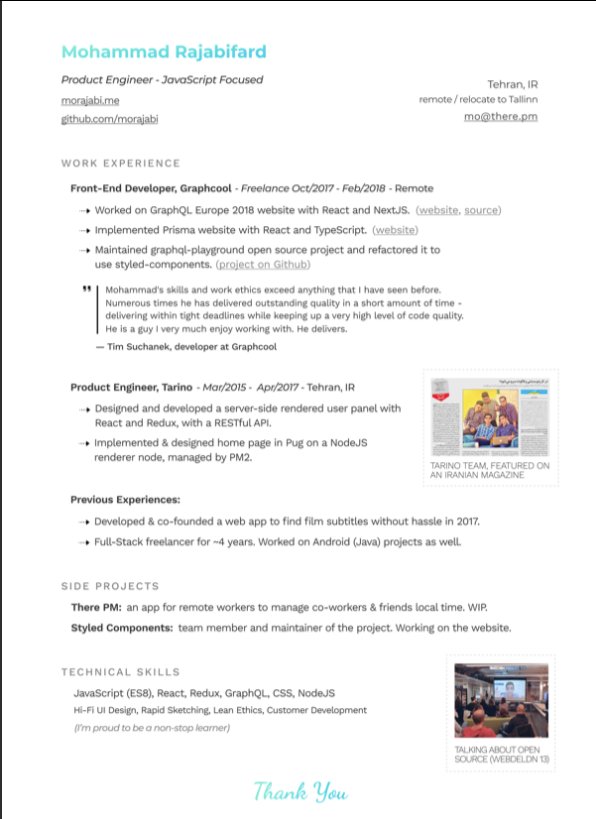
"But I got no work experience..."
Make a open source lib, make a small side project for yourself, do freelance work, ask friends to work with them, no friends? Find friends on Github, and Twitter.
Bonus points:
- Show you care about the company: I used the company's brand font and gradient for in the resume for my name and "Thank You" note.
- Don't list 15 things and libraries you worked with, pick the most related ones to the role you're applying.
-🙅♂️"copy cover letter"
"I got no firends, no work"
One practical way is to reach out to conferences and offer to make their website for free. But make sure to do it good. You'll get:
- a project for portfolio
- new friends
- work experience
- learnt new stuff
- new thing for Twitter bio
If you don't even have the skills yet, why not try your chance for @LambdaSchool? No? @freeCodeCamp. Still not? Pick something from here and learn https://t.co/7NPS1zbLTi
You'll feel very overwhelmed, no escape, just acknowledge it and keep pushing.
- Forget what you don't have, make your strength bold
- Pick one work experience and explain what you did in detail w/ bullet points
- Write it towards the role you apply
- Give social proof
/thread
"But I got no work experience..."
Make a open source lib, make a small side project for yourself, do freelance work, ask friends to work with them, no friends? Find friends on Github, and Twitter.
Bonus points:
- Show you care about the company: I used the company's brand font and gradient for in the resume for my name and "Thank You" note.
- Don't list 15 things and libraries you worked with, pick the most related ones to the role you're applying.
-🙅♂️"copy cover letter"
"I got no firends, no work"
One practical way is to reach out to conferences and offer to make their website for free. But make sure to do it good. You'll get:
- a project for portfolio
- new friends
- work experience
- learnt new stuff
- new thing for Twitter bio
If you don't even have the skills yet, why not try your chance for @LambdaSchool? No? @freeCodeCamp. Still not? Pick something from here and learn https://t.co/7NPS1zbLTi
You'll feel very overwhelmed, no escape, just acknowledge it and keep pushing.
![Peter McCormack [Jan/3\u279e\u20bf \U0001f511\u220e]](https://pbs.twimg.com/profile_images/1524287442307723265/_59ITDbJ_normal.jpg)