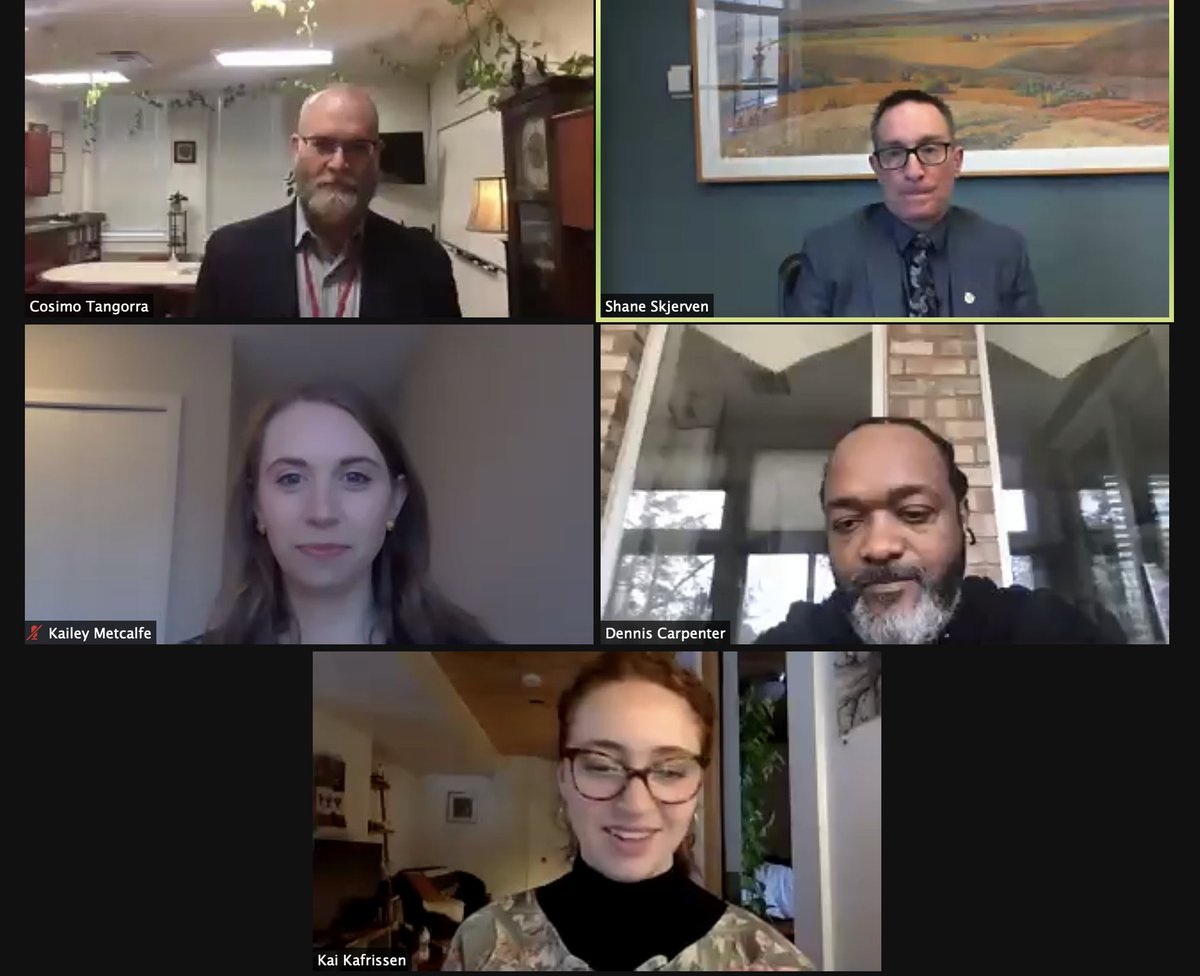
We're LIVE for the first of our 3-part #EquityInEducation Series! It's not too late to join us... Follow along in this thread ⤵️ @EquitySupt1 @ShaneSkjerven12 @KafrissenKai @CosimoTangorra #BringPeopleTogether #TeVirtualEvents #TeVE
Join us today at 10 am PT/1 pm ET to discuss how & why @ShaneSkjerven12 & @CosimoTangorra have committed to #EquityInEducation, & the steps they\u2019re taking to ensure effective & permanent #DEI in their districts. Register now: https://t.co/bKKbzO3DgF #TeVirtualEvents @EquitySupt1 pic.twitter.com/oENmpK6RrG
— Thoughtexchange (@thoughtxchng) January 13, 2021

He built trust by recognizing his own privilege. He had (and still has) and GREAT team that supports him, you cannot do this work alone! And he embraced traditions of the culture. #BringPeopleTogether #Equity

Your district has such a small minority population they are saying "it's not our work".
As a white leader, you don't feel like you should be the one doing the leading in the #equity conversation?
#TeVirtualEvents #BringPeopleTogether
@ShaneSkjerven12 - Leadership is about humility. It's for ALL of us and we need to embrace it, challenge ourselves to work together.
@CosimoTangorra - Doesn't feel like he is "leading" it, work TOGETHER. It's not just about race. It's about inclusivity for ALL.
More from Education

New from me:
I’m launching my Forecasting For SEO course next month.
It’s everything I’ve learned, tried and tested about SEO forecasting.
The course: https://t.co/bovuIns9OZ
Following along 👇
Why forecasting?
Last year I launched https://t.co/I6osuvrGAK to provide reliable forecasts to SEO teams.
It went crazy.
I also noticed an appetite for learning more about forecasting and reached out on Twitter to gauge interest:
The interest encouraged me to make a start...
I’ve also been inspired by what others are doing: @tom_hirst, @dvassallo and @azarchick 👏👏
And their guts to be build so openly in public.
So here goes it...
In the last 2 years I’ve only written 3 blog posts on my site.
- Probabilistic thinking in SEO
- Rethinking technical SEO audits
- How to deliver better SEO strategies.
I only write when I feel like I’ve got something to say.
With forecasting, I’ve got something to say. 💭
There are mixed feelings about forecasting in the SEO industry.
Uncertainty is everywhere. Algorithm updates impacting rankings, economic challenges impacting demand.
It’s difficult. 😩
I’m launching my Forecasting For SEO course next month.
It’s everything I’ve learned, tried and tested about SEO forecasting.
The course: https://t.co/bovuIns9OZ
Following along 👇
Why forecasting?
Last year I launched https://t.co/I6osuvrGAK to provide reliable forecasts to SEO teams.
It went crazy.
I also noticed an appetite for learning more about forecasting and reached out on Twitter to gauge interest:
The interest encouraged me to make a start...
I’ve also been inspired by what others are doing: @tom_hirst, @dvassallo and @azarchick 👏👏
And their guts to be build so openly in public.
So here goes it...
In the last 2 years I’ve only written 3 blog posts on my site.
- Probabilistic thinking in SEO
- Rethinking technical SEO audits
- How to deliver better SEO strategies.
I only write when I feel like I’ve got something to say.
With forecasting, I’ve got something to say. 💭
There are mixed feelings about forecasting in the SEO industry.
Uncertainty is everywhere. Algorithm updates impacting rankings, economic challenges impacting demand.
It’s difficult. 😩

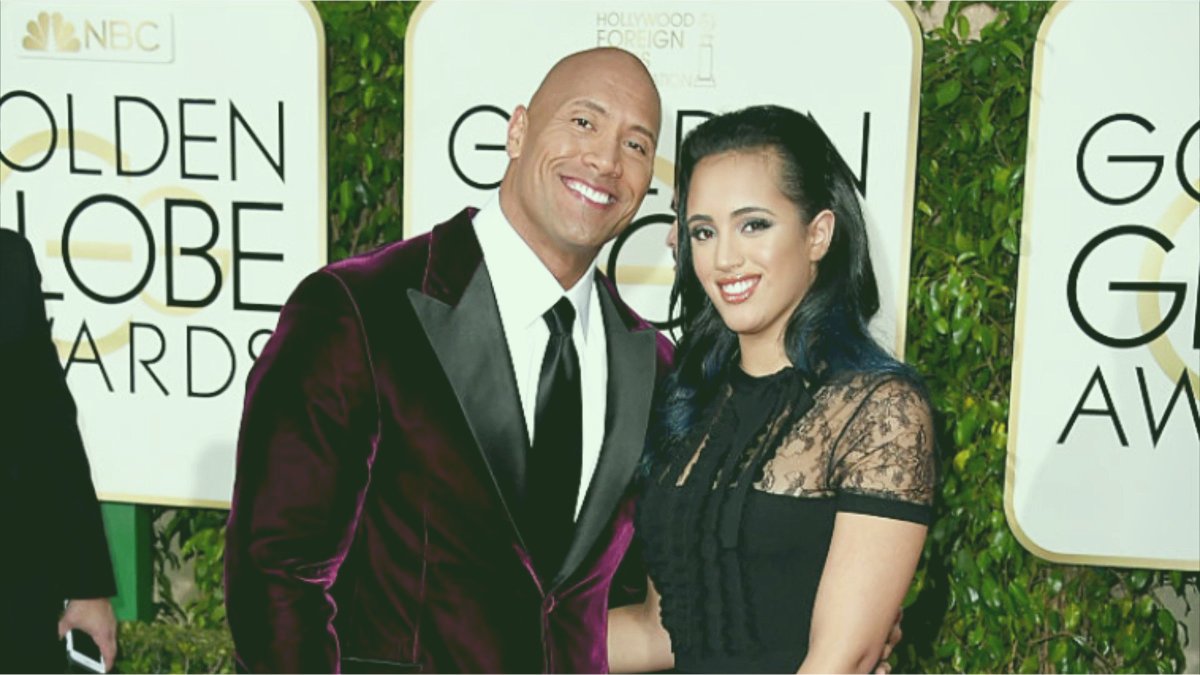
Trending news of The Rock's daughter Simone Johnson's announcing her new Stage Name is breaking our Versus tool because "Wrestling Name" isn't in our database!
Here's the most useful #Factualist comparison pages #Thread 🧵
What is the difference between “pseudonym” and “stage name?”
Pseudonym means “a fictitious name (more literally, a false name), as those used by writers and movie stars,” while stage name is “the pseudonym of an entertainer.”
https://t.co/hT5XPkTepy #english #wiki #wikidiff
People also found this comparison helpful:
Alias #versus Stage Name: What’s the difference?
Alias means “another name; an assumed name,” while stage name means “the pseudonym of an entertainer.”
https://t.co/Kf7uVKekMd #Etymology #words
Another common #question:
What is the difference between “alias” and “pseudonym?”
As nouns alias means “another name; an assumed name,” while pseudonym means “a fictitious name (more literally, a false name), as those used by writers and movie
Here is a very basic #comparison: "Name versus Stage Name"
As #nouns, the difference is that name means “any nounal word or phrase which indicates a particular person, place, class, or thing,” but stage name means “the pseudonym of an
Here's the most useful #Factualist comparison pages #Thread 🧵
What is the difference between “pseudonym” and “stage name?”
Pseudonym means “a fictitious name (more literally, a false name), as those used by writers and movie stars,” while stage name is “the pseudonym of an entertainer.”
https://t.co/hT5XPkTepy #english #wiki #wikidiff
People also found this comparison helpful:
Alias #versus Stage Name: What’s the difference?
Alias means “another name; an assumed name,” while stage name means “the pseudonym of an entertainer.”
https://t.co/Kf7uVKekMd #Etymology #words
Another common #question:
What is the difference between “alias” and “pseudonym?”
As nouns alias means “another name; an assumed name,” while pseudonym means “a fictitious name (more literally, a false name), as those used by writers and movie
Here is a very basic #comparison: "Name versus Stage Name"
As #nouns, the difference is that name means “any nounal word or phrase which indicates a particular person, place, class, or thing,” but stage name means “the pseudonym of an

I was a recipient of KGSP for my Msc from 2013-2016
Korean Government Scholarship Program (KGSP) Application made easy
Application period- 1 February 2021- 31 March, 2021
MS- 3yrs (1 year Korean language + 2 years MS)
PhD- 4yrs (1 year Korean language + 3 years PhD)
How to navigate the https://t.co/6Ne99JDfyv page
1. Type https://t.co/ow51lWVKcQ in your browser and hit the enter button
2. Click on scholarships and select GKS notice as attached in the picture👇
3. Play with the notice dashboard to see various announcements from NIIED.
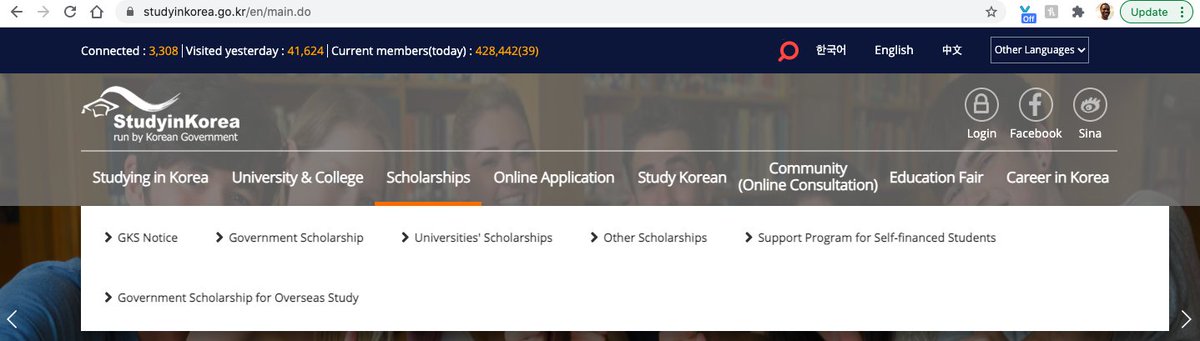
4. E.g in 2020, the Global Korea Scholarship for Graduate Degrees was announced on 11, February as indicated by no 205. You can click to download the application materials to get familiar with what is expected. I attached series of links in this thread to assist too.
Category- All fields
Benefits
1. Visa fee
2. Airfare: Actual cost (To and fro from your home country to Korea and upon completion to your home country)
3. Resettlement Allowance: KRW 200,000 (Given upon arrival in Korea)
4. Monthly stipend: Graduate (MS/PhD)-KRW 1000,000 (362,610.35 Nigerian Naira) per month ,Research Program including Postdoctoral fellow and visiting Professors - 1,500,000 KRW (542,824.78 Nigerian Naira) per month
Korean Government Scholarship Program (KGSP) Application made easy
Application period- 1 February 2021- 31 March, 2021
MS- 3yrs (1 year Korean language + 2 years MS)
PhD- 4yrs (1 year Korean language + 3 years PhD)
How to navigate the https://t.co/6Ne99JDfyv page
1. Type https://t.co/ow51lWVKcQ in your browser and hit the enter button
2. Click on scholarships and select GKS notice as attached in the picture👇
3. Play with the notice dashboard to see various announcements from NIIED.
4. E.g in 2020, the Global Korea Scholarship for Graduate Degrees was announced on 11, February as indicated by no 205. You can click to download the application materials to get familiar with what is expected. I attached series of links in this thread to assist too.
Category- All fields
Benefits
1. Visa fee
2. Airfare: Actual cost (To and fro from your home country to Korea and upon completion to your home country)
3. Resettlement Allowance: KRW 200,000 (Given upon arrival in Korea)
4. Monthly stipend: Graduate (MS/PhD)-KRW 1000,000 (362,610.35 Nigerian Naira) per month ,Research Program including Postdoctoral fellow and visiting Professors - 1,500,000 KRW (542,824.78 Nigerian Naira) per month