
“I bring down the tall tree and make the low tree tall. I cause the green tree to wither and make the withered tree thrive. I, the Lord, have spoken and I will do it.”
Well, folks, the reason I haven’t been sharing many short clips from my morning readings lately is that, well, I’m in chapters 11-17 of Ezekiel. They involve complicated visions that don’t lend themselves to Twitter threads. But at the end of my reading today in Ezek 17,
“I bring down the tall tree and make the low tree tall. I cause the green tree to wither and make the withered tree thrive. I, the Lord, have spoken and I will do it.”
More from Beth Moore
More from Culture


The emerging picture of John Sullivan aka Jayden X, the Cap riot agitator, and the documentarian Jade Sacker who filmed the whole thing really is the perfect microcosm of how Globalist American Empire stages its narrative.
Here’s the summary overview:
First Sullivan: agent provocateur who is no more antifa/BLM than he is Proud Boy, with suspicious family ties to the security state (allegedly), who helps instigate and document the Jan 6 events leading to IC officials immediately demanding the removal of the incumbent regime...
The guy’s social media profile is all over the map. From Civil Liberties gun guy to Antifa activist. And who planned the Utah BLM event that ended in the bizarre car shooting. His feed since Jan has all led to the Cap Hill events, including the first of the Parlor call outs.

Okay so maybe the guy is just a confused burn-it-all-down nihilist. Possible, but then we might do a big think about how an unhinged political schizo gets hooked up with a filmmaker with a long-history of doing activist/journalism on behalf of Woke Imperialism...
If John Sullivan aka Jaydenx is the “Fake,” Jade Sacker, his accomplice, is the “Gay.” Here’s a few snapshots from her portfolio (https://t.co/YEO1CCsQn8)
The plight of Rohingya Muslims. The Kurds in Northern Syria. Trans Women in Cambodia. etc. Boiler plate globohomo

Here’s the summary overview:
First Sullivan: agent provocateur who is no more antifa/BLM than he is Proud Boy, with suspicious family ties to the security state (allegedly), who helps instigate and document the Jan 6 events leading to IC officials immediately demanding the removal of the incumbent regime...
The guy’s social media profile is all over the map. From Civil Liberties gun guy to Antifa activist. And who planned the Utah BLM event that ended in the bizarre car shooting. His feed since Jan has all led to the Cap Hill events, including the first of the Parlor call outs.
Okay so maybe the guy is just a confused burn-it-all-down nihilist. Possible, but then we might do a big think about how an unhinged political schizo gets hooked up with a filmmaker with a long-history of doing activist/journalism on behalf of Woke Imperialism...
If John Sullivan aka Jaydenx is the “Fake,” Jade Sacker, his accomplice, is the “Gay.” Here’s a few snapshots from her portfolio (https://t.co/YEO1CCsQn8)
The plight of Rohingya Muslims. The Kurds in Northern Syria. Trans Women in Cambodia. etc. Boiler plate globohomo



You May Also Like







Master Thread of all my threads!
Hello!! 👋
• I have curated some of the best tweets from the best traders we know of.
• Making one master thread and will keep posting all my threads under this.
• Go through this for super learning/value totally free of cost! 😃
1. 7 FREE OPTION TRADING COURSES FOR
2. THE ABSOLUTE BEST 15 SCANNERS EXPERTS ARE USING
Got these scanners from the following accounts:
1. @Pathik_Trader
2. @sanjufunda
3. @sanstocktrader
4. @SouravSenguptaI
5. @Rishikesh_ADX
3. 12 TRADING SETUPS which experts are using.
These setups I found from the following 4 accounts:
1. @Pathik_Trader
2. @sourabhsiso19
3. @ITRADE191
4.
4. Curated tweets on HOW TO SELL STRADDLES.
Everything covered in this thread.
1. Management
2. How to initiate
3. When to exit straddles
4. Examples
5. Videos on
Hello!! 👋
• I have curated some of the best tweets from the best traders we know of.
• Making one master thread and will keep posting all my threads under this.
• Go through this for super learning/value totally free of cost! 😃
1. 7 FREE OPTION TRADING COURSES FOR
A THREAD:
— Aditya Todmal (@AdityaTodmal) November 28, 2020
7 FREE OPTION TRADING COURSES FOR BEGINNERS.
Been getting lot of dm's from people telling me they want to learn option trading and need some recommendations.
Here I'm listing the resources every beginner should go through to shorten their learning curve.
(1/10)
2. THE ABSOLUTE BEST 15 SCANNERS EXPERTS ARE USING
Got these scanners from the following accounts:
1. @Pathik_Trader
2. @sanjufunda
3. @sanstocktrader
4. @SouravSenguptaI
5. @Rishikesh_ADX
The absolute best 15 scanners which experts are using.
— Aditya Todmal (@AdityaTodmal) January 29, 2021
Got these scanners from the following accounts:
1. @Pathik_Trader
2. @sanjufunda
3. @sanstocktrader
4. @SouravSenguptaI
5. @Rishikesh_ADX
Share for the benefit of everyone.
3. 12 TRADING SETUPS which experts are using.
These setups I found from the following 4 accounts:
1. @Pathik_Trader
2. @sourabhsiso19
3. @ITRADE191
4.
12 TRADING SETUPS which experts are using.
— Aditya Todmal (@AdityaTodmal) February 7, 2021
These setups I found from the following 4 accounts:
1. @Pathik_Trader
2. @sourabhsiso19
3. @ITRADE191
4. @DillikiBiili
Share for the benefit of everyone.
4. Curated tweets on HOW TO SELL STRADDLES.
Everything covered in this thread.
1. Management
2. How to initiate
3. When to exit straddles
4. Examples
5. Videos on
Curated tweets on How to Sell Straddles
— Aditya Todmal (@AdityaTodmal) February 21, 2021
Everything covered in this thread.
1. Management
2. How to initiate
3. When to exit straddles
4. Examples
5. Videos on Straddles
Share if you find this knowledgeable for the benefit of others.

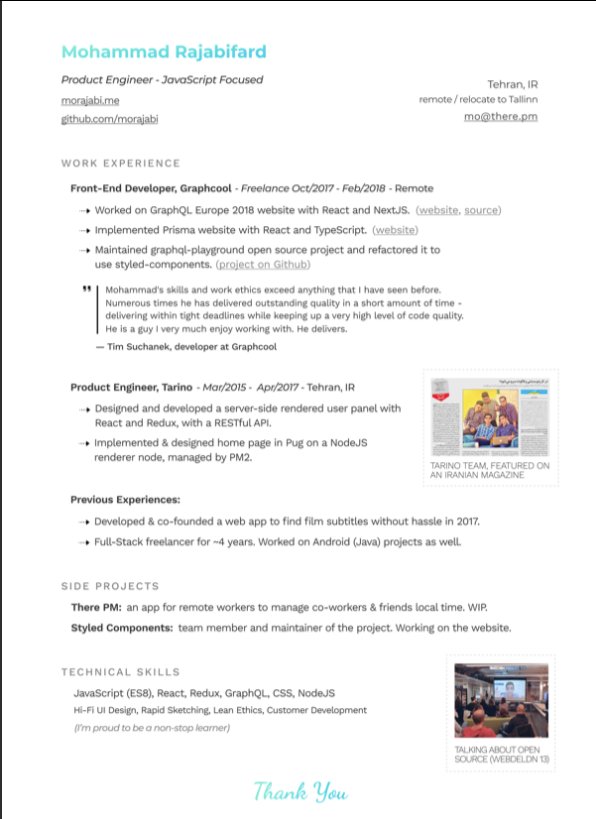
👨💻 Last resume I sent to a startup one year ago, sharing with you to get ideas:
- Forget what you don't have, make your strength bold
- Pick one work experience and explain what you did in detail w/ bullet points
- Write it towards the role you apply
- Give social proof
/thread
"But I got no work experience..."
Make a open source lib, make a small side project for yourself, do freelance work, ask friends to work with them, no friends? Find friends on Github, and Twitter.
Bonus points:
- Show you care about the company: I used the company's brand font and gradient for in the resume for my name and "Thank You" note.
- Don't list 15 things and libraries you worked with, pick the most related ones to the role you're applying.
-🙅♂️"copy cover letter"
"I got no firends, no work"
One practical way is to reach out to conferences and offer to make their website for free. But make sure to do it good. You'll get:
- a project for portfolio
- new friends
- work experience
- learnt new stuff
- new thing for Twitter bio
If you don't even have the skills yet, why not try your chance for @LambdaSchool? No? @freeCodeCamp. Still not? Pick something from here and learn https://t.co/7NPS1zbLTi
You'll feel very overwhelmed, no escape, just acknowledge it and keep pushing.
- Forget what you don't have, make your strength bold
- Pick one work experience and explain what you did in detail w/ bullet points
- Write it towards the role you apply
- Give social proof
/thread
"But I got no work experience..."
Make a open source lib, make a small side project for yourself, do freelance work, ask friends to work with them, no friends? Find friends on Github, and Twitter.
Bonus points:
- Show you care about the company: I used the company's brand font and gradient for in the resume for my name and "Thank You" note.
- Don't list 15 things and libraries you worked with, pick the most related ones to the role you're applying.
-🙅♂️"copy cover letter"
"I got no firends, no work"
One practical way is to reach out to conferences and offer to make their website for free. But make sure to do it good. You'll get:
- a project for portfolio
- new friends
- work experience
- learnt new stuff
- new thing for Twitter bio
If you don't even have the skills yet, why not try your chance for @LambdaSchool? No? @freeCodeCamp. Still not? Pick something from here and learn https://t.co/7NPS1zbLTi
You'll feel very overwhelmed, no escape, just acknowledge it and keep pushing.