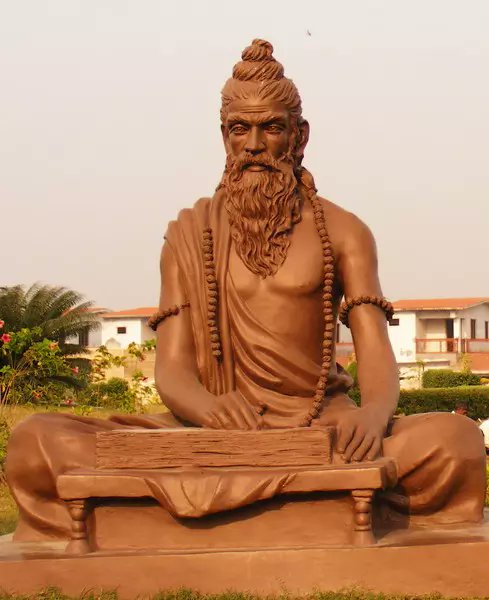
it has come our attention that some of our newer followers are struggling to understand the words we use to describe our rare books, and you are in for a treat with this simple guide to "Words That Don't Mean Anything What It Seems Like They Mean"
[thread 1/?]
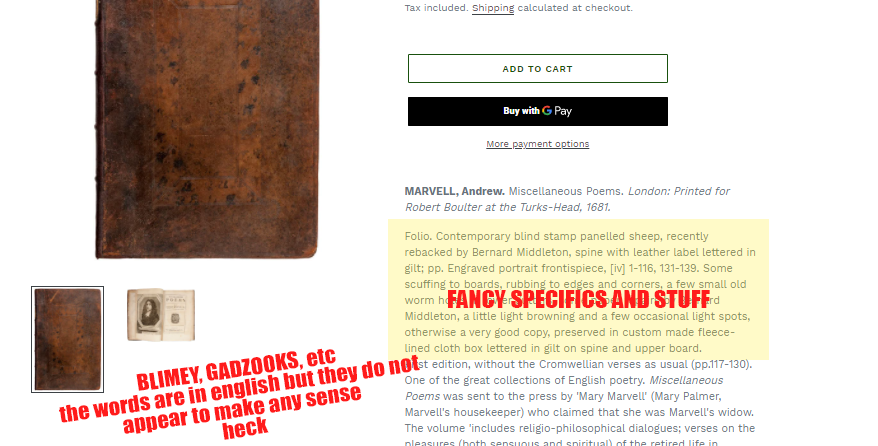
FINE: the book was crapped out by an angel
VERY GOOD: no-one can prove anything
GOOD: lets just be grateful it has covers, shall we
FAIR: the book is on fire, guarded by a hydra
POOR: no book, only despair
so its not really very helpful. 5 tweets in and we have learned nothing. you are welcome.
I am going to cover some of the things you'll see most often, and you are going to hate me for it
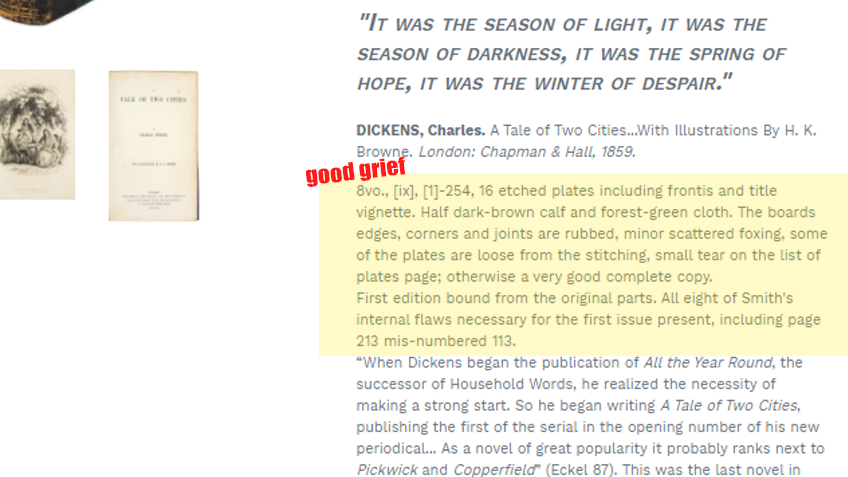
12mo, 8vo, 4to
This used to have a precise meaning to do with page folding, but booksellers got lazy and now it means 'we eyeballed the size of the book'
smaller number usually means a larger book
because of course
we'll say faded, or 'lightly browned' or 'a little tired' when what we mean is 'this book has grazed the abyss'
'sophisticated' literally means 'the book is a fake'
'extra-illustrated' means 'someone cut up and pasted a bunch of images inside the book like the love child of picasso and edward scissorhands'
personally i rather like the fun inscriptions, like the 18th century kid who drew rude pictures all over the inside his latin primer, but 🤷♀️
https://t.co/cGcFh4ZRgm
More from Culture


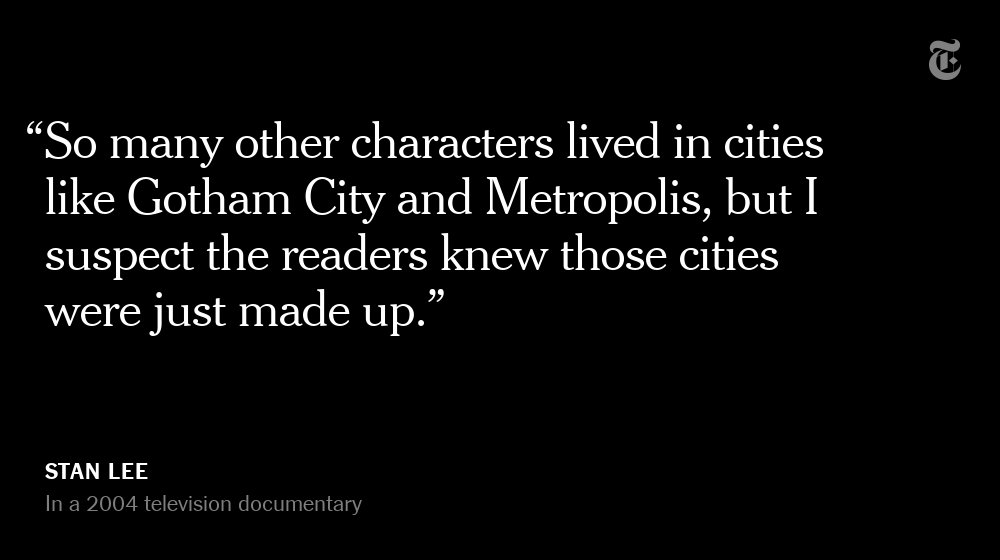
Stan Lee’s fictional superheroes lived in the real New York. Here’s where they lived, and why. https://t.co/oV1IGGN8R6
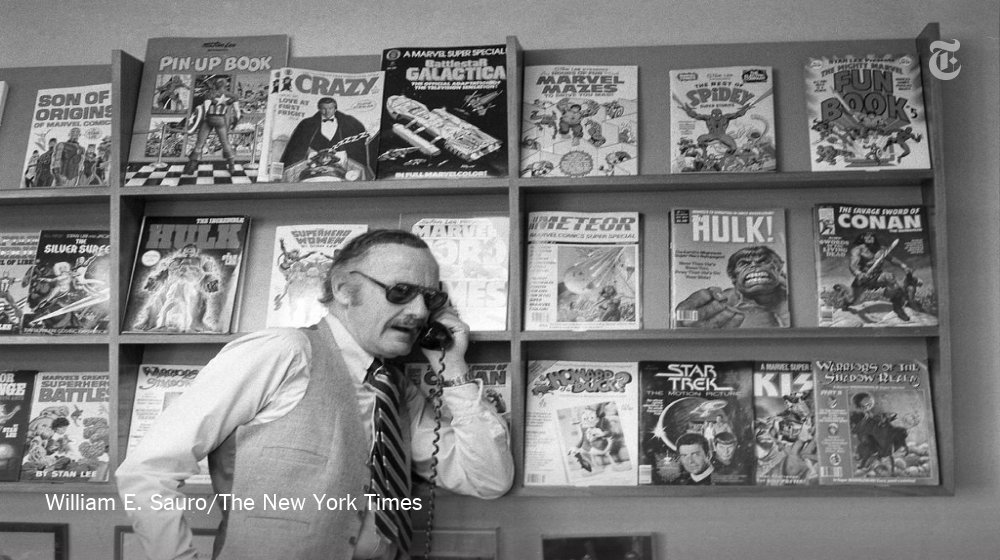
Stan Lee, who died Monday at 95, was born in Manhattan and graduated from DeWitt Clinton High School in the Bronx. His pulp-fiction heroes have come to define much of popular culture in the early 21st century.
Tying Marvel’s stable of pulp-fiction heroes to a real place — New York — served a counterbalance to the sometimes gravity-challenged action and the improbability of the stories. That was just what Stan Lee wanted. https://t.co/rDosqzpP8i
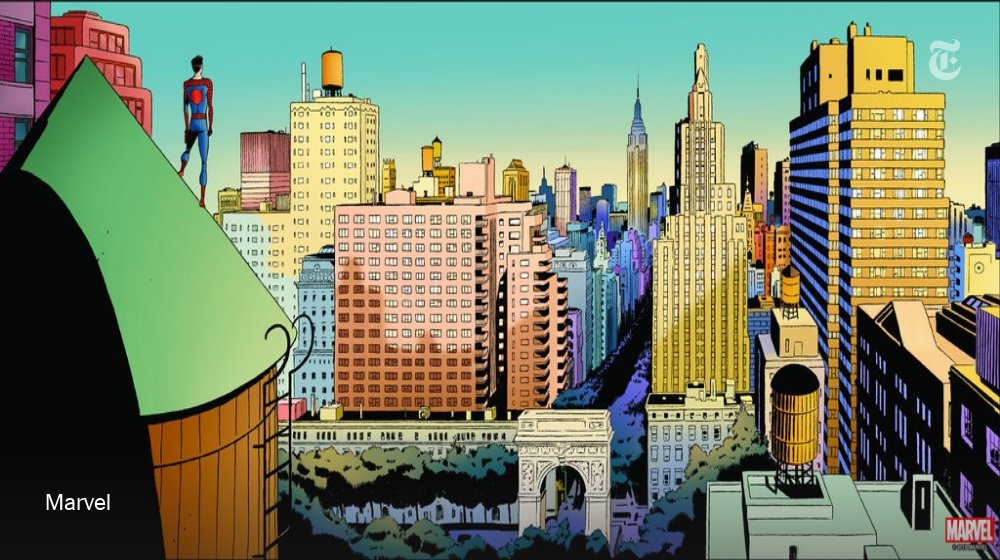
The New York universe hooked readers. And the artists drew what they were familiar with, which made the Marvel universe authentic-looking, down to the water towers atop many of the buildings. https://t.co/rDosqzpP8i
The Avengers Mansion was a Beaux-Arts palace. Fans know it as 890 Fifth Avenue. The Frick Collection, which now occupies the place, uses the address of the front door: 1 East 70th Street.
Stan Lee, who died Monday at 95, was born in Manhattan and graduated from DeWitt Clinton High School in the Bronx. His pulp-fiction heroes have come to define much of popular culture in the early 21st century.
Tying Marvel’s stable of pulp-fiction heroes to a real place — New York — served a counterbalance to the sometimes gravity-challenged action and the improbability of the stories. That was just what Stan Lee wanted. https://t.co/rDosqzpP8i
The New York universe hooked readers. And the artists drew what they were familiar with, which made the Marvel universe authentic-looking, down to the water towers atop many of the buildings. https://t.co/rDosqzpP8i
The Avengers Mansion was a Beaux-Arts palace. Fans know it as 890 Fifth Avenue. The Frick Collection, which now occupies the place, uses the address of the front door: 1 East 70th Street.





I woke up this morning to hundreds of notifications from this tweet, which is literally just a quote from a book I am giving away tonight.
The level of vitriol in the replies is a new experience for me on here. I love Twitter, but this is the dark side of it.
Thread...
First, this quote is from a book which examines castes and slavery throughout history. Obviously Wilkerson isn’t claiming slavery was invented by America.
She says, “Slavery IN THIS LAND...” wasn’t happenstance. American chattel slavery was purposefully crafted and carried out.
That’s not a “hot take” or a fringe opinion. It’s a fact with which any reputable historian or scholar agrees.
Second, this is a perfect example of how nefarious folks operate here on Twitter...
J*mes Linds*y, P*ter Bogh*ssian and others like them purposefully misrepresent something (or just outright ignore what it actually says as they do in this case) and then feed it to their large, angry following so they will attack.
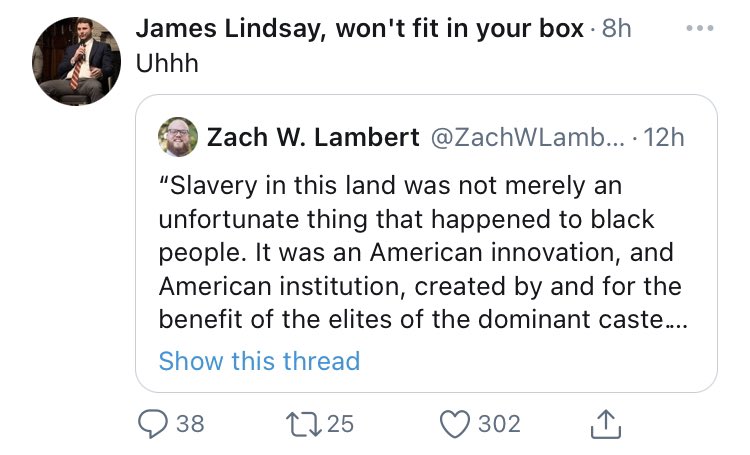
The attacks are rarely about ideas or beliefs, because purposefully misrepresenting someone’s argument prevents that from happening. Instead, the attacks are directed at the person.
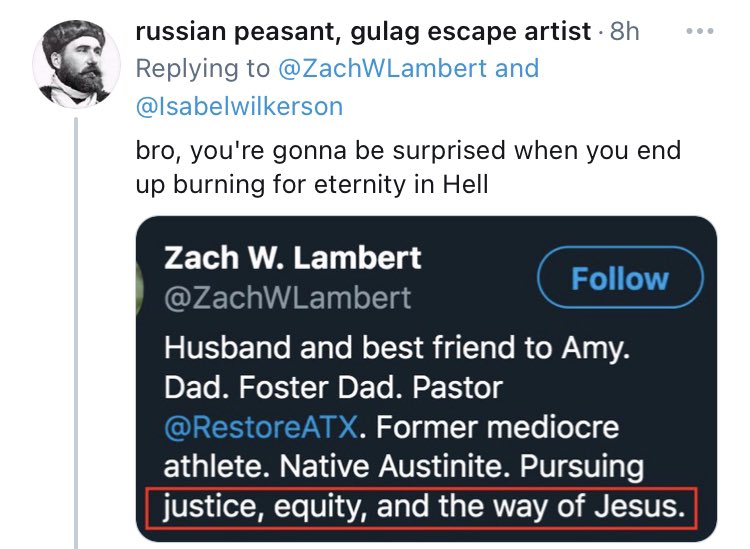
The level of vitriol in the replies is a new experience for me on here. I love Twitter, but this is the dark side of it.
Thread...
\u201cSlavery in this land was not merely an unfortunate thing that happened to black people. It was an American innovation, and American institution, created by and for the benefit of the elites of the dominant caste.\u201d @Isabelwilkerson
— Zach W. Lambert (@ZachWLambert) February 11, 2021
First, this quote is from a book which examines castes and slavery throughout history. Obviously Wilkerson isn’t claiming slavery was invented by America.
She says, “Slavery IN THIS LAND...” wasn’t happenstance. American chattel slavery was purposefully crafted and carried out.
That’s not a “hot take” or a fringe opinion. It’s a fact with which any reputable historian or scholar agrees.
Second, this is a perfect example of how nefarious folks operate here on Twitter...
J*mes Linds*y, P*ter Bogh*ssian and others like them purposefully misrepresent something (or just outright ignore what it actually says as they do in this case) and then feed it to their large, angry following so they will attack.
The attacks are rarely about ideas or beliefs, because purposefully misrepresenting someone’s argument prevents that from happening. Instead, the attacks are directed at the person.