I think something shifted in the market -- and active investors & traders would do well to adjust their mindset.
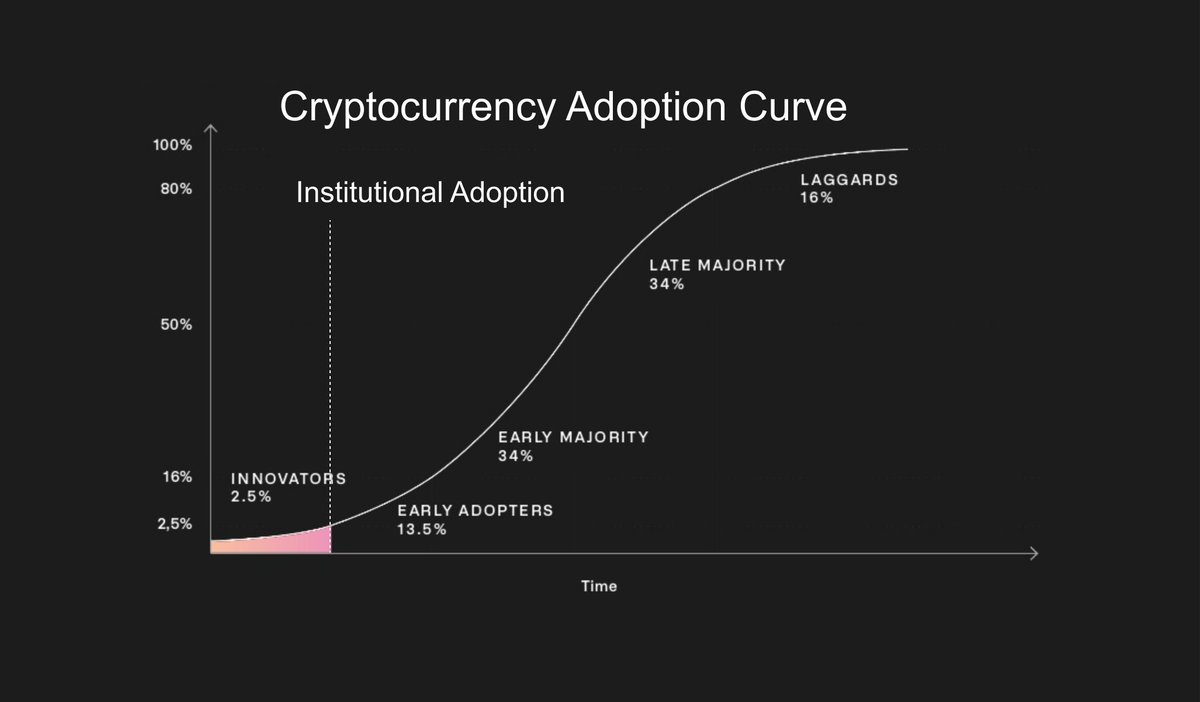
1/ We've reached a critical inflection point in bitcoin's adoption curve.
A moment wholly unique in the history of markets.
Are you ready for what comes next? 👇
#Bitcoin
I think something shifted in the market -- and active investors & traders would do well to adjust their mindset.
If they want this asset: they'll have to hustle, compete with the masses and FOMO in above ATH's.
Against a backdrop of scarcity unlike anything they've ever seen.
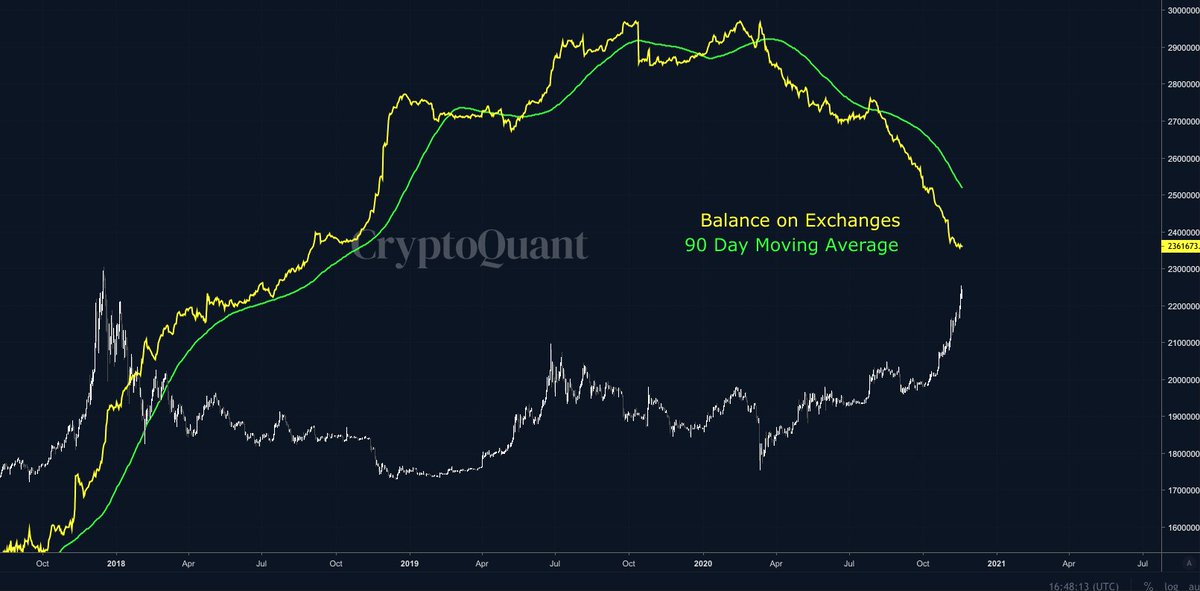
Their bots will not stop buying.
There isn't enough supply for all of them, and they know it.
How much appetite will strong hands have to market sell, just to run stops?
In the opening hours of the greatest bull market of their lives.
In a liquidity crisis.
This is why I think #Bitcoin goes to $35k-$40k, before a shakeout much worse than anything we've seen so far.
I’m not saying we teleport to $40k instantly.
Just small gains, pretty much every day, for many weeks.
But this scenario would not be unprecedented:
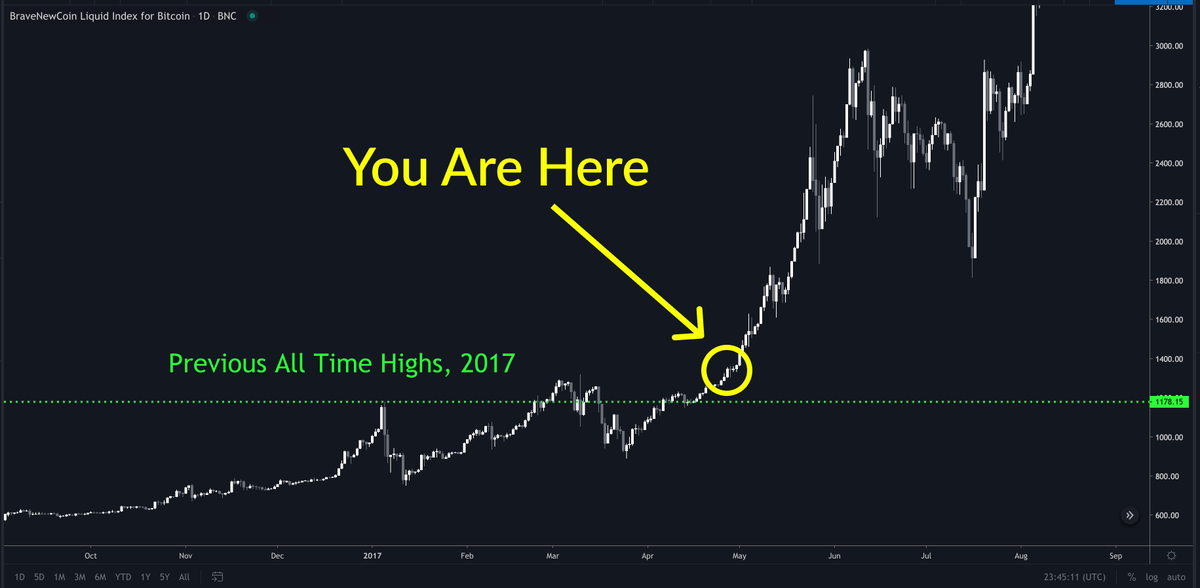
This same thing happened in 2017, when #BTC broke previous ATHs after multiple tries.
*Don't* throw risk mgmt out the window -- because we can't know for sure if I'm right.
Buy gradually -- on small pullbacks, at the weekly TWAP, BTC's time-weighted average price.
https://t.co/DSutfD4HXP
TWAP stands for Time Weighted Average Price. It is de rigeur among institutions when accumulating an asset whilst there's an absence of OTC block sellers with whom to directly match.
— Su Zhu (@zhusu) December 4, 2020
The guarantee of fill and privacy of overall size are certainly also plus points.$BTC
I will look to two metrics:
(and neither one is funding -- funding will be useless if this scenario plays out).
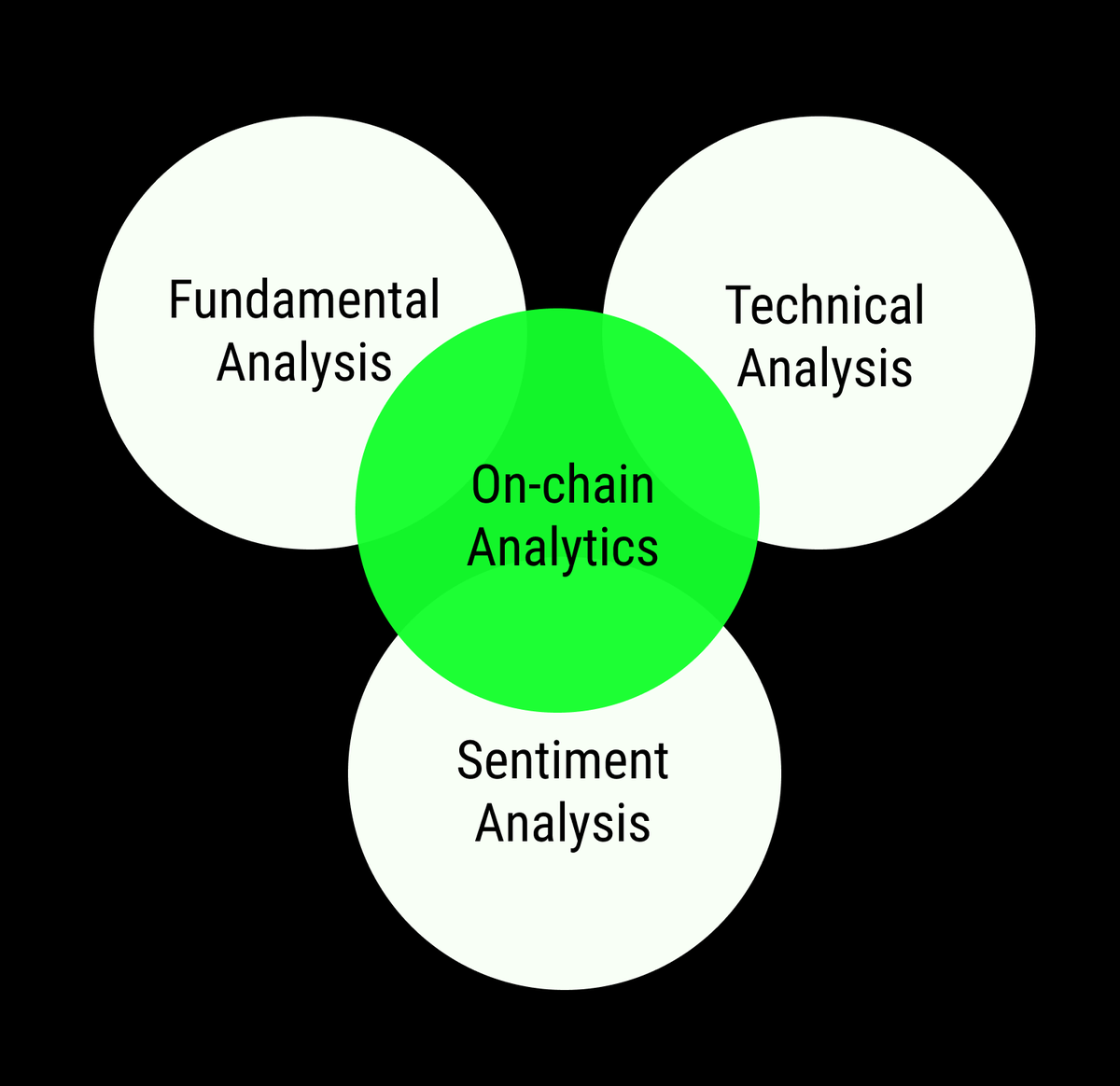
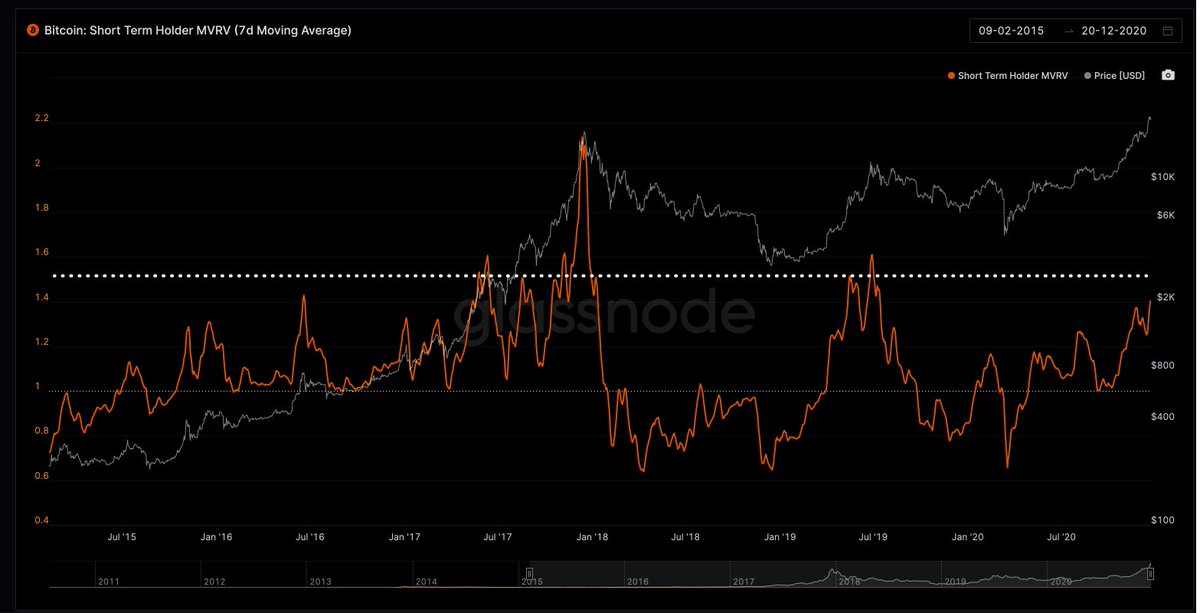
I consider this the alpha metric on-chain for finding local #BTC tops.
I want to see STH-MVRV print above a 1.5, then make lowers lows.
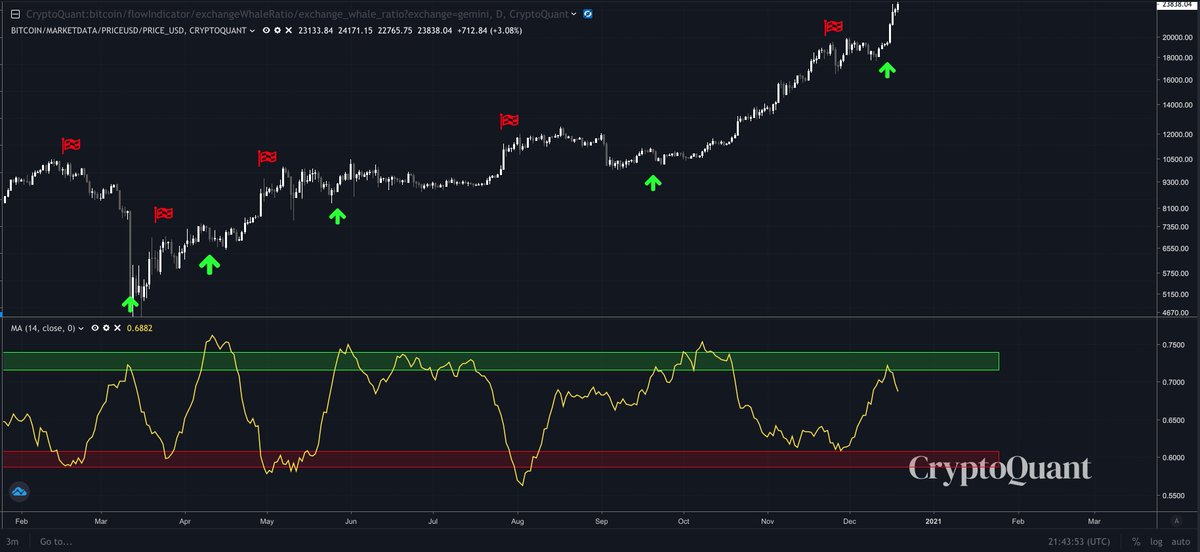
On Gemini exchange: this metric was never wrong in 2020.
Gemini whales are #Bitcoin 's secret bellweather.
(Data from @cryptoquant_com)

More from Crypto

2020 was a game changer for Ethereum.
The vast majority of its success was fueled by #DeFi.
Here's what happened in 5 Tweets 🔽
1) Governance Tokens 🪙
Projects gave complete ownership of billion dollar protocols to their users, often using retroactive airdrops.
Early adopters earned tokens for past usage, and token-based voting now dictates all technical
2) Liquidity Mining ⛏️
Power users were the first to earn on-going distribution by providing liquidity.
$COMP sparked the wave, with $BAL coining the term a few weeks
3) Yield Faming 🌾
Projects coupled liquidity mining and governance tokens to boost 'yields' by combining lending rates with an incentive layer.
APYs peaked as high as 1M% during 'DeFi summer', leading to a 'food coin' craze like $YAM and
4) Fair Launches ✅
Who needs investment when you can launch using yield farming?
@iearnfinance debuted $YFI with no formal funding, seeding a community treasury for self-sustainability.
The notion of a core team and community became one and the
The vast majority of its success was fueled by #DeFi.
Here's what happened in 5 Tweets 🔽
1) Governance Tokens 🪙
Projects gave complete ownership of billion dollar protocols to their users, often using retroactive airdrops.
Early adopters earned tokens for past usage, and token-based voting now dictates all technical
It pays to be a web3 power user.
— Coopahtroopa \U0001f525_\U0001f525 (@Cooopahtroopa) December 9, 2020
Five networks that issued retroactive airdrops to value added actors \U0001f4dd
2) Liquidity Mining ⛏️
Power users were the first to earn on-going distribution by providing liquidity.
$COMP sparked the wave, with $BAL coining the term a few weeks
BAL is live!
— Balancer Labs (@BalancerLabs) June 23, 2020
The 435k BAL for liquidity providers of the first three weeks of liquidity mining (145k per week) have just been sent out to the wallets used to provide liquidity on Balancer.https://t.co/pkXFzwzPVC
3) Yield Faming 🌾
Projects coupled liquidity mining and governance tokens to boost 'yields' by combining lending rates with an incentive layer.
APYs peaked as high as 1M% during 'DeFi summer', leading to a 'food coin' craze like $YAM and
Check out @Cooopahtroopa's latest post for all the #DeFi farmers out there \U0001f468\u200d\U0001f33e
— Zerion \U0001f3e6 (@zerion_io) June 26, 2020
Turns out @synthetix_io & @CurveFinance were ploughing the fields long before $COMP & $BAL came along.
Learn how to put your #crypto to work with this #yieldfarming 101 \U0001f4b8
\U0001f449 https://t.co/zYUKtqx3BK
4) Fair Launches ✅
Who needs investment when you can launch using yield farming?
@iearnfinance debuted $YFI with no formal funding, seeding a community treasury for self-sustainability.
The notion of a core team and community became one and the
2/ What is a Fair Launch?
— fair launch capital (@fairlaunchcap) August 26, 2020
A FL enables founders to bootstrap new crypto networks that are earned, owned, and governed by their community from the outset.
In this dynamic, everyone participates on equal footing\u2014there is no early access, pre-mine, or allocation of tokens.