The existence of stablecoins does not prevent consumers from using any other traditional payment, savings or credit offerings
The #STABLEAct is a confused attempt at regulating perceived harms that are not actually caused by the technology, but are, ironically, inherent in the existing financial system that cryptocurrencies are designed to replace
👇🏽
The existence of stablecoins does not prevent consumers from using any other traditional payment, savings or credit offerings
This happens when banks make arbitrary and opaque risk decisions that are in turn based on cumbersome regulations which deputize banks to do the government’s job
1. Stablecoin issuers could take advantage of low income consumers
2. Stablecoins are an ‘outsourced issuance’ of US dollars
3. Stablecoins pose market, liquidity, and credit risk
But all of these concerns are misplaced👇🏽
https://t.co/g997ym8zCV
This is the opposite of stablecoins like USDC, which are fully collateralized and don't charge interest or fees
This objective does not justify regulating the issuance or transactional use of stablecoins
They are, at most, the issuance of a promise to redeem 1 stablecoin for 1 US Dollar, the same way as a check or money order
This issuance is already regulated under state money transmission laws
Perhaps they refer to the risk that stablecoins could become 'too big to fail' or somehow cause a 2008 style financial crisis, which of course is absurd...
And again, there are existing laws (state money transmission) which require issuers of stablecoins to have fully collateralized reserves with a 1:1 backing.

More from Crypto






1/ ERC-20 token standard approve() has caused an unnecessary cost of $53.8M for #Ethereum and #DeFi users
This is bad. Continue reading why and how to avoid this in the future.
👇👇👇

2/ Before you go all rage on the flaws of my analysis, please read the whole Twitter thread for disclaimers and caveats.

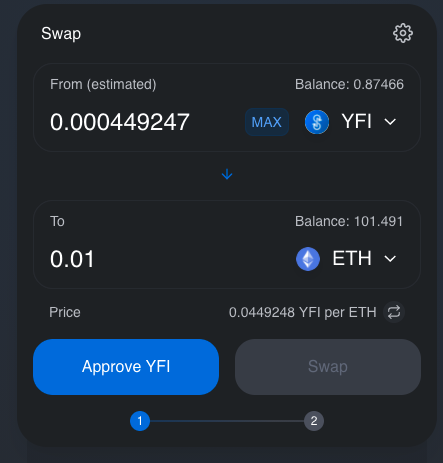
3/ approve() is an unnecessary step of ERC-20 tokens when they interact with smart contracts.
You know this because when you do a Uniswap trade you need press two transaction buttons instead of one.
4/ Why there is approve() - you can read the history in this Twitter
5/ I queried all approve() transactions on Google BigQuery public dataset and calculated their ETH cost and then converted this to the USD with the current ETH price.
This is bad. Continue reading why and how to avoid this in the future.
👇👇👇
2/ Before you go all rage on the flaws of my analysis, please read the whole Twitter thread for disclaimers and caveats.
3/ approve() is an unnecessary step of ERC-20 tokens when they interact with smart contracts.
You know this because when you do a Uniswap trade you need press two transaction buttons instead of one.
4/ Why there is approve() - you can read the history in this Twitter
1/ I just spend my Saturday morning on a call with a crypto fund explaining to them how #Ethereum ERC-20 token approve() function works
— \U0001f42e Mikko Ohtamaa (@moo9000) August 29, 2020
I am too old for this shit. pic.twitter.com/7EYfOaRP5L
5/ I queried all approve() transactions on Google BigQuery public dataset and calculated their ETH cost and then converted this to the USD with the current ETH price.