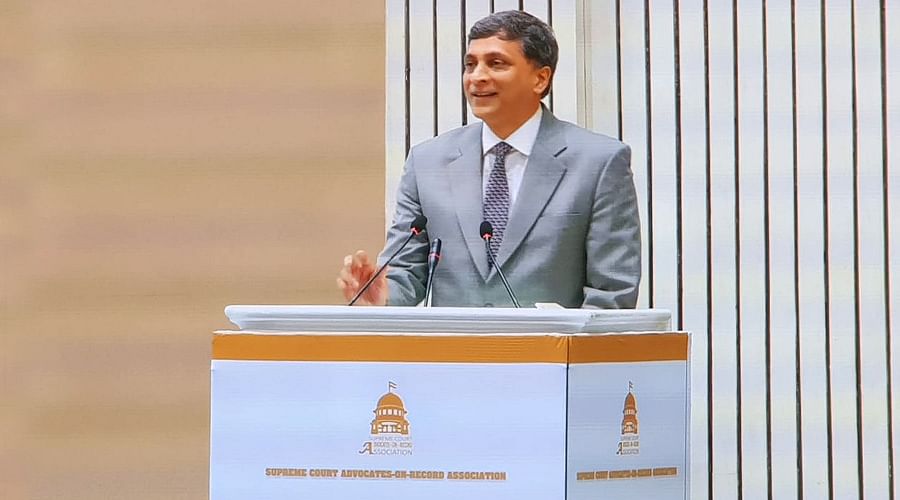
<< 𝙇𝙤𝙖𝙣 𝙈𝙤𝙧𝙖𝙩𝙤𝙧𝙞𝙪𝙢 & 𝙄𝙣𝙩𝙚𝙧𝙚𝙨𝙩 𝙒𝙖𝙞𝙫𝙚𝙧 >>

#SupremeCourt bench led by Justice Ashok will today take up plea(s) seeking extension of loan moratorium owing to the pandemic alongwith sector-specific plea’s.

@RBI
#loan
#loanmoratorium #ExtendMoratorium
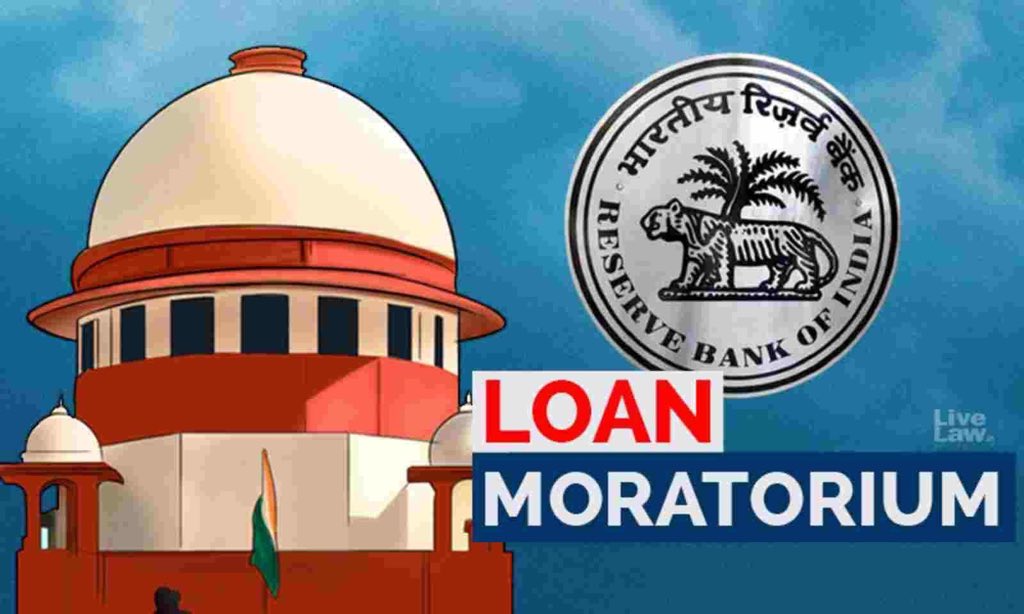
Senior Advocate Ravindra Srivastava is making rejoinder submissions.
He says that no authority seems to be looking into the grievances of the borrowers.
Srivastava : Govt and RBI have come up with measures - for small borrowers (for loans up to 2 crores) on which I made submissions regarding discrimination.
They have shown nothing on record to prove why this was done, Srivastava says
Srivastava says that the intervention application of the IBA and the SBI circulars have been signed by the Deputy Managing Director but nowhere it has been stipulated to be a Board Approved policy.
Interest over interest is also stipulated in the Circulars which means that borrowers will have to pay a penalty for taking moratorium, says Srivastava
He adds that he is unable to understand how the RBI is holding the borrowers hands with the present policy stipulations.
26 sectors severely impacted by disaster, Kamath Committee has recognised these sectors, says Srivastava
This is a case where the National Disaster Management Authority should have come out, instead of handing over to the banks.
Srivastava: There has to be a solution to this, the power cannot ve left to the banks. Instead the RBI should be making provisions for resolution of the processes.
Bench says it will re-assemble at 2 PM.
Bench re-assembles.
Srivastava continues his rejoinder submissions.
Srivastava: Invocation stipulates a last date. Prudential norms never have a cut off date.

“But there has to be a cut off date. Otherwise how will there be invocation?” Justice Reddy asks
But this is catastrophic especially in light of the Covid stress., says Srivastava
Srivastava: NDMA has to collect empirical data and make a comprehensive policy, not arguing that there needs to be a complete waiver. There can be a partial waiver also but for this there is a need for a calibrated policy under the Disaster Management Act
Srivastava: The DMA structure as argued by Mr Salve has demolished the architecture of the DMA, with due respect. His argument has made provisions of the DMA nugatory.
Relief can be granted for loans. In policy making, national authority has to apply its mind (under Disaster Management Act) but that has not been done.
Srivastava: Not practice of My lords to rely on Articles, but I have enclosed some articles wherein one financial expert has demonstrated how the waiver of compound interest works.
Srivastava: Absolute distress prevailing at the moment. They have not been taken into account, with due regard to the Union or RBI. Huge profits being made by banks.
Srivastava concludes.
Adv Vishal Tiwari: Pursuant to Order of your lordships, I went to to making a representation. One lending institution has written to me stating that (PNB Housing) the RBI Advisory is not applicable to me.

More from Live Law

More from Court
Some initial observations about this case, and in particular what the Court of Appeal made of the Attorney General’s application to refer these sentences as “unduly lenient”.

Spoiler: it makes uncomfortable reading for the Attorney General.


First, by way of background. I was one of several commentators astonished that the Attorney General, who has no known experience of practising criminal law, decided to personally present this serious case at the Court of Appeal.

It appeared an overtly political decision.


Comments leaked to the press confirmed this was a political decision, to capitalise on a tragic case in the headlines.

A “friend” of the Attorney General told the Express that she was pursuing the case *against* legal advice. She also took a preemptive pop at the judges.


On the day of the hearing, it appeared from selected reports that the AG was out of her depth. She appeared to be making political submissions to the Court of Appeal that have no place in a case of this type.


The Court of Appeal judgment helps understand what happened.

The AG played a limited role. She “rehearsed some of the facts and said that the sentences had caused widespread public concern”

Her contribution was seemingly not considered by the Court to be legal submissions. Oof.

You May Also Like

THE MEANING, SIGNIFICANCE AND HISTORY OF SWASTIK

The Swastik is a geometrical figure and an ancient religious icon. Swastik has been Sanatan Dharma’s symbol of auspiciousness – mangalya since time immemorial.


The name swastika comes from Sanskrit (Devanagari: स्वस्तिक, pronounced: swastik) &denotes “conducive to wellbeing or auspicious”.
The word Swastik has a definite etymological origin in Sanskrit. It is derived from the roots su – meaning “well or auspicious” & as meaning “being”.


"सु अस्ति येन तत स्वस्तिकं"
Swastik is de symbol through which everything auspicios occurs

Scholars believe word’s origin in Vedas,known as Swasti mantra;

"🕉स्वस्ति ना इन्द्रो वृधश्रवाहा
स्वस्ति ना पूषा विश्ववेदाहा
स्वस्तिनास्तरक्ष्यो अरिश्तनेमिही
स्वस्तिनो बृहस्पतिर्दधातु"


It translates to," O famed Indra, redeem us. O Pusha, the beholder of all knowledge, redeem us. Redeem us O Garudji, of limitless speed and O Bruhaspati, redeem us".

SWASTIK’s COSMIC ORIGIN

The Swastika represents the living creation in the whole Cosmos.


Hindu astronomers divide the ecliptic circle of cosmos in 27 divisions called
https://t.co/sLeuV1R2eQ this manner a cross forms in 4 directions in the celestial sky. At centre of this cross is Dhruva(Polestar). In a line from Dhruva, the stars known as Saptarishi can be observed.