The American business community is speaking with a unified voice - NAM called to invoke the 25th Amendment; the Business Roundtable and Chambers of Commerce urge a peaceful transition of power; all have denounced last week's violence. What might this mean? A few implications:
1/

This isn't just PR - bad politics is bad for business. Here, the Harvard Business Review makes the business case for democracy (leading essay by @RebeccaReCap)

https://t.co/dpjrfsaHsX

2/
Historically, business has been a crucial ally for democracy. Mark Mizruchi shows how business helped secure democracy after WII, through organizations like the Committee for Economic Development (see also his @NiskanenCenter paper: https://t.co/xoqUUN1nCD)

3/
My book examines how business groups formed to lobby against patronage and corruption, and in favor of institutional reform, in the 19th c. (https://t.co/FnNhZUupBG)

For a summary of business’s role in American democracy over the 20th century, see https://t.co/SDwfD0O3Lj

4/
Today, corporations are cutting off PAC $$ — Wall St banks (JPMorgan Chase, Goldman Sachs, CitiGroup), big tech (Microsoft, Facebook). Many more corps have suspended donations to members of Congress who contested the certification of election results last week
5/
Trump has been kicked off the big social media platforms, including Twitter; Stripe and Shopify have stopped processing payments on Trump Org websites; the PGA is moving its championship from a Trump golf course

6/
Groups like @LeadershipNP are calling on businesses to support reforms like HR1, and are advocating greater action - like refusing to hire ppl who worked for the Trump administration or supported claims of fraud (see the Forbes Commitment: https://t.co/uRIjlAV8YF)

7/
Last fall, corporations were vocal in their support and resources for free and fair elections, gave employees time to vote on Election Day, condemned Trump’s refusal to accept the election results. Even Charles Koch laments his role in polarization https://t.co/1IDirO8L5M

8/
Corporations are being much more supportive of democracy than the GOP caucus, and they’re acting in ways that affect (far-right) candidates’ prospects.
We should be wary of too much corporate power - but we shouldn’t be cynical about the crucial role it can play today.

/end

More from Business

You May Also Like

THREAD: 12 Things Everyone Should Know About IQ

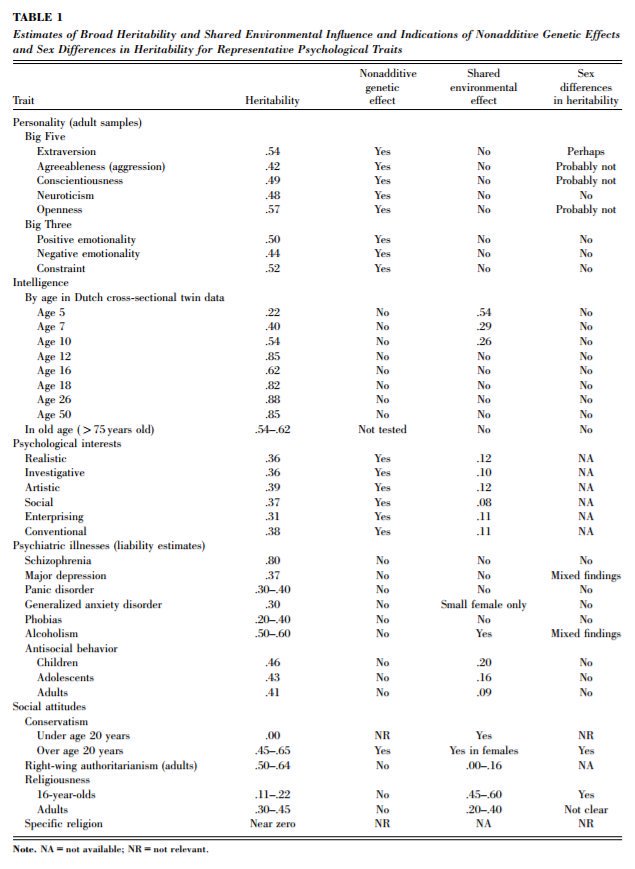
1. IQ is one of the most heritable psychological traits – that is, individual differences in IQ are strongly associated with individual differences in genes (at least in fairly typical modern environments). https://t.co/3XxzW9bxLE


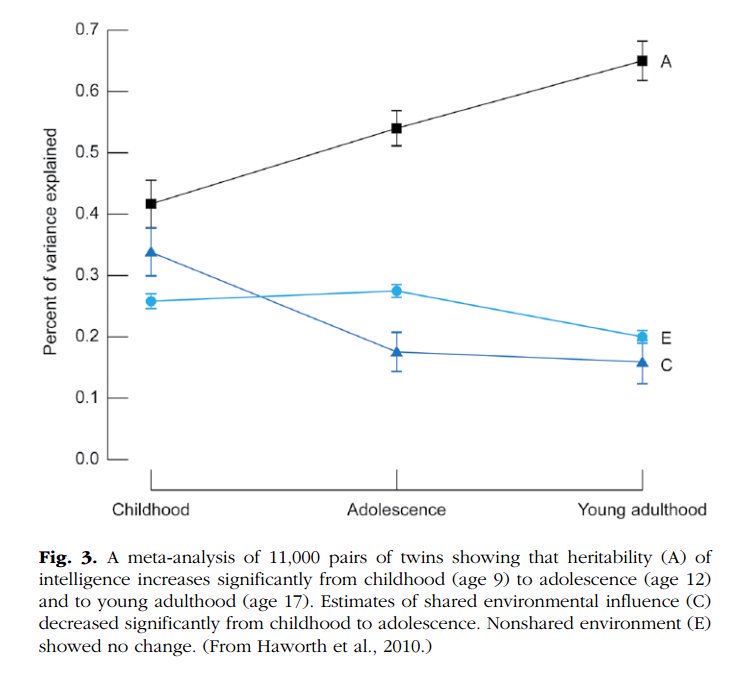
2. The heritability of IQ *increases* from childhood to adulthood. Meanwhile, the effect of the shared environment largely fades away. In other words, when it comes to IQ, nature becomes more important as we get older, nurture less.
https://t.co/UqtS1lpw3n


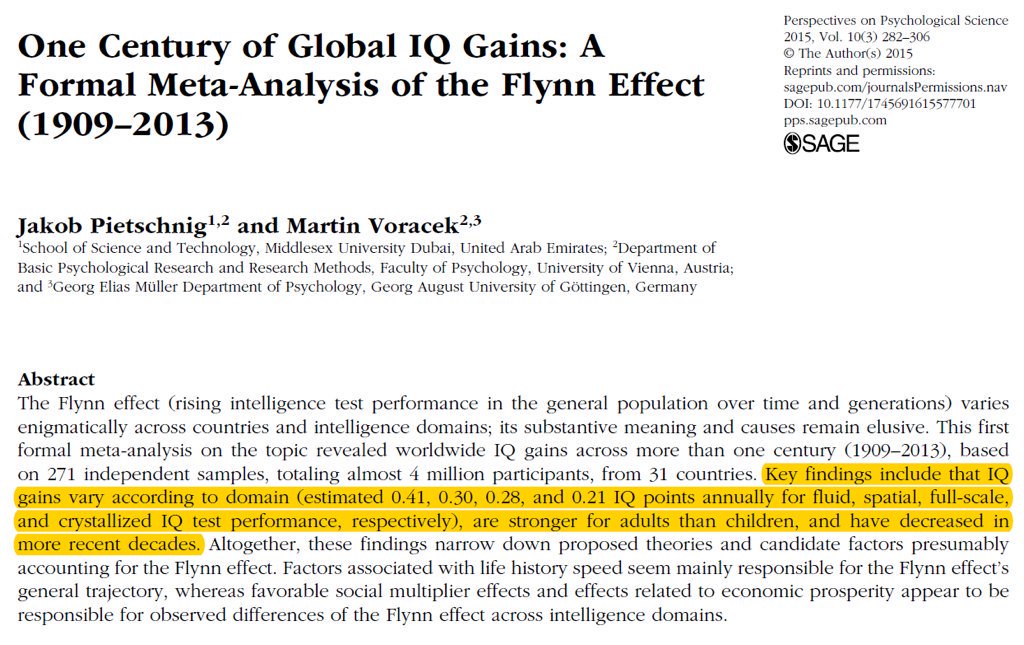
3. IQ scores have been increasing for the last century or so, a phenomenon known as the Flynn effect. https://t.co/sCZvCst3hw (N ≈ 4 million)

(Note that the Flynn effect shows that IQ isn't 100% genetic; it doesn't show that it's 100% environmental.)


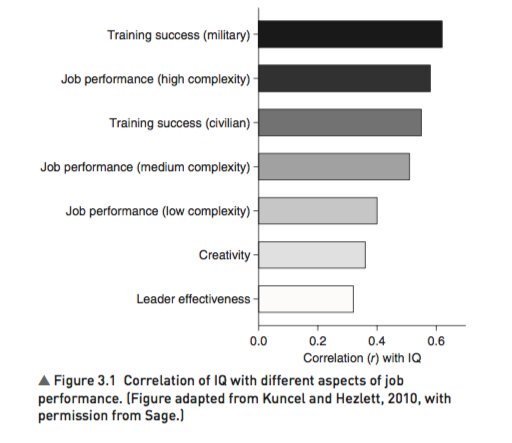
4. IQ predicts many important real world outcomes.

For example, though far from perfect, IQ is the single-best predictor of job performance we have – much better than Emotional Intelligence, the Big Five, Grit, etc. https://t.co/rKUgKDAAVx https://t.co/DWbVI8QSU3


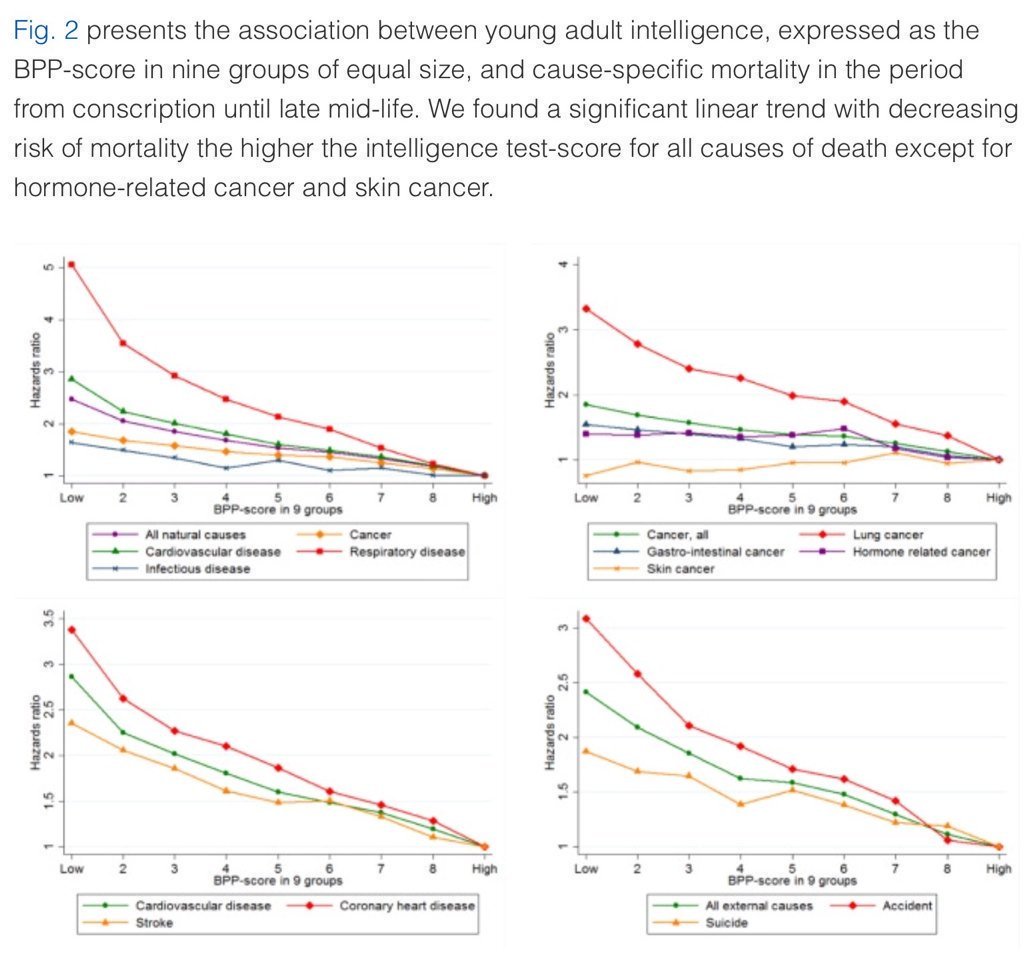
5. Higher IQ is associated with a lower risk of death from most causes, including cardiovascular disease, respiratory disease, most forms of cancer, homicide, suicide, and accident. https://t.co/PJjGNyeQRA (N = 728,160)