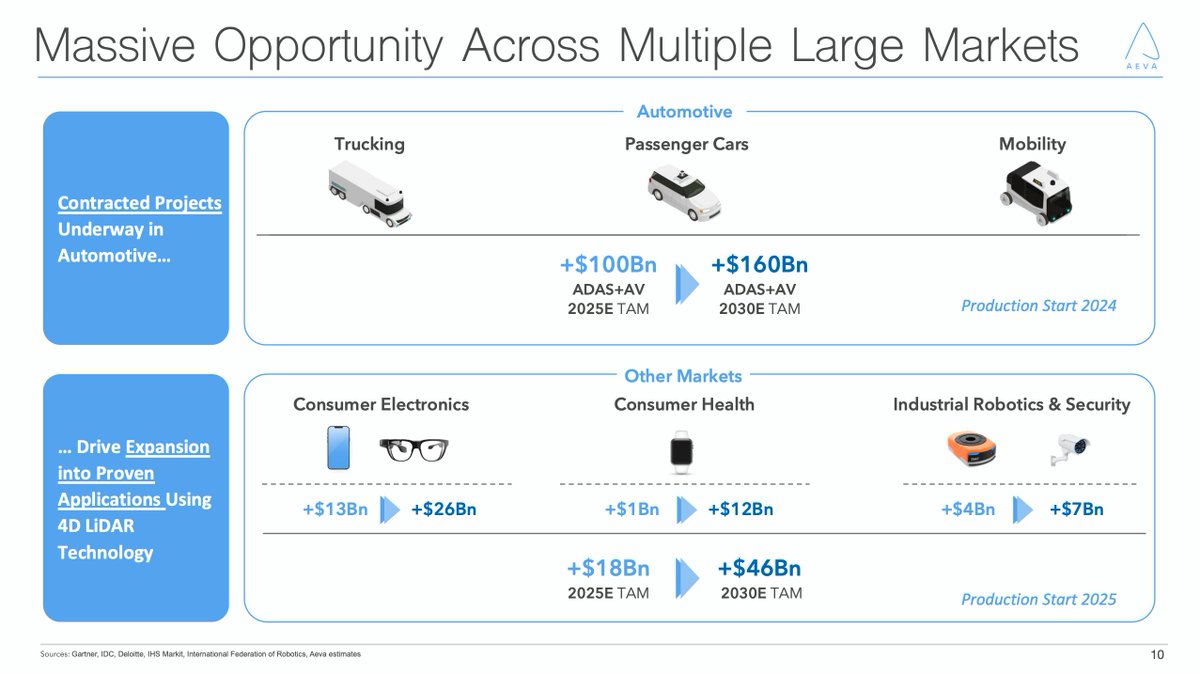
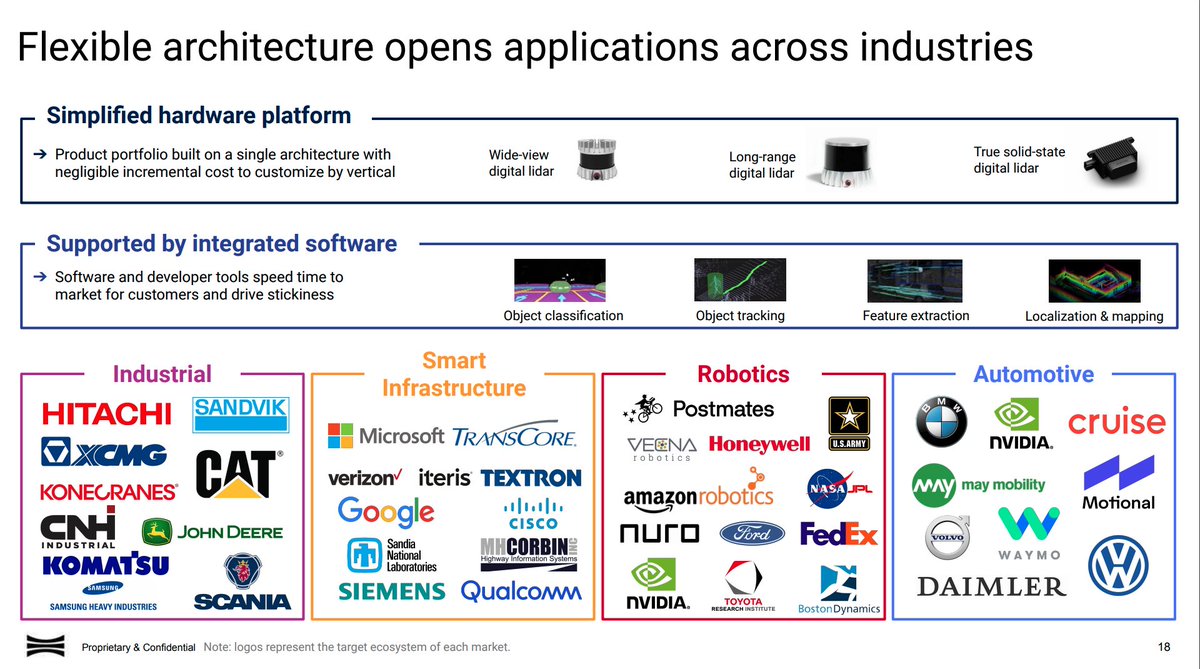
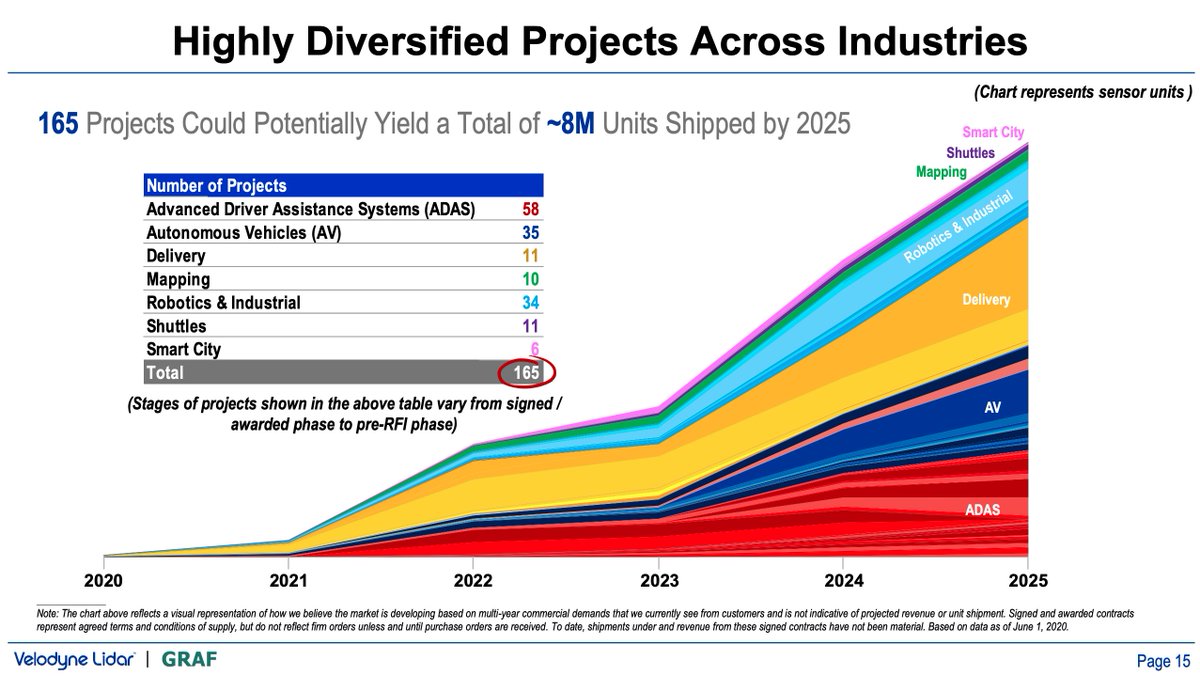
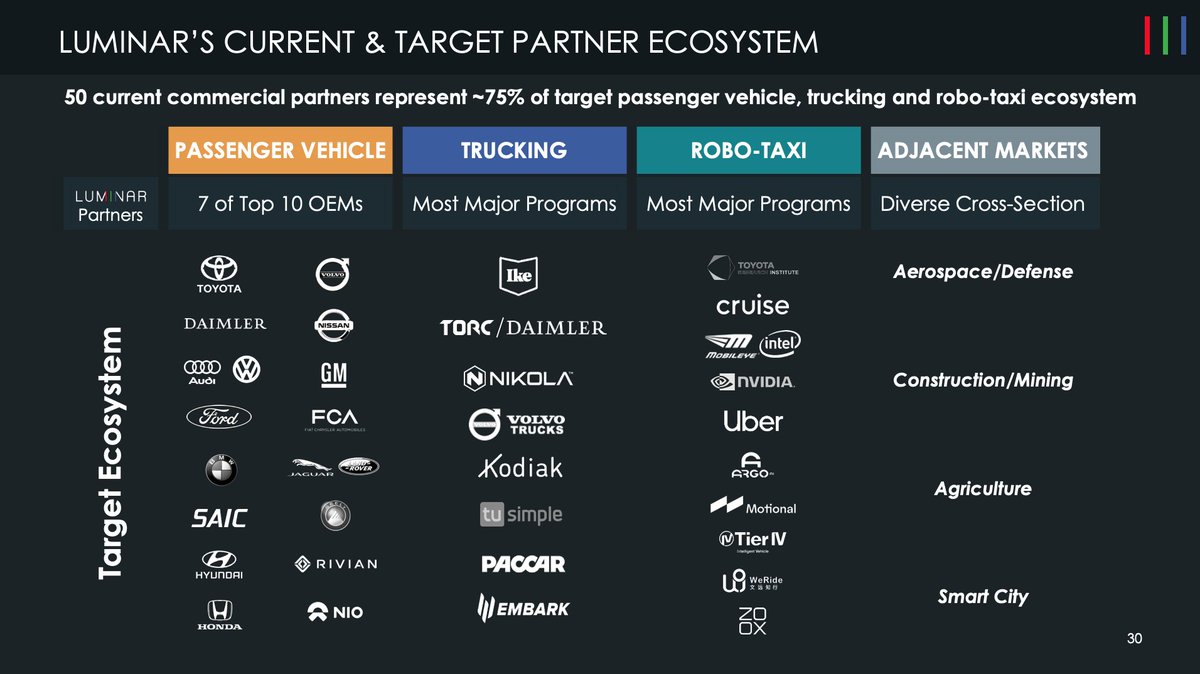
1/ Interesting thing happening in the LIDAR industry right now. 5+ companies will soon or have SPAC'd. Their value is based on *projected* revenue that comes from *entirely overlapping* potential customers, with very little discount applied to future projections. Is this bad?

2/ And how did we end up here? SPACs aren't subject to the same effective restrictions on future revenue projections as traditional IPOs. It's totally possible the numbers will be correct for one of these companies. But it's not possible for all to be correct.
3/ SPACs may be a good thing for pre-revenue companies or companies that have chosen to go public before they meet the more customary milestones for an IPO ($100m in ARR, for example).
4/ If these companies were to be valued based on earnings today, they would be severely undervalued. But if you look at the market caps for each of these companies, they're each being valued as if they had already realized some of their ambitious future projections.
5/ Of course, it's certainly not unusual for startups to be valued based on future revenue projections, even in a highly competitive space. But I typically see private markets put a much larger discount on these future projections than what we see with these SPACs.
6/ Let's look at the overlap (from public pitches):
* All targeting ADAS or robotaxi market as the top of one of the top revenue sources
* All include value added software for perception
* All counting on today's nascent industry adoption of LIDAR to balloon

In no order:
7/ AEVA
8/ Innoviz
9/ Ouster
10/ Velodyne
11/ Luminar
12/ What does this mean? First, I have great respect for all of these companies. They're each innovating in different ways, and competition is great for the industry. Robotaxis will have an enormous positive impact on society, so it's critical to see progress here.
13/ But we saw a consolidation / collapse of the robotaxi space over the last 24 months (down to a handful of players), and LIDAR is next. This probably means lower market caps for most of these co's, which sucks for everyone involved, but may the best product win!

More from Business

Introducing "The Balloon Effect"

Many businesses & creators have experienced a similar pattern of success.

From @MrBeastYT and @MorningBrew to @oatly and @Rovio.

Let's break down what "The Balloon Effect" is and examples of it in real life.

Keep reading 👇


1/ What is "The Balloon Effect"?

It is a particular pattern of growth.

It is not Instagram's growth trajectory.

It is not
https://t.co/5axsTUKek6's growth trajectory.

"The Balloon Effect" is defined by several years of hard work & grit complemented by slow, linear growth.

2/ And then one day, one month, or one quarter...everything changes.

A business hits a tipping point and its trajectory shifts entirely.

Gradual growth turns to exponential growth & your brand and your size explode.

Like a step function.

3/ Now, you're probably wondering.

Why is it called "The Balloon Effect"?

Because filling/popping a water balloon follows the exact pattern I just described (and so many businesses experience).

Long unsexy slog 👉 Exponential tipping point.

4/ Initially, you turn on the faucet & water takes up space in the empty balloon.

Through effort you open the faucet, yet the results are unexciting.

But it's what must be done for water (or growth) to happen at all.

It's not sexy, but it's necessary.

You May Also Like

1/ Some initial thoughts on personal moats:

Like company moats, your personal moat should be a competitive advantage that is not only durable—it should also compound over time.

Characteristics of a personal moat below:


2/ Like a company moat, you want to build career capital while you sleep.

As Andrew Chen noted:


3/ You don’t want to build a competitive advantage that is fleeting or that will get commoditized

Things that might get commoditized over time (some longer than


4/ Before the arrival of recorded music, what used to be scarce was the actual music itself — required an in-person artist.

After recorded music, the music itself became abundant and what became scarce was curation, distribution, and self space.

5/ Similarly, in careers, what used to be (more) scarce were things like ideas, money, and exclusive relationships.

In the internet economy, what has become scarce are things like specific knowledge, rare & valuable skills, and great reputations.