Okay, as my discussion with @rahulroushan, an excerpt of which was tweeted by @digikarma, has triggered yet another debate on beef, I feel I must pitch in with my 2 paisa fwiw. (1/10)
More from Business

Following @BAUDEGS I have experienced hateful and propagandist tweets time after time. I have been shocked that an academic community would be so reckless with their publications. So I did some research.
The question is:
Is this an official account for Bahcesehir Uni (Bau)?

Bahcesehir Uni, BAU has an official website https://t.co/ztzX6uj34V which links to their social media, leading to their Twitter account @Bahcesehir
BAU’s official Twitter account

BAU has many departments, which all have separate accounts. Nowhere among them did I find @BAUDEGS
@BAUOrganization @ApplyBAU @adayBAU @BAUAlumniCenter @bahcesehirfbe @baufens @CyprusBau @bauiisbf @bauglobal @bahcesehirebe @BAUintBatumi @BAUiletisim @BAUSaglik @bauebf @TIPBAU
Nowhere among them was @BAUDEGS to find

The question is:
Is this an official account for Bahcesehir Uni (Bau)?
Bahcesehir Uni, BAU has an official website https://t.co/ztzX6uj34V which links to their social media, leading to their Twitter account @Bahcesehir
BAU’s official Twitter account
BAU has many departments, which all have separate accounts. Nowhere among them did I find @BAUDEGS
@BAUOrganization @ApplyBAU @adayBAU @BAUAlumniCenter @bahcesehirfbe @baufens @CyprusBau @bauiisbf @bauglobal @bahcesehirebe @BAUintBatumi @BAUiletisim @BAUSaglik @bauebf @TIPBAU
Nowhere among them was @BAUDEGS to find

Introducing "The Balloon Effect"
Many businesses & creators have experienced a similar pattern of success.
From @MrBeastYT and @MorningBrew to @oatly and @Rovio.
Let's break down what "The Balloon Effect" is and examples of it in real life.
Keep reading 👇
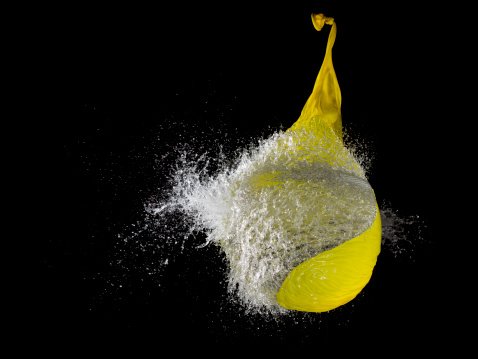
1/ What is "The Balloon Effect"?
It is a particular pattern of growth.
It is not Instagram's growth trajectory.
It is not https://t.co/5axsTUKek6's growth trajectory.
"The Balloon Effect" is defined by several years of hard work & grit complemented by slow, linear growth.
2/ And then one day, one month, or one quarter...everything changes.
A business hits a tipping point and its trajectory shifts entirely.
Gradual growth turns to exponential growth & your brand and your size explode.
Like a step function.
3/ Now, you're probably wondering.
Why is it called "The Balloon Effect"?
Because filling/popping a water balloon follows the exact pattern I just described (and so many businesses experience).
Long unsexy slog 👉 Exponential tipping point.
4/ Initially, you turn on the faucet & water takes up space in the empty balloon.
Through effort you open the faucet, yet the results are unexciting.
But it's what must be done for water (or growth) to happen at all.
It's not sexy, but it's necessary.
Many businesses & creators have experienced a similar pattern of success.
From @MrBeastYT and @MorningBrew to @oatly and @Rovio.
Let's break down what "The Balloon Effect" is and examples of it in real life.
Keep reading 👇
1/ What is "The Balloon Effect"?
It is a particular pattern of growth.
It is not Instagram's growth trajectory.
It is not https://t.co/5axsTUKek6's growth trajectory.
"The Balloon Effect" is defined by several years of hard work & grit complemented by slow, linear growth.
2/ And then one day, one month, or one quarter...everything changes.
A business hits a tipping point and its trajectory shifts entirely.
Gradual growth turns to exponential growth & your brand and your size explode.
Like a step function.
3/ Now, you're probably wondering.
Why is it called "The Balloon Effect"?
Because filling/popping a water balloon follows the exact pattern I just described (and so many businesses experience).
Long unsexy slog 👉 Exponential tipping point.
4/ Initially, you turn on the faucet & water takes up space in the empty balloon.
Through effort you open the faucet, yet the results are unexciting.
But it's what must be done for water (or growth) to happen at all.
It's not sexy, but it's necessary.