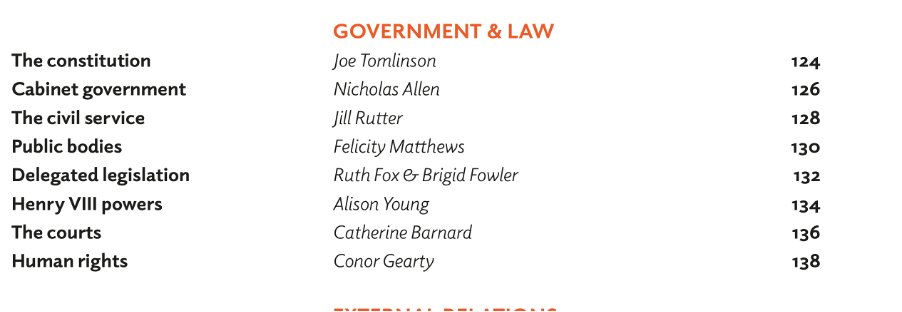
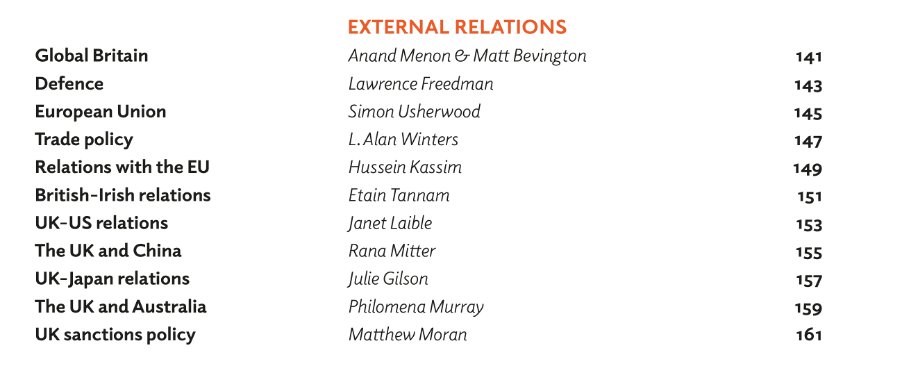
IT’S HERE The new bumper @ukandeu report that tells you all you need to know – or at least all the questions you need to ask – about the UK after Brexit. https://t.co/S1lHP6TBJ1 1/27

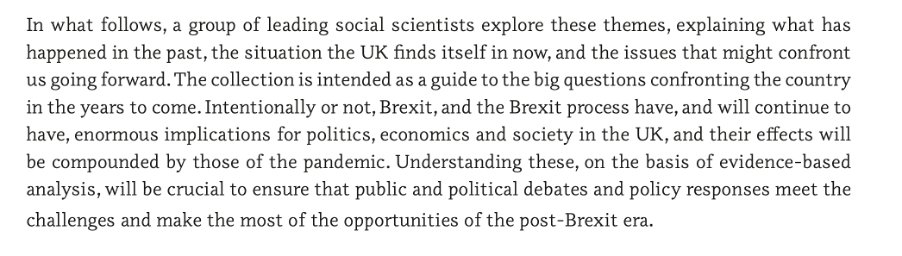

Download it, tell your boss your wifi has crashed, and have a read. 5/27
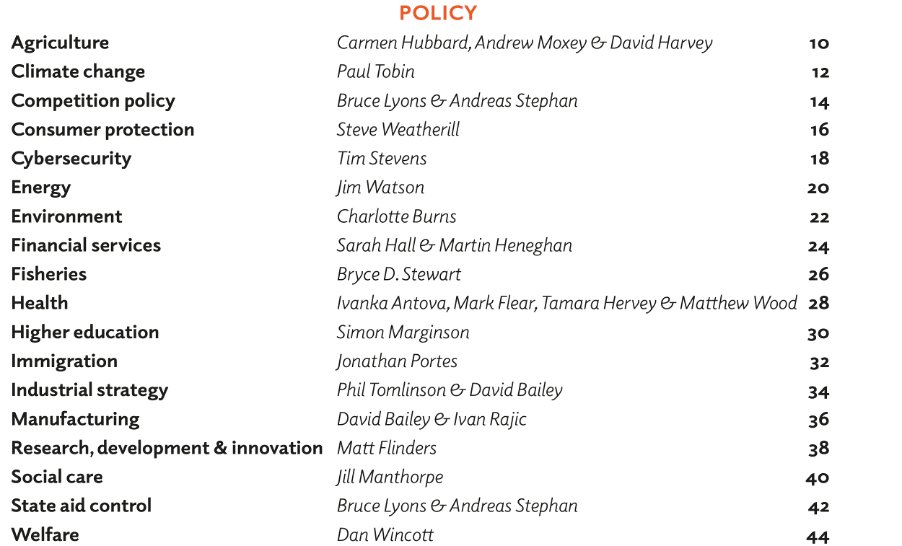

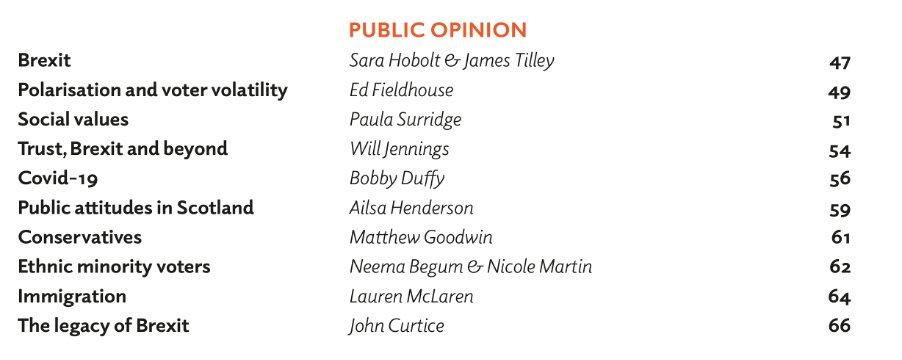


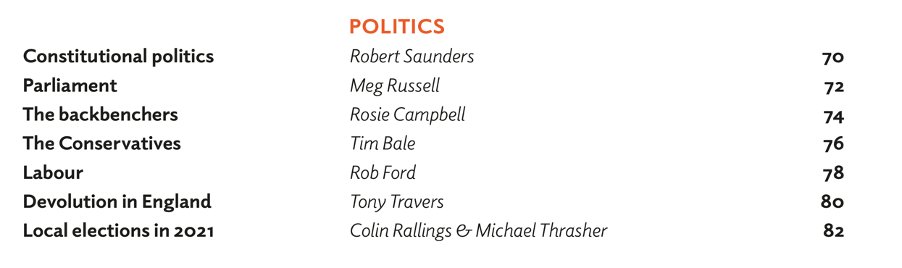


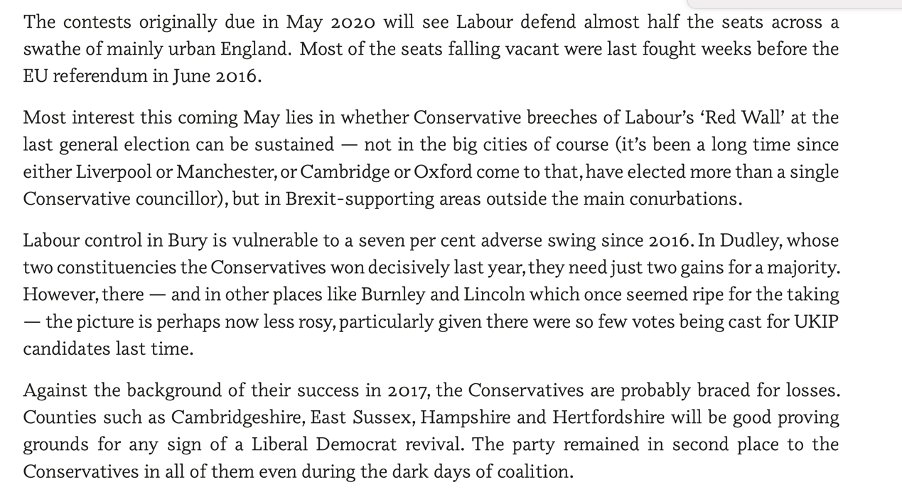
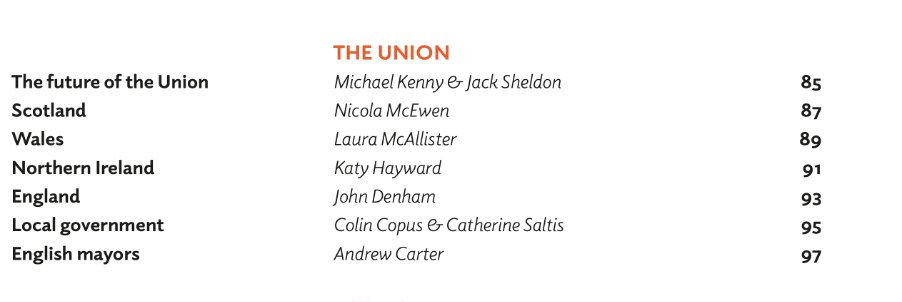
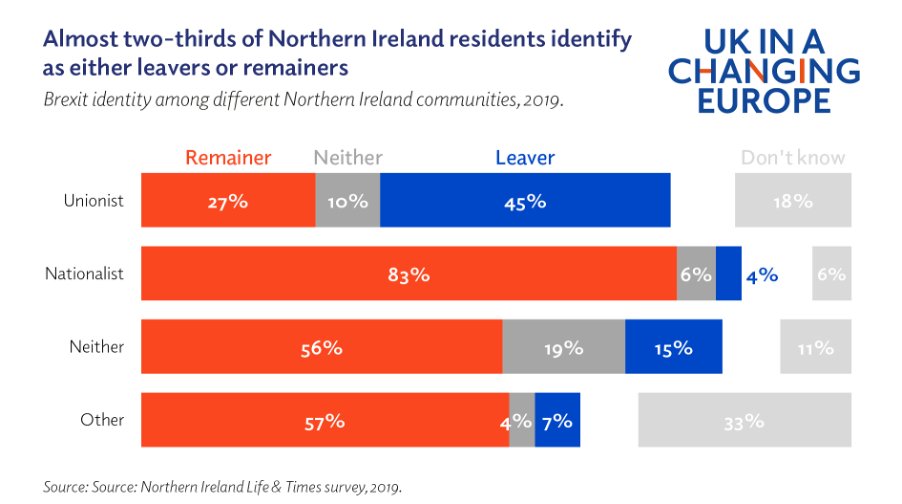
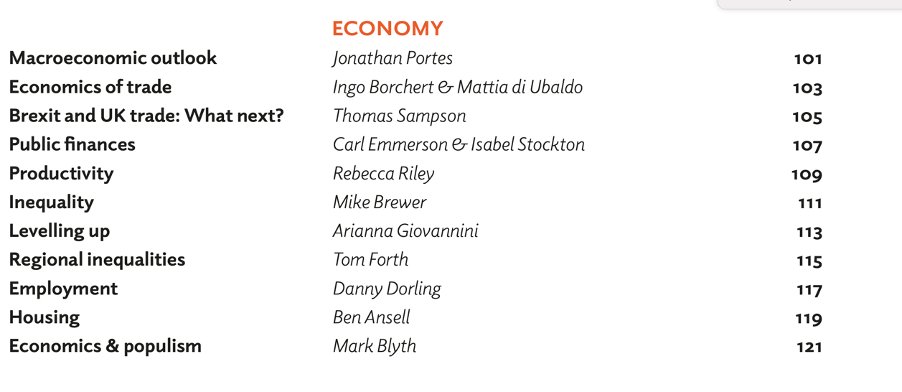


@Brigid_Fowler @cambridgelaw @CSBarnard24 @conorgearty (Lot of lawyers here...) 25/ 27
More from Brexit

On this, I think it’s highly unlikely to occur in the timeframe given. For several reasons, I don’t think it’s realistic for Scotland to secede, and then join the EU, in 9 years.
For that, thanks goes to Brexit.
A thread because why not...
Two important dates: March 2016 and January 1st 2021.
Firstly, prior to the 2014 referendum, the Nationalists proposed a date of March 2016 to secede.
Secondly, today - the end completion of Brexit five-and-a-half years after Cameron’s majority in 2015.
Brexit has demonstrated many things, primarily that splitting unions is not easy. The UKs membership of the EU was 47 years and by the end it was not at the heart of the EU. The Union has existed for over 300 as a unitary state.
Dividing a unitary state, like the UK, will not be easy. Frankly, it will make Brexit look simple. Questions of debt, currency, defence, and more will need to be resolved ... something not addressed with Brexit.
Starting with debt. Scotland will end up with its proportionate share of the UKs national debt. It’s not credible to suggest otherwise. Negotiating what is proportionate won’t be easy when both sides disagree.
It’s importance will be seen shortly.
For that, thanks goes to Brexit.
A thread because why not...
On the current trajectory, I think this is likely to be the map of Europe of 2030. pic.twitter.com/65i1A8CiP8
— Ben Judah (@b_judah) January 1, 2021
Two important dates: March 2016 and January 1st 2021.
Firstly, prior to the 2014 referendum, the Nationalists proposed a date of March 2016 to secede.
Secondly, today - the end completion of Brexit five-and-a-half years after Cameron’s majority in 2015.
Brexit has demonstrated many things, primarily that splitting unions is not easy. The UKs membership of the EU was 47 years and by the end it was not at the heart of the EU. The Union has existed for over 300 as a unitary state.
Dividing a unitary state, like the UK, will not be easy. Frankly, it will make Brexit look simple. Questions of debt, currency, defence, and more will need to be resolved ... something not addressed with Brexit.
Starting with debt. Scotland will end up with its proportionate share of the UKs national debt. It’s not credible to suggest otherwise. Negotiating what is proportionate won’t be easy when both sides disagree.
It’s importance will be seen shortly.


Two excellent questions at the end of a very sensible thread summarising the post-Brexit UK FP debate. My own take at attempting to offer an answer - ahead of the IR is as follow:
1. The two versions have a converging point: a tilt to the Indo-pacific doesn’t preclude a role as a convening power on global issues;
2. On the contrary, it underwrites the credibility for leadership on global issues, by seeking to strike two points:
A. Engaging with a part of the world in which world order and global issues are central to security, prosperity, and - not least - values;
B. Propelling the UK towards a more diversified set of economic, political, and security ties;
3. The tilt towards the Indo-Pacific whilst structurally based on a realist perception of the world, it is also deeply multilateral. Central to it is the notion of a Britain that is a convening power.
4. It is as a result a notion that stands on the ability to renew diplomacy;
5. It puts in relation to this a premium on under-utilised formats such as FPDA, 5Eyes, and indeed the Commonwealth - especially South Pacific islands;
6. It equally puts a premium on exploring new bilateral and multilateral formats. On former, Japan, Australia. On latter, Quad;
Both the @ChathamHouse and @Policy_Exchange reports are excellent and leave a healthy tension to the UK foreign policy debate. I\u2019m left with two questions that won\u2019t go away. Is the first underestimating how the world has changed. Is the second overestimating Britain\u2019s capacity?
— Ben Judah (@b_judah) January 11, 2021
1. The two versions have a converging point: a tilt to the Indo-pacific doesn’t preclude a role as a convening power on global issues;
2. On the contrary, it underwrites the credibility for leadership on global issues, by seeking to strike two points:
A. Engaging with a part of the world in which world order and global issues are central to security, prosperity, and - not least - values;
B. Propelling the UK towards a more diversified set of economic, political, and security ties;
3. The tilt towards the Indo-Pacific whilst structurally based on a realist perception of the world, it is also deeply multilateral. Central to it is the notion of a Britain that is a convening power.
4. It is as a result a notion that stands on the ability to renew diplomacy;
5. It puts in relation to this a premium on under-utilised formats such as FPDA, 5Eyes, and indeed the Commonwealth - especially South Pacific islands;
6. It equally puts a premium on exploring new bilateral and multilateral formats. On former, Japan, Australia. On latter, Quad;