"The tangible benefits of #Brexit." A thread.

For the EU, the tangible benefits of Brexit have been immense. Not just in the way it has galvanised support for the EU across the bloc, but in the way that the UK has made itself...

/1

...the least competitive advanced economy in the world. Don't forget -- we're no longer a trading partner of the EU, but its main trading rival, and considering both their population and economy is 7x bigger than ours, we don't stand a chance.

/2
(Remember Boris Johnson's famous mutterings about business...? Something that could only have been said by a man born into fabulous wealth and privilege...)

/3
But the big win for the EU has been in the sheer, gob-smacking, eye-watering amount of assets that have been stripped from the UK and moved to banks and financial institutions in Dublin, Paris, Frankfurt etc.

$1.6 trillion as of October this year.

That is an INSANE amount.

/4
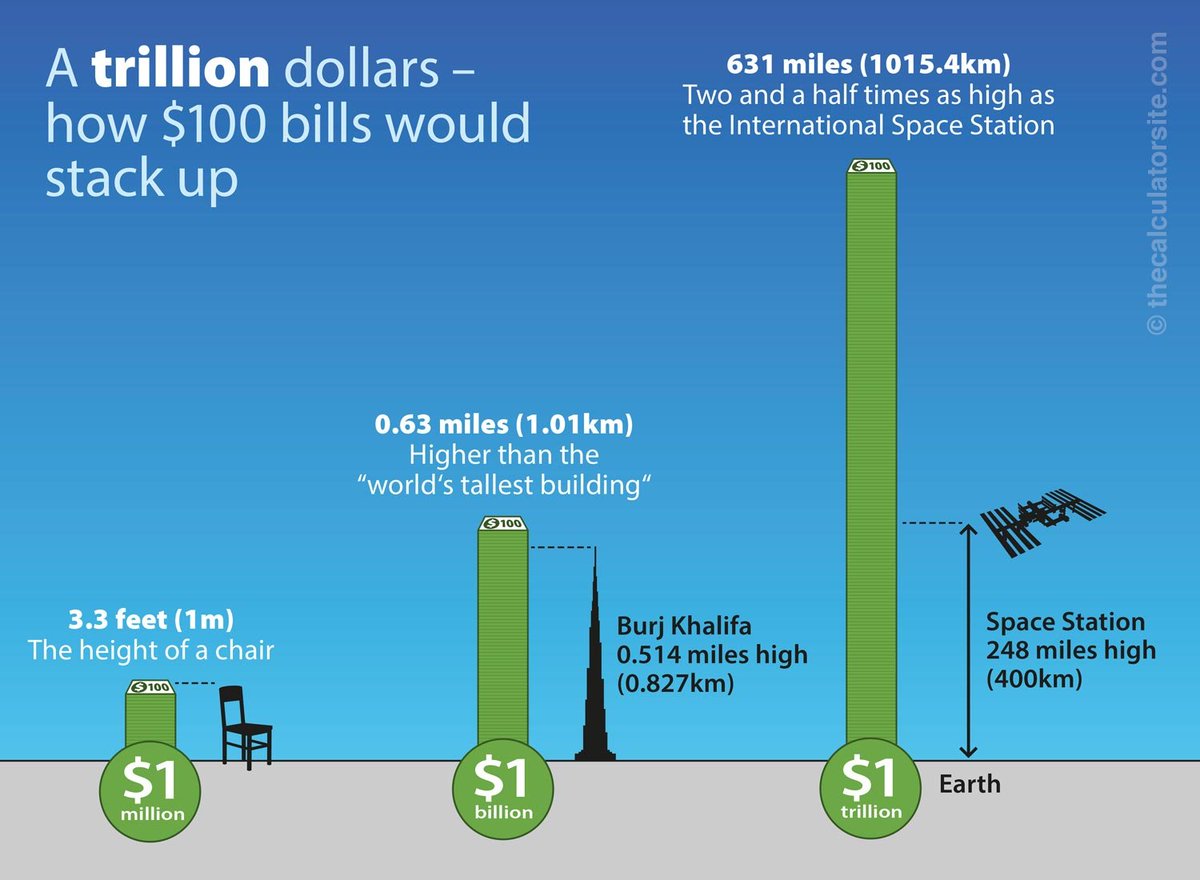
I'll try to put it into perspective: $1.6 trillion is over half our entire GDP. It's 1/64th of the WORLD'S entire GDP. If you stacked it up in $100 bills, it would reach FOUR TIMES the height of the International Space Station.

/5
All gone. Handed over to the EU! I mean, cards on the table, I'd have much rather have stayed in the EU, but I don't love our European friends and neighbours *that* much!

https://t.co/6bOSSVJM4C

/6
And before somebody says "money moves all the time"... not like this -- Barclays had to go to the High Court to shift their €190 billion of assets from London to Dublin. That's over 100 times more than what the UK's entire fishing industry is worth.

/7
And that's just one financial institution.

(This matter doesn't get much coverage by Britain's Brexit press... I wonder why...)

For the UK, the tangible benefits of Brexit have shockingly few and far between.

/8
Making our own trade deals with "the rest of the world" sounds great on the surface, but dig a little deeper and you'll see we only really make goods and services for affluent people, and the developing world, God love it, just isn't that affluent.

/9
The IMF lists just 39 nations with an "advanced economy" on their website. 30 of them are in Europe. Of the nine that remain, there are none in the whole of Africa, Latin America or the Caribbean. There are only five in the whole of Asia & the EU already has deals with them.

/10
Many of the countries we're actively seeking new trade deals with are countries that we give aid money to. It's a bit like running a charity shop where your only customers are the people that require the charity.

/11
Furthermore, Scotland (62% Remain) is eyeing the door and the border down the Irish Sea has been a huge psychological blow to Unionists in Northern Ireland... expect to see a border poll sooner rather than later.

/12
No serious commentator believes the UK will survive to the end of the decade, so unless you regard the break up of our 313 year Union as a benefit, I feel most Brits will be sorely disappointed by how things play out.

/13
But for the privately-educated millionaires who pushed this on us: Cummings, Farage, Johnson, Gove, Rees-Mogg etc... they'll be laughing all the way to the bank. Disaster capitalism has never been so profitable... no advanced economy has ever been so potty as to try it.

/14

More from Brexit

This very short article by Jeremy Cliffe is the best thing I have ever read on Brexit and the EU. It pivots on the contrast between Delors’ and Thatcher’s authentically provincial Christian visions and suggests the battle in Britain between the two is not over.


Thatcher: Protestant believer in the totally free market and absolutely sovereign centralised nation state. Delors: Catholic believer in third way personalism, corporatism and federalism. Individualism versus relational love. Heterodoxy versus Orthodoxy.

The article useful gives the lie to the idea that the Catholic vision of the EU has altogether vanished even though it is weakened. Delors wanted a social dimension to the free market and single currency and yet lexiteers laughably insist the EU is more neoliberal than the U.K.!

Subsidiary federalism is a doctrine of democracy and human fraternity. State sovereignty is a doctrine of naked power. It is a face of Antichrist. Leviathan.

Those combined that democracy can only be inside a single state fail to power just how much of private law and evermore so is necessarily international. Thus if political institutions don’t extend over borders there can be no democracy.
On this, I think it’s highly unlikely to occur in the timeframe given. For several reasons, I don’t think it’s realistic for Scotland to secede, and then join the EU, in 9 years.

For that, thanks goes to Brexit.

A thread because why not...


Two important dates: March 2016 and January 1st 2021.

Firstly, prior to the 2014 referendum, the Nationalists proposed a date of March 2016 to secede.

Secondly, today - the end completion of Brexit five-and-a-half years after Cameron’s majority in 2015.

Brexit has demonstrated many things, primarily that splitting unions is not easy. The UKs membership of the EU was 47 years and by the end it was not at the heart of the EU. The Union has existed for over 300 as a unitary state.

Dividing a unitary state, like the UK, will not be easy. Frankly, it will make Brexit look simple. Questions of debt, currency, defence, and more will need to be resolved ... something not addressed with Brexit.

Starting with debt. Scotland will end up with its proportionate share of the UKs national debt. It’s not credible to suggest otherwise. Negotiating what is proportionate won’t be easy when both sides disagree.

It’s importance will be seen shortly.
It is time to talk Brexit and standards again. (thread)


Let's start off with: I don't think any trade experts are surprised by this. It is why the TCA did not do much on SPS. It is why the EU did not offer much on SPS. It is why the UK did not ask much on SPS.

But it also shows that the popular slogan "after Brexit we'll have the same standards as before, so why would anything change in trade" was wrong - and worse, it was purposefully trying to stifle a necessary debate.

And this leads me to the next point: I have no issue with changing the rules, I have a massive issue with how it is done. Here's what we should discuss:

The decisive question: What are the standards the UK as a country wants. To inform this debate, we need the following information:

You May Also Like