
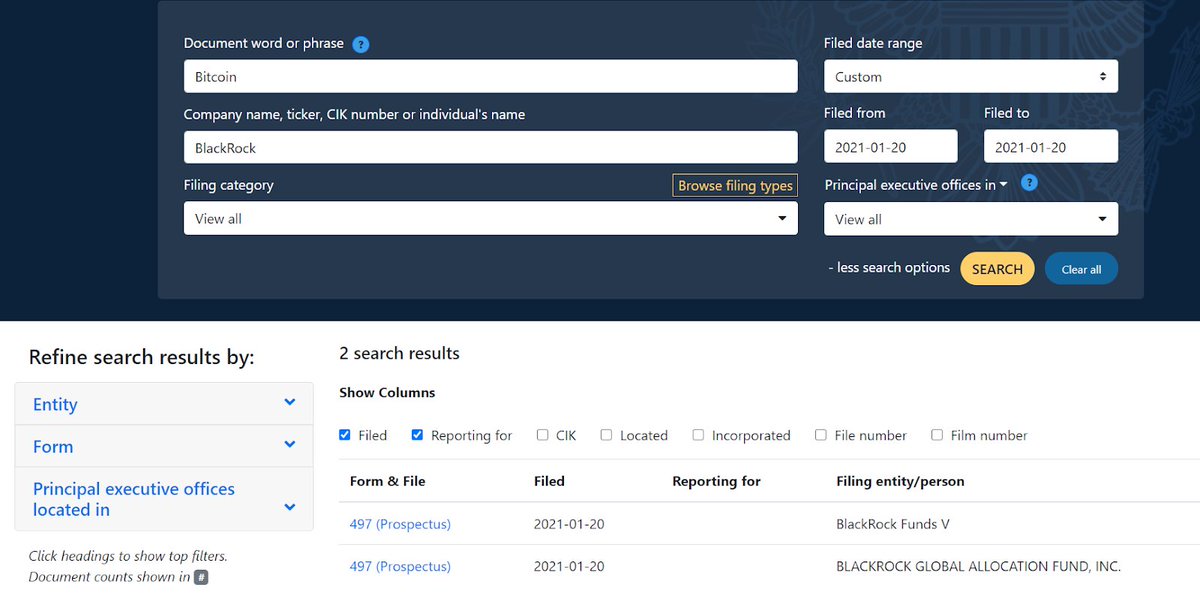
#BlackRock, the world’s largest asset manager with $7.81 trillion AUM, recently granted two of its funds the ability to invest in #Bitcoin futures.
Here's why I think BlackRock investing in Bitcoin futures is bearish, and could result in a major downturn in the coming months.

With Futures, they can either short or long. Considering BlackRock's historically bearish stance on BTC, It's quite clear they will be shorting.

With their large cash size, BlackRock will be the largest player in this market. They can and will tank Bitcoin's price to avoid paying out. Banks have done it before...
They went live in December 2017. This was the perfect tool for Wall Street to take control of Bitcoin, and short it.
We saw an 85% crash in the proceeding months.
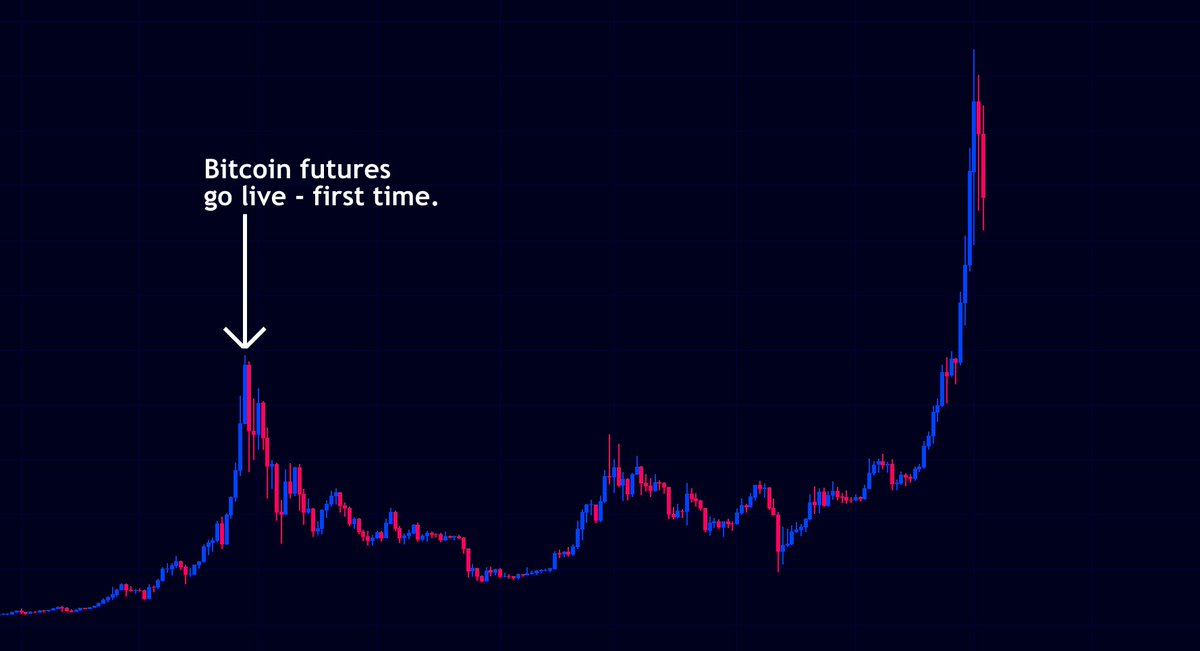
Over $200 billon was wiped from the crypto markets as the news spread. For something apparently so bullish, that's an odd reaction, don't you think?

Bitcoin is up over 1000% since March. If you really think the largest asset manager in the world is going to FOMO in at ATH's, I don't know what to tell you.
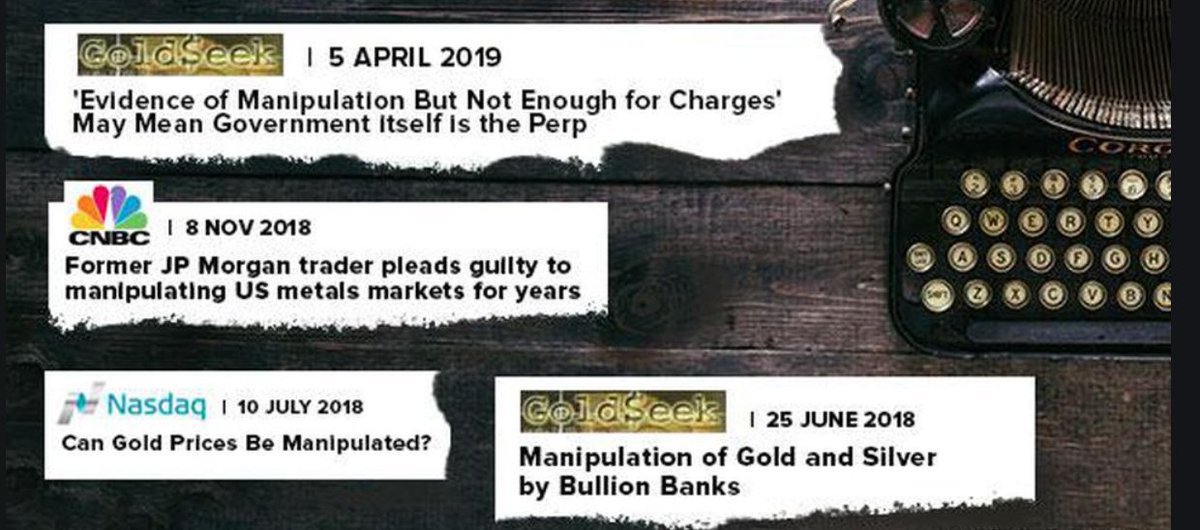
This is because they will be able to artificially suppress it, just like they did to Gold futures in the past.
More from Bitcoin

Afternoon all,
I wanted to take some time to cover some resources I use in my daily $BTC trading. This will be a longer thread, so bear with it you will hopefully find something that will help you also. I will try to keep it concise so if there are any questions please DM me.
11. Portfolio Management & Trade Diary- https://t.co/KAig84dOsk
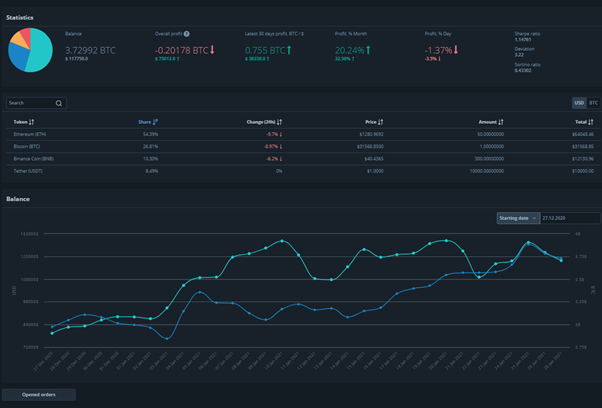
3Commas gives you the ability to see your full portfolio, mapping your balance and asset breakdown. You have access to all your trade history across all exchange in a single trade diary, saving time extracting taxes
I wanted to take some time to cover some resources I use in my daily $BTC trading. This will be a longer thread, so bear with it you will hopefully find something that will help you also. I will try to keep it concise so if there are any questions please DM me.
11. Portfolio Management & Trade Diary- https://t.co/KAig84dOsk
3Commas gives you the ability to see your full portfolio, mapping your balance and asset breakdown. You have access to all your trade history across all exchange in a single trade diary, saving time extracting taxes

$BTC: Two Bitcoin FUDs to address this Thanksgiving weekend:
1. China PlusToken FUD: Old news. Please see linked thread.
2. U.S. Treasury FUD: Read thread below...
1/ These news are much more relevant, as they imply severe trade-offs for people who want to keep their bitcoins undoxxed, with the cost and risks of doing so. I would not disqualify the tweet as mere FUD in the sense that what he posted is false. It should be taken seriously.
2/ For all we know, his decision of making it public before TG weekend may come out of the urgency of informing CT of a poignant anti-Bitcoin move by a Trump administration trying to cut lose ends before leaving office—not just "price manipulation" as I've seen suggested around.
3/ It implies the acceleration of a process already planned for for months in advance, not something he just came up with to "crash the market."
4/ In practicality, assuming this passes, it will have two major consencuences:
a. Armstrong's analysis is correct. And I would go further in saying, this regulation would leave the U.S. severely handicapped to continue to be the leader in the cryptocurrency industry worldwide.
1. China PlusToken FUD: Old news. Please see linked thread.
2. U.S. Treasury FUD: Read thread below...
$BTC:
— David Puell (@kenoshaking) November 27, 2020
1/ So here's the deal with all the PlusToken news we've been seeing recently in the crypto media. Thing is, tho it's just being reported now after the Chinese government put out official balances, @ErgoBTC blew this story open for the on-chain community over a year ago... https://t.co/epNjZaNcJ1
1/ These news are much more relevant, as they imply severe trade-offs for people who want to keep their bitcoins undoxxed, with the cost and risks of doing so. I would not disqualify the tweet as mere FUD in the sense that what he posted is false. It should be taken seriously.
2/ For all we know, his decision of making it public before TG weekend may come out of the urgency of informing CT of a poignant anti-Bitcoin move by a Trump administration trying to cut lose ends before leaving office—not just "price manipulation" as I've seen suggested around.
3/ It implies the acceleration of a process already planned for for months in advance, not something he just came up with to "crash the market."
4/ In practicality, assuming this passes, it will have two major consencuences:
a. Armstrong's analysis is correct. And I would go further in saying, this regulation would leave the U.S. severely handicapped to continue to be the leader in the cryptocurrency industry worldwide.


1/ #Bitcoin FUD-busting time!
claim: bitcoin ownership is heavily concentrated.
@business published an article claiming "2% of accounts control 95% of all Bitcoin" 🤣
truth: the facts, my friends, simple don't line up. let's dive in!
2/ interrogating on-chain addresses is tricky.
address =/ account.
one person can control multiple addresses.
one address can hold bitcoin belonging to multiple ppl.
exchanges and trading firms will have addresses with large balances that represent client funds.
3/ the fine folks @glassnode published an excellent analysis of on-chain address balances in January
the ownership distribution of bitcoin among wallets is actually much more diverse than one might expect.
full piece here:
https://t.co/n5IdIQdNoA
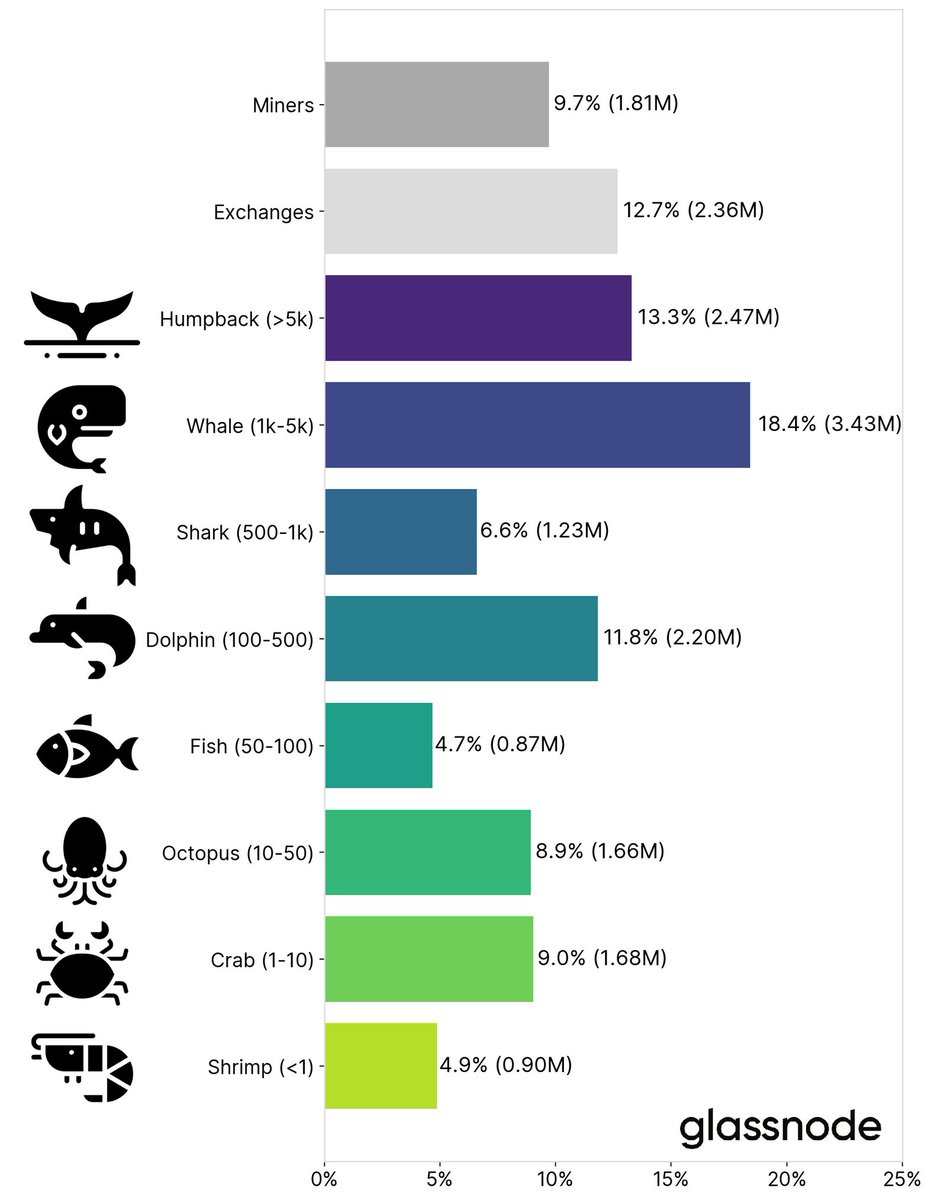
4/ 31% of BTC is held in addresses not identified as exchange wallets.
these are likely institutions, funds, custodians, and OTC desks.
our analysis at @CoinSharesCo indicates >15% of all bitcoin is held in third party custody, including @coinbase and our own @KomainuCustody
5/ in fact, between asset managers @Grayscale ($36B in BTC) and our @xbtprovider ($4B in BTC), 4% of bitcoin is locked up by fund providers and asset managers!
our @CoinSharesCo research team publishes an EXCELLENT weekly report on fund flows and AUMs -
claim: bitcoin ownership is heavily concentrated.
@business published an article claiming "2% of accounts control 95% of all Bitcoin" 🤣
truth: the facts, my friends, simple don't line up. let's dive in!
2/ interrogating on-chain addresses is tricky.
address =/ account.
one person can control multiple addresses.
one address can hold bitcoin belonging to multiple ppl.
exchanges and trading firms will have addresses with large balances that represent client funds.
3/ the fine folks @glassnode published an excellent analysis of on-chain address balances in January
the ownership distribution of bitcoin among wallets is actually much more diverse than one might expect.
full piece here:
https://t.co/n5IdIQdNoA
4/ 31% of BTC is held in addresses not identified as exchange wallets.
these are likely institutions, funds, custodians, and OTC desks.
our analysis at @CoinSharesCo indicates >15% of all bitcoin is held in third party custody, including @coinbase and our own @KomainuCustody
5/ in fact, between asset managers @Grayscale ($36B in BTC) and our @xbtprovider ($4B in BTC), 4% of bitcoin is locked up by fund providers and asset managers!
our @CoinSharesCo research team publishes an EXCELLENT weekly report on fund flows and AUMs -

I will be a buyer under 13800 levels, but depending upon the reversal on smaller timeframe.
#BITCOIN
— Mayank Narula (@Mayank_Narula1) March 5, 2022
Pending RSI divergence on monthly chart which requires a dip under 13805 to get resolved.
But monthly RSI divergences can go on for years before the resolution.
Best case scenario will be panic dump over next few months. pic.twitter.com/hi67hMg9sZ
You May Also Like


1/Politics thread time.
To me, the most important aspect of the 2018 midterms wasn't even about partisan control, but about democracy and voting rights. That's the real battle.
2/The good news: It's now an issue that everyone's talking about, and that everyone cares about.
3/More good news: Florida's proposition to give felons voting rights won. But it didn't just win - it won with substantial support from Republican voters.
That suggests there is still SOME grassroots support for democracy that transcends
4/Yet more good news: Michigan made it easier to vote. Again, by plebiscite, showing broad support for voting rights as an
5/OK, now the bad news.
We seem to have accepted electoral dysfunction in Florida as a permanent thing. The 2000 election has never really
To me, the most important aspect of the 2018 midterms wasn't even about partisan control, but about democracy and voting rights. That's the real battle.
2/The good news: It's now an issue that everyone's talking about, and that everyone cares about.
3/More good news: Florida's proposition to give felons voting rights won. But it didn't just win - it won with substantial support from Republican voters.
That suggests there is still SOME grassroots support for democracy that transcends
4/Yet more good news: Michigan made it easier to vote. Again, by plebiscite, showing broad support for voting rights as an
5/OK, now the bad news.
We seem to have accepted electoral dysfunction in Florida as a permanent thing. The 2000 election has never really
Bad ballot design led to a lot of undervotes for Bill Nelson in Broward Co., possibly even enough to cost him his Senate seat. They do appear to be real undervotes, though, instead of tabulation errors. He doesn't really seem to have a path to victory. https://t.co/utUhY2KTaR
— Nate Silver (@NateSilver538) November 16, 2018