
They are correct on force, I worked in decentralized societies, they are dangerous because the state does not have a monopoly on violence
I have a different take on bitcoin, tether, and dollars
Can also speak with authority on nation state violence
"Nothing makes you feel more free than taking another person's freedom"
After much investigation and conversations with people on here, I\u2019ve formed a relatively robust theory of what may be happening with Tether.
— Travis Kimmel (@coloradotravis) January 18, 2021
This thread will attempt to lay it out with neutral language for the purpose of discussion.
1/
They are correct on force, I worked in decentralized societies, they are dangerous because the state does not have a monopoly on violence
But we need to be real, disrupting the global centralized economy won't be like Uber putting taxis out of work
For decentralization to rise the centralized global power of the last 70 years (US Hegemony) has to weaken
Yes we will be rich, but as the Big Short says,
"you can be happy, just don't fucking dance"
Piece I wrote is here, but lets stay focused on tether, bitcoin, and dollar for now
https://t.co/nT6gw6Xw6v
They are doing what the CCP does best
Using the US's 70 years of geopolitical power, 10 aircraft carrier battle groups, and GDP strength without having to pay for it
Would be a wasted opportunity by the CCP
CCP doesn't want fair anything, they want to undo the shame of the Opium Wars and treat the West the way we treated them in the 19th century
But don't care, bitcoin could drop to $1k, would just buy more
Privateers running an unlicensed federal reserve branch printing free dollars with the protection of the CCP and fear their displeasure much more than SDNY AUSAs
Tether and bitcoin are nothing
China kills Indians in the Himalayas to keep India engaged there so its navy does not have funds for defenses at the Strait of Malacca
You would too if you graduated in 2007 for the GFC, spent a decade overseas at war while fed and boomers had a party, came back for a pandemic, everything is expensive, and it all feels fake
Then I look at https://t.co/j0Jxx4Xsjs, see my cost of living going up 12% a year, and it is frustrating
Makes the whole traditional financial system feel dirty
But I don't, so I just stay long bitcoin, and will go into other investments when I find ones I think are good value and make sense to me
None of us should because the only thing that protects global trade is violence and that requires dudes like me
Think people get confused about security
Bitcoin being secure isn't the same as shipments being secured
More from Bitcoin



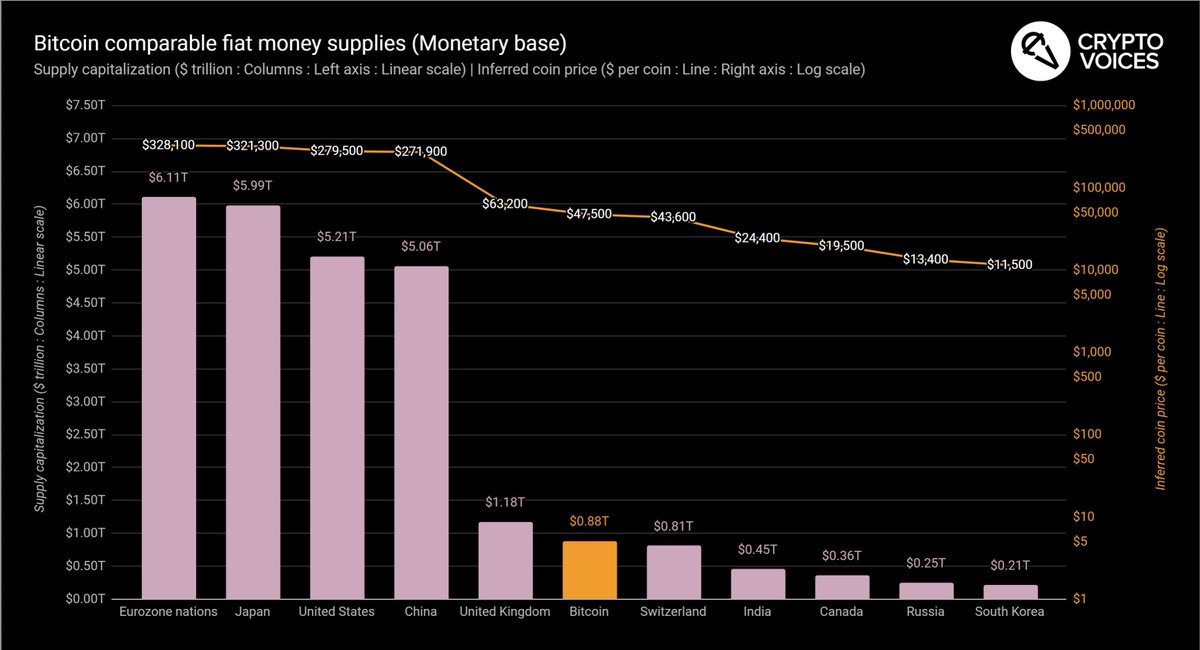

The defi matrix
As each asset class goes on-chain, it can be stored in a digital wallet. And it can be traded against other such assets. Not just cryptocurrencies, but national digital currencies, personal tokens, etc.
We’re about to enter an age of global monetary competition.
The defi matrix is the table of all pair wise trades. It’s the fiat/stablecoin pairs, the fiat/crypto pairs, the crypto/crypto pairs, and much more besides.
Uniswap-style automatic market making for everything. Every possession you have, constantly marked to market by ~2040.
More liquidity, less currency?
This is an interesting point. Cash doesn’t make you money. In fact, it can lose you money in an inflating environment.
Reliable, 24/7 mark-to-market on everything is hard — but if achieved, means less % of assets in cash.
AMMs boost BTC. Here's why.
- All assets trade against all assets in the defi matrix
- Automated market makers give liquidity for rare pairs
- Everything is marked-to-market 24/7
- Value of cash drops, as you can liquidate instantly
- The new no-op is to keep your assets in BTC
Basically, automated market makers like @Uniswap boost BTC in the long term, because they allow *everything* to be priced in BTC terms, and *anyone* to switch out of BTC into their asset of choice.
Though in practice this may mean WBTC/RenBTC [or ETH!] rather than BTC itself.
As each asset class goes on-chain, it can be stored in a digital wallet. And it can be traded against other such assets. Not just cryptocurrencies, but national digital currencies, personal tokens, etc.
We’re about to enter an age of global monetary competition.
The defi matrix is the table of all pair wise trades. It’s the fiat/stablecoin pairs, the fiat/crypto pairs, the crypto/crypto pairs, and much more besides.
Uniswap-style automatic market making for everything. Every possession you have, constantly marked to market by ~2040.
More liquidity, less currency?
This is an interesting point. Cash doesn’t make you money. In fact, it can lose you money in an inflating environment.
Reliable, 24/7 mark-to-market on everything is hard — but if achieved, means less % of assets in cash.
Thus less use for currencies as people can more easily store their wealth into assets and easily trade them.
— Pierre-Yves Gendron (@pierreyvesg7) February 24, 2021
AMMs boost BTC. Here's why.
- All assets trade against all assets in the defi matrix
- Automated market makers give liquidity for rare pairs
- Everything is marked-to-market 24/7
- Value of cash drops, as you can liquidate instantly
- The new no-op is to keep your assets in BTC
Basically, automated market makers like @Uniswap boost BTC in the long term, because they allow *everything* to be priced in BTC terms, and *anyone* to switch out of BTC into their asset of choice.
Though in practice this may mean WBTC/RenBTC [or ETH!] rather than BTC itself.

Another #FreeLoveFriday. So far, I’ve covered Bitcoin, Mastercoin/Omni, and last week ChainLink and the importance of decentralized oracles. Today, let’s talk about one of the most fascinating projects in crypto - @MakerDAO
In my thread about Mastercoin, I briefly touched on the vital role fiat-backed stablecoins play in crypto markets, but there’s a catch with them:
The counterparty risk of a third-party holding fiat in reserves.
Enter MakerDAO, which set out to create a decentralized, collateral-backed cryptocurrency, DAI, that would be “soft-pegged” to the U.S. Dollar using the power of algorithms. In crypto tradition, its supporters said trust game theory, not operators.
In 2017, MakerDAO published a whitepaper describing a system where anyone could create DAI by leveraging ETH as collateral to create Collateralized Debt Positions. Essentially, you take out a digital USD loan against your crypto.
The game theory of the system is structured such that DAI issuance is controlled to keep the price pegged to $1.00. In essence, it buffers the fluctuations of the underlying collateral to create a synthetic dollar bill.
Back with another #FreeLoveFriday. Last time, we covered how Mastercoin/@Omni_Layer pioneered digital asset issuance on blockchains. Today, let\u2019s discuss @Chainlink and the vital role it plays in connecting blockchains to the real world. https://t.co/0poYIBtGrt
— Emin G\xfcn Sirer (@el33th4xor) January 22, 2021
In my thread about Mastercoin, I briefly touched on the vital role fiat-backed stablecoins play in crypto markets, but there’s a catch with them:
The counterparty risk of a third-party holding fiat in reserves.
Enter MakerDAO, which set out to create a decentralized, collateral-backed cryptocurrency, DAI, that would be “soft-pegged” to the U.S. Dollar using the power of algorithms. In crypto tradition, its supporters said trust game theory, not operators.
In 2017, MakerDAO published a whitepaper describing a system where anyone could create DAI by leveraging ETH as collateral to create Collateralized Debt Positions. Essentially, you take out a digital USD loan against your crypto.
The game theory of the system is structured such that DAI issuance is controlled to keep the price pegged to $1.00. In essence, it buffers the fluctuations of the underlying collateral to create a synthetic dollar bill.

To chaiye chalte h 12K ki taraf.
#BTC https://t.co/Yd4iZqC42s
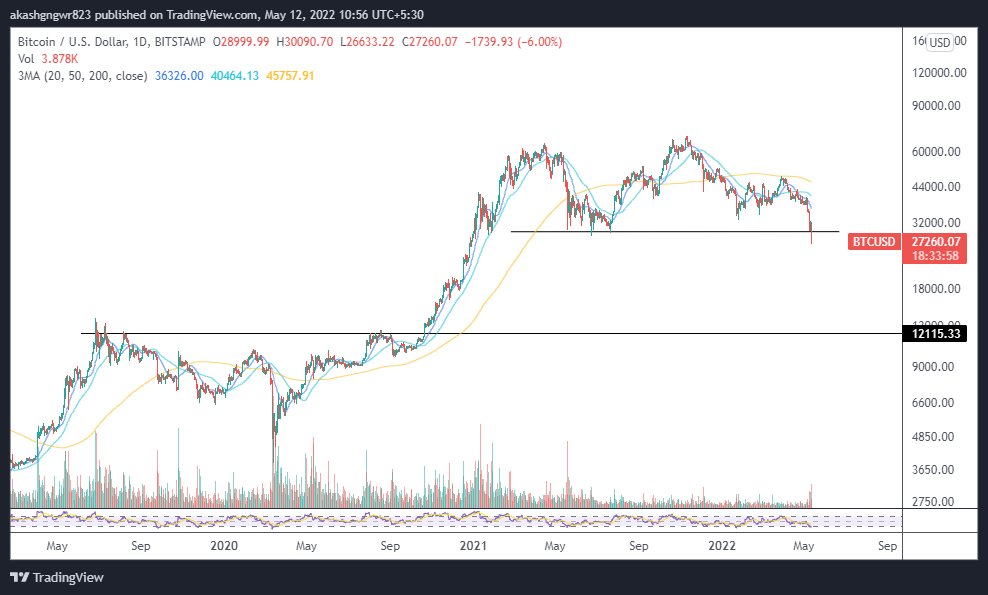
#BTC https://t.co/Yd4iZqC42s
I don't know why Crypto YouTubers are so bullish on BTC right from the top \U0001f61b while the charts are saying something else. Won't be surprised to see the entire retracement of the marked rise. #BTC pic.twitter.com/SQJkjAfZme
— Aakash Gangwar (@akashgngwr823) April 30, 2022
You May Also Like




1/OK, data mystery time.
This New York Times feature shows China with a Gini Index of less than 30, which would make it more equal than Canada, France, or the Netherlands. https://t.co/g3Sv6DZTDE
That's weird. Income inequality in China is legendary.
Let's check this number.
2/The New York Times cites the World Bank's recent report, "Fair Progress? Economic Mobility across Generations Around the World".
The report is available here:
3/The World Bank report has a graph in which it appears to show the same value for China's Gini - under 0.3.
The graph cites the World Development Indicators as its source for the income inequality data.
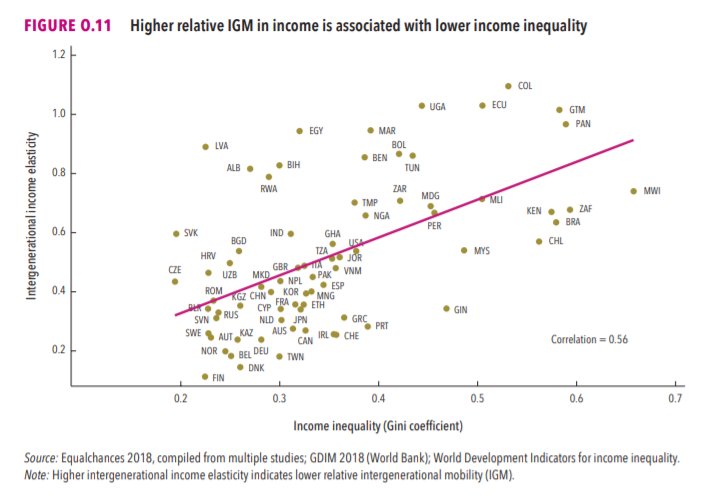
4/The World Development Indicators are available at the World Bank's website.
Here's the Gini index: https://t.co/MvylQzpX6A
It looks as if the latest estimate for China's Gini is 42.2.
That estimate is from 2012.
5/A Gini of 42.2 would put China in the same neighborhood as the U.S., whose Gini was estimated at 41 in 2013.
I can't find the <30 number anywhere. The only other estimate in the tables for China is from 2008, when it was estimated at 42.8.
This New York Times feature shows China with a Gini Index of less than 30, which would make it more equal than Canada, France, or the Netherlands. https://t.co/g3Sv6DZTDE
That's weird. Income inequality in China is legendary.
Let's check this number.
2/The New York Times cites the World Bank's recent report, "Fair Progress? Economic Mobility across Generations Around the World".
The report is available here:
3/The World Bank report has a graph in which it appears to show the same value for China's Gini - under 0.3.
The graph cites the World Development Indicators as its source for the income inequality data.
4/The World Development Indicators are available at the World Bank's website.
Here's the Gini index: https://t.co/MvylQzpX6A
It looks as if the latest estimate for China's Gini is 42.2.
That estimate is from 2012.
5/A Gini of 42.2 would put China in the same neighborhood as the U.S., whose Gini was estimated at 41 in 2013.
I can't find the <30 number anywhere. The only other estimate in the tables for China is from 2008, when it was estimated at 42.8.
