✨ Today, I started my 8TH YEAR working full-time in #Bitcoin.
I've been a journalist, I've worked at a global exchange and I've spent thousands of hours down the rabbit hole.
If you're just starting out, here are the lessons I'd pass along 🧵
More from Bitcoin

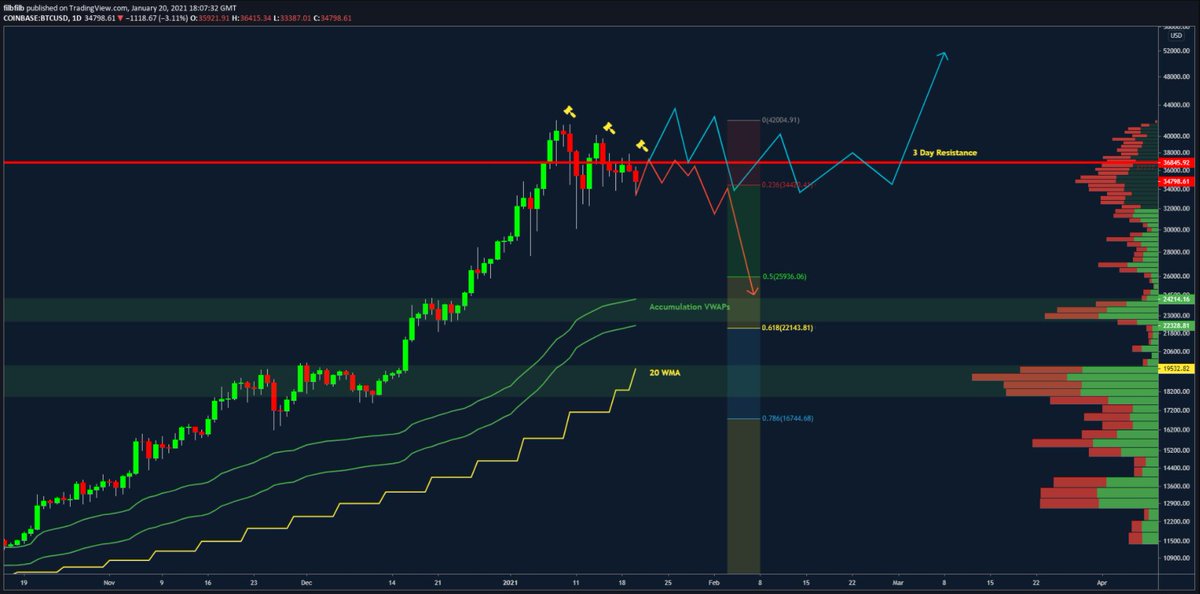
- Trapped in consolidation between $30 and $38k
- Lower highs and supply above c$38k
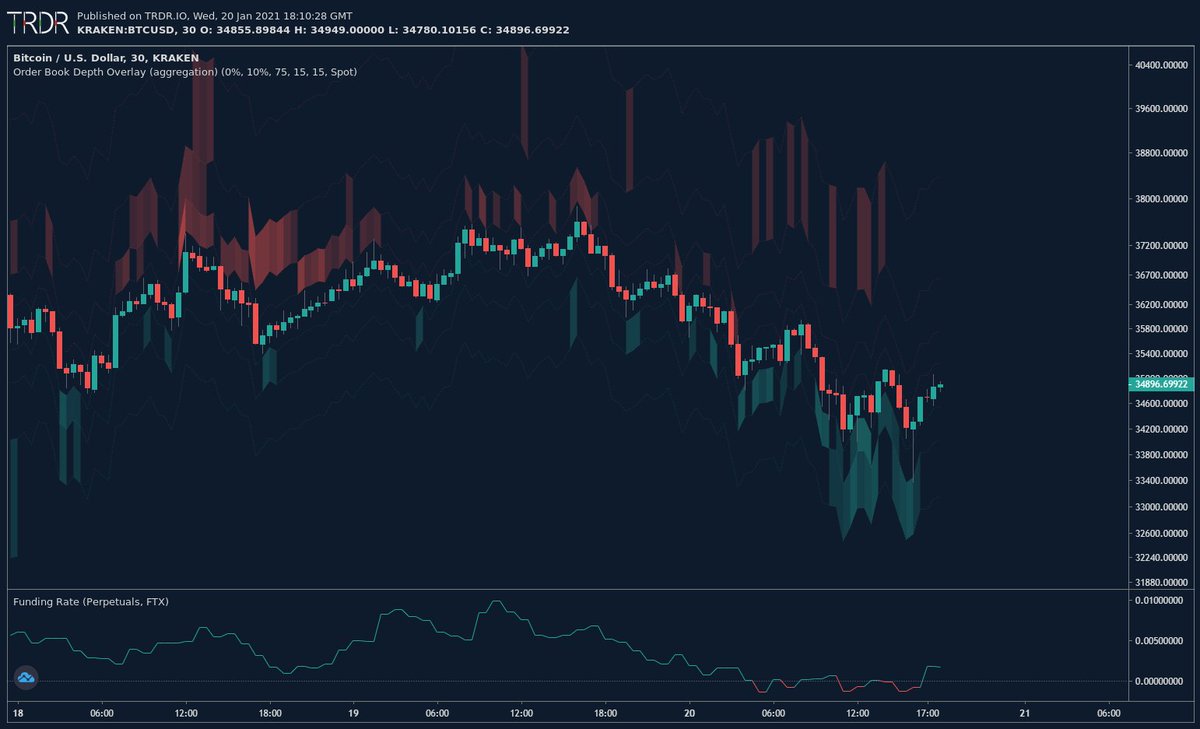
- Buying interest on the books £30-33k
- Meme consolidation triangle
- 20 wma @ $19.5k
- Accumulation VWAPs in the 20s
- underlying tether fud
- 61.8% retracement c. $22k
- 3 Day predator unconfirmed Orange candle
- Demand at low $30s was tested today and has since bounced & Coinbase led price on the drop
- Market structure is complex - Triangle is misleading
- Lots of orders stacked @ 30-33k.
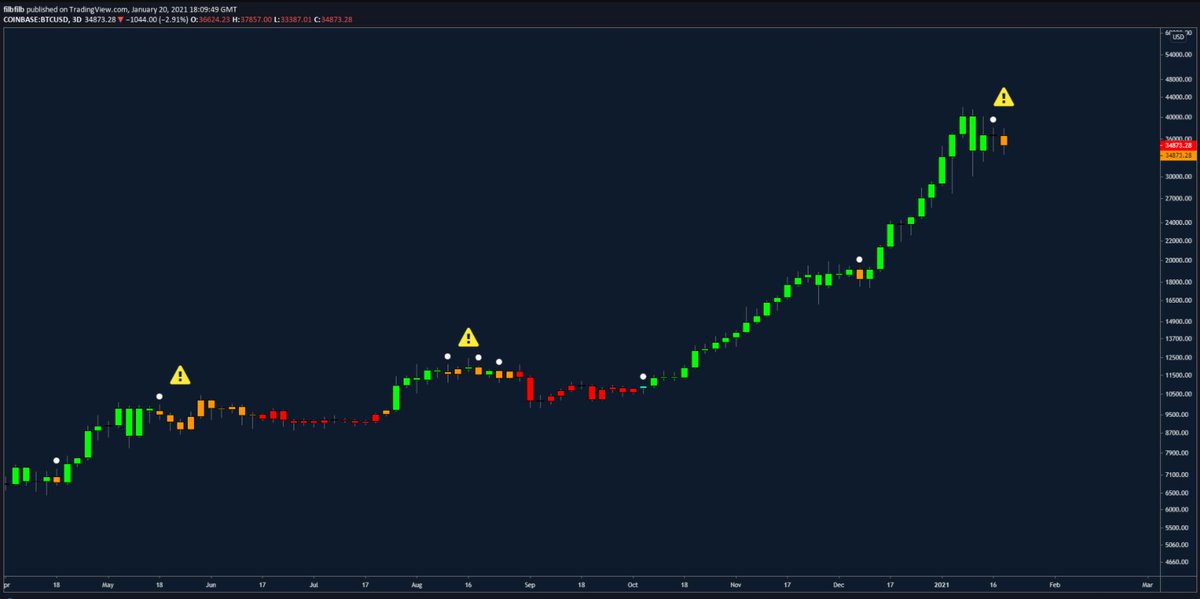
- Market is fearful in the demand zone as shown by funding; i do not think we are ready to drop quite yet; Expecting longer consolidation.
- New Tether output has been on hold but new money came today
- Tether case request for 30 more days; could be indicative of consolidation
- Breakdown in price deeper than high $20s / lower $30s would IMO most likely require FUD induced event
- If stars align 20 WMA is catching up fast and will probably be resting in with the accumulation VWAPs, 61.8% retracement &d drives into big buy orders.
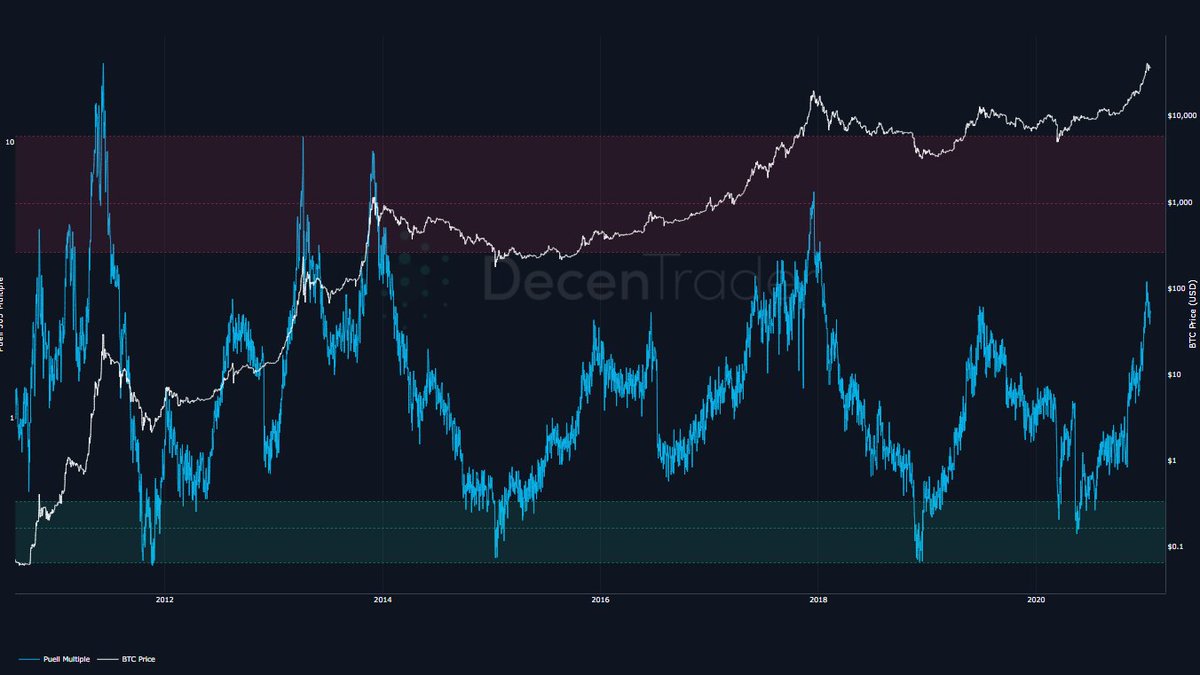
- Why did we stop @ $40k?
- Miners deep in profit vs. 654 average; time to tp
- SImilar response in other cycles
https://t.co/Iurd68NnZZ


https://t.co/cv4UqsaVAK
That being said I hold some Doge @blockio in an "A-" address myself after 0. 1. "9-" versions :). Don't believe Bitcoin Core the Coin (Utility) is the only visible value on Core chain. Color me crazy. I believe in script. And FOSS that is used to export📜

And that's just a guy @MeniRosenfeld who put his identity and ideas out in the public to build a Web of Trust back when the web was much less of a safe place. His identity at stake and the implementation of a branch in source code by another unsung hero @killerstorm reveals value
Some of those who set up our bright future quietly implemented it in a branch on the main source code before it was officially the Bitcoin Core main repository, before a "Bitcoin Core" entity existed
Just because Bitcoin Core nodes dominate and do not read "smart" colored satoshis or display them, doesn't mean they do not exist on chain. The example of recreating P2WSH-over-P2SH address from BTC https://t.co/ZWSP2MO5bY wallets in Bitcoin Core Gold I shared proves -rescan's $




Back with another #FreeLoveFriday. Last time, we covered how Mastercoin/@Omni_Layer pioneered digital asset issuance on blockchains. Today, let\u2019s discuss @Chainlink and the vital role it plays in connecting blockchains to the real world. https://t.co/0poYIBtGrt
— Emin G\xfcn Sirer (@el33th4xor) January 22, 2021
In my thread about Mastercoin, I briefly touched on the vital role fiat-backed stablecoins play in crypto markets, but there’s a catch with them:
The counterparty risk of a third-party holding fiat in reserves.
Enter MakerDAO, which set out to create a decentralized, collateral-backed cryptocurrency, DAI, that would be “soft-pegged” to the U.S. Dollar using the power of algorithms. In crypto tradition, its supporters said trust game theory, not operators.
In 2017, MakerDAO published a whitepaper describing a system where anyone could create DAI by leveraging ETH as collateral to create Collateralized Debt Positions. Essentially, you take out a digital USD loan against your crypto.
The game theory of the system is structured such that DAI issuance is controlled to keep the price pegged to $1.00. In essence, it buffers the fluctuations of the underlying collateral to create a synthetic dollar bill.
You May Also Like


Curated the best tweets from the best traders who are exceptional at managing strangles.
• Positional Strangles
• Intraday Strangles
• Position Sizing
• How to do Adjustments
• Plenty of Examples
• When to avoid
• Exit Criteria
How to sell Strangles in weekly expiry as explained by boss himself. @Mitesh_Engr
• When to sell
• How to do Adjustments
• Exit
1. Let's start option selling learning.
— Mitesh Patel (@Mitesh_Engr) February 10, 2019
Strangle selling. ( I am doing mostly in weekly Bank Nifty)
When to sell? When VIX is below 15
Assume spot is at 27500
Sell 27100 PE & 27900 CE
say premium for both 50-50
If bank nifty will move in narrow range u will get profit from both.
Beautiful explanation on positional option selling by @Mitesh_Engr
Sir on how to sell low premium strangles yourself without paying anyone. This is a free mini course in
Few are selling 20-25 Rs positional option selling course.
— Mitesh Patel (@Mitesh_Engr) November 3, 2019
Nothing big deal in that.
For selling weekly option just identify last week low and high.
Now from that low and high keep 1-1.5% distance from strike.
And sell option on both side.
1/n
1st Live example of managing a strangle by Mitesh Sir. @Mitesh_Engr
• Sold Strangles 20% cap used
• Added 20% cap more when in profit
• Booked profitable leg and rolled up
• Kept rolling up profitable leg
• Booked loss in calls
• Sold only
Sold 29200 put and 30500 call
— Mitesh Patel (@Mitesh_Engr) April 12, 2019
Used 20% capital@44 each
2nd example by @Mitesh_Engr Sir on converting a directional trade into strangles. Option Sellers can use this for consistent profit.
• Identified a reversal and sold puts
• Puts decayed a lot
• When achieved 2% profit through puts then sold
Already giving more than 2% return in a week. Now I will prefer to sell 32500 call at 74 to make it strangle in equal ratio.
— Mitesh Patel (@Mitesh_Engr) February 7, 2020
To all. This is free learning for you. How to play option to make consistent return.
Stay tuned and learn it here free of cost. https://t.co/7J7LC86oW0