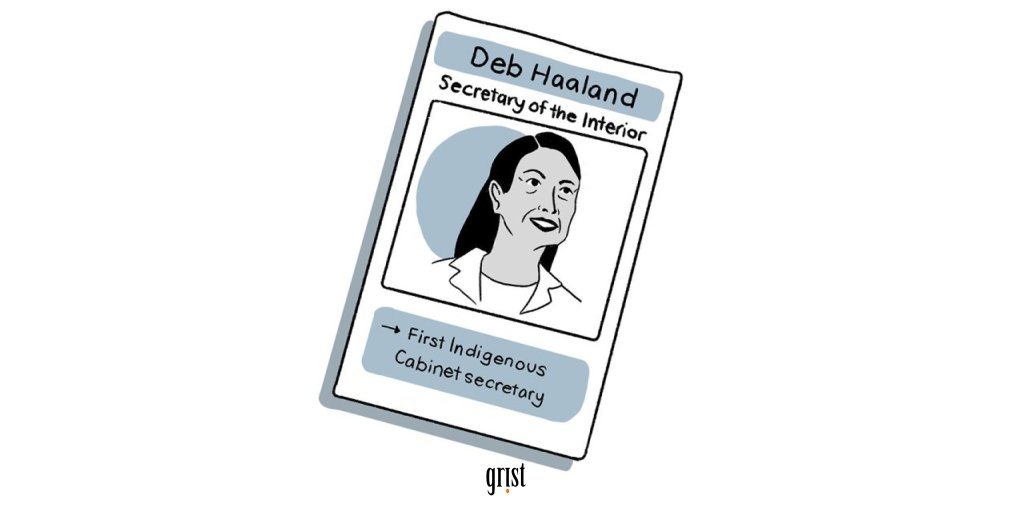
President Biden sprung into climate action on his first day in office, but he will need to rely on his Cabinet choices to help deliver on his climate goals.
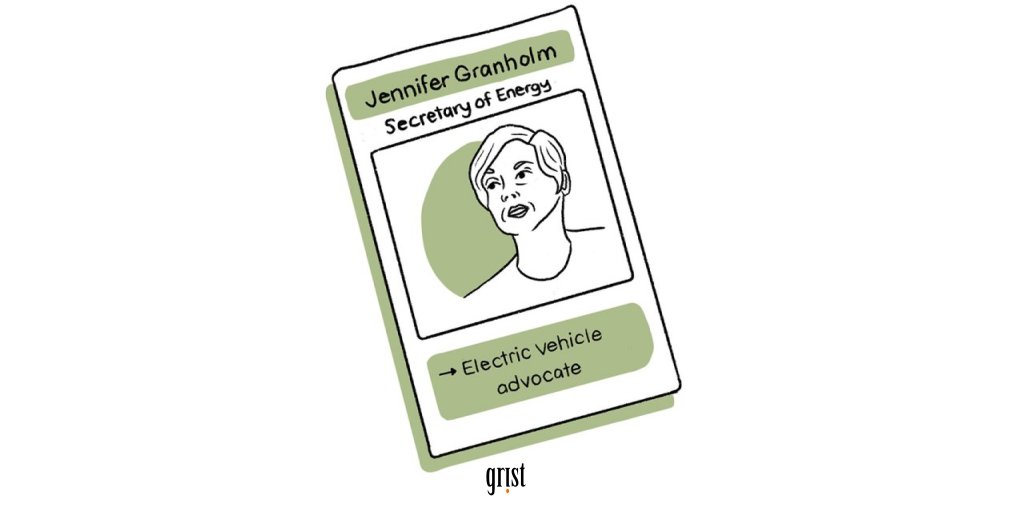
Here's a quick guide to the top 10 climate-relevant Cabinet nominees. THREAD ⬇️ https://t.co/OnCEjtaclz
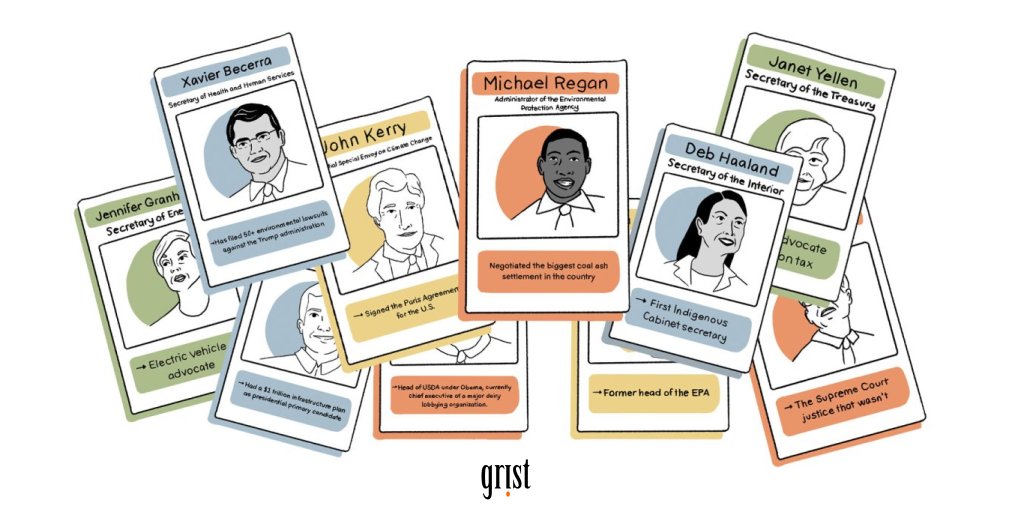
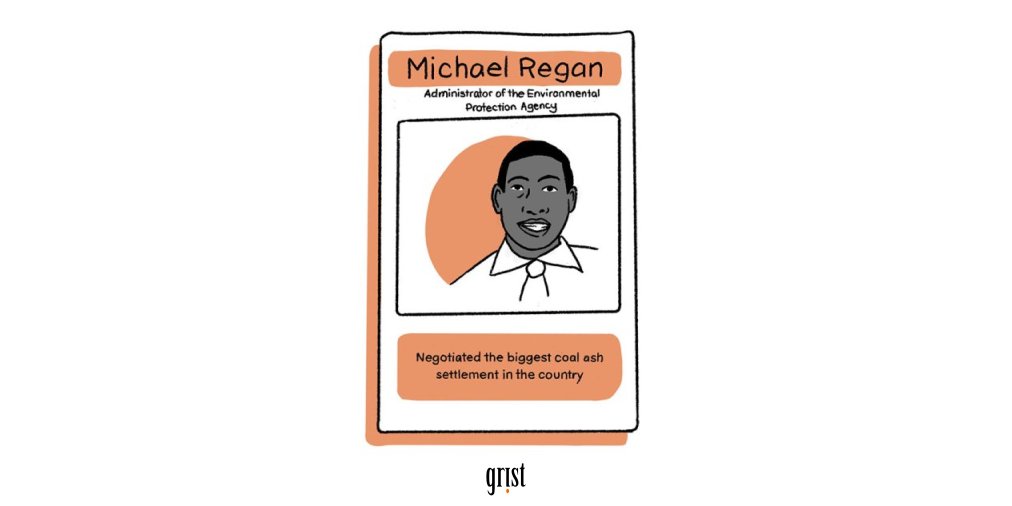
Regan founded North Carolina’s first Environmental Justice and Equity Board.


Advocates have raised concerns about Vilsack’s nomination based on his past promotion of industrial farming and civil rights record.


More from Biden




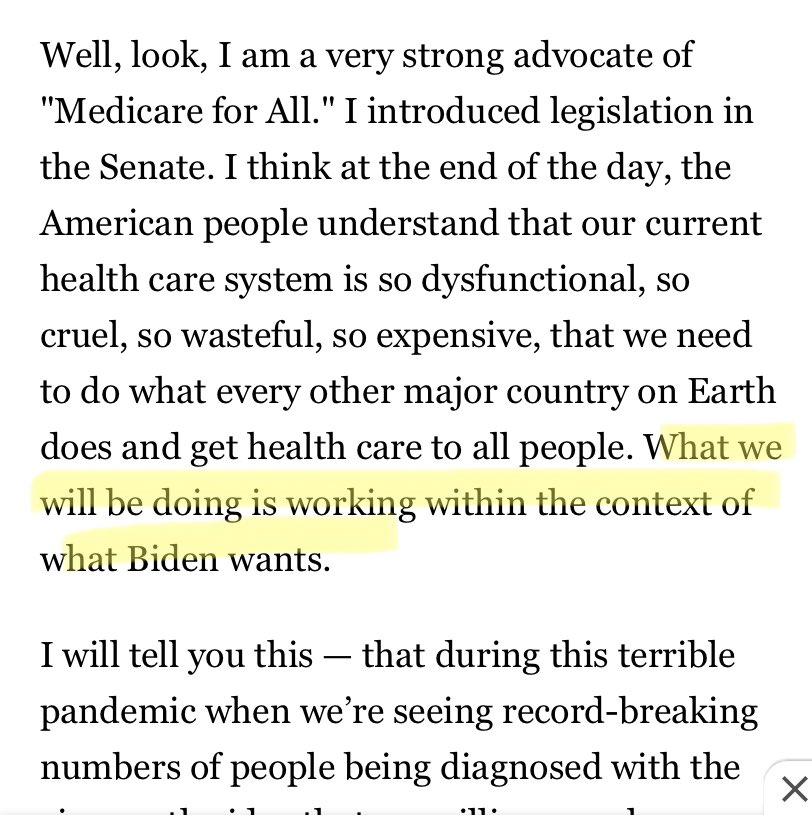
THREAD: There has been a lot of criticism levied against @BernieSanders recently following his comment about "working within the context of what Biden wants" as Chairman of the Senate Budget Committee. This thread will explore why this really isn't all that surprising.
Over the last 20+ years, Bernie has endorsed every establishment Democrat running for President: Bill Clinton, Gore, Kerry, Obama, Hillary, and most recently, Biden. These candidates and what they represent largely contradict much of what Bernie says he stands for.
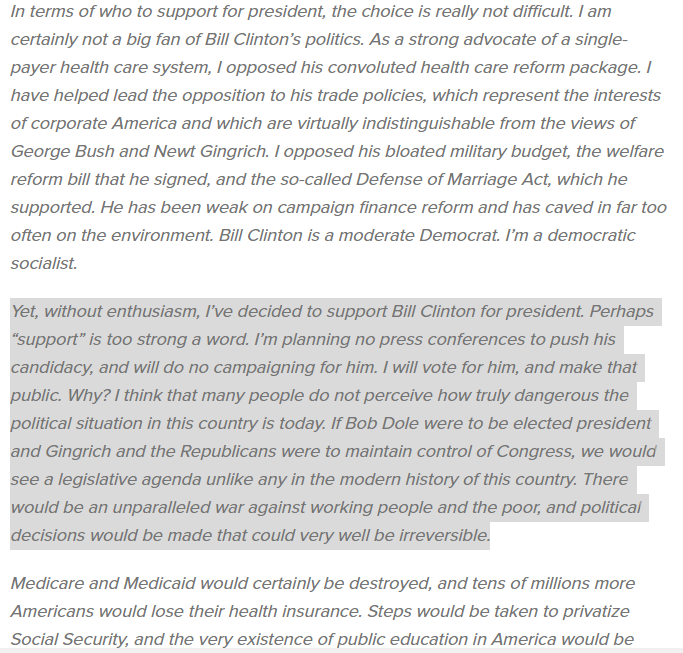
Chris Hedges theorized in 2015: "...All that energy and all of that money goes back into the Democratic party. [Bernie] functions as a sheepdog to corral progressives, left-leaning progressives, back into the embrace of the Democratic
Bernie's foreign policy positions are also telling. While he *did* vote against the US invasion of Iraq, he still voted to fund it once underway, & also backed the US bombing of Kosovo, US sanctions against Iran & Libya, & the Iraqi Liberation Act of
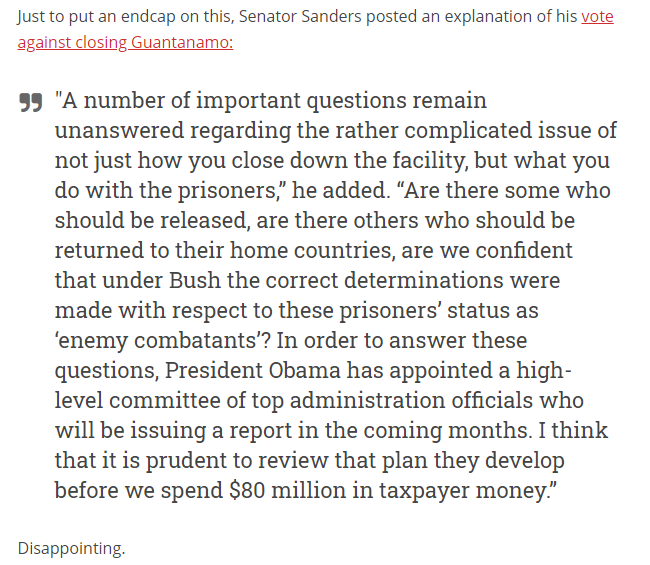
Bernie called closing the torturous gulag at Guantanamo a "complicated issue" and supported a proposal in 2009 to "prohibit funding to transfer, release, or incarcerate detainees detained at Guantanamo Bay, Cuba, to or within the United States."
https://t.co/4p64SgeD1x
Over the last 20+ years, Bernie has endorsed every establishment Democrat running for President: Bill Clinton, Gore, Kerry, Obama, Hillary, and most recently, Biden. These candidates and what they represent largely contradict much of what Bernie says he stands for.
Chris Hedges theorized in 2015: "...All that energy and all of that money goes back into the Democratic party. [Bernie] functions as a sheepdog to corral progressives, left-leaning progressives, back into the embrace of the Democratic
Bernie's foreign policy positions are also telling. While he *did* vote against the US invasion of Iraq, he still voted to fund it once underway, & also backed the US bombing of Kosovo, US sanctions against Iran & Libya, & the Iraqi Liberation Act of
Bernie called closing the torturous gulag at Guantanamo a "complicated issue" and supported a proposal in 2009 to "prohibit funding to transfer, release, or incarcerate detainees detained at Guantanamo Bay, Cuba, to or within the United States."
https://t.co/4p64SgeD1x


You May Also Like



1/ Some initial thoughts on personal moats:
Like company moats, your personal moat should be a competitive advantage that is not only durable—it should also compound over time.
Characteristics of a personal moat below:
2/ Like a company moat, you want to build career capital while you sleep.
As Andrew Chen noted:
3/ You don’t want to build a competitive advantage that is fleeting or that will get commoditized
Things that might get commoditized over time (some longer than
4/ Before the arrival of recorded music, what used to be scarce was the actual music itself — required an in-person artist.
After recorded music, the music itself became abundant and what became scarce was curation, distribution, and self space.
5/ Similarly, in careers, what used to be (more) scarce were things like ideas, money, and exclusive relationships.
In the internet economy, what has become scarce are things like specific knowledge, rare & valuable skills, and great reputations.
Like company moats, your personal moat should be a competitive advantage that is not only durable—it should also compound over time.
Characteristics of a personal moat below:
I'm increasingly interested in the idea of "personal moats" in the context of careers.
— Erik Torenberg (@eriktorenberg) November 22, 2018
Moats should be:
- Hard to learn and hard to do (but perhaps easier for you)
- Skills that are rare and valuable
- Legible
- Compounding over time
- Unique to your own talents & interests https://t.co/bB3k1YcH5b
2/ Like a company moat, you want to build career capital while you sleep.
As Andrew Chen noted:
People talk about \u201cpassive income\u201d a lot but not about \u201cpassive social capital\u201d or \u201cpassive networking\u201d or \u201cpassive knowledge gaining\u201d but that\u2019s what you can architect if you have a thing and it grows over time without intensive constant effort to sustain it
— Andrew Chen (@andrewchen) November 22, 2018
3/ You don’t want to build a competitive advantage that is fleeting or that will get commoditized
Things that might get commoditized over time (some longer than
Things that look like moats but likely aren\u2019t or may fade:
— Erik Torenberg (@eriktorenberg) November 22, 2018
- Proprietary networks
- Being something other than one of the best at any tournament style-game
- Many "awards"
- Twitter followers or general reach without "respect"
- Anything that depends on information asymmetry https://t.co/abjxesVIh9
4/ Before the arrival of recorded music, what used to be scarce was the actual music itself — required an in-person artist.
After recorded music, the music itself became abundant and what became scarce was curation, distribution, and self space.
5/ Similarly, in careers, what used to be (more) scarce were things like ideas, money, and exclusive relationships.
In the internet economy, what has become scarce are things like specific knowledge, rare & valuable skills, and great reputations.