20 machine learning questions that will make you think.

(Cool questions. Not the regular, introductory stuff that you find everywhere.)

🧵👇

1. Why is it important to introduce non-linearities in a neural network?

2. What are the differences between a multi-class classification problem and a multi-label classification problem?

3. Why does the use of Dropout work as a regularizer?

👇
4. Why you shouldn't use a softmax output activation function in a multi-label classification problem when using a one-hot-encoded target?

5. Does the use of Dropout in your model slow down or speed up the training process? Why?

👇
6. In a Linear or Logistic Regression problem, do all Gradient Descent algorithms lead to the same model, provided you let them run long enough?

7. Explain the difference between Batch Gradient Descent, Stochastic Gradient Descent, and Mini-batch Gradient Descent.

👇
8. What are the advantages of Convolution Neural Networks (CNN) over a fully connected network for image classification?

9. What are the advantages of Recurrent Neural Networks (RNN) over a fully connected network when working with text data?

👇
10. How do you deal with the vanishing gradient problem?

11. How do you deal with the exploding gradient problem?

12. Are feature engineering and feature extraction still needed when applying Deep Learning?

13. How does Batch Normalization help?

👇
14. The universal approximation theorem shows that any function can be approximated as closely as needed using a single nonlinearity. Then why do we use more?

15. What are some of the limitations of Deep Learning?

16. Is there any value in weight initialization?

👇
17. The training loss of your model is high and almost equal to the validation loss. What does it mean? What can you do?

18. Assuming you are using Batch Gradient Descent, what advantage would you get from shuffling your training dataset?

👇
19. Compare the following evaluation protocols: a hold-out validation set, K-fold cross-validation, and iterated K-fold validation. When would you use each one?

20. What are the main differences between Adam and the Gradient Descent optimization algorithms?

👇
I'll be posting an in-depth answer for each one of these questions over the next following days.

Stay tuned and help me spread more machine learning content to more people in the community!
Feel free to post answers for those questions that you know. Give them a try!

You’ll be forced to think about them just by trying to collect your thoughts to put them here.

(There’s nothing as effective to learn than interacting with others.)

More from Santiago

10 machine learning YouTube videos.

On libraries, algorithms, and tools.

(If you want to start with machine learning, having a comprehensive set of hands-on tutorials you can always refer to is fundamental.)

🧵👇

1⃣ Notebooks are a fantastic way to code, experiment, and communicate your results.

Take a look at @CoreyMSchafer's fantastic 30-minute tutorial on Jupyter Notebooks.

https://t.co/HqE9yt8TkB


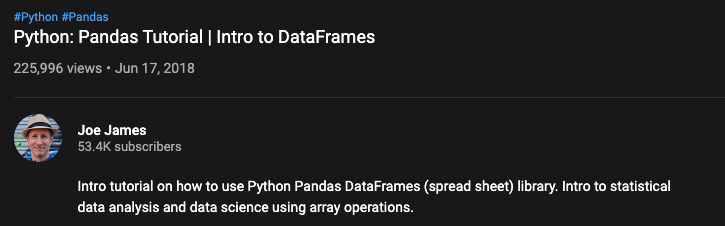
2⃣ The Pandas library is the gold-standard to manipulate structured data.

Check out @joejamesusa's "Pandas Tutorial. Intro to DataFrames."

https://t.co/aOLh0dcGF5


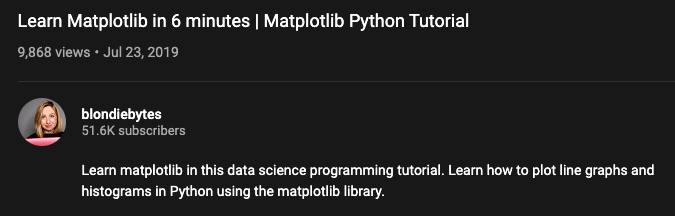
3⃣ Data visualization is key for anyone practicing machine learning.

Check out @blondiebytes's "Learn Matplotlib in 6 minutes" tutorial.

https://t.co/QxjsODI1HB


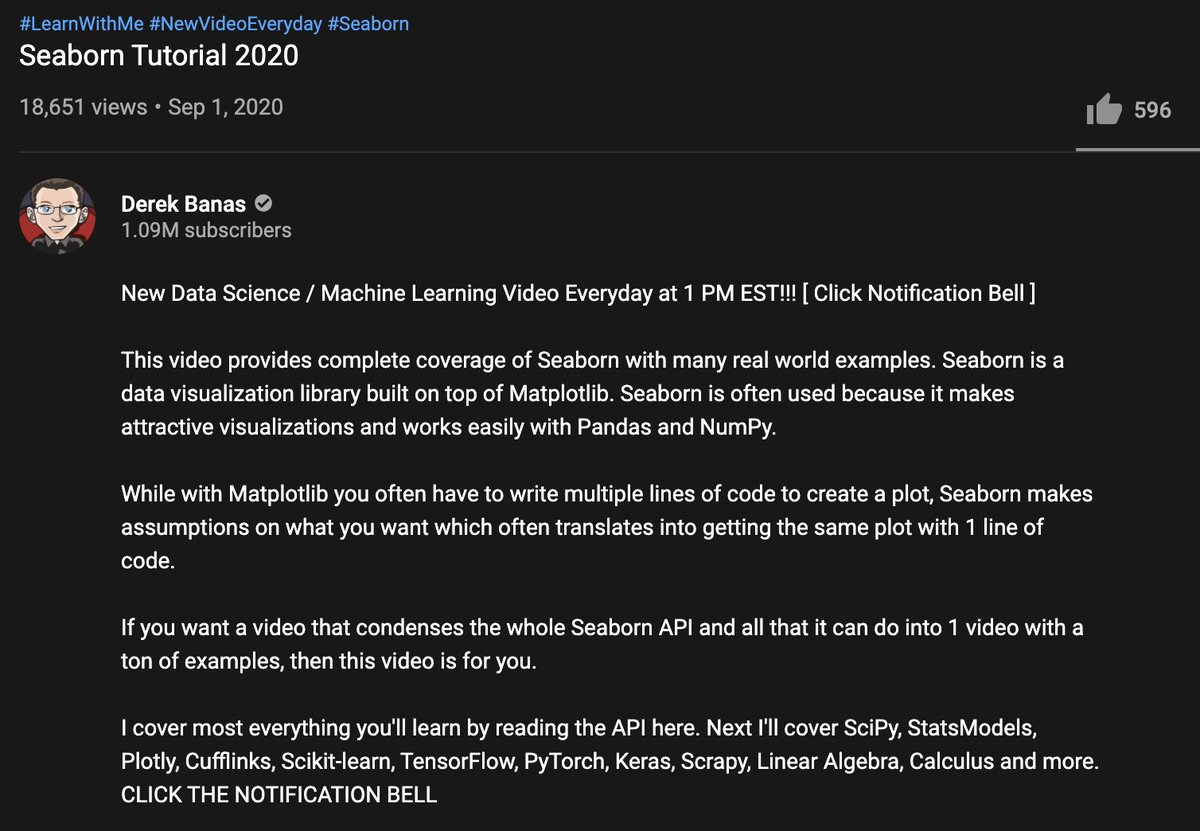
4⃣ Another trendy data visualization library is Seaborn.

@NewThinkTank put together "Seaborn Tutorial 2020," which I highly recommend.

https://t.co/eAU5NBucbm

More from All

The best morning routine?

Starts the night before.

9 evening habits that make all the difference:

1. Write down tomorrow's 3:3:3 plan

• 3 hours on your most important project
• 3 shorter tasks
• 3 maintenance activities

Defining a "productive day" is crucial.

Or else you'll never be at peace (even with excellent output).

Learn more


2. End the workday with a shutdown ritual

Create a short shutdown ritual (hat-tip to Cal Newport). Close your laptop, plug in the charger, spend 2 minutes tidying your desk. Then say, "shutdown."

Separating your life and work is key.

3. Journal 1 beautiful life moment

Delicious tacos, presentation you crushed, a moment of inner peace. Write it down.

Gratitude programs a mindset of abundance.

4. Lay out clothes

Get exercise clothes ready for tomorrow. Upon waking up, jump rope for 2 mins. It will activate your mind + body.

You May Also Like

1/12

RT-PCR corona (test) scam

Symptomatic people are tested for one and only one respiratory virus. This means that other acute respiratory infections are reclassified as


2/12

It is tested exquisitely with a hypersensitive non-specific RT-PCR test / Ct >35 (>30 is nonsense, >35 is madness), without considering Ct and clinical context. This means that more acute respiratory infections are reclassified as


3/12

The Drosten RT-PCR test is fabricated in a way that each country and laboratory perform it differently at too high Ct and that the high rate of false positives increases massively due to cross-reaction with other (corona) viruses in the "flu


4/12

Even asymptomatic, previously called healthy, people are tested (en masse) in this way, although there is no epidemiologically relevant asymptomatic transmission. This means that even healthy people are declared as COVID


5/12

Deaths within 28 days after a positive RT-PCR test from whatever cause are designated as deaths WITH COVID. This means that other causes of death are reclassified as
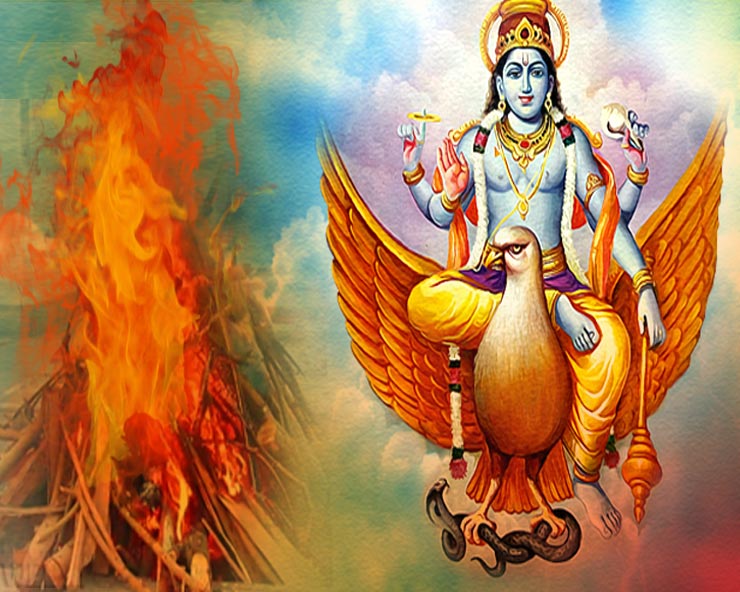
🌺श्री गरुड़ पुराण - संक्षिप्त वर्णन🌺

हिन्दु धर्म के 18 पुराणों में से एक गरुड़ पुराण का हिन्दु धर्म में बड़ा महत्व है। गरुड़ पुराण में मृत्यु के बाद सद्गती की व्याख्या मिलती है। इस पुराण के अधिष्ठातृ देव भगवान विष्णु हैं, इसलिए ये वैष्णव पुराण है।


गरुड़ पुराण के अनुसार हमारे कर्मों का फल हमें हमारे जीवन-काल में तो मिलता ही है परंतु मृत्यु के बाद भी अच्छे बुरे कार्यों का उनके अनुसार फल मिलता है। इस कारण इस पुराण में निहित ज्ञान को प्राप्त करने के लिए घर के किसी सदस्य की मृत्यु के बाद का समय निर्धारित किया गया है...

..ताकि उस समय हम जीवन-मरण से जुड़े सभी सत्य जान सकें और मृत्यु के कारण बिछडने वाले सदस्य का दुख कम हो सके।
गरुड़ पुराण में विष्णु की भक्ति व अवतारों का विस्तार से उसी प्रकार वर्णन मिलता है जिस प्रकार भगवत पुराण में।आरम्भ में मनु से सृष्टि की उत्पत्ति,ध्रुव चरित्र की कथा मिलती है।


तदुपरांत सुर्य व चंद्र ग्रहों के मंत्र, शिव-पार्वती मंत्र,इन्द्र सम्बंधित मंत्र,सरस्वती मंत्र और नौ शक्तियों के बारे में विस्तार से बताया गया है।
इस पुराण में उन्नीस हज़ार श्लोक बताए जाते हैं और इसे दो भागों में कहा जाता है।
प्रथम भाग में विष्णुभक्ति और पूजा विधियों का उल्लेख है।

मृत्यु के उपरांत गरुड़ पुराण के श्रवण का प्रावधान है ।
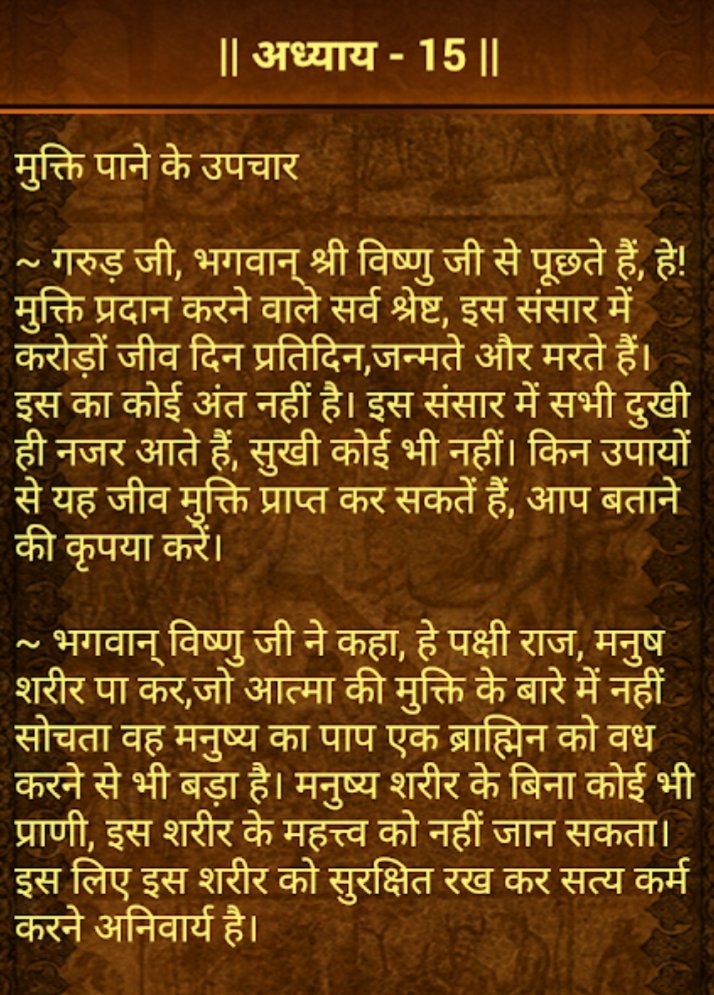
पुराण के द्वितीय भाग में 'प्रेतकल्प' का विस्तार से वर्णन और नरकों में जीव के पड़ने का वृत्तांत मिलता है। मरने के बाद मनुष्य की क्या गति होती है, उसका किस प्रकार की योनियों में जन्म होता है, प्रेत योनि से मुक्ति के उपाय...
Still wondering about this 🤔


save as q