https://t.co/vG5pjEa7B9
Very interesting new report about how America's economic geography has changed since the great recession: https://t.co/l3YE4WzgKx
Short version: Places with lots of skilled workers are doing great, other places aren't. But more people are moving to the former, which is good.


More from Noah Smith
1/OK, let's take a little break from Coup Twitter, and think about an economic issue:
How can we build up the wealth of the middle class?
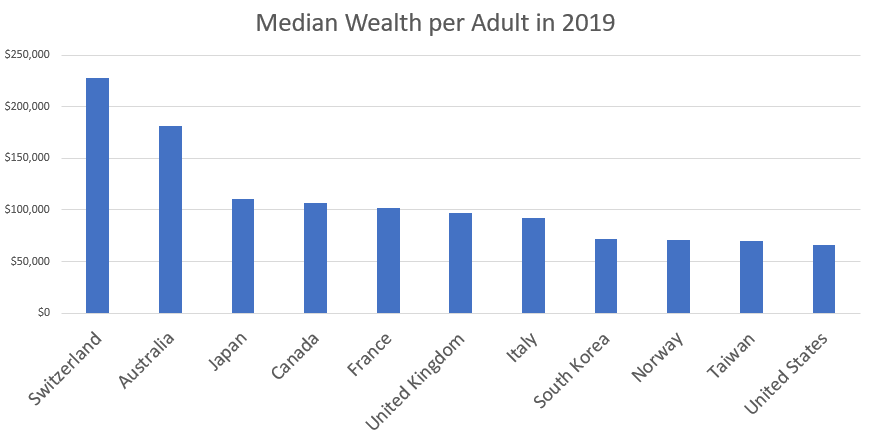
2/The typical American has surprisingly little wealth compared to the typical resident of many other developed countries.
This is a fact that is not widely known or appreciated.
3/Now, some people argue that stuff like Social Security or social insurance programs should be included in wealth. But I chose to focus on private wealth because I think having assets you can sell whenever you want is important to
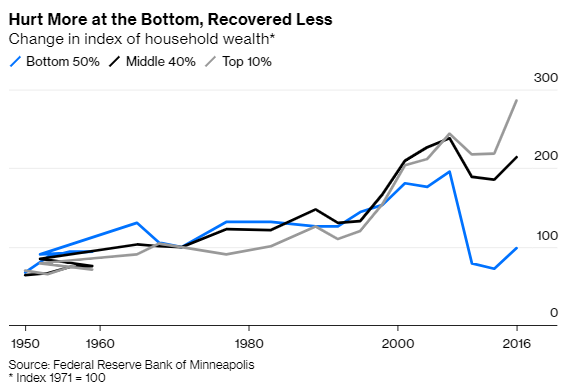
4/For many decades after World War 2, middle-class wealth in America was on a smooth upward trajectory.
Then the housing crash came, and all that changed. Suddenly the rich were still doing well but everyone else was seeing the end of their American Dream.
5/Why the divergence?
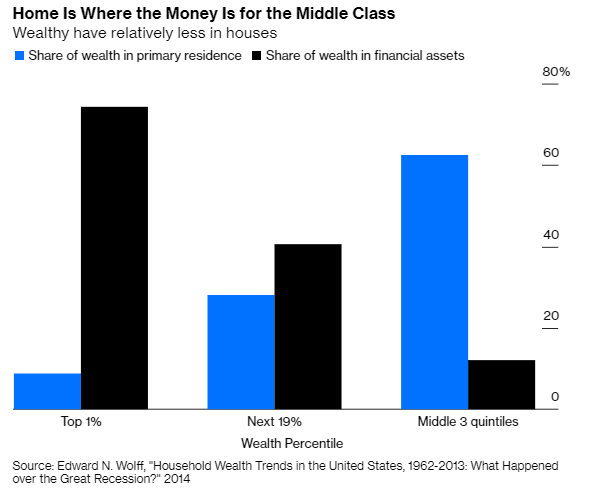
Because the American middle class has its wealth in houses -- specifically, in the houses they live in.
It's the rich who own stocks.
How can we build up the wealth of the middle class?
2/The typical American has surprisingly little wealth compared to the typical resident of many other developed countries.
This is a fact that is not widely known or appreciated.
3/Now, some people argue that stuff like Social Security or social insurance programs should be included in wealth. But I chose to focus on private wealth because I think having assets you can sell whenever you want is important to
Yes, these numbers don't include things like Social Security, just privately held wealth. They're not an attempt to capitalize every possible future income stream.
— Noahtogolpe \U0001f407 (@Noahpinion) January 10, 2021
4/For many decades after World War 2, middle-class wealth in America was on a smooth upward trajectory.
Then the housing crash came, and all that changed. Suddenly the rich were still doing well but everyone else was seeing the end of their American Dream.
5/Why the divergence?
Because the American middle class has its wealth in houses -- specifically, in the houses they live in.
It's the rich who own stocks.
Bloomberg Ideas conference now starting! I will be live-tweeting it. You can watch on our Facebook or Twitter pages (links below)!
Our first panel is about cryptocurrency! We have @matt_levine, @tylercowen, @eiaine, @nirkaissar, and Camilla
Ou: Crypto will be useful for the unbanked.
Cowen: Crypto has to compete against a bunch of other emerging payments technologies. Bitcoin is too inflexible.
Cowen: I'll bet on the payments companies over crypto.
Today and tomorrow we'll be having a Bloomberg Ideas event!
— Noah Smith (@Noahpinion) October 25, 2018
Today will be a panel on cryptocurrency.
Tomorrow will be panels on the economics of AI, and on regulation of big tech companies.
You can watch livestreams here:https://t.co/1dC0ELGvabhttps://t.co/Juz5Mp2EC1 pic.twitter.com/VfxOscNflo
Our first panel is about cryptocurrency! We have @matt_levine, @tylercowen, @eiaine, @nirkaissar, and Camilla
Ou: Crypto will be useful for the unbanked.
Cowen: Crypto has to compete against a bunch of other emerging payments technologies. Bitcoin is too inflexible.
Cowen: I'll bet on the payments companies over crypto.
Time for panel #3: Big Tech and regulation!
I will be live-tweeting again, and you can also watch video at either the Twitter or Facebook links below!
Kaissar: Every industry gets regulated when it gets big. The question is what kind of regulation Big Tech will get,and whether the companies will be proactive in shaping it.
Kaissar: More profitable companies have higher returns. Why? Maybe it's a risk factor, because more profit = higher risk of getting regulated.
Bershidskyis showing a diagram of GDPR complaince pop-ups. What a massive ill-conceived bureaucratic mess.
Ritholtz: It's 2018 and we're still talking about Facebook privacy settings?! If you're still giving your personal data to Facebook, you just don't care about privacy!
I will be live-tweeting again, and you can also watch video at either the Twitter or Facebook links below!
Bloomberg Ideas conference now starting! I will be live-tweeting it. You can watch on our Facebook or Twitter pages (links below)! https://t.co/Mbr9dZzWBy
— Noah Smith (@Noahpinion) October 25, 2018
Kaissar: Every industry gets regulated when it gets big. The question is what kind of regulation Big Tech will get,and whether the companies will be proactive in shaping it.
Kaissar: More profitable companies have higher returns. Why? Maybe it's a risk factor, because more profit = higher risk of getting regulated.
Bershidskyis showing a diagram of GDPR complaince pop-ups. What a massive ill-conceived bureaucratic mess.
Ritholtz: It's 2018 and we're still talking about Facebook privacy settings?! If you're still giving your personal data to Facebook, you just don't care about privacy!
More from All










The best morning routine?
Starts the night before.
9 evening habits that make all the difference:
1. Write down tomorrow's 3:3:3 plan
• 3 hours on your most important project
• 3 shorter tasks
• 3 maintenance activities
Defining a "productive day" is crucial.
Or else you'll never be at peace (even with excellent output).
Learn more
2. End the workday with a shutdown ritual
Create a short shutdown ritual (hat-tip to Cal Newport). Close your laptop, plug in the charger, spend 2 minutes tidying your desk. Then say, "shutdown."
Separating your life and work is key.
3. Journal 1 beautiful life moment
Delicious tacos, presentation you crushed, a moment of inner peace. Write it down.
Gratitude programs a mindset of abundance.
4. Lay out clothes
Get exercise clothes ready for tomorrow. Upon waking up, jump rope for 2 mins. It will activate your mind + body.
Starts the night before.
9 evening habits that make all the difference:
1. Write down tomorrow's 3:3:3 plan
• 3 hours on your most important project
• 3 shorter tasks
• 3 maintenance activities
Defining a "productive day" is crucial.
Or else you'll never be at peace (even with excellent output).
Learn more
How to be 5x more productive.
— Ben Meer (@SystemSunday) August 1, 2022
A best-selling author\u2019s 3-3-3 Method:
2. End the workday with a shutdown ritual
Create a short shutdown ritual (hat-tip to Cal Newport). Close your laptop, plug in the charger, spend 2 minutes tidying your desk. Then say, "shutdown."
Separating your life and work is key.
3. Journal 1 beautiful life moment
Delicious tacos, presentation you crushed, a moment of inner peace. Write it down.
Gratitude programs a mindset of abundance.
4. Lay out clothes
Get exercise clothes ready for tomorrow. Upon waking up, jump rope for 2 mins. It will activate your mind + body.

You May Also Like



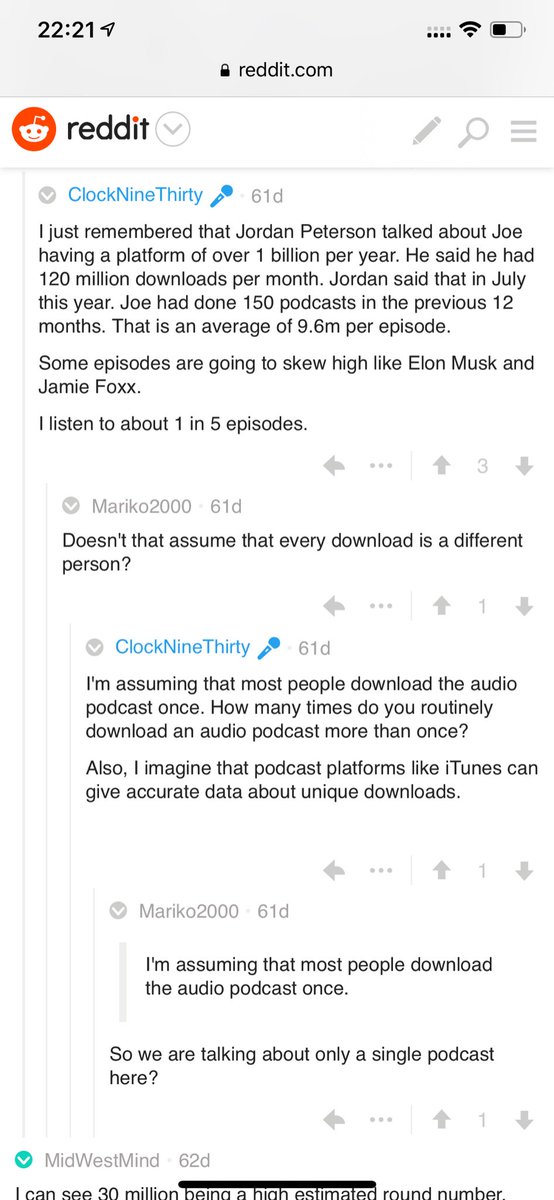
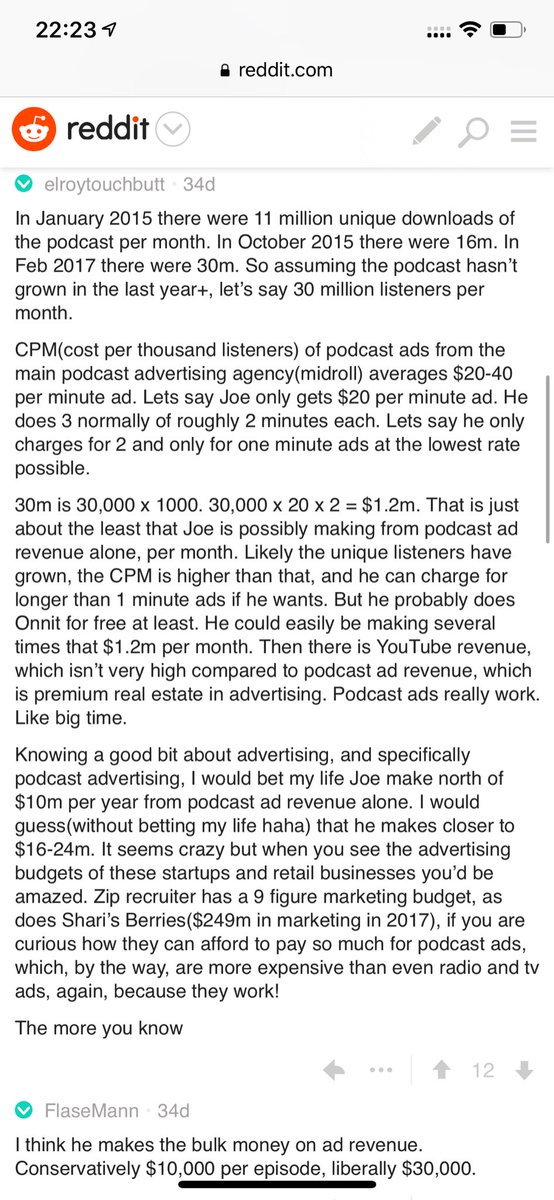
Joe Rogan's podcast is now is listened to 1.5+ billion times per year at around $50-100M/year revenue.
Independent and 100% owned by Joe, no networks, no middle men and a 100M+ people audience.
👏
https://t.co/RywAiBxA3s
Joe is the #1 / #2 podcast (depends per week) of all podcasts
120 million plays per month source https://t.co/k7L1LfDdcM
https://t.co/aGcYnVDpMu
Independent and 100% owned by Joe, no networks, no middle men and a 100M+ people audience.
👏
https://t.co/RywAiBxA3s
Joe is the #1 / #2 podcast (depends per week) of all podcasts
120 million plays per month source https://t.co/k7L1LfDdcM
https://t.co/aGcYnVDpMu