7 powerful concepts everyone should teach their children:

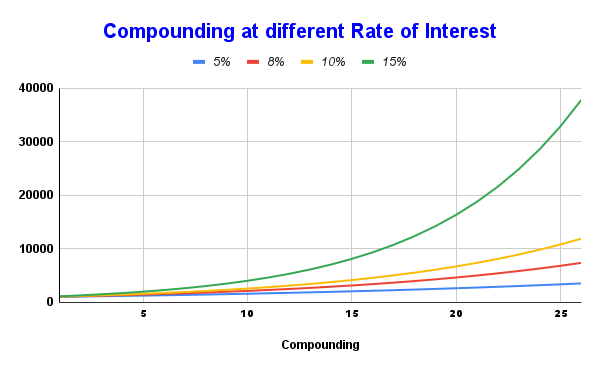
Compound interest:

Large outcomes are often the result of small gains in performance compounding over the course of years and decades.

Small improvements may look tiny in isolation, but they result in gigantic outcomes when you zoom out.
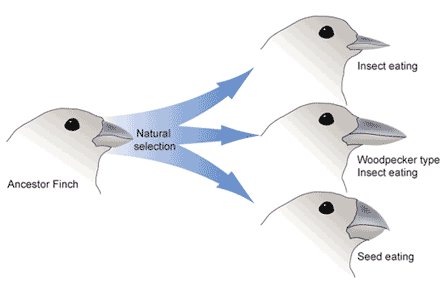
Evolution by natural selection:

People and culture evolve through a process of generational iteration.

In every generation, the fittest organisms reproduce to create the next generation - while the unfittest die away.

Most things in our world are the result of this process.
Evolution-environment disconnect:

We evolved in the scarcity of jungles but find ourselves in the abundance of cities with unlimited food and pleasures.

Our biology isn't equipped to deal with this abundance - which often leads to addiction and obesity.
Many things around us are designed to exploit this evolutionary disconnect:

• Added sugar to exploit your taste buds
• Pornography to exploit your sex drive
• Social media to exploit your social instincts

Recognizing and limiting these things is critical for a healthy life.
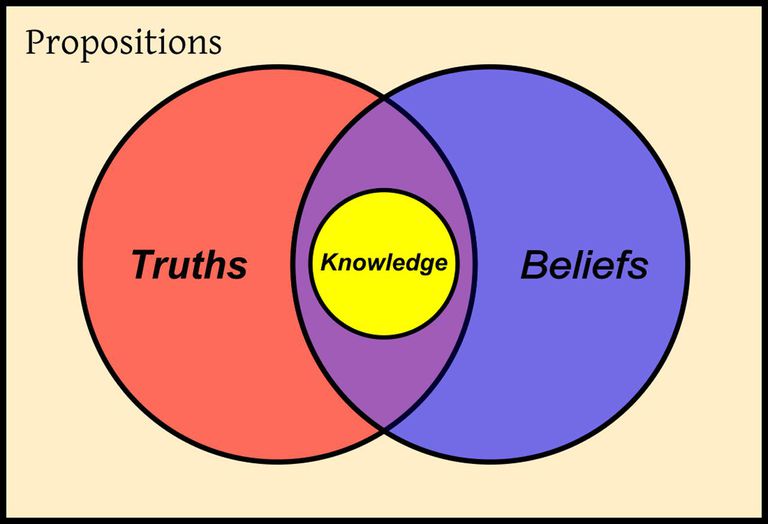
Epistemology:

The branch of philosophy that differentiates knowledge from belief.

You don't need to believe in the sky or water because you know they are there.

We only believe in something when we are either too lazy or too scared to find the evidence of truth for ourselves.
Mental models:

A mental model is a representation of how something works.

It's a mental shortcut that helps us understand how things function.

For example, mental models from physics - like gravity and relativity - explain how the physical world works.
Cognitive biases:

Are errors in thinking that lead to incorrect conclusions and decisions.

Some errors, like confirmation bias, show us how we're always biased towards information that confirms our views.

Avoiding these biases can improve decision-making significantly.
Counter-positioning:

Most of us think that the best way to win is to beat the best at their game.

But the best strategy is often to be the best at the opposite of the game the leader is playing.

See how Amazon became bigger by going online vs competing with Walmart in stores.
If you found this thread helpful, please:

- Retweet the first tweet and help others find this thread

- Follow me at @heykahn

I write and share insights about marketing, tech, and psychology.

More from Zain Kahn

I went from zero to leading marketing teams in 5 years.

But I never studied marketing in college.

Those 5 years I spent 1,000+ hours studying 100s of books and resources.

I've distilled everything I learned in those 5 years into 7 simple frameworks.

Here they are ― for free:

1. How to write world class


2. Master the psychology of


3. Learn how to


4. Use the best marketing

More from All

https://t.co/6cRR2B3jBE
Viruses and other pathogens are often studied as stand-alone entities, despite that, in nature, they mostly live in multispecies associations called biofilms—both externally and within the host.

https://t.co/FBfXhUrH5d


Microorganisms in biofilms are enclosed by an extracellular matrix that confers protection and improves survival. Previous studies have shown that viruses can secondarily colonize preexisting biofilms, and viral biofilms have also been described.


...we raise the perspective that CoVs can persistently infect bats due to their association with biofilm structures. This phenomenon potentially provides an optimal environment for nonpathogenic & well-adapted viruses to interact with the host, as well as for viral recombination.


Biofilms can also enhance virion viability in extracellular environments, such as on fomites and in aquatic sediments, allowing viral persistence and dissemination.

You May Also Like

1/ Some initial thoughts on personal moats:

Like company moats, your personal moat should be a competitive advantage that is not only durable—it should also compound over time.

Characteristics of a personal moat below:


2/ Like a company moat, you want to build career capital while you sleep.

As Andrew Chen noted:


3/ You don’t want to build a competitive advantage that is fleeting or that will get commoditized

Things that might get commoditized over time (some longer than


4/ Before the arrival of recorded music, what used to be scarce was the actual music itself — required an in-person artist.

After recorded music, the music itself became abundant and what became scarce was curation, distribution, and self space.

5/ Similarly, in careers, what used to be (more) scarce were things like ideas, money, and exclusive relationships.

In the internet economy, what has become scarce are things like specific knowledge, rare & valuable skills, and great reputations.