Startups are hard!

One of the hardest parts is managing your team.

How much guidance do you give? Do you do it yourself? When to track others to-dos?

Starting out, I wish I had a cheat sheet for management.

So I wrote one.

23 Hard Won Lessons In Startup Management 👇🏽👇🏽👇🏽

1/ Feedback is a gift.

Don't just give it frequently but seek it all the time, in multiple different ways.

Create a culture where feedback is viewed as a gift and given frequently.
2/ Almost without fail, if at any point you think in your head, "this person is not good, we should let them go," then you are probably right.

Try to do it as soon as possible but compassionately.
3/ Leading and managing people well is NOT an innate talent.

Get a coach and a mentor and learn as much as you can.

You will improve continually over time.
4/ Bring on an "HR" person earlier than you think you should.

Let's face it - most folks want to complain/vent to someone.

Without an HR person, you are that person.

As a founder, you take this complaining too personally and too seriously.
5/ There is no such thing as a momentary lapse of integrity.

If someone is dishonest, it is likely not the first time and definitely not the last time.

When you first see it, take decisive action.
6/ Individual success is a function of company success.

If someone puts themselves ahead of the company, they do not belong.
7/ Make someone demonstrate persistent interest in you and your company before issuing shares or compensation.
8/ Product is hard. It requires depth, iteration, and lots of saying ‘no’.

Let me repeat: product is hard.

Build this DNA as early as possible.
9/ When your company is growing quickly, expect everything to break down every 6-9 months.

This isn’t really avoidable, but move quickly to fix it.
10/ Any analysis ahead of action is purely speculation.

You really do not understand something until you've done it.

Analysis post-action can be driven by real data.
11/ If you are constantly using your authority to get your team to do things as you see them, something is wrong.

Instead try to use data, logic and persuasion.
12/ Constantly ask the question, "What does great look like?" for people, product, processes, and everything else.

Your biggest threat (especially as a first time entrepreneur) is not knowing this, and not being able to identify it.

More from Jesse Pujji

More from All

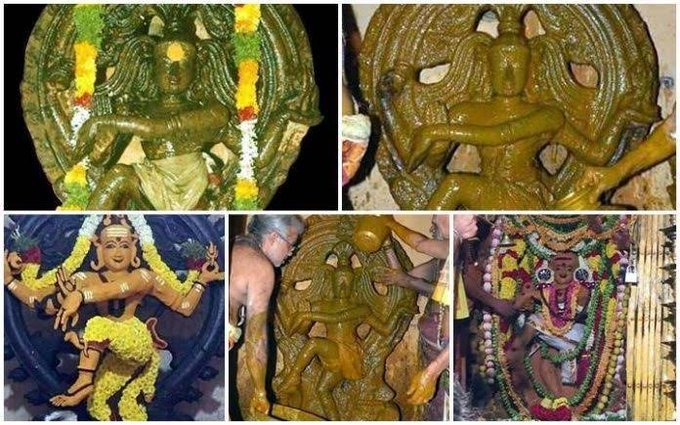
Margatha Natarajar murthi - Uthirakosamangai temple near Ramanathapuram,TN
#ArudraDarisanam
Unique Natarajar made of emerlad is abt 6 feet tall.
It is always covered with sandal paste.Only on Thriuvadhirai Star in month Margazhi-Nataraja can be worshipped without sandal paste.


After removing the sandal paste,day long rituals & various abhishekam will be
https://t.co/e1Ye8DrNWb day Maragatha Nataraja sannandhi will be closed after anointing the murthi with fresh sandal paste.Maragatha Natarajar is covered with sandal paste throughout the year


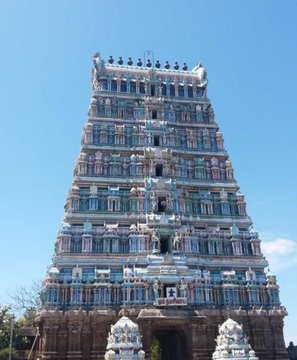
as Emerald has scientific property of its molecules getting disturbed when exposed to light/water/sound.This is an ancient Shiva temple considered to be 3000 years old -believed to be where Bhagwan Shiva gave Veda gyaana to Parvati Devi.This temple has some stunning sculptures.

You May Also Like

https://t.co/6cRR2B3jBE
Viruses and other pathogens are often studied as stand-alone entities, despite that, in nature, they mostly live in multispecies associations called biofilms—both externally and within the host.

https://t.co/FBfXhUrH5d


Microorganisms in biofilms are enclosed by an extracellular matrix that confers protection and improves survival. Previous studies have shown that viruses can secondarily colonize preexisting biofilms, and viral biofilms have also been described.


...we raise the perspective that CoVs can persistently infect bats due to their association with biofilm structures. This phenomenon potentially provides an optimal environment for nonpathogenic & well-adapted viruses to interact with the host, as well as for viral recombination.


Biofilms can also enhance virion viability in extracellular environments, such as on fomites and in aquatic sediments, allowing viral persistence and dissemination.