
Ugrashrava ji replied that he was coming from the place where Ved Vyas had narrated Mahabharat granth systematically.
HOW MAHABHARAT BOOK WAS CREATED AND ITS ORIGIN
#MahabharatSeries
Once upon a time in Naimisharanya, many Sages were sitting and doing Tapasya. That time Sage Ugrashrava(Son of Lomharshan) happened to come there, He was a scholar of Purans and also a Kathavachak.

Ugrashrava ji replied that he was coming from the place where Ved Vyas had narrated Mahabharat granth systematically.
Ugrashrava ji said "Mahabharat Shlokas is there with combination of Laukik-Vedic Sanskrit."
After the creation of Mahabharat Ved Vyas thought in his mind as to
Brahma ji replied that since you have called your creation as Kavya hence in future it will be famous as Kavya. Brahma ji requested Vyas ji to write this Mahabharat by invoking Ganeshji.
◆Poulom parv is its Museum
◆Aastik parv is its root
◆Samba parv are its detailed shoulders.
◆Sabha and Aranya parv are its place where Birds live
◆Arni parv is like glandular knots.
◆Virat and Udyog parv is its essence.
◆Stree parv and Aaeshik parv are its shadows.
◆Shanti parv is it's fruit.
Ashwamedh parv is its Amrut rass
◆Aashram-Vaasik parva is the place where we can take shelter and sit.
After fulfilling his promise to mother Satyavati for the 3 children, Ved Vyas left for his Hermitage when these 3 sons grew old and left this mrityu lok that time Vyas ji started preaching Mahabharat to the world.
Among his Listeners were Parikshit Son Janmejaya and thousands of Brahmins. Sage Vyas's disciples Vaishampayan was also one of the listeners. Whenever the Yajmans would get free time after the Yagya,
Out of the total Shlokas written by Vyas ji 30,00,000 Shlokas are revered in Dev Lok,
◆15,00,000 in Pitra lok ◆14,00,000 in Gandhava lok,
The introduction of Kuru vansh
You can follow me in other SM channels too as i am posting my series there too
Instagram link👇
https://t.co/6Oxeb2WtY2
Facebook page👇
https://t.co/K0oAXVgx9C
#InspiredBySwamiAnjaninandanDass
📸 Credit - katha kids
https://t.co/W2jnWlziJC
More from Anshul Pandey
WRONG!
Buddha avatar is not Fake it is mentioned in many Sanatan scriptures. I will give you references from Sanatan scriptures with the SS.
So lets start...
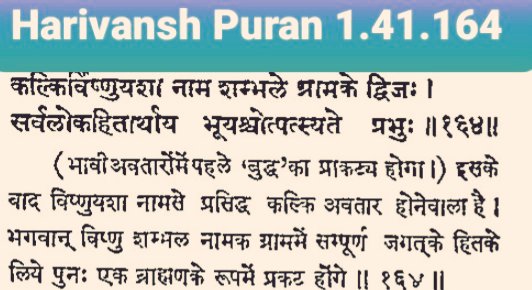
1) Harivansh Puran(1.41.164)
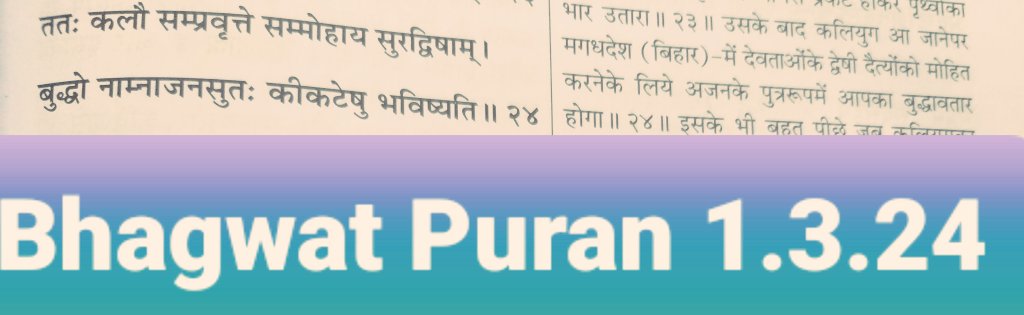
2)Bhagwat Puran(1.3.24)
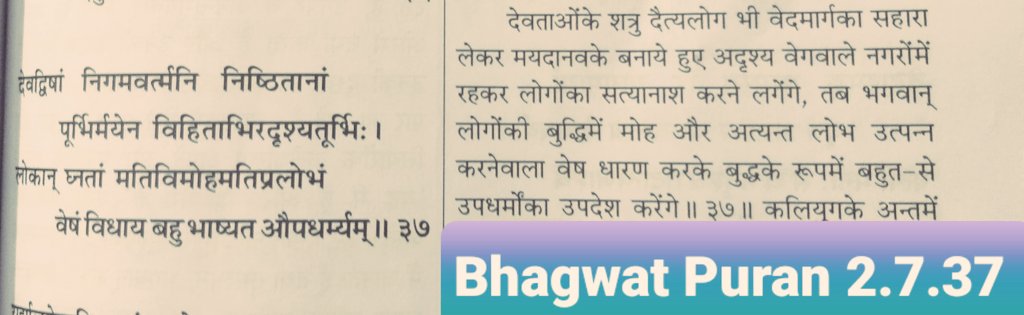
3)Bhagwat Puran(2.7.37)
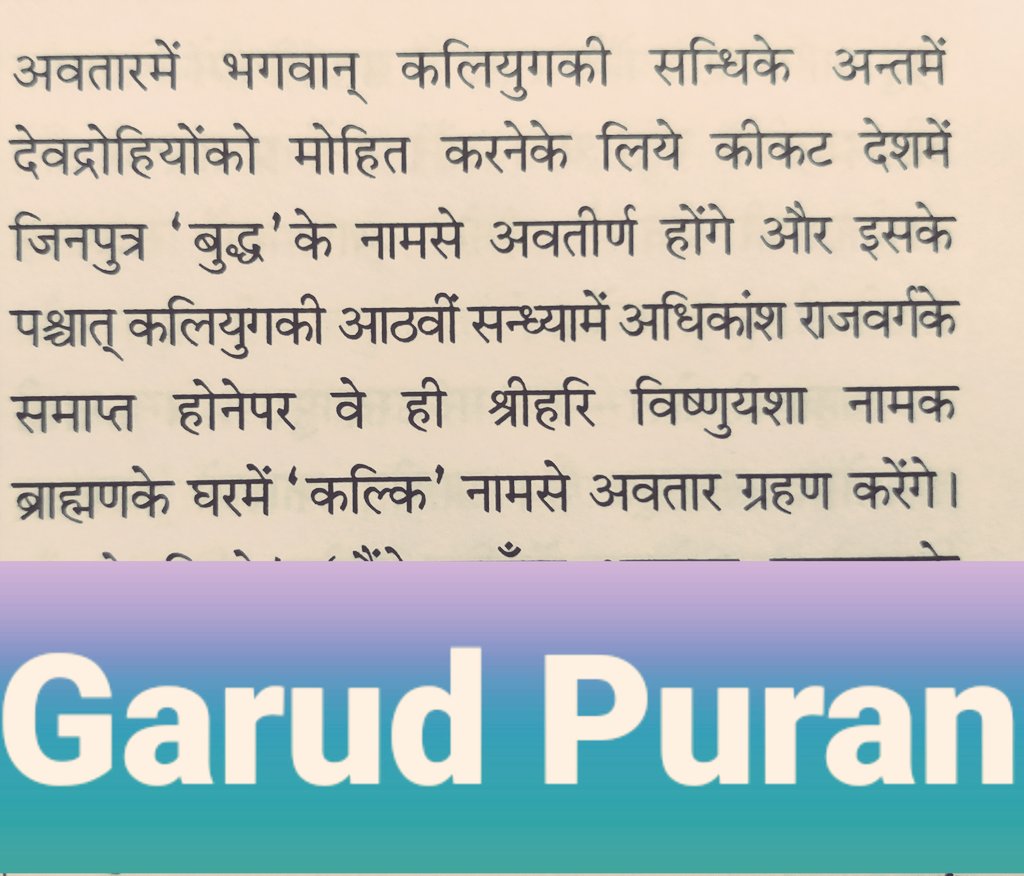
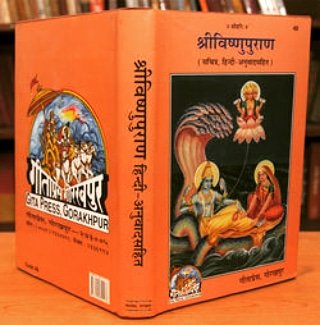
4)Garud Puran
Buddha avatar is not Fake it is mentioned in many Sanatan scriptures. I will give you references from Sanatan scriptures with the SS.
So lets start...
One of the copy of Bhagwad Geeta as sold by ISKCON says that Buddha was Vishnu Avatar. Fake info.
— Jaimine (@jaiminism) April 8, 2021
1) Harivansh Puran(1.41.164)
2)Bhagwat Puran(1.3.24)
3)Bhagwat Puran(2.7.37)
4)Garud Puran





More from All









You May Also Like


A brief analysis and comparison of the CSS for Twitter's PWA vs Twitter's legacy desktop website. The difference is dramatic and I'll touch on some reasons why.
Legacy site *downloads* ~630 KB CSS per theme and writing direction.
6,769 rules
9,252 selectors
16.7k declarations
3,370 unique declarations
44 media queries
36 unique colors
50 unique background colors
46 unique font sizes
39 unique z-indices
https://t.co/qyl4Bt1i5x

PWA *incrementally generates* ~30 KB CSS that handles all themes and writing directions.
735 rules
740 selectors
757 declarations
730 unique declarations
0 media queries
11 unique colors
32 unique background colors
15 unique font sizes
7 unique z-indices
https://t.co/w7oNG5KUkJ

The legacy site's CSS is what happens when hundreds of people directly write CSS over many years. Specificity wars, redundancy, a house of cards that can't be fixed. The result is extremely inefficient and error-prone styling that punishes users and developers.
The PWA's CSS is generated on-demand by a JS framework that manages styles and outputs "atomic CSS". The framework can enforce strict constraints and perform optimisations, which is why the CSS is so much smaller and safer. Style conflicts and unbounded CSS growth are avoided.
Legacy site *downloads* ~630 KB CSS per theme and writing direction.
6,769 rules
9,252 selectors
16.7k declarations
3,370 unique declarations
44 media queries
36 unique colors
50 unique background colors
46 unique font sizes
39 unique z-indices
https://t.co/qyl4Bt1i5x
PWA *incrementally generates* ~30 KB CSS that handles all themes and writing directions.
735 rules
740 selectors
757 declarations
730 unique declarations
0 media queries
11 unique colors
32 unique background colors
15 unique font sizes
7 unique z-indices
https://t.co/w7oNG5KUkJ
The legacy site's CSS is what happens when hundreds of people directly write CSS over many years. Specificity wars, redundancy, a house of cards that can't be fixed. The result is extremely inefficient and error-prone styling that punishes users and developers.
The PWA's CSS is generated on-demand by a JS framework that manages styles and outputs "atomic CSS". The framework can enforce strict constraints and perform optimisations, which is why the CSS is so much smaller and safer. Style conflicts and unbounded CSS growth are avoided.


