A time series (TS) is a series of data points indexed (or listed or graphed) in time order, with equally spaced time intervals.

Let me tell you a little about them, in the following thread 🧵

1/9

Currently, time series analysis is applied in many fields, such as:

🔹Economic forecasting
🔹Inventory analysis
🔹Stock price forecasting
🔹Medical supplies forecasting
🔹Census analysis

2/9
The 4 main components of a time series are:

▪️Level: the average value in the series if it were a straight line.
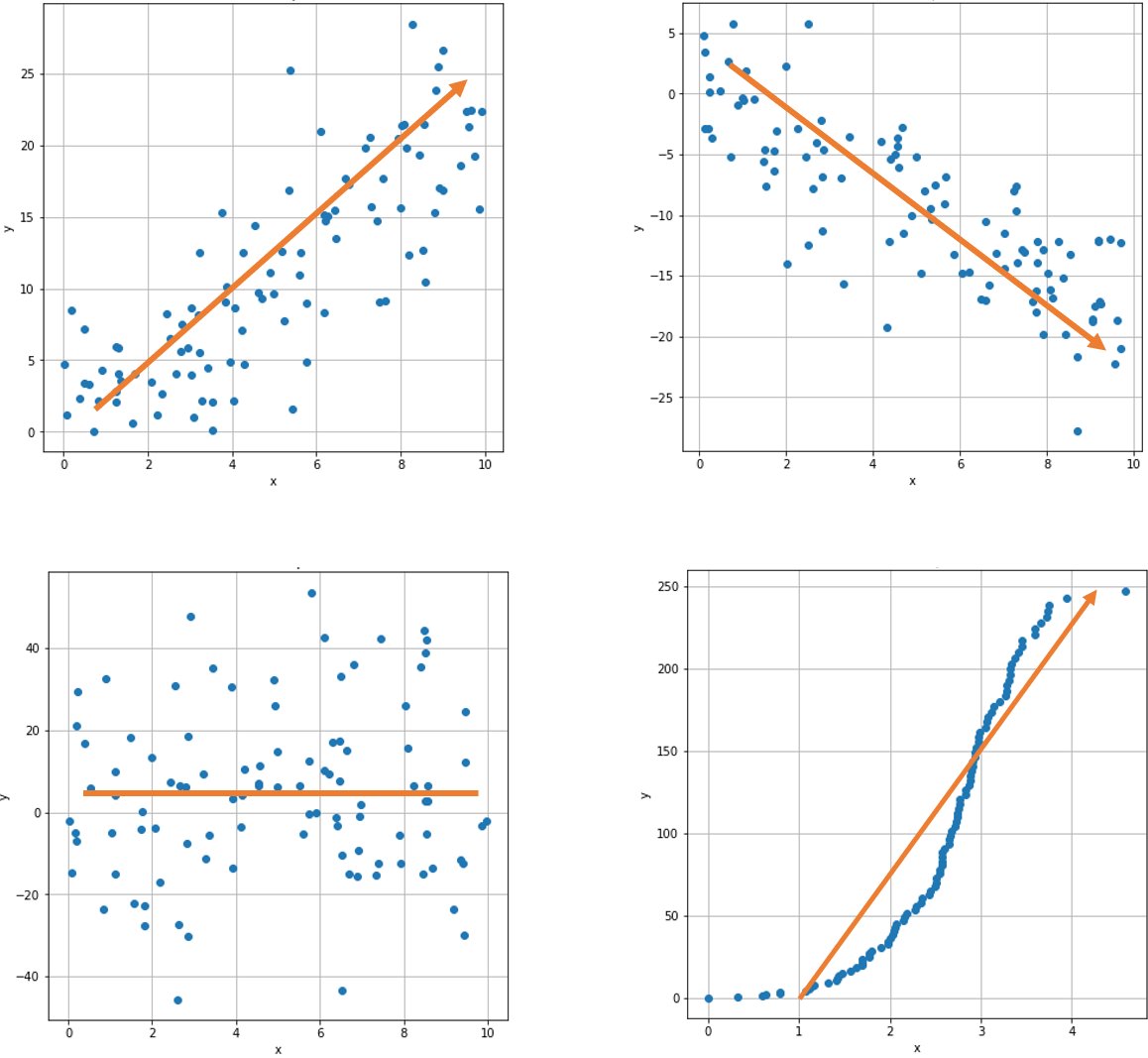
▪️Trend: the linear increasing or decreasing behavior of the series over time.

3/9
and,

▪️Seasonality: the repeating patterns or cycles of behavior over time.
▪️Noise: the random variation in the series that cannot be explained by the model.

4/9
A time series can be decomposed into its components using the following 2 methods:

▪️Additive decomposition: Level + Trend + Seasonality + Noise

▪️Multiplicative decomposition: Level * Trend * Seasonality * Noise

5/9
Additionally, two of the most commonly used methods for time series analysis are:

🔹Box-Jenkins Analysis
🔹Holt-Winters Analysis

6/9
The Box–Jenkins method, applies autoregressive moving average (ARMA) or autoregressive integrated moving average (ARIMA) models to find the best fit of a time-series model to past values of a time series.

Another (very useful) variant is SARIMAX.

7/9
Holt-Winters analysis is a time series forecasting method for univariate data that can be extended to support data with a systematic trend or seasonal component.

A variant is Holt-Winters (Triple) Exponential Smoothing, with support for both trends and seasonality.

8/9
Finally, both Python and R have excellent libraries and documentation for performing time series analysis.

Let's get to work!

9/9

More from Andres Segura-Tinoco

More from All

You May Also Like

So the cryptocurrency industry has basically two products, one which is relatively benign and doesn't have product market fit, and one which is malignant and does. The industry has a weird superposition of understanding this fact and (strategically?) not understanding it.


The benign product is sovereign programmable money, which is historically a niche interest of folks with a relatively clustered set of beliefs about the state, the literary merit of Snow Crash, and the utility of gold to the modern economy.

This product has narrow appeal and, accordingly, is worth about as much as everything else on a 486 sitting in someone's basement is worth.

The other product is investment scams, which have approximately the best product market fit of anything produced by humans. In no age, in no country, in no city, at no level of sophistication do people consistently say "Actually I would prefer not to get money for nothing."

This product needs the exchanges like they need oxygen, because the value of it is directly tied to having payment rails to move real currency into the ecosystem and some jurisdictional and regulatory legerdemain to stay one step ahead of the banhammer.