I’ve been watching the right-wing narrative regarding the Jan. 6 insurrection with keen interest, and realizing that the American right again intends to resort to its well-worn “waving the bloody shirt” gambit. A thread about what that will mean.

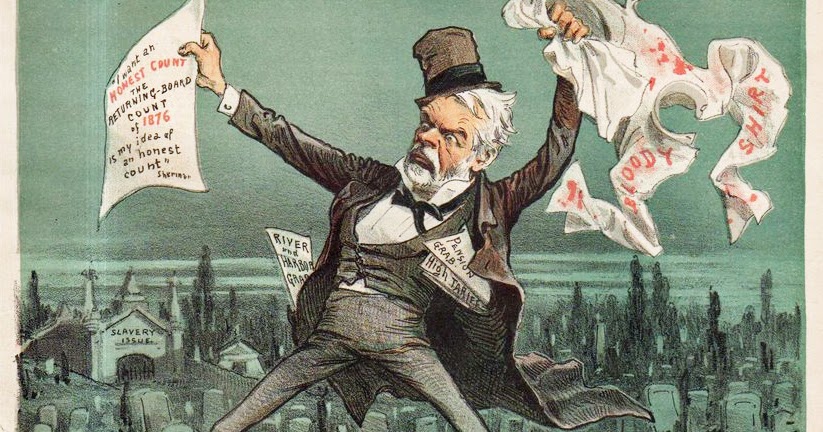
We all know the phrase and its meaning: Someone who “waves the bloody shirt” is a demagogue whose rhetoric callously recalls violent incidents for the purpose of scoring cheap political points. /2
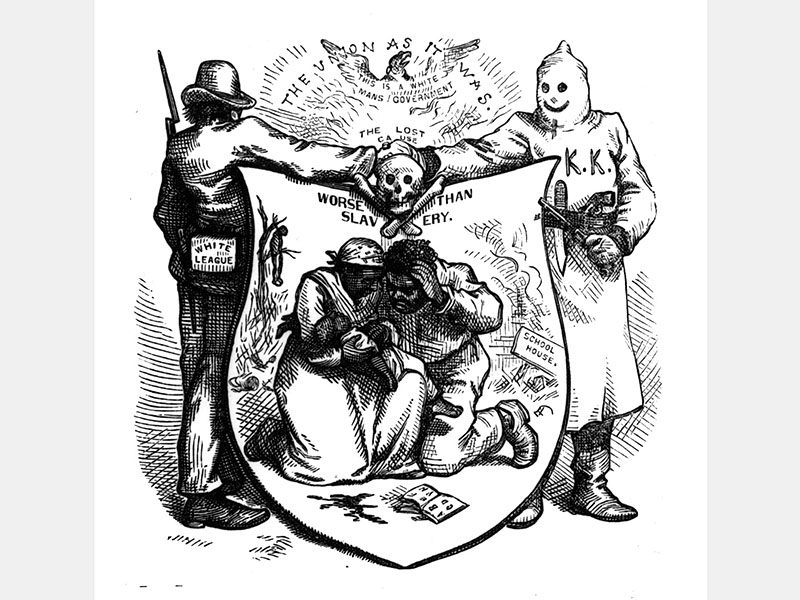
The phrase originated during the Reconstruction era following the Civil War. In the early years, white terrorists from armed paramilitary groups like the Ku Klux Klan roamed the Southern countryside intent on terrorizing black people and anyone assisting them. /3
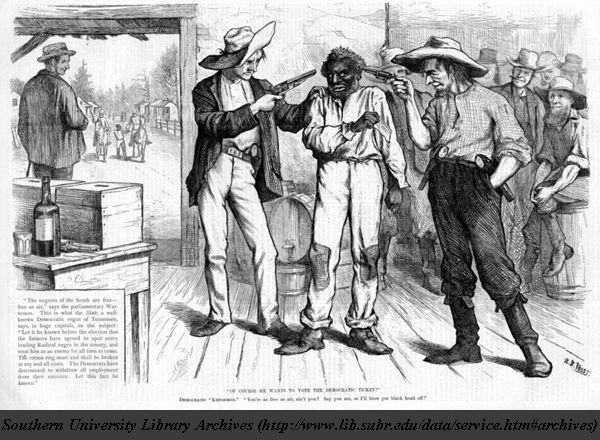
Preventing blacks from voting was the primary focus of the terrorists. Their reputation for threatening people at the polls themselves was well established. /4
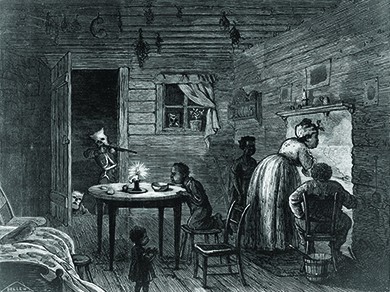
During this period, some 3,000 black freedmen would be murdered in the South. The majority were people lethally attacked at their homes—shot through windows and doors, and at other times lynched. /5
Most of these attacks took place at night. Black people lived in constant fear of having nighttime visitors. /6
The terrorists’ wrath was also directed at certain white people—namely, Southerners who sympathized with the Union, called “scalawags”; and Northerners who usually came to the postwar South with altruistic intentions but were hated as exploitative “carpetbaggers.” /7
These are phrases whose meanings remain with us, thanks to their enduring repetition over the decades. You’ll recall how the carpetbagger is the chief villain of “Gone With the Wind.” /8
In reality, they often were educators who were helping to open schools for black children and promoting literacy in the adult population too. This was seen as a threat to white supremacy and its rule, especially since it enhanced their ability to vote. /9
Schooling black children threatened to overturn one of the core myths of white supremacists—namely, that blacks were naturally too ignorant and stupid to be teachable, which is why they need to be under the control of their white masters. /10
So teachers were flogged and lynched, and schoolhouses burned to the ground, as the first wave of terrorism struck the newly freed ex-slave community and their helpers. /11
Some of the Klan’s most prominent white victims were schoolteachers. However, since they were white, they often were simply flogged or beaten and threatened with lynching. /12
This is where the phrase “waving the bloody shirt” originates, as explained by historian Stephen Budiansky in his terrific history, “The Bloody Shirt: Terror After Appomatox.” /13

https://t.co/7h5ss629DE
As he explains, the phrase arises from an incident in which 120 night-riding Klansmen descended on a home at which a local school superintendent was spending the night. /14
According to the legend that then became conventional wisdom in the South, the shirt from Huggins’ beating was delivered to Rep. Benjamin Butler of Massachusetts, who then waved it about as he ranted at length about the evils of the Ku Klux Klan. /15
But while Butler did deliver such a speech, at no time did he ever wave any bloody shirt in the House. /16
Nonetheless, the legend became a sneer: If any Northerner should happen to bring up the campaign of lethal terror being waged against blacks in the South in any political context, he would be dismissed as “waving the bloody shirt.” It became a common cartoon trope. /17
Soon enough, the conventional wisdom became that this very real violence was not the problem, but rather the demagogues who dared reference it, “exploiting” the tragedy for political purposes. /18
Budiansky describes the rhetorical outcome of this gambit: “The way it made a victim of the bully and a bully of the victim… the real story was never the atrocities white Southerners committed but only the attempt by their political enemies to make political hay out of it.” /19
The use of this rhetorical twist by conservatives, especially those who wish to whitewash the reality of far-right violence, has never ceased. In the 1920s, it was a common reference among defenders of the revived Klan. /20
More recently, you could hear versions of it whenever right-wing extremists would act out violently, often following the on-air urgings of right-wing pundits—who would then complain bitterly about anyone daring to connect them to the violence. /21
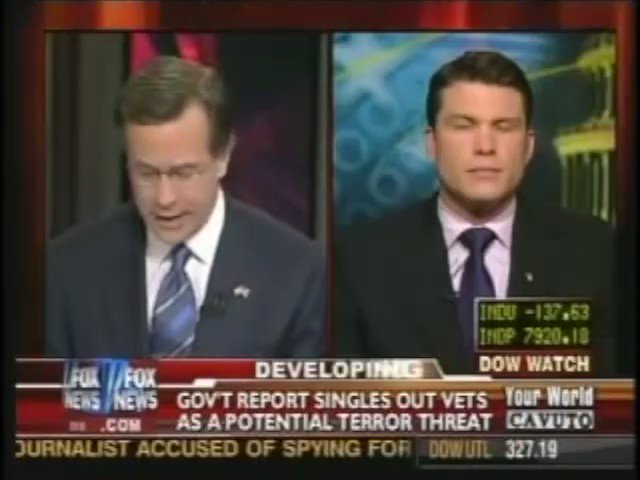
The most striking example—mainly because of its real-world effects—came in 2009, when the Department of Homeland Security issued a bulletin to law enforcement warning that right-wing extremists were becoming more active and recruiting veterans. /22

https://t.co/oazIaqOkme
Conservatives essentially did a kind of self-own in this instance, openly identifying with the terrorist factions identified in the report and defending them on the basis that they appeared to be normal “conservatives.” It worked. /23

https://t.co/G4sQ0H0iEV
Fox News seized on the issue, running multiple segments on virtually every news show discussing the DHS bulletin. /24

More from All

MASTER THREAD on Short Strangles.

Curated the best tweets from the best traders who are exceptional at managing strangles.

• Positional Strangles
• Intraday Strangles
• Position Sizing
• How to do Adjustments
• Plenty of Examples
• When to avoid
• Exit Criteria

How to sell Strangles in weekly expiry as explained by boss himself. @Mitesh_Engr

• When to sell
• How to do Adjustments
• Exit


Beautiful explanation on positional option selling by @Mitesh_Engr
Sir on how to sell low premium strangles yourself without paying anyone. This is a free mini course in


1st Live example of managing a strangle by Mitesh Sir. @Mitesh_Engr

• Sold Strangles 20% cap used
• Added 20% cap more when in profit
• Booked profitable leg and rolled up
• Kept rolling up profitable leg
• Booked loss in calls
• Sold only


2nd example by @Mitesh_Engr Sir on converting a directional trade into strangles. Option Sellers can use this for consistent profit.

• Identified a reversal and sold puts

• Puts decayed a lot

• When achieved 2% profit through puts then sold

You May Also Like

So the cryptocurrency industry has basically two products, one which is relatively benign and doesn't have product market fit, and one which is malignant and does. The industry has a weird superposition of understanding this fact and (strategically?) not understanding it.


The benign product is sovereign programmable money, which is historically a niche interest of folks with a relatively clustered set of beliefs about the state, the literary merit of Snow Crash, and the utility of gold to the modern economy.

This product has narrow appeal and, accordingly, is worth about as much as everything else on a 486 sitting in someone's basement is worth.

The other product is investment scams, which have approximately the best product market fit of anything produced by humans. In no age, in no country, in no city, at no level of sophistication do people consistently say "Actually I would prefer not to get money for nothing."

This product needs the exchanges like they need oxygen, because the value of it is directly tied to having payment rails to move real currency into the ecosystem and some jurisdictional and regulatory legerdemain to stay one step ahead of the banhammer.