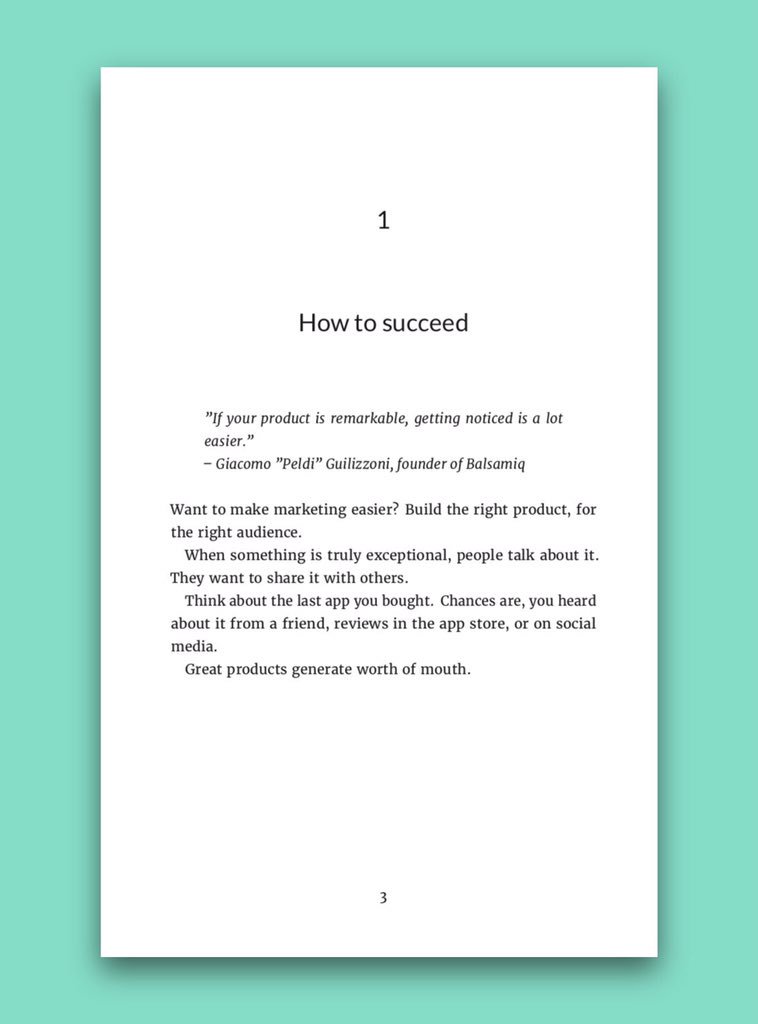
Tip: It's easy to focus all of your copywriting creativity on the high-visibility copy, but sometimes it's the smallest details that have the biggest impact. Create a personal connection with website visitors by adding delight with microcopy.

Thread 👇

Microcopywriting refers to the small, low-visibility details of your website and product. With very little time and effort, you can add delight, create a personal connection, and portray your brand's personality. Plus, it shows that you put in a little extra love and care.
In short, each little piece of microcopy gives your visitors and users even more reason to get on your side (and stay there).
Microcopy comes in all shapes and sizes: An interesting 404 error message, a funny tidbit in a product description, a clever turn of phrase in the fine print of a newsletter.
So take a look around your site, emails, etc. — what copy can you add to give someone an unexpected smile?

For more growth bites 👉 https://t.co/AdAiLkJ75R

More from All

You May Also Like

I just finished Eric Adler's The Battle of the Classics, and wanted to say something about Joel Christiansen's review linked below. I am not sure what motivates the review (I speculate a bit below), but it gives a very misleading impression of the book. 1/x


The meat of the criticism is that the history Adler gives is insufficiently critical. Adler describes a few figures who had a great influence on how the modern US university was formed. It's certainly critical: it focuses on the social Darwinism of these figures. 2/x

Other insinuations and suggestions in the review seem wildly off the mark, distorted, or inappropriate-- for example, that the book is clickbaity (it is scholarly) or conservative (hardly) or connected to the events at the Capitol (give me a break). 3/x

The core question: in what sense is classics inherently racist? Classics is old. On Adler's account, it begins in ancient Rome and is revived in the Renaissance. Slavery (Christiansen's primary concern) is also very old. Let's say classics is an education for slaveowners. 4/x

It's worth remembering that literacy itself is elite throughout most of this history. Literacy is, then, also the education of slaveowners. We can honor oral and musical traditions without denying that literacy is, generally, good. 5/x