Alex1Powell Categories Trading

A few quick thoughts (although very much first
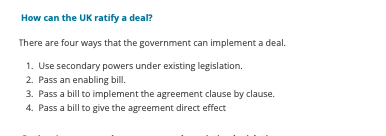
It seems like the bill contains a mix of some of the options outlined in our @instituteforgov explainer on UK ratification
https://t.co/WUa3MSkABL
Clause 29 seems to be a catch all clause - so existing domestic law is treated as subject to the UK-EU deal where it has not been specifically amended to implement it (where this is required) (more from @ProfMarkElliott
https://t.co/FEBrdG09Cy)
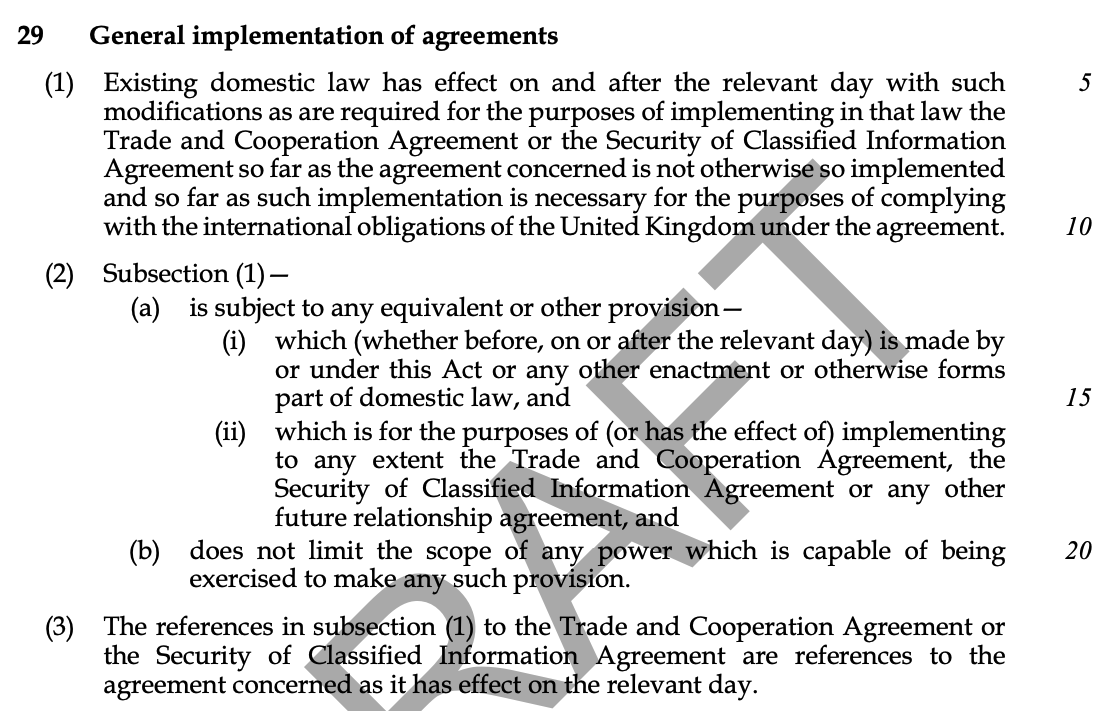
Cl 29 of the Future Relationship Bill is certainly interesting. If I\u2019ve understood correctly, it is, in effect, an automatic Henry VIII clause that requires existing domestic law to be treated as subject to the Agreements to the extent that they have not been implemented. pic.twitter.com/nyL52YOslD
— Mark Elliott (@ProfMarkElliott) December 29, 2020
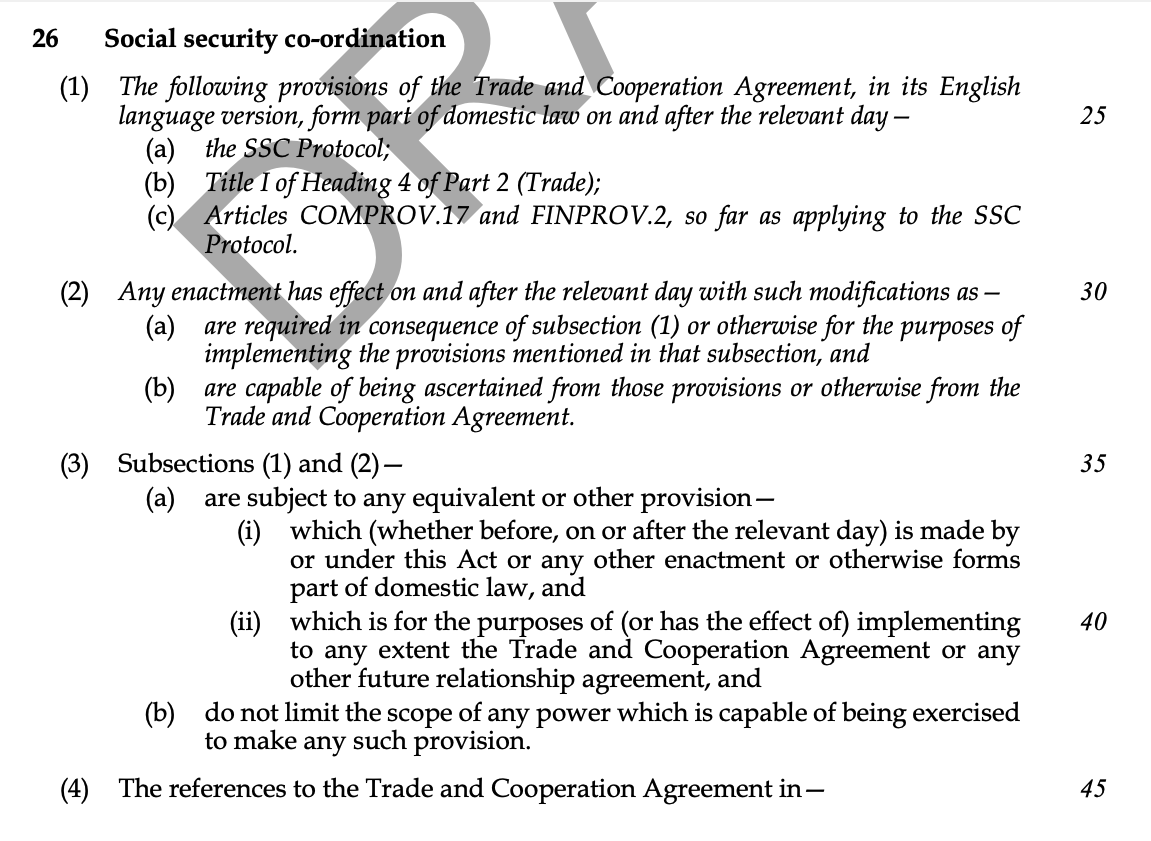
Also seem to be separate provisions for the social security coordination protocol to form part of domestic law (clause 26)
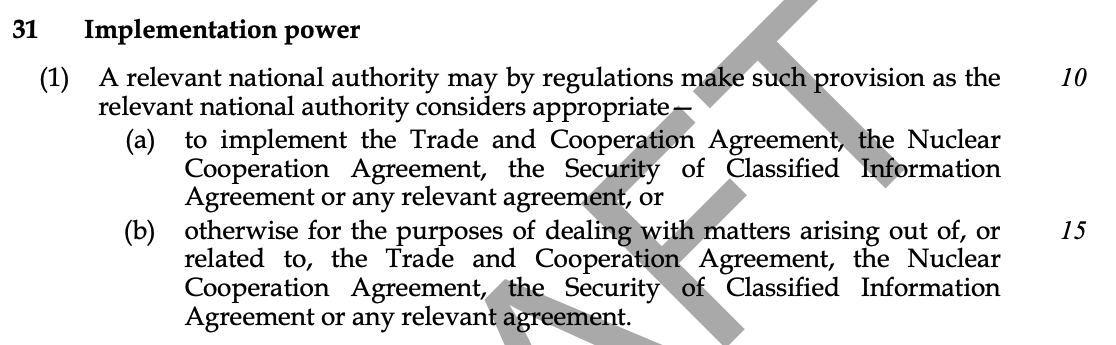
Clause 31 includes a general implementating power (a big Henry VIII power, that allows the use of secondary legislation to do anything an act of parliament could do). Seems to be affirmative. Exercisable by gov and also devolved administrations. Inevitable given short time.


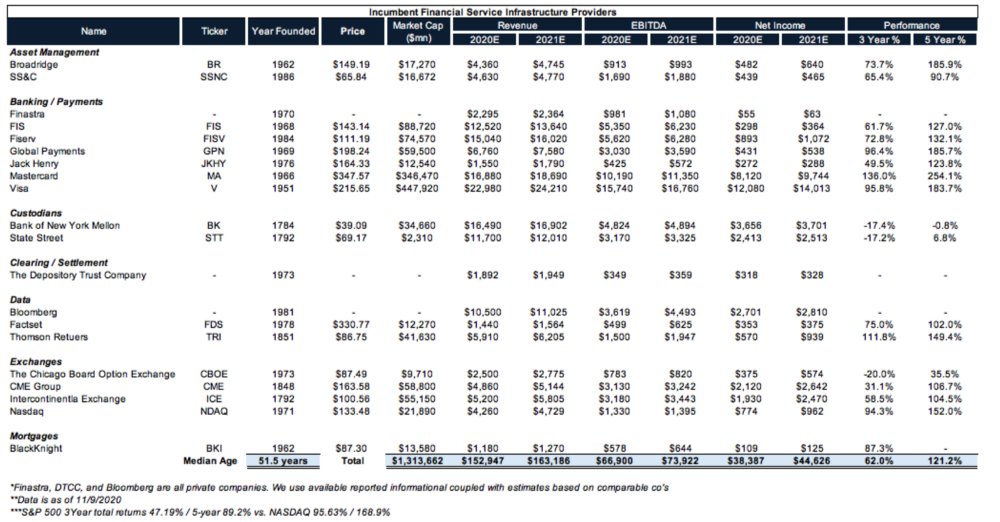
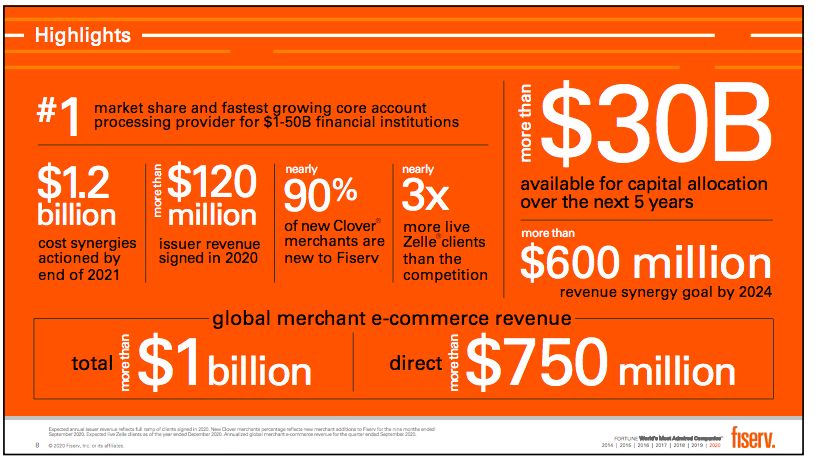
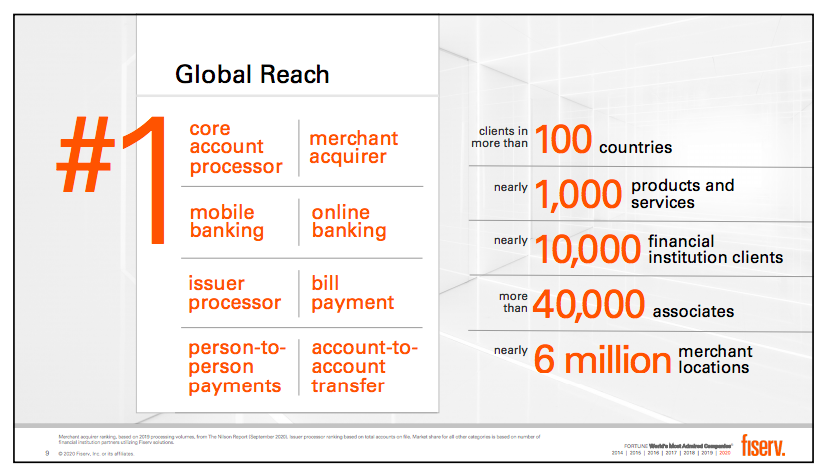
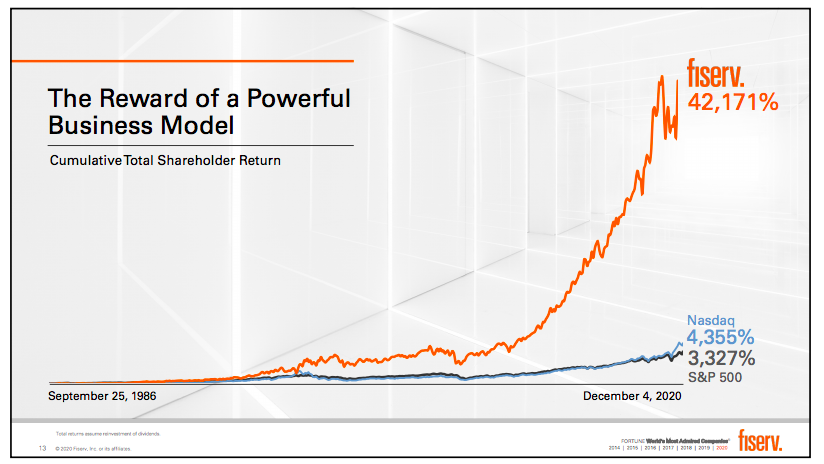


Will attempt to deep dives on each to build on some of my musings from earlier in the year on this topic 🤗 https://t.co/Amlnje1Qiq
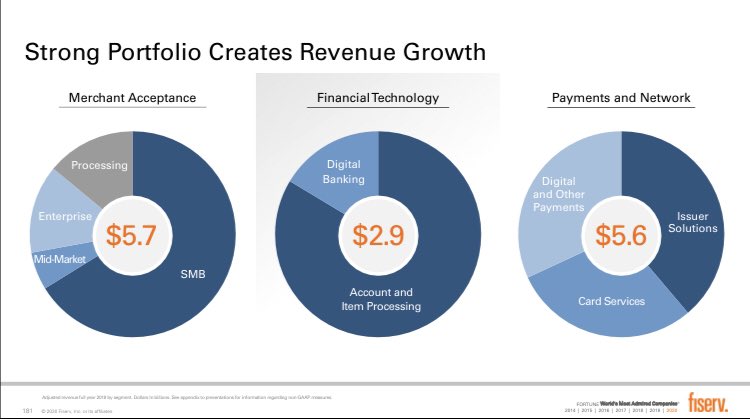
3) The revenue mix of $FISV today (post FDC merger) is roughly ~40% merchant acquiring, ~45% issuer processing and other payments related services, and ~15% core bank processing. Will take these in turn, then highlight growth levers I\u2019m most excited to watch in the coming years pic.twitter.com/yhvkCQrsF8
— BlueToothDDS (@BlueToothDDS) March 6, 2020
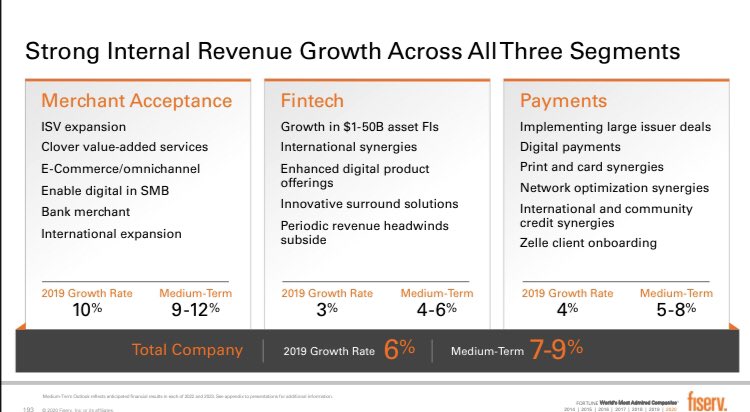
Will also try to bridge to an earlier thread laying out the $FISV growth algorithm and the operational/financial levers that support its medium-term outlook of 15-20% FCF/share growth
Here we focus on the top line, most notably the impressive acceleration across all 3 segments https://t.co/8HzMhEC5Bj
12) $FISV has both operational levers ($0.6B revenue synergies, $1.4B combined cost synergies + add\u2019l cost take out) and financial levers ($30B+ deployable FCF) to support its 15-20% compounded FCF/share growth
— BlueToothDDS (@BlueToothDDS) December 9, 2020
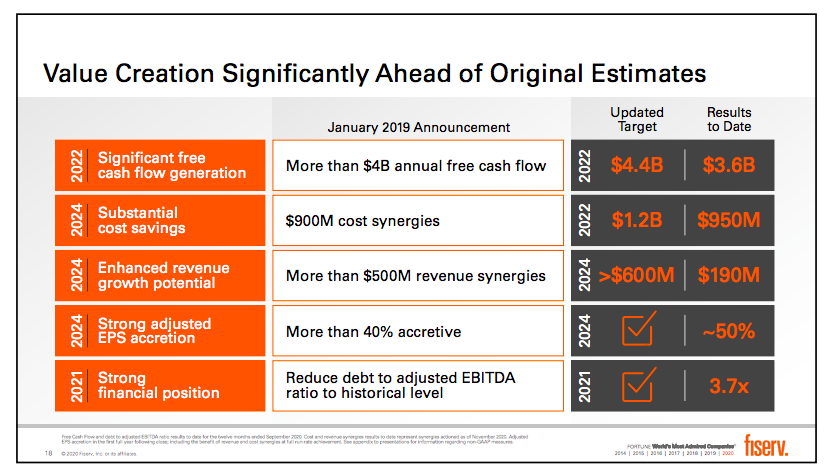
... and this is all before underlying business momentum (tomorrow) pic.twitter.com/JBtlGQIfBT
Let’s start with Merchant:
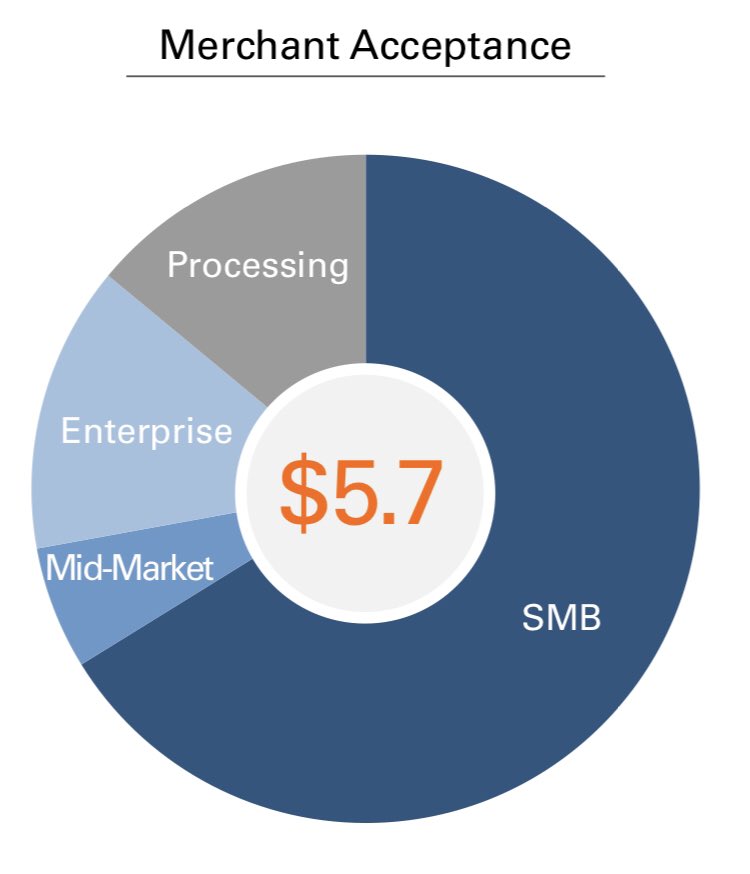
1) This segment, which ~40% of $FISV revenue today, is the #1 merchant acquirer globally processing $3T+ annually for 6M merchants worldwide
2/3 of revenue is from SMBs, ~20% from mid-to-enterprise merchants, remaining ~15% is wholesale processing
2) 🇺🇸 is 3/4 of the $FISV Merchant segment and the scale of this business is unmatched: it processes 40% of all in-person purchases in the US, covers 80% of all US zip codes and accounts for 10% of US GDP. This book of business is the most balanced in the industry https://t.co/Qlkk7lz3jQ
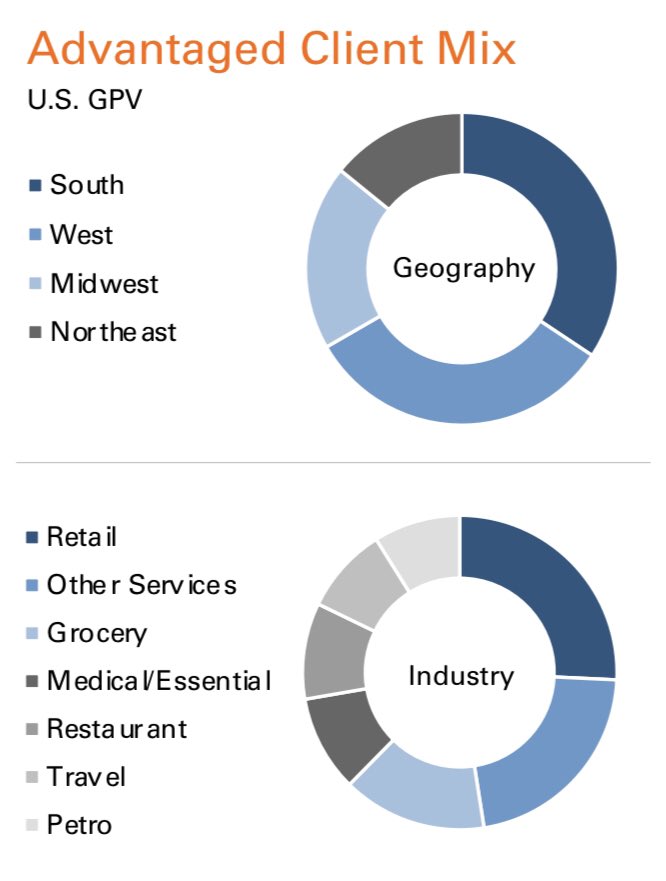
4) $FISV merchant business is the largest US acquirer processing $2.4 trillion of payments annually (including through JVs with BAC, WFC, PNC, C) accounting for 10% of \U0001f1fa\U0001f1f8 GDP. This segment includes Clover, which focuses on SMBs and is $105B runrate today growing at 40%+ annually pic.twitter.com/M5j4mbeiJX
— BlueToothDDS (@BlueToothDDS) March 6, 2020
3) Internationally, $FISV Merchant has strong position in EMEA (top 3 through various JVs and alliances) and several high growth countries, among others: India 🇮🇳 (top 3 with ~15% share), Argentina 🇦🇷 (~50% market share today), Brazil 🇧🇷 (routing ~30% of all electronic payments)







CMP:30
Technically given breakout at 19 only. I am posting this note after I got my own conviction.
Dont buy at one go, buy on DIP’s
Till now you have seen Hero or Zero calls in F&O.
— CA Surendra Doki (@surendradoki) December 12, 2020
Let me give same call in Investment.\U0001f4b8
Who all are ready.
Based on your response only will post call along with detailed notes.
Hero or Zero in Investment \U0001f3af\U0001f9b8\u200d\u2642\ufe0f
-Positive points to be considered
SUBEX plans to foray into emerging verticals like Fintech&E-commerce by expanding digital trust business beyond its core area of Telecom sector
SUBEX is literally Zero /negligible debt company,hence it can focus on growth in new verticals
SUBEX main advantage is 75% of telecom companies are their clients
SUBEX now focusing on internet of things (IOT) , security and analytics and management expecting 140n to 200 crores additional revenue from new verticals
1/5 th of the global teleco’s tariff goes through company,counts British Telecom,Airtel,JIO,VI,T-Mobile,AT & T,Orannge and Swisscom and etc.
SUBEX has increased its employees by 15%
Key possitive factor for SUBEX is new and promising Management
SUBEX has massive leverage with the existing teleco customers thhey can take major advantage out of it to enhance their business in new areas such as IOT security,FinTech,Digital Trust, Cyber security & 5G.