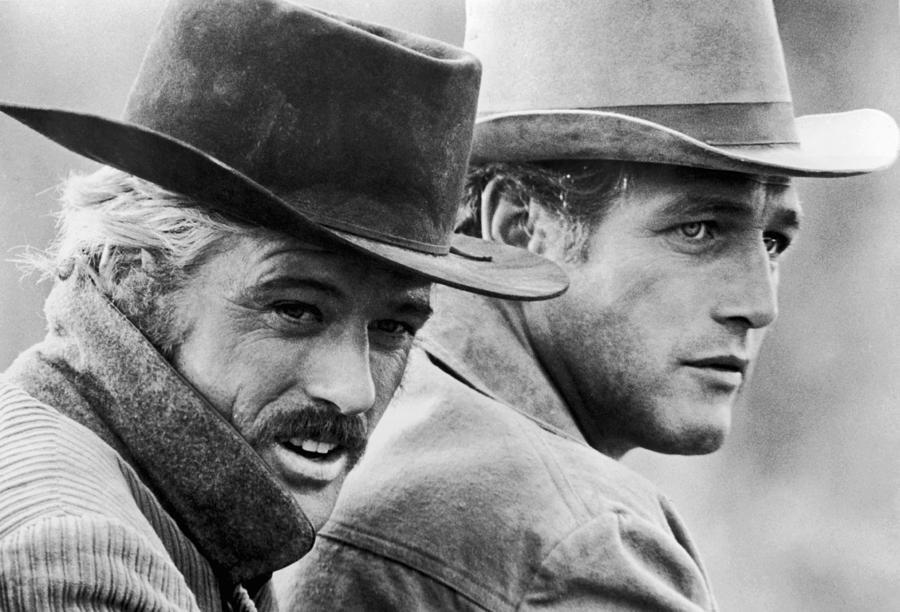
A few words on the passing of William Goldman: In addition to being a legendary screenwriter, he was a friend and mentor to so many other writers, offering guidance and support, directly influencing hundreds of films beyond his own work...
Butch Cassidy and the Sundance Kid
More from Writing
Today we learn health services are brutally underfunded with scant support for hard pressed staff, although it\u2019s left unclear who is responsible for that and it appears to be an exceptional, totally unpredicted phenomenon, like a freak weather event. pic.twitter.com/StwFR7RejE
— Flying_Rodent (@flying_rodent) January 25, 2021
We also don’t learn that the paper it’s written in stridently supported those measures and attacked junior doctors threatening strike action over NHS cuts and long working hours, accusing them of holding the country to ransom.
We aren’t reminded that NHS funding and the future of health provision was a central part of previous election campaigns, and that attempts to highlight these problems were swiftly stomped on or diverted and then ignored by most of the press, including the Times.
I’d underline here that “corruption” doesn’t just mean money in brown envelopes: it describes a situation where much of an organisation is personally motivated to ignore, downplay or divert from malfeasance for personal reasons - because highlighting them would be bad for careers
Foges was Cameron’s speechwriter at the height of austerity; Forsyth is married to the PM’s spokesman; Danny F is a Tory peer; Parris is a former MP; Gove used to write for them regularly, and that’s before we get to professional mates-with-ministers like Shipman or Montgomerie.
You May Also Like
Why is this the most powerful question you can ask when attempting to reach an agreement with another human being or organization?
A thread, co-written by @deanmbrody:
Next level tactic when closing a sale, candidate, or investment:
— Erik Torenberg (@eriktorenberg) February 27, 2018
Ask: \u201cWhat needs to be true for you to be all in?\u201d
You'll usually get an explicit answer that you might not get otherwise. It also holds them accountable once the thing they need becomes true.
2/ First, “X” could be lots of things. Examples: What would need to be true for you to
- “Feel it's in our best interest for me to be CMO"
- “Feel that we’re in a good place as a company”
- “Feel that we’re on the same page”
- “Feel that we both got what we wanted from this deal
3/ Normally, we aren’t that direct. Example from startup/VC land:
Founders leave VC meetings thinking that every VC will invest, but they rarely do.
Worse over, the founders don’t know what they need to do in order to be fundable.
4/ So why should you ask the magic Q?
To get clarity.
You want to know where you stand, and what it takes to get what you want in a way that also gets them what they want.
It also holds them (mentally) accountable once the thing they need becomes true.
5/ Staying in the context of soliciting investors, the question is “what would need to be true for you to want to invest (or partner with us on this journey, etc)?”
Multiple responses to this question are likely to deliver a positive result.
make products.
"If only someone would tell me how I can get a startup to notice me."
Make Products.
"I guess it's impossible and I'll never break into the industry."
MAKE PRODUCTS.
Courtesy of @edbrisson's wonderful thread on breaking into comics – https://t.co/TgNblNSCBj – here is why the same applies to Product Management, too.
"I really want to break into comics"
— Ed Brisson (@edbrisson) December 4, 2018
make comics.
"If only someone would tell me how I can get an editor to notice me."
Make Comics.
"I guess it's impossible and I'll never break into the industry."
MAKE COMICS.
There is no better way of learning the craft of product, or proving your potential to employers, than just doing it.
You do not need anybody's permission. We don't have diplomas, nor doctorates. We can barely agree on a single standard of what a Product Manager is supposed to do.
But – there is at least one blindingly obvious industry consensus – a Product Manager makes Products.
And they don't need to be kept at the exact right temperature, given endless resource, or carefully protected in order to do this.
They find their own way.
Legacy site *downloads* ~630 KB CSS per theme and writing direction.
6,769 rules
9,252 selectors
16.7k declarations
3,370 unique declarations
44 media queries
36 unique colors
50 unique background colors
46 unique font sizes
39 unique z-indices
https://t.co/qyl4Bt1i5x
PWA *incrementally generates* ~30 KB CSS that handles all themes and writing directions.
735 rules
740 selectors
757 declarations
730 unique declarations
0 media queries
11 unique colors
32 unique background colors
15 unique font sizes
7 unique z-indices
https://t.co/w7oNG5KUkJ
The legacy site's CSS is what happens when hundreds of people directly write CSS over many years. Specificity wars, redundancy, a house of cards that can't be fixed. The result is extremely inefficient and error-prone styling that punishes users and developers.
The PWA's CSS is generated on-demand by a JS framework that manages styles and outputs "atomic CSS". The framework can enforce strict constraints and perform optimisations, which is why the CSS is so much smaller and safer. Style conflicts and unbounded CSS growth are avoided.