Extracts from #Navalny last address #2 today: “Putin’s party is akin a swine devouring oil and gas dollars from a trough, & when poked & reminded that $ are for everyone, growls, “What about the WWII? What about veterans?!” The verdict is due any minute now. #FreeNavalny 👇🏼☝🏼
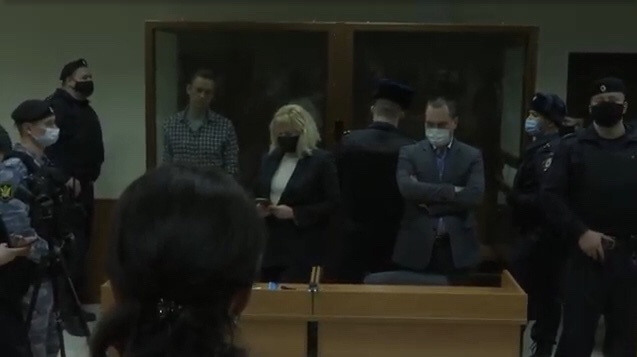
The judge is back and reads the verdict now.
“The politician criticized the participants in the [RT] video in support of the amendments to the Constitution, calling the presenters "corrupt lackeys", "traitors" and "people without conscience."
The judge says Navalny pleaded not guilty and called the persecution politicized.
She reads the lengthy description of the “slander” (or libel and defamation) case in which one presenter, a 95 y.o. veteran, allegedly was insulted by Navalny’s video comment
the judge lists the evidence for the prosecution: the veteran's certificates, the testimony of his grandson, his neighbor and nurse, as well as witnesses, who saw Navalny's comment on the Internet and filed the case
The linguistic expert admitted that Navalny's statements were evaluation (not libel).
The expert explained that the negative assessment applies to all persons depicted in the video, and the commentary contains a statement, the judge said.
[I am listening to the judge's speech and it is so absurd that I have a hard time translating and commenting. I will resume in a second. It is the most exemplary case of a show trial and combat propaganda used by the Kremlin to manipulate its own people I've ever seen.] #Navalny
The judge says that they checked evidence from the WWII records and there is no information that the veteran Artemenko was a traitor: he didn't "carry out espionage" nor was a deserter.
She is reading the conclusion of an expert, an esteemed professor of linguistics, who explains that "traitor" in the context of Navalny's social media comment, cannot be interpreted as a statement of facts. Nor can be "the shame of the country." Therefore, the case is not libel
[Basically, at this point, it is the discussion of the language: the meanings of the words, contexts, perception, and the way the language can affect people. It is a bizarre mix of a semantics lecture and Kafkaesque Netflix series from 1984]
[one needs to invent a new language to translate this mundane and terrifying speech that the judge drones on and on, stumbling and stuttering. Words "Russia Today" (RRRRRusha) punctuate the droning]
She says that Navalny's internet comments contain defamatory statements that call for contemptuous attitude to the veteran of the WWII
"Navalny deliberately denigrated the honor of the veteran" and "spread slanderous information." The court is critical of Navalny's pleading not guilty of libel. According to the court, he says so in order to avoid responsibility
She is reading the previous verdict: 3.5 years in penal colony (2.6 after counting the house arrest)
Sentence: $11,480 (850,000 roubles)
"The court takes into account the personal character of the defendant who has the record of conviction"
"the fine should be paid witin three days since the verdict and in case of malicious evasion of the payment of a fine, it may be punishable by imprisonment"
#Navalny listening to his second sentence today
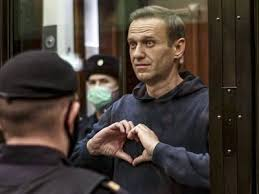
This time, they kept #Navalny in handcuffs so he couldn't show a heart sign to his wife--or anything else. He did make an address, see below in this thread. #FreeNavalny
#Navalny's 2nd last address in 8 hrs: "really funny that I'm doing another last address. All day long, morning till now, for several days, the prosecutor was telling me I was demanding exclusive treatment. It seems that if one person does two last addresses--that's exclusive"
"In my pocket, I have an extract from the case file, from the first hearing... I looked at this piece of paper every time "in the dirtiest moments: when the prosecutor spoke with tears in her eyes about the veteran, when they said on TV that I had insulted the veteran."
"It's a welfare department record of financial assistance received by the veteran from the state in 4 years: "consumer goods" and "groceries," for the total sum of $145 (11,000 rubles.) That's your concern for the veteran, you hypocritical villains!"
"Another shameful moment here is the force task [of this court]: 15 employees from all over the country. Lazy bums. They spent more money on them than the veteran received in his entire life. One day of this trial is worth much more than the veteran received in four years."
"The most disgusting thing about this government is that it exists to rob people. Where do palaces and [expensive] toilet brushes come from? This money does not come out of nowhere. They are taken from veterans."
"Someone out there didn't receive medical treatment. Someone out there couldn't afford a wheelchair so that Putin's mother-in-law would have an apartment. And so that Medvedev gets four palaces. To protect their ability to rob, they manipulate the robbed. "
"A witness who wrote a statement against Navalny said that one can see right away that the veteran is poor. Poor is what we associated with WWII veterans. In Russia, the victorious soldiers have the smallest pension compared to other countries that defeated fascism."
"But the pension cannot be increased, because money does not come out of nowhere. Because for the palaces you need to rob someone. It is best and most convenient to steal from a veteran."
"What does your Putin and [his party] United Russia have to do with winning the war? Did they stay in the trenches? You use this [arguments] because you don’t want to speak about real issues; because you are embarrassed to discuss the current problem."
"The most disgusting moment of the process was when the prosecutor read the fabricated testimony of the veteran. She pretended that her voice was trembling."
"Our government has turned into a pig that slurps out of the trough. And when they kick her on the side, “This is for everyone” she lifts her head and says: “What? We will not allow to offend the veterans! We will not allow revising the history of the WWII!"
"You are willing to serve this monster boar because you hope that you'll get some crumbs.”
[I am skipping a really graphic description of the governments' crimes by Navalny]
"I saw a TV report about the veteran feeling ill after watching my video comments. He was lying in his underpants on the bedspread. The grandson is standing next to him... [and the TV crew happened to be right there at the right moment.] [RT] Margarita Simonyan was probably there
"I understand what you've done: in the morning there was one trial, in the evening another. So that in the evening you would say that Navalny is sentenced to prison not because he was hiding from the inspection, but because he insulted the veteran"
"I believe that for this all you will burn in hell but, I hope, you are all young people and you will still answer before a human court. I'm sure that your plot will not work. One way or another, the truth will out and everyone will be held responsible."
This was #Navalny's last address for the second trial. Here is the first speech, in Russian for now:
https://t.co/uhM2gkzsxI
Overall today: The appeal court confirmed Navalny's initial sentence but reduced the sentence by 1.5 months. If nothing changes, Navalny will stay in the colony until the summer of 2023. Navalny was also found guilty of “slandering a veteran” and fined $11,000.
In a nutshell: #Putin feared #Navalny's popularity and tried to kill him but failed. Navalny became more dangerous to Putin by turning into a national hero after returning to Russia after surviving a coma. Putin imprisoned Navalny and used the libel case to discredit Navalny.
Putin suppressed the opposition by putting all Navalny's allies under house arrest, cutting them off the Internet & using violence to stop the mass protests. The Kremlin mafia state kills & jails to stay in power. You can help: sign, share the petition.
https://t.co/SfSY0b0zia
Dictators like #Lukashenko and #Putin cause suffering and grief but one by one they will fall. The truth will out. Support people of Belarus and Russia in the fight for decency. #RussiaWillBeFree #РоссияБудетСвободной #РоссияБезПутина